
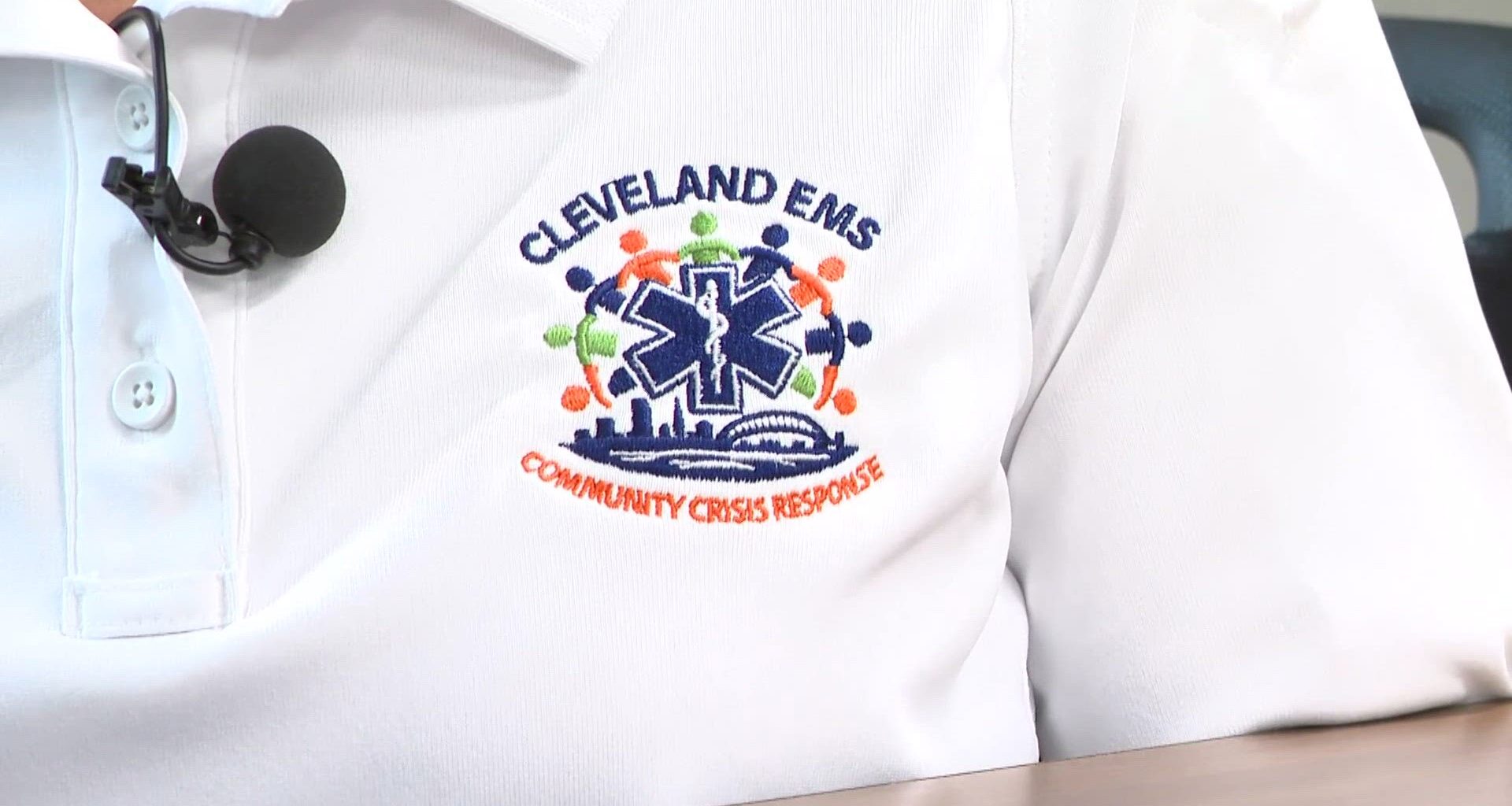
Unarmed teams of social workers and paramedics in Cleveland will respond to mental health and substance abuse crises, with the goal of connecting people to services.
CLEVELAND — The city of Cleveland is launching a new Community Crisis Response Bureau designed to change how first responders handle certain mental health and substance abuse emergencies.
The bureau is led by Maureen Malavé, the city’s deputy commissioner of community crisis response. The program uses unarmed teams made up of social workers and paramedics to respond to eligible, nonviolent crises.

This story continues below.
“We want to meet people where they’re at and connect them to services and make sure we provide compassionate, trauma-informed support,” Malavé said.
The bureau was created after Cleveland City Council passed Tanisha’s Law, named after Tanisha Anderson, who died in police custody in 2014 during a mental health crisis.
A response can begin with a 911 call. Social workers will be stationed within the city’s 911 center and can receive calls involving mental health crises. If additional help is needed, the call can be evaluated to determine whether it is appropriate for the community crisis response team.
The team will include a social worker and a paramedic. The paramedic can conduct a health assessment while the social worker works to de-escalate the situation and determine what services the person needs.
There is also multiple safety screenings before the teams are dispatched. “If weapons are involved or violence is suspected, police will be dispatched immediately,” said Malavé.
Malavé said the community crisis response team will also remain in communication with police.
The program is already underway with a small team responding to frequent 911 callers. Malavé is building the bureau to about 17 people and expects it to be fully staffed by the middle of next year.
“what we want to avoid is unnecessary trips to the emergency room we want to avoid arrests we want to avoid putting people in jail when that’s not what they really need we want to meet them where they’re at and give them the services that they need,” said Malavé.