
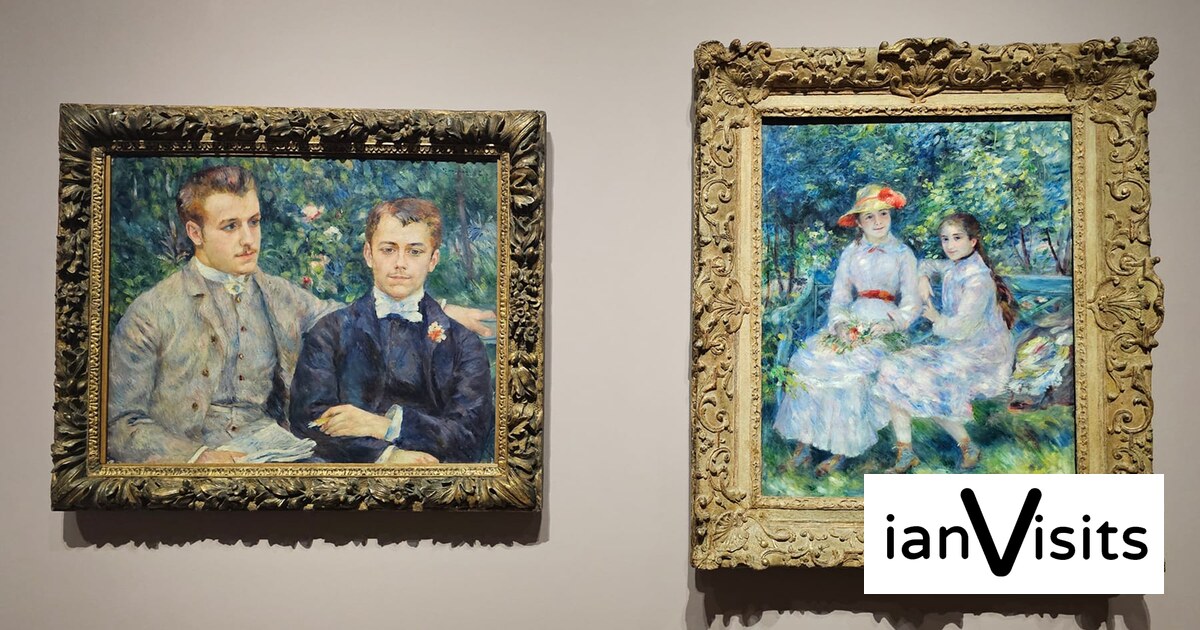
The man who painted Sunday afternoons is the subject of a new exhibition at the National Gallery, exploring twenty years when Pierre-Auguste Renoir captured the pleasures of Parisian life — and the flirtations beneath its respectable surface.
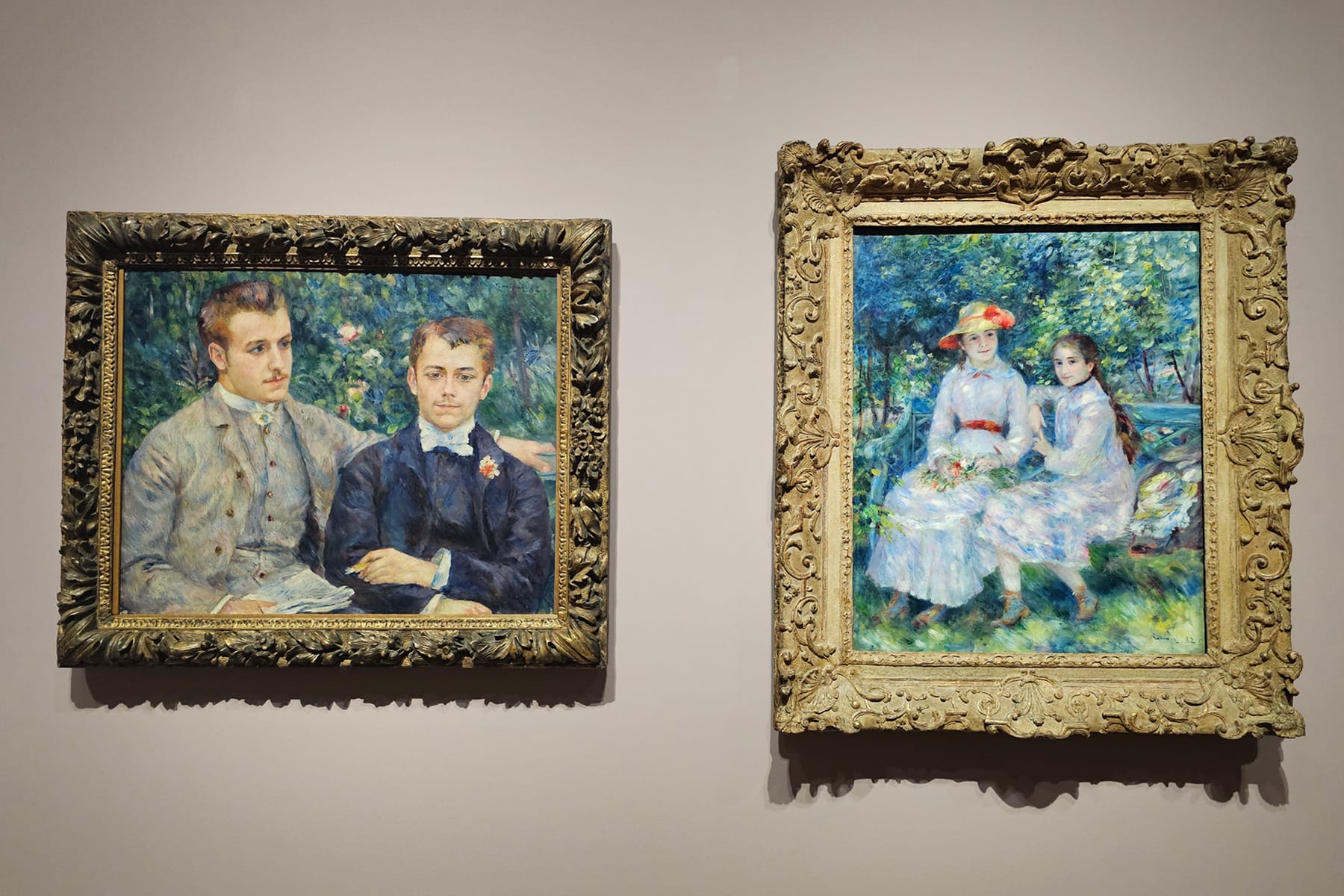
At a time when most artists and writers focused on the dire state that Paris and France found themselves in, Renoir turned his back on the gloomy Monday to Saturday and focused on the day off instead. Only the richer folk though, as poor people didn’t get Sunday afternoons off.
The exhibition focuses on the mid-1860s to the mid-1880s, tracing his fascination with romance, friendship, companionship and family life. It’s the National Gallery’s first exhibition devoted to him since 2007, and what the gallery describes as the most significant British exhibition of his work for twenty years.
Although the exhibition is rare, Renoir’s paintings are so familiar from prints, postcards and living-room walls that you might feel the exhibition is rather like visiting a well-worn theme – but this is a chance to see the originals, not the photocopies.
The star attraction is Dance at the Moulin de la Galette, lent by the Musée d’Orsay and being shown in the UK for the first time. Painted in 1876, its gathering of dancers and drinkers brings the exhibition’s themes together in one busy afternoon. Here are people enjoying themselves, watching one another and perhaps wondering who they might be going home with.
Expect plenty of courtship and coupling, then, alongside a few paintings of the consequences of said couplings.
What makes the exhibition particularly interesting, though, is the social language tucked inside these apparently easy-going scenes. The captions help decode details that contemporary viewers would have recognised far more readily than most of us do today.
You might not notice the breastfeeding mum lacks a wedding ring, but Parians did. That slight twist of the lady’s head? Shocking!!
These are paintings that reward a little nosiness.
Take The Umbrellas. At first glance, it’s a familiar Parisian street scene, with a crowd negotiating the rain. Look again, and the man behind the young woman on the left appears to be considering an opportunity to offer more than shelter beneath his brolly.
As exhibition co-curator Chiara Di Stefano explained at the preview, appearing bareheaded could carry sexual implications for contemporary audiences.
If you have a print hanging on the wall, you might want to move it from the living room to the bedroom.

However, for all the gallant gents offering a hand and a brolly to ladies throughout the exhibition, there’s also a sense that the women have more say in these encounters than the conventional image of men pursuing demure ladies might suggest.
Thanks to his style, the works on display feel dreamy and wistful, fitting the subjects of young love quite well.
As an artist who challenged conventions, he also painted central Paris, reportedly deliberately leaving the Louvre gallery out of the scene. There’s also a very large painting included because it failed. Renoir, seemingly tired of his impressionist style, tried out something new, but Paris was not impressed.
You might be though, and Renoir & Love is at the National Gallery until the end of January 2027.
Peak rate prices:
Standard Ticket: £25
Concessions: £18
National Art Pass: £12.50
Under 17: Free
Details here.
Each Friday evening after 5:30pm from 23rd October 2026 to 15th January 2027, tickets are available on a “pay what you want” basis, so you can visit for as little as a quid. Those tickets need booking in advance here.
