

Hands up if you have a cupboard full of supplements that have been languishing there, untouched, for months? Or maybe you have taken some of them but struggle to do it consistently and wonder if the benefits are worth it.
The reality is that, beyond vitamin D, which is recommended by the NHS in the autumn and winter months, supplements are only necessary if you aren’t getting the right, or enough, nutrients from your diet. However, if you have identified gaps in your diet, supplements could help. But the key to success could be in how you take them. Enter the new supplement stacking trend.
Could supplement stacking help you finally embrace that cupboard full of vitamins? Possibly, says nutritionist Sarah Ann Macklin. “Supplement stacking is a wellness term used to describe taking several supplements together, usually with a particular goal in mind,” she explains.
It means you can get really specific with your supplementation. “By taking a step back to evaluate your specific health goals, dietary habits and lifestyle demands, you can create a far more targeted and personalised approach to your overall wellbeing,” adds Isabelle Nunn, head of nutrition science at Wild Nutrition.
I was intrigued. Here’s what I learnt when I tried supplement stacking myself.
The supplements I stackedThe benefits of supplement stacking
Before I started my supplement stacking experiment, I was taking a multivitamin and not seeing any noticeable differences. As a wellness editor, I’m always running from meetings to events, and forever trying to squeeze the gym in. I try to eat as healthily as possible, but my busy summer calendar meant my good intentions didn’t always pay off. I was always tired; my skin was looking a little dull, and I was constantly getting ill.
So, how could supplement stacking change the way I see results? “The advantage of targeted supplementation is that you can address nutrients you genuinely need without automatically taking others you may already be getting enough of,” says Macklin.
For that reason, she advised that I ditch the multivitamin before getting more tailored with my routine. “It’s surprisingly easy to unintentionally double up on certain nutrients, and with some vitamins and minerals, more is not necessarily better,” she says.
As well as helping you get more targeted with your supplements, the theory is that some vitamins perform better when stacked together, as some work as facilitators for other vitamins. Taken together, they can either change their chemical form or create the right environment in the gut. One example of this is when you take vitamin D and omega-3 together, as the fat-soluble vitamin helps to process vitamin D in the small intestine.
“Vitamin C and iron are also a good example of nutrients that work together,” Macklin explains. “Vitamin C can improve the absorption of non-haem iron, which is the form found predominantly in plant foods.”
Unfortunately, however, she explains that there isn’t a universal ‘perfect match’ when it comes to supplements. “What’s appropriate for one person may not be right for another, depending on their diet, medical history, medications, life stage and whether you actually have an increased requirement,” she says.
If you’re unsure about which supplements to stack together, start small, with two supplements for a specific need, such as fatigue. Then add on other supplements to your stack as you start to see results.
If you have concerns about deficiencies in your diet, we always advise speaking to your GP first. They may recommend a blood test to identify deficiencies. They will then be able to recommend changes to your diet, or could suggest supplements if you’re not able to get the nutrients you need through diet alone.
My supplement stacking routine
With the above advice in mind, I popped my multivitamin back in the cupboard and decided to focus on five supplements from leading brands including Dr Vegan, Wild Nutrition and Ancient and Brave. I was hoping that if I stripped away all the vitamins and supplements my body didn’t need, and instead zoned in on my deficiencies, I would start to see some positive changes, such as increased energy levels, brighter skin and better immunity. In a bid to remember to take them, I laid out all the supplements the night before and popped them next to my coffee mug.
Creatine + collagen + vitamin C for healthy ageing
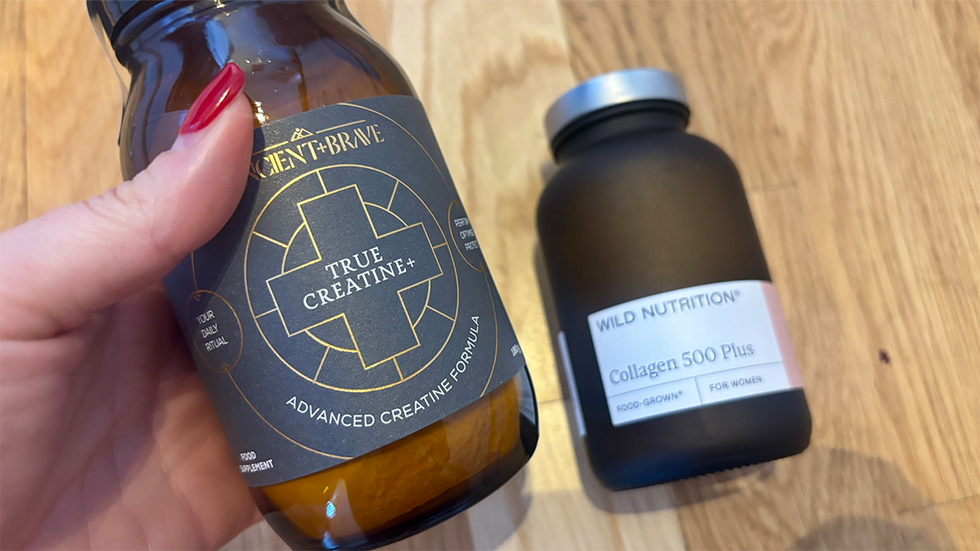
First up was creatine. It’s a supplement I’ve never got into a good routine of taking daily, even though my personal trainer is constantly raving about the benefits. I run and go to the gym regularly, and I know it can help support muscle strength, plus research also shows that it’s really important for bone health as you age. I opted for Ancient and Brave’s True Creatine + as it comes in an unflavoured powder format, which I could add to my morning coffee.
Nunn suggests stacking creatine with other supplements that support bone density. “I would recommend pairing it with collagen, and adding other bone density supporting nutrients like calcium, vitamin D3 and K2.”
I found that Wild Nutrition’s Collagen 500 Plus was easy to add to my breakfast of yoghurt and oats every morning, and it also contains vitamin C for immunity.
“Collagen is an important structural protein found throughout the body, including in our skin, bones and cartilage,” says Macklin, and although collagen can be found in foods like shellfish and citrus foods, many of us don’t get enough. Better still, a study earlier this year showed that it can help with healthy ageing.
I picked Wild Nutrition’s collagen specifically as it has added vitamin C, which can help with immunity as we go into the colder months of the year, plus it aids the production of collagen in the body. “Vitamin C is required for collagen synthesis, supports normal immune function and acts as an antioxidant. It also increases the absorption of plant-derived iron,” Macklin adds.
B12 + vitamin D + iron + vitamin C for tiredness 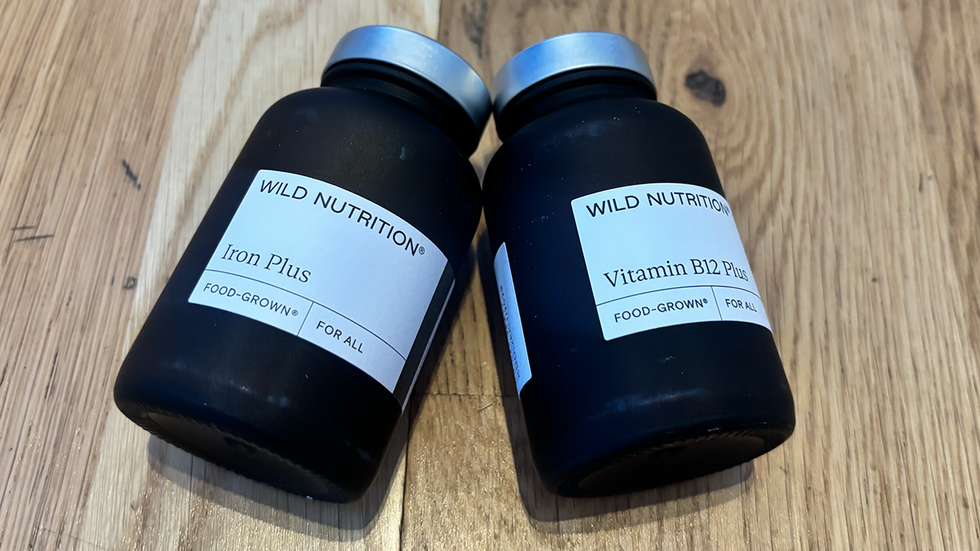
Low B12 levels can cause tiredness, and I believe the lack of this vitamin in my diet was the reason I’ve been finding it tough to get out of bed. So, I opted for Wild Nutrition’s B12 capsules to try and boost my energy levels. Macklin explains that B12 is essential for normal red blood cell formation, which allows you to convert the food you eat into energy.
A supplement that’s recommended for all adults in the UK is vitamin D, so I opted for Dr Vegan’s Vitamin D, with K2. “Vitamin D plays an important role in bone and muscle health and helps regulate calcium,” says Macklin, adding: “In the UK, everyone is advised to consider taking vitamin D daily during autumn and winter because sunlight isn’t strong enough for us to produce sufficient vitamin D through the skin.”
With Macklin’s advice about vitamin C helping the absorption of iron, I also added Wild Nutrition’s Food Grown Iron Plus supplement to my list. Iron, again, can help with tiredness, and like B12, plays an important role in red blood cell formation, helping to carry oxygen around the body.
The verdict: Does supplement stacking work?
It took me a while to get into a routine, and there were days when I completely forgot to take the supplements, especially when I had an early start. But stacking all my supplements at the same time meant that it became something I associated with a certain time of day – like brushing my teeth or having my morning coffee (something I magically never seem to forget). Personalising them also meant I could look at where I was lacking in nutrients and really target those areas.
I can see the benefits, too. My skin looks brighter and my hair and nails have been growing like crazy. I’ve also stopped feeling completely knackered every morning, and I can sustain that energy throughout the day, even for an evening gym class. Most importantly, I haven’t been sick (touch wood) in months.
However, there are some downsides, one of which is the monthly cost, especially if I keep taking five supplements every day. My supplement habit would cost me £105 a month if I kept it up. Consistency is key with supplements, so I would only suggest stacking like this if you can afford the monthly cost.
Supplements aren’t a magic fix either, especially if you don’t have the basics right, including a well-balanced diet, sleep and exercise. Macklin, who spoke about the tension between chasing optimisation and actually listening to what your body needs at the ALLBRIGHT’s Live Well Festival, says she would always prioritise getting nutrients through whole foods. “They provide a much broader package of nutrients, fibre and other beneficial compounds that you simply don’t get from an isolated supplement,” she says.
Some pairings should also be avoided. For example, the NHS states that high doses of zinc reduce copper absorption and advises people to avoid taking more than 25 mg/day of supplemental zinc unless advised by a doctor.
Macklin adds this important piece of advice before you consider supplementing: “In some cases, a nutrient deficiency needs to be confirmed and the underlying reason investigated. Speak to your GP or an appropriately qualified healthcare professional, particularly if you have persistent symptoms.”

Sarah is our wellness expert, specialising in expert-tested reviews and roundups on the latest health and fitness products. She can be regularly found on a yoga mat or training for a run, so she knows what to look for when it comes to the best yoga leggings, hydration vests or running trainers. From fitness trackers to the best supplements, she also has extensive experience writing about the latest products and writing detailed honest reviews.
Prior to joining the GHI, Sarah was a freelance journalist for 10 years, specialising in health, fitness and travel for national newspapers and magazine. During her time at Women’s Health, she interviewed celebrities about their fitness routines, for the Telegraph she investigated the health risks of Lime Bikes and visited Thailand to look at the trend of longevity travel – while for the London Standard she wrote about topics including AI powered PTs and smart ice baths.
When she isn’t testing out the latest smart watches, lifting weights at the gym, or hopping on a flight, Sarah can be found running around South London or devouring the latest trending TV show.