

Listen to this article
Estimated 4 minutes
The audio version of this article is generated by AI-based technology. Mispronunciations can occur. We are working with our partners to continually review and improve the results.
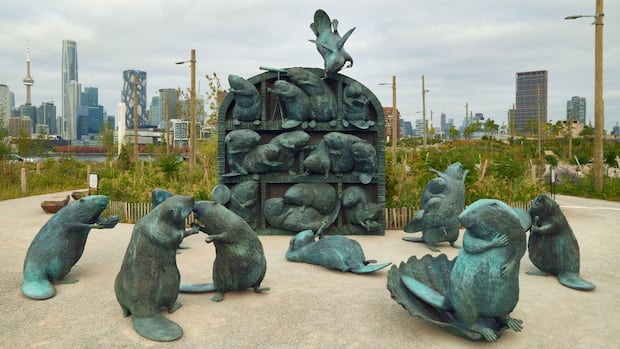
What if Louis XV had made a Versailles-style sculpture dedicated to the French colony of Canada? Would he choose to honour the region’s most important currency, the beaver? These are the musings of Kent Monkman that led to his very first public artwork, The Colony, a new sculpture on display at the Lassonde Art Trail in Toronto’s Biidaasige Park.
Unveiled to the public on Sept. 30, National Day for Truth and Reconciliation, the sculpture is a culmination of four years of work. Jokingly dubbed the “beaver condo,” The Colony is rendered in bronze with a verdigris patina and stands more than 4.5 metres tall. The artwork shows 25 giant beavers, an animal from the Pleistocene era that also appears in traditional Cree stories. In one corner, a pair of beavers are dancing. At the front, a beaver recreates Sandro Botticelli’s The Birth of Venus while two more play drums and another is seen lounging and smoking a pipe. At the very top, visitors will spot a beaver cupid.
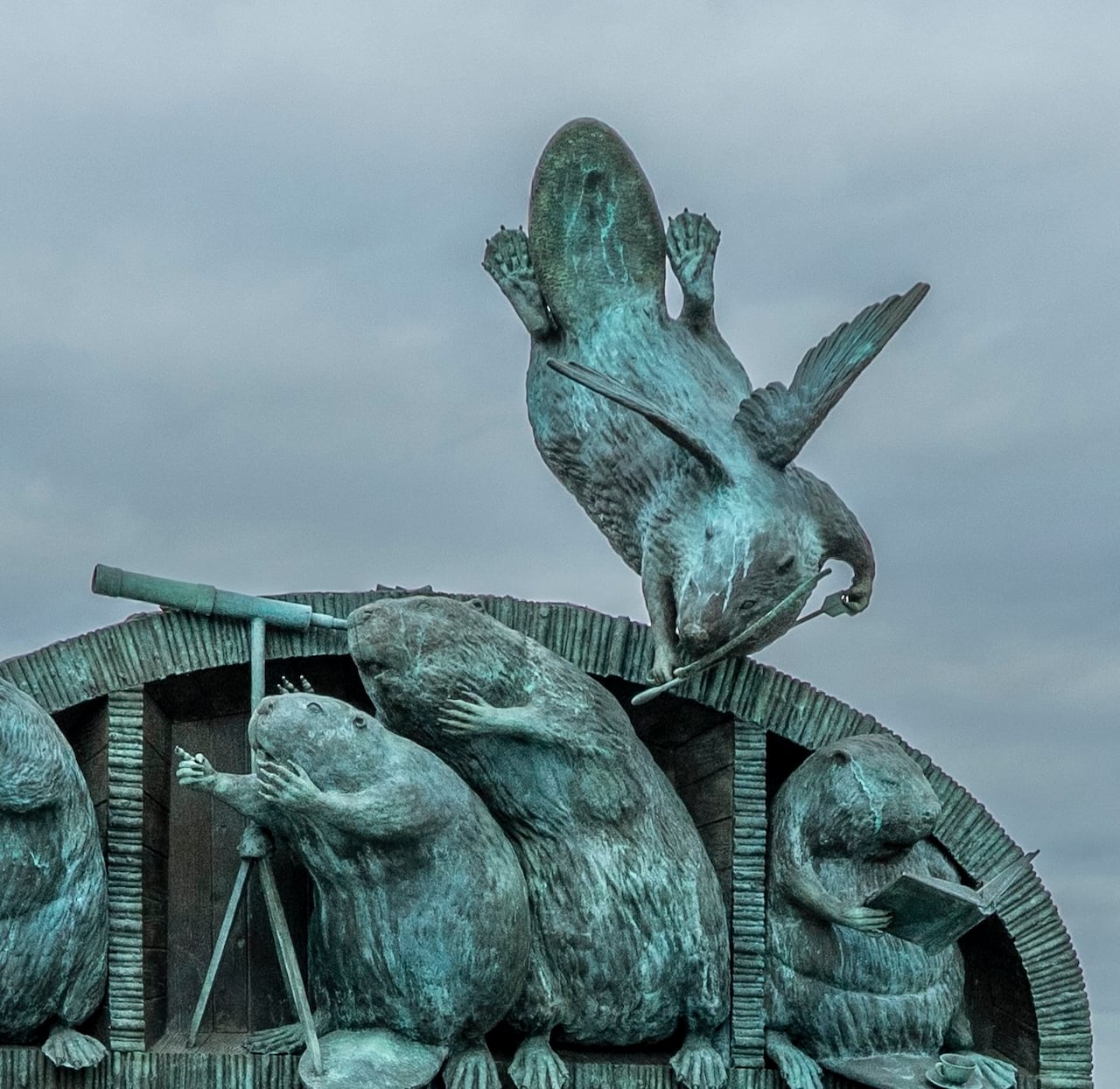 Kent Monkman, The Colony (detail), 2026, commissioned by Lassonde Art Trail. (Vid Ingelevics/Ryan Walker)
“The whole point was to think about the geopolitical history of this continent,” says Monkman. “The beaver was so integral to the shaping of the continent, because different European nations were competing in the fur trade and the beaver was the first currency on this continent.
“This was during the reign of Louis XV, who was obsessed with hunting, exotic animals and foreign lands. He commissioned a series of paintings of these hunts by famous artists of the day, and absent from that series of paintings were anything that represented North America. With some humour, I decided to think about this sculpture as being a sculpture that Louis XV never commissioned or maybe should have commissioned for Versailles.”
The artwork’s aged patina is meant to look as if the sculpture has been installed for centuries.
While Monkman says he doesn’t have a favourite beaver, visitors may notice one of the creatures reading a book with a teacup perched on his tail. The book is The Memoirs of Miss Chief Eagle Testickle, a real-life publication, which tells the story of Turtle Island through the eyes of Monkman’s famous alter ego. In the book, Monkman explains, Miss Chief encounters the dam-building critters as they face mass extermination from the fur trade.
Speaking at a press event, Julie Lassonde, board chair of the Lassonde Art Trail, mentions the social importance of gathering spaces, such as the art trail, “where community knits itself together.” It is a place, she says, “where people cross paths, pause and rediscover what connects them.”
“This work is full of play, humour and genuine joy,” Lassonde continues. “It invites us to ask: ‘How do we play? What brings us delight?’ Beavers, nature’s original engineers, are almost always depicted as solemn and industrious. Here [Monkman] offers a witty, subversive peek behind that curtain, blurring the boundary between beaver and human to transform a flat, tired cliché into something vibrant, mischievous and deeply relatable.”
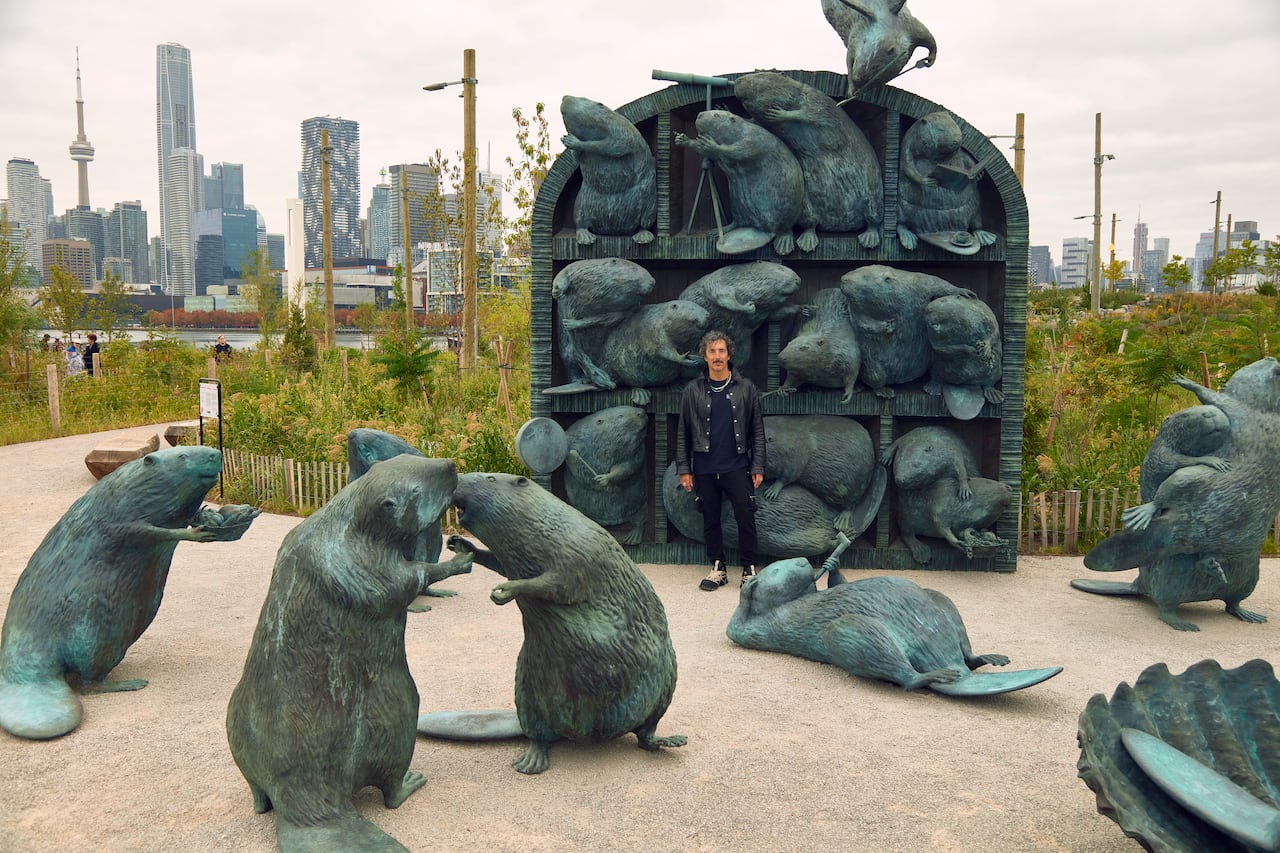 Kent Monkman with The Colony at Lassonde Art Trail. (Michael Seleski)
Monkman says: “I want people to reflect on the joy that’s in our cultures,” as well as ”the resilience of our elders and ancestors who survived genocide through the colonial project of residential schools.”
”As Cree people, we believe that we are in kinship with animals like the beaver,” says the artist. “We see ourselves in these animals. I wanted to remind people that before all of these other people came, this was a place for First Nations to gather. This was First Nations territory.”