
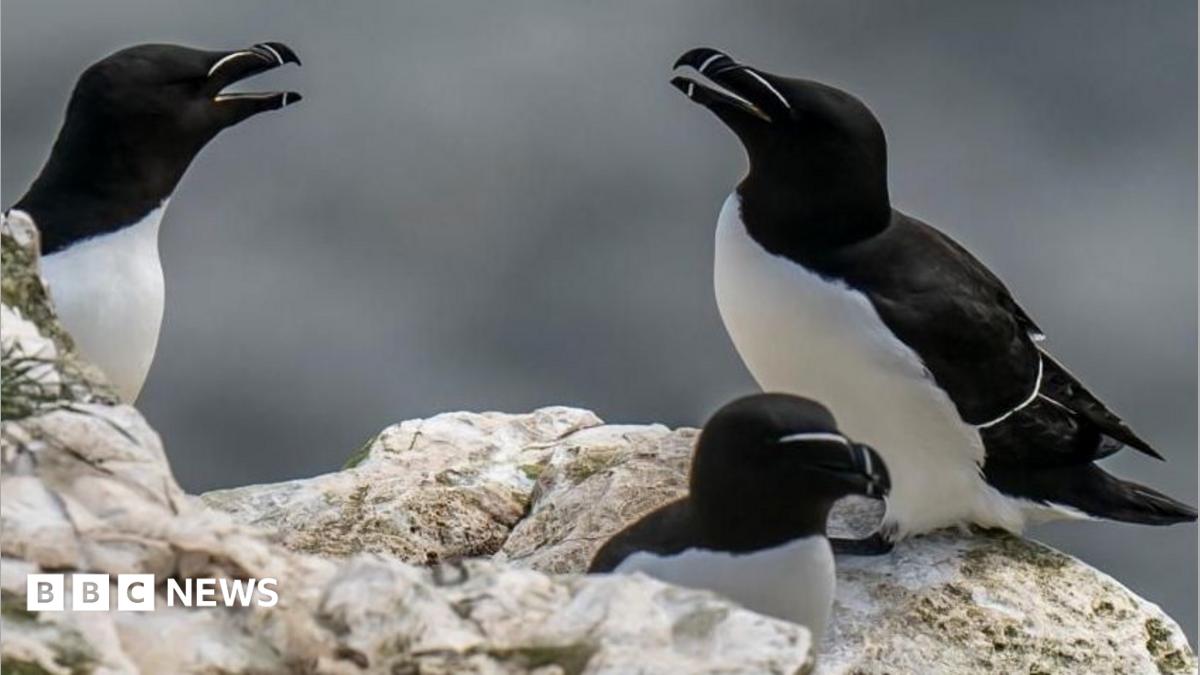
A “floating scarecrow” has helped stop endangered seabirds such as guillemots and razorbill getting caught in fishing nets, researchers have said.
Scientists from Fishtek Marine, based in Devon, developed the device known as a Looming Eye Buoy with the RSPB before trialling it off the Cornish coast.
The research, analysed by the University of Exeter, suggested the scarecrow device, which has a spinning top using an animated eye effect to scare birds, decreased the risk of rare birds being caught in nets by about two-thirds.
Scientists said simple deterrents could have a positive impact on species like guillemots and razorbill which are on the Amber List of UK Birds of Conservation Concern.
The accidental capture and death of animals not being targeted by fishermen is known as bycatch and Fishtek Marine said an estimated 95,000 diving seabirds are caught in nets and drown across Europe.
Along with the LEB, researchers also deployed a commercially available kite in the shape of a bird of prey, known as a “scarybird kite”.
Following the two-year trial which involved 10 Cornish fishermen, Fishtek Marine said the research showed the chances of birds being caught were reduced by 59% using LEBs and by 71% using kites.