
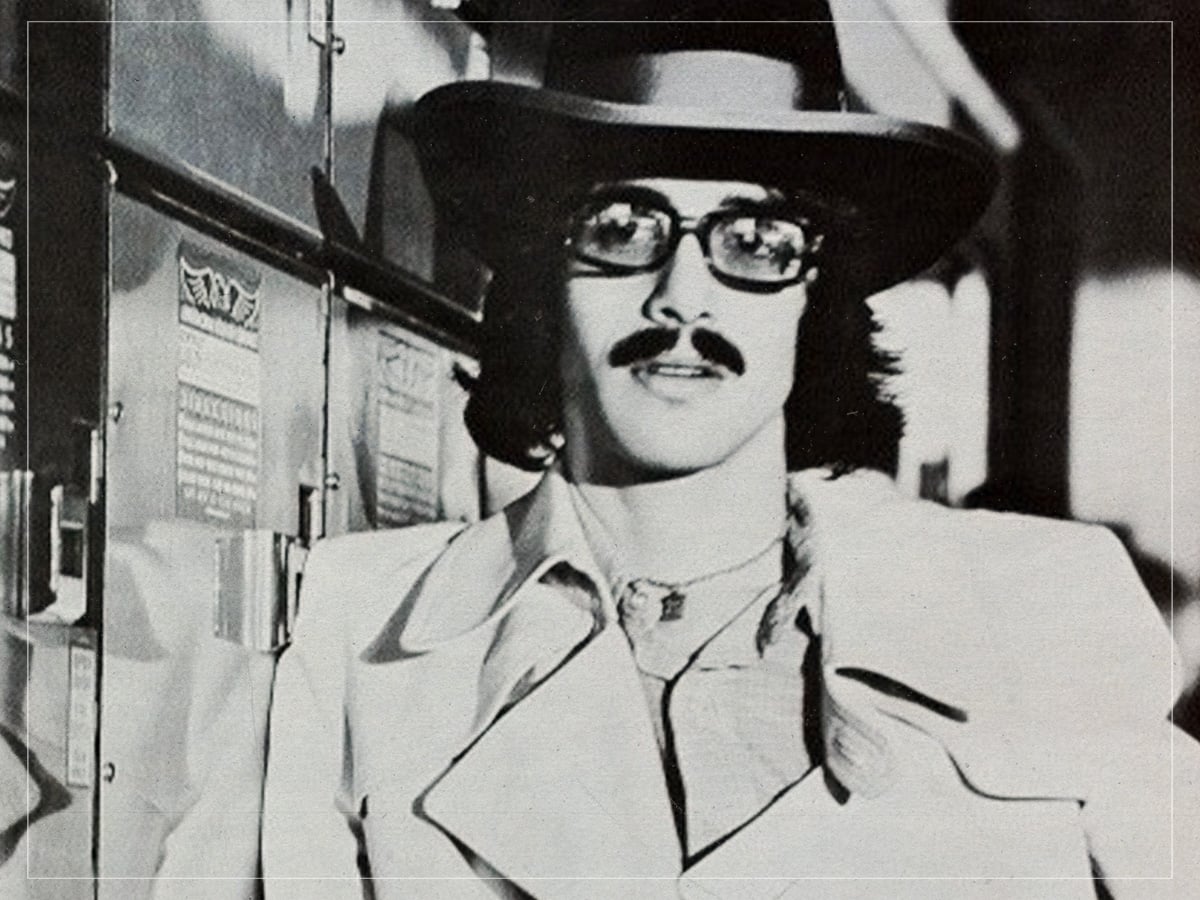
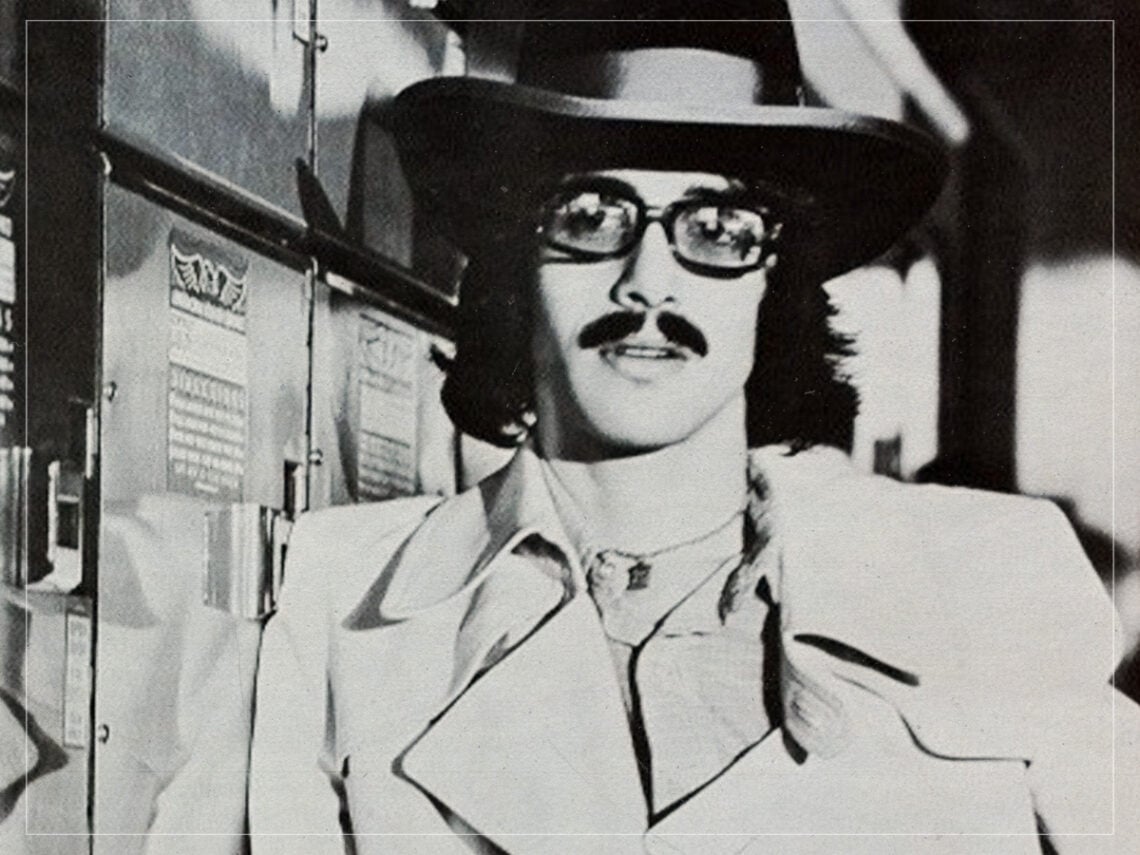
Credit: Far Out / Album Sleeve
Mon 5 October 2026 0:30, UK
If I were to make a list of all the legendary names that Van Dyke Parks has played, performed or recorded with, I’d hit my word count before I was even able to write much else about him so here’s a condensed list of names of artists that you’ll have heard his work with: The Beach Boys, Randy Newman, Gordon Lightfoot, Harry Nilsson, Little Feat, Fiona Apple, Carly Simon, Bonnie Raitt, Judy Collins and Bob Dylan.
Just like Dan Penn and Spooner Oldham, or Ry Cooder and Jim Keltner, Van Dyke Parks is one of the most unheralded geniuses in modern music history. A multi-instrumentalist, songwriter, producer and orchestral arranger, Parks even has timeless film scores and songs to his name, including things as iconic as ‘The Bare Necessities’ from The Jungle Book.
And the extreme versatility, ingenuity and adaptability that Van Dyke Parks could bring to every session not only made him an obviously attractive collaborator to other similarly ranging and ambitious writers, but also comes through in his own unusual solo works, as well.
But sometimes his work with other people could overlap or intrude upon the time he could have been spending making more of those solo works, or more of a name of his own, instead.
Having collaborated with an array of session musicians in expanding on even Phil Spector’s Wall of Sound production style with the heralded Pet Sounds, Brian Wilson was beginning to withdraw more and more from his Beach Boy bandmates and soon turned to Van Dyke Parks to help with his next project, Smile.
Conceived as an album that would not only build on that success, but which would also examine the American land and soundscapes, reject the rising rock trends and invading British pretenders and wrestle back this American music from the influence of The Beatles and Beatlemaniacs. Wilson began to suggest that Smile was to be a “teenage symphony to God”, and soon such grand and sprawling ambitions led to similarly grand and sprawling sessions. Over 80 of them, where the pair cut more than 50 hours of sounds that would need to be moulded together and trimmed down to a more manageable amount of music.
Perhaps sensing the project was getting away from everybody involved, Parks parted ways with Wilson and Smile in order to focus on the recording of his own debut album, Song Cycle, which itself ended up navigating a similar series of themes and sounds as the unfinished album he was leaving behind did.
Further reading: From The Vault
And, though he was leaving Wilson behind to take up work on his own album, Parks was bringing some of the Beach Boys’ frontman’s legendary perfectionism and fastidiousness to his own work, as well, meaning that Song Cycle had a similarly long studio gestation.
Inspired by watching Wilson work – painstakingly re-recording take after take, spending day after day and week after week on a single sound, syllable, line or lyric – Parks has described his own studio practices as being like “the quick brown fox jumps over the lazy dog”.
Having employed the services of over 50 musicians and taking over seven months to finalise recordings, Song Cycle cost Parks’ Warner Bros label almost $80,000 in fees, making it one of the most expensive albums ever made at that point.
On hearing the final mix, Ostin felt the record had been both worth the outlay and worth the wait, saying later that on hearing it he “thought we had the next Beatles”. The Warner Bros marketing department said something similar in their publicity materials, and compared the debuting artist to Dylan, as well.
Maybe appropriately so, as, through the techniques he’d learned from writing with Brian Wilson and his early aspirations to bring the studio stylings and techniques of the Beatles to a more authentically American album (and not to mention through his collaborations with a young Randy Newman on the record), Van Dyke Parks’ debut Song Cycle sounds at times like what you’d get if were to smash Sgt Pepper’s Lonely Hearts Club Band and The Basement Tapes together (while sounding at others like the kinds of nightmares you’d have if you took the wrong turn down Tin Pan Alley).
Receiving generally favourable reviews from critics but making almost no impact whatsoever on the general public, Song Cycle didn’t bring Mo Oston or Warner Bros the kind of financial return you’d expect for an album by The Next Beatles. In fact, it didn’t bring them any kind of financial return at all, and they even went on to take out a full-page advert in a music trade magazine under the banner “How we lost $35,509.50 on ‘The Album of the Year’ (Dammit)”.
Because he is an artist and not a businessman, Van Dyke Parks has stood by his work and justified the outlay, though, telling Bill Kopp in 2012 that “It was a matter of public record at the time that Brian spent $62,000 on production of one song – ‘Good Vibrations’ – but Warner Brothers still made their crocodile tears about how much I had cost them and how little they gained from me. I would say without hesitancy that the exact opposite is true. Warners got a vast amount of information from me in collateral areas of production. Warner Brothers lost money many times over with Song Cycle, but they also profited beyond explanation.”
And, as well as profiting from his studio and production innovations when making the album, they also, despite all the noise, profited financially on the album, as well, which broke even three years after it came out and began.
ADD AS A PREFERRED SOURCE ON GOOGLE  The Far Out Classic Rock Newsletter
All the latest Classic Rock content from the independent voice of culture.
Straight to your inbox.