
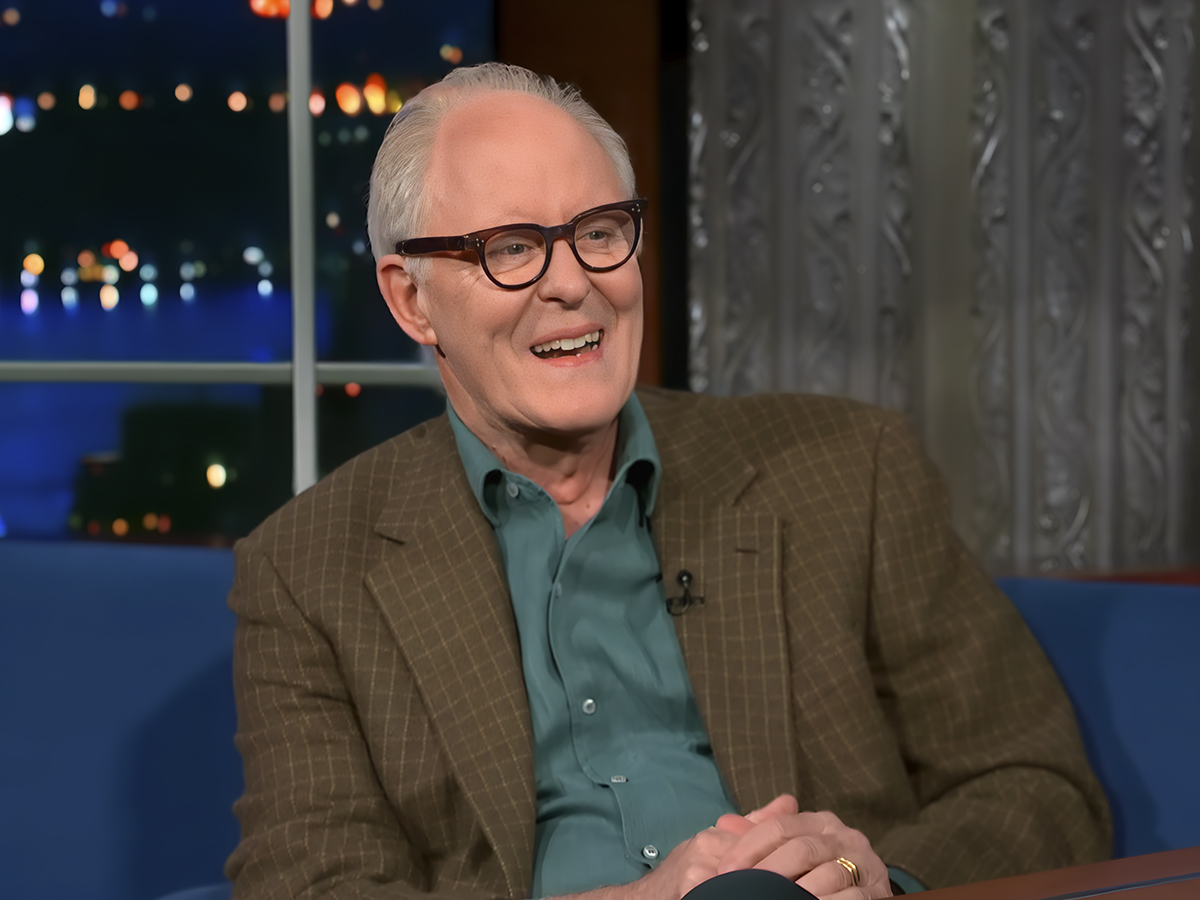
(Credits: Far Out / YouTube Still)
Tue 19 August 2025 22:30, UK
To say John Lithgow‘s career started on screen is to not only discredit his work as a professional treading the boards of theatres across the country in the 1970s, but his heritage, too.
The star was born to be an actor. The son of a father who was a theatre producer and a mother who was an actor, it seemed like Lithgow’s journey had already begun before conception.
Credits began rolling in during the decade for Lithgow, who would not only be prevalent in theatre, performing titles like Comedians and Hamlet, but also found his way onto television. Add to this a few film appearances, and as the 1980s approached, it seemed like the imposing figure of John Lithgow would be one we’d be getting used to for a long time to come.
In 1979, Lithgow grabbed a role in All That Jazz, marrying his love of the stage with his desire to be under the studio lights. But that small part would snowball into a more handsome role in Blow Out two years later as Lithgow took on the murderous role of Burke alongside John Travolta. But it would be the following years as a less conventional character that Lithgow would arguably begin his career in earnest.
The World According to Garp isn’t the most well-known effort of Lithgow or co-star Robin Williams’ careers, but it is one of their most important. A comedy drama drenched in the ideas of feminism, sexism and the brutality of sexual assault, the movie somehow manages to address such issues with a degree of levity that feels almost unnatural. Much of that is down to Lithgow’s delicately poised portrayal of transgender former NFL player Robert Muldoon, the best friend to Williams’ Garp.
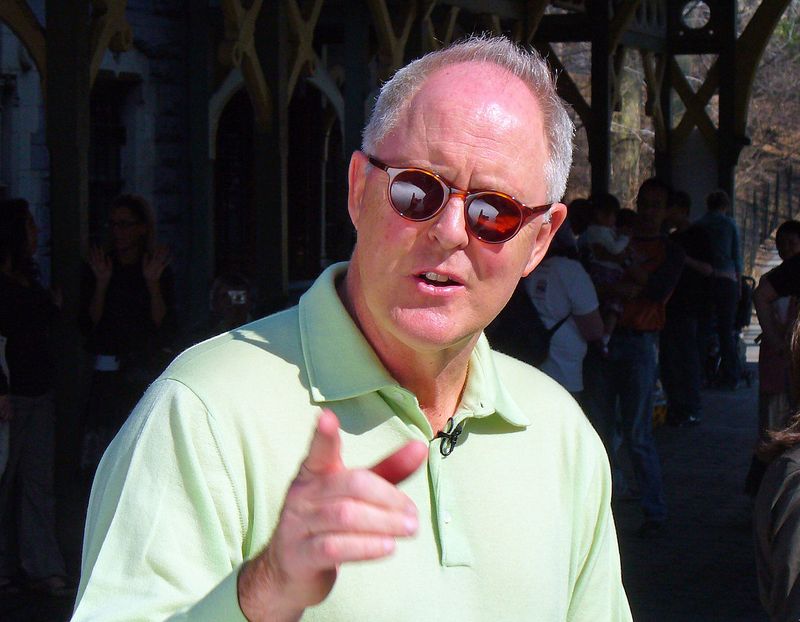 John Lithgow (Credit: David Shankbone)
The novel was the first introduction Lithgow had to his defining character, as he told GQ: “I had read the novel, like everybody else. It never occurred to me this would be a movie.” A lot of that trepidation is the very troubling scenes surrounding sexual assault, which are only really mentioned in the movie but are graphically depicted in the novel. “It struck me as a book you couldn’t possibly make a movie out of, particularly because of one absolutely key scene. I thought you just can’t do this in a movie.”
However, director George Roy Hill felt the story needed to be told and the “radical” decision to pitch Lithgow as Roberta was another move that nearly didn’t happen. “It was a very radical choice to make the essential friend of the hero a ‘transsexual’ as they were referred to then. Interestingly enough, when I first met with George Hill, to read for him, he ruled me out immediately for being too tall.”
“He said, ‘It just won’t work, it will be pushing it too much.’” Considering the time and the tolerances in society, Hill might have been correct. Thankfully, though, he came to his senses, as Lithgow continued: “Eight months passed, I was in despair because I thought I was the only one to play this part. I went back and I screen tested for it, with three other actors — among them Jeff Daniels — just by chance I had read this book called Conundrum, the memoir of Jan Morris, a travel writer who had undergone trans surgery.”
The book had given the actor, if not a solid perspective, then a slew of anecdotes that put him over the edge. “I spout the things that I remembered from reading this book two years before. And he was like ‘My God! You New York actors, you do so much research.’ Not at all.”
Sadly, for Lithgow, the part could have had even more sensitivity. John Irving was first asked to write the screenplay for the movie and had a different idea for Roberta. “It was the early 1980s when George Roy Hill asked me if I would write the screenplay for Garp, but I knew we didn’t see eye to eye about Roberta. George was a World War II guy; he couldn’t see past the comedic part of a transgender woman who’d been an NFL player,” he explained.
“A pity, because John Lithgow, who was cast as Roberta in the film, could have played her as I wrote her,” admitted Irving. “Roberta is a force of normality in an otherwise extreme world; she is the only character who loves Garp and his mother equally, the only character who isn’t in a rage about someone or something. I declined to write the Garp script because George wouldn’t do Roberta my way.”
Still, Lithgow managed to deliver almost from day one. “I remember the first scene I shot, was a scene in which I as Roberta was tied to a tree and Garp and his kids were clowning around with me. I was playing the damsel in distress,” the actor reminisced. But as they rehearsed, Lithgow was worried he had overstepped the mark, and asked Hill for feedback. “My heart sank into my stomach,” he confessed when Hill agreed to offer him some constructive criticism, “He roared with laughter… it was fine. That was the last direction he ever gave me.”
A movie so poignantly decorated with serious issues, approached with a humanity that very few actors and directors have got right since, Lithgow agrees, “This is a movie for right now.” From this movie onward, Lithgow’s career was set.
Related Topics