
From April 2030, the triple lock will change to a double lock, rising every year by inflation or by the 2.5% figure.
Mr Swinney claimed this meant pensions would be £4 billion lower in Scotland by 2050 than they would have been had the triple lock remained in place.
The Scottish Government said the figure came from a projected population share of the savings made at a UK level, though the estimate did not take into account consequentials which would come to Scotland as a result of increased spending on social care.
The First Minister was accused of misleading Parliament by Scottish Conservative leader Russell Findlay.
Mr Findlay said the comment was “inaccurate and irresponsible”, and was “inevitably causing concern to Scottish pensioners”.
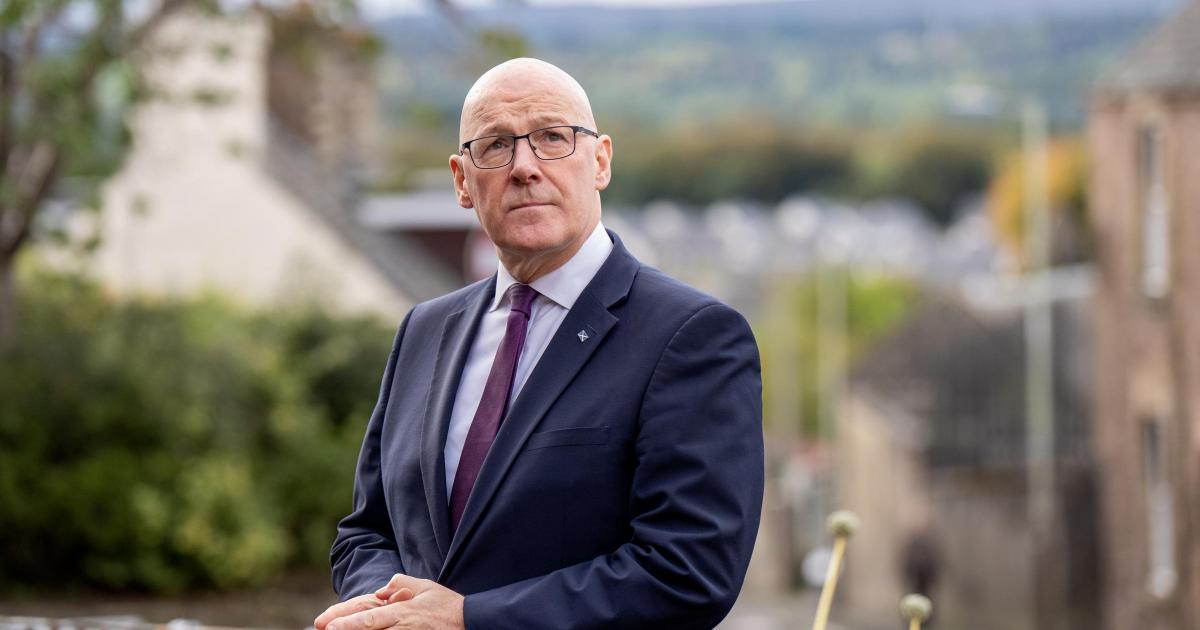
Speaking to the Press Association during an event in Perth and Kinross on Monday, the First Minister said: “I’ve got nothing to explain to Parliament about this issue.
“Scottish pensioners were led to believe there was a triple lock going to be in place and that gave them legitimate expectations about the level of their pension.
“They’re going to lose out on that because Andy Burnham is removing the triple lock.
“That’s the hard reality that pensioners in Scotland are having to face up to, having been promised in 2014 that their pensions were safe.
“Their pensions have been undermined by the Labour Government.”
Pressed on the changes not meaning Scots will “lose” their pensions, as he suggested to Mr Findlay, the First Minister said: “The Treasury have set out the amount by which pensions will not increase, the amount by which people will lose out in the years to come.
“That’s what I’ve set out to Parliament.
“Now, if people don’t like the uncomfortable reality of removing the triple lock and undermining the pension and the legitimate expectations that were raised by the No campaign in 2014 – pensions would increase by a certain amount over the course of the future if people voted no – that’s the hard reality I’m pointing out to people in Scotland today.”
Pushed on the potential for an increase in funding through Barnett consequentials as a result of more spending on social care in England, the First Minister said he cannot be so sure.
“None of us can foresee what the implications of these changes will be for the block grant in Scotland, because we’ve seen in recent years the block grant being reduced because of negative consequentials,” he said.
“Nobody can tell me that that money is going to result in a rise in the Scottish Government’s budget.”
“Obviously, it’s important that I work constructively with the Prime Minister where I can,” he added. “But there’s obviously issues we’re going to disagree upon, and the triple lock is one of them.”
Responding to the First Minister, Mr Findlay said: “Having alarmed Scots pensioners by peddling misinformation, John Swinney is now doubling down, which smacks of SNP arrogance.
“If he’s really so confident that he’s done nothing wrong then he should welcome an investigation by the independent advisers on the ministerial code.”
Scottish Labour MSP Claire Barker said it was “disappointing” the First Minister “decided to double down” on the claims.
“It is completely wrong for the First Minister to suggest that people in Scotland could lose their pensions. This just amounts to scaremongering,” she said.
“Andy Burnham and Michael Marra have both spoken about the need to do politics differently.
“It is therefore unfortunate that John Swinney is choosing to push falsehoods and misinformation as the public deserve honesty from politicians.
“On an issue as important as pensions, we should have a grown-up debate, not childish politicking from the SNP which only adds to people’s worry about the cost of living.
“If the First Minister has respect for the Scottish Parliament, he will reflect on his remarks and take the first opportunity to correct the record.”
Meanwhile, Sam Taylor, from the These Islands thinktank, has released correspondence with the government over comments made by the First Minister last year.
On November 6, Mr Swinney told MSPs that “The independent Scottish Fiscal Commission (SFC) has confirmed that the majority of taxpayers in Scotland are set to pay less than they would elsewhere in the United Kingdom this year. So that’s the judgement of the independent Scottish Fiscal Commission.”
However, those were estimates rather than actual figures and outturn data for previous years showed that the majority of Scottish taxpayers paid more income tax than they would have in the rest of the UK.
Mr Taylor said he wrote to Mr Swinney after meeting John Ireland, chief executive of the SFC, who had said he raised the issue with officials.
Mr Taylor then submitted a Freedom of Information request to the government to see how officials had responded to Mr Ireland.
The advice says officials followed up with Mr Ireland, who “is not pressing for a correction to the official record” but stressed the importance of distinguishing between the SFC’s independent forecasts and how they are used and interpreted by government.
“This is the integrity of the man,” Mr Taylor tweeted. “John Swinney knew he had misled parliament, but because he was able to get away with it, did nothing to correct the Official Report.”