
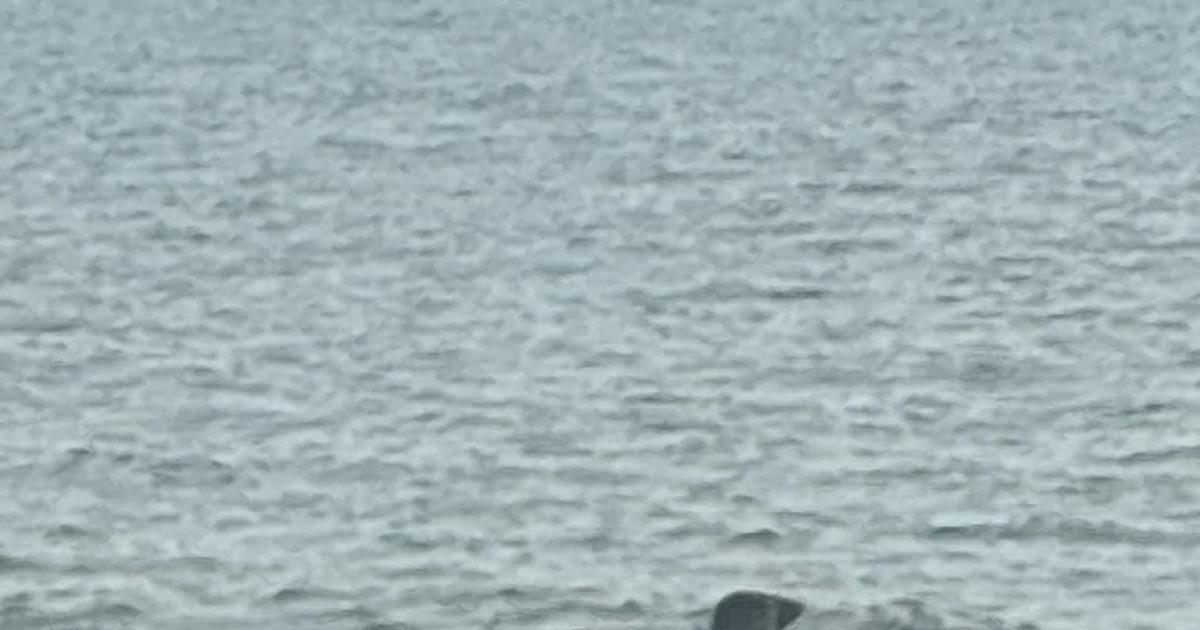
Somerford carer Carley King, 43, spotted a seal bobbing beside swimmers near an Avon Beach hut at 3.45pm on Saturday, October 3.
About 20 people watched as the seal was “going between the groins and going under water playing to the crowd”.
Another swimmer said, “it was there, amazing”, while her son was “really excited to tell his schoolmates”.
Carley, who lives nearby, was delighted by the seal’s arrival.
At about 7pm the same day, 22-year-old classic car worker Dylan Byrom spotted a seal near Playgolf Bournemouth, close to his home beside the River Stour.
Dylan said: “It was so awesome, I was just going for a walk with my girlfriend Daniella, and it kept by the weir and didn’t go anywhere else.”
He added: “It’s funny because when we go for walks at the golf course, we always see magpies and as we started the walk, we came across loads of magpies, and then 20 minutes later we saw the seal.
“Usually we walk a certain direction but this time we walked down the river to get our steps in and came across this amazing experience”.
Daniella was amazed too, saying: “It was so cool because I had no idea they explore the River Stour, and to happen literally across the road from where we live makes it seem even more special.”
Dorset Wildlife Trust said seals coming ashore for “a spot of sunbathing” is “completely normal”.
Grey and common (harbour) seals are native to UK waters, found in Dorset and capable of travelling hundreds of kilometres at sea.
The trust said: “Seals are very mobile marine mammals and travel hundreds of kilometres, but it is completely normal for them to come ashore to rest so they can recover lost energy, digest their food and they will also haul out for longer periods during their moulting season.”
The trust urged the public to give resting seals plenty of space, adding: “It’s important that they are given plenty of space to rest without being disturbed.”
The trust funds seal research and habitat protection through digital seal adoptions, while identifying pollution, marine litter and human disturbance as threats.