
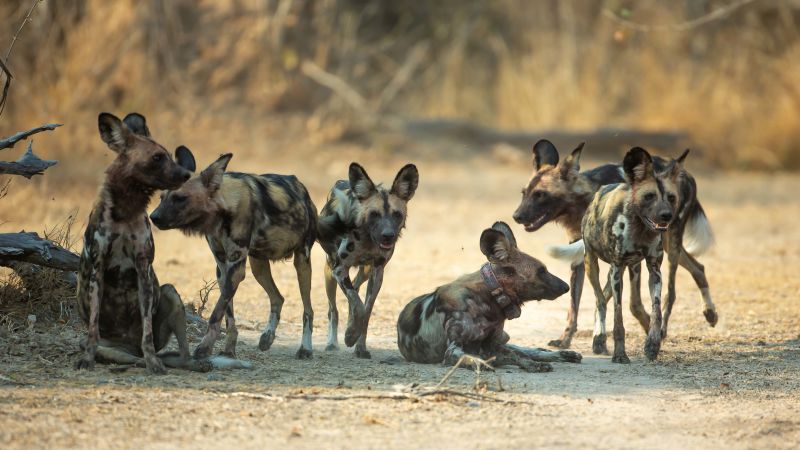
Worn down by the endless swiping on apps, it’s easy to understand why many on the hunt for love are deeply disillusioned by the state of modern dating. Yet one real-life epic love story has proven that romance is still very much alive, kicking and — in this case — tail wagging.
Driven by the desire for a partner, three male African wild dogs left the safety of their pack in Zambia to embark upon a 2,563-mile odyssey fraught with danger, to find mates. Crossing crocodile-infested rivers while evading the threat of lions and humans alike, the young brothers covered a distance roughly 249 miles shy of the width of the United States in under nine months.
When the trek finally culminated in April, the wild dogs set a record for the longest documented single land journey by any animal on the continent, rewriting our understanding of the connectivity between faraway populations of an intensely social species.
Some 9,300 miles away at Montana State University, Scott Creel, a professor of conservation biology and ecology, followed the trio’s journey — beamed via GPS tracking collars — on his laptop.
“You check every day, and you’re like, ‘Yeah, this is extraordinary,’” Creel, who co-authored a study on their journey, published last month in The Scientific Naturalist, told CNN.
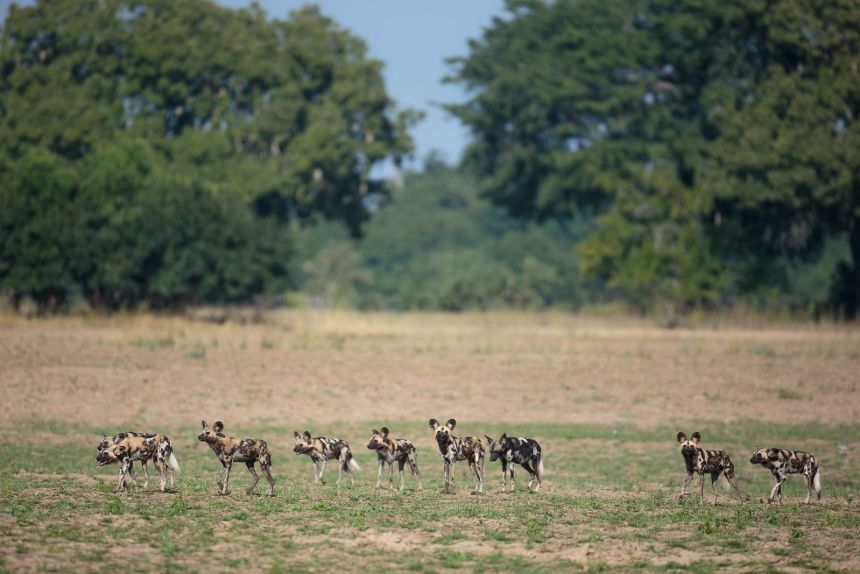
With fewer than 700 packs and under 1,700 mature individuals left globally, according to the International Union for Conservation of Nature (IUCN), African wild dogs are classified as endangered and are proving increasingly difficult for researchers to find.
Their behavior complicates the challenge; home ranges span hundreds of square miles, spacing packs out across the continent, and breeding is typically limited to a single dominant individual from each sex within each pack.
Eventually, the rest of the pack must make a choice: stick around and wait for the chance to become the alpha male or female, potentially when one of the head pair dies, or break from the group in search of a mate to start a new family in a process known as dispersal.
On August 6, 2025, the trio of three-year-old males, born and raised among the Mayukuyuku pack in western Zambia’s Kafue National Park, chose option two.
“If there’s no opportunities amongst the packs that are their immediate neighbors, they just sort of pick a direction and go,” explained Creel.
“Then they’re just rolling with the punches.”
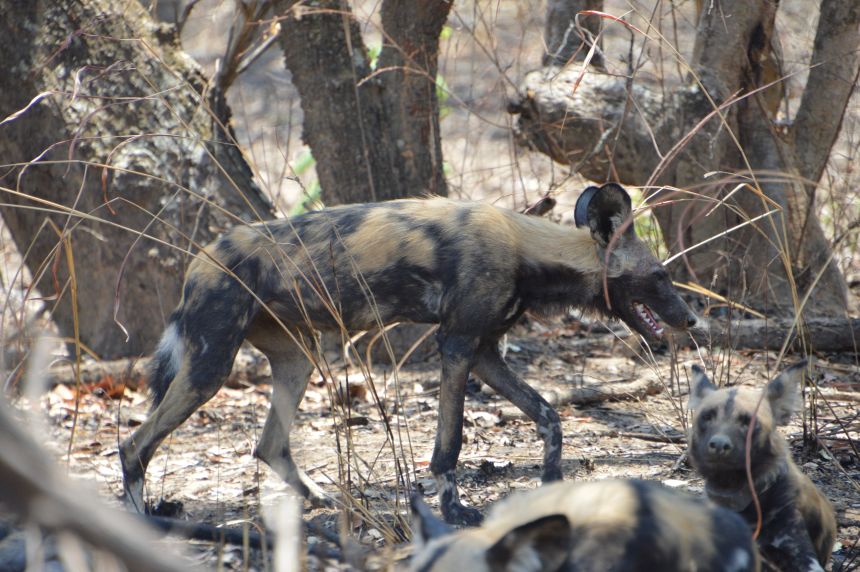
The brothers were three of more than 500 African wild dogs from over 50 packs that Creel, in collaboration with the Zambian Carnivore Programme, spent the past 16 years studying via satellite GPS radio collars that track the animals’ movements across their entire life.
Their departure did not come as a shock. Three of 19 pups to survive to adulthood, the males’ chances of breeding were low in a large pack and four of their agemate sisters had dispersed two weeks prior.
Yet the nature and scale of the subsequent journey was unprecedented. Within a month, the males had ventured hundreds of miles toward the country’s urban center, swiftly doubling back on each occasion they reached the outskirts of major cities like Kabwe.
When leaving the national parks and other protected areas to enter regions with a higher human footprint, the dogs’ movement patterns revealed a dramatic shift that Creel hypothesizes as “travel mode.” A moderate balance of moving, resting, hunting was replaced by an accelerated linear approach adopted to speed around potential danger, a behavior which Creel believes evolved from responses to run-ins with lions.
The males reunited with their sisters — by then down to three — midway through September, almost 750 miles from their starting point in the northerly Copperbelt Province, a testament to the dogs’ ability to locate each other via scent.
After a day with their siblings, the trio spent the next six months on a winding route westward before reaching a forested region in eastern Zambia Luangwa Valley, home to one of the largest African wild dog populations on the continent, where they remained. Creel believes it is likely the dogs connected with females, though the difficulty of accessing the highly remote area means research teams have been unable to conclusively verify the union.
Yet the long-range treks made by the Mayukuyuku siblings and other tracked wild dogs is ample cause for conservationists to be excited. Movements of dispersed, collared individuals have connected all of Zambia’s resident wild dog populations, spanning seven national parks.
What’s more, there are examples of the species’ connectivity extending to the broader sub-Saharan region. The sisters crossed into Mozambique and since then, another group of Mayukuyuku dispersers crossed north into the Democratic Republic of Congo, while a group from a different pack headed east into Malawi.
It is a “mind-boggling” level of linkage that Creel “would not have dreamed of” still enduring today when he began studying the dogs, and a source of optimism that their continued ability to make new connections — despite the distances and human populations in between — means there is hope for their dwindling numbers to rise naturally.
“They’ll only recover if they’re connected,” said Creel.
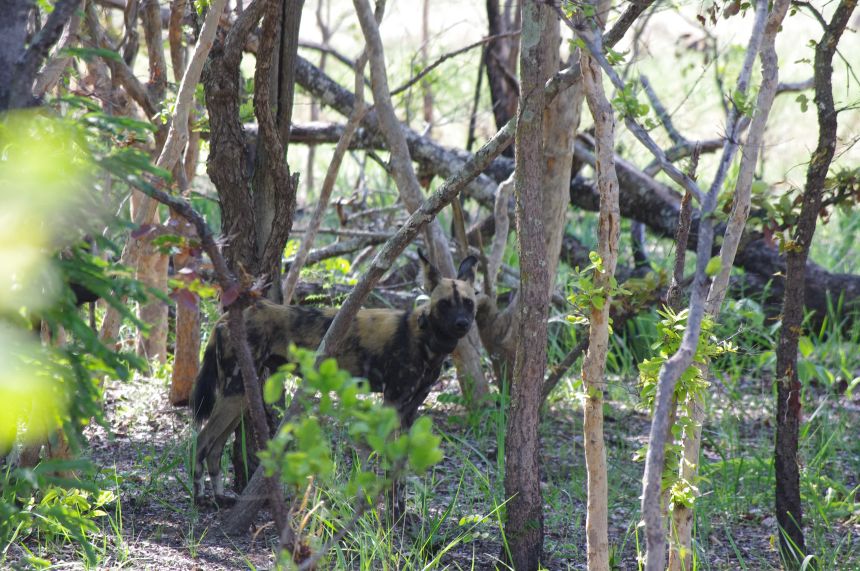
That is Creel’s “glass half full” takeaway from the long-distance wild dog journeys. The other side of the story is written in blood.
A few weeks after reuniting with the brothers, one of the three surviving Mayukuyuku females was caught in a wire snare while traversing through a forest. Anchored to trees, the noose is designed to catch an animal and then tighten, often inflicting a “horror show” of injuries in the process as the abrasive wire bites into flesh as deep as three inches, Creel explained.
The snares are not intended to catch African wild dogs, but are set by bushmeat poachers in pursuit of large herbivores like wildebeest or zebra. Even when wild dogs and lions manage to bite their way free, many still succumb to their wounds.
“You set it, and then whoever walks through the gap in the bushes next is who dies,” Creel said.
“If you see the damage that they do, it’s very hard not to be engaged,” he added. “I can’t imagine how painful it is.”
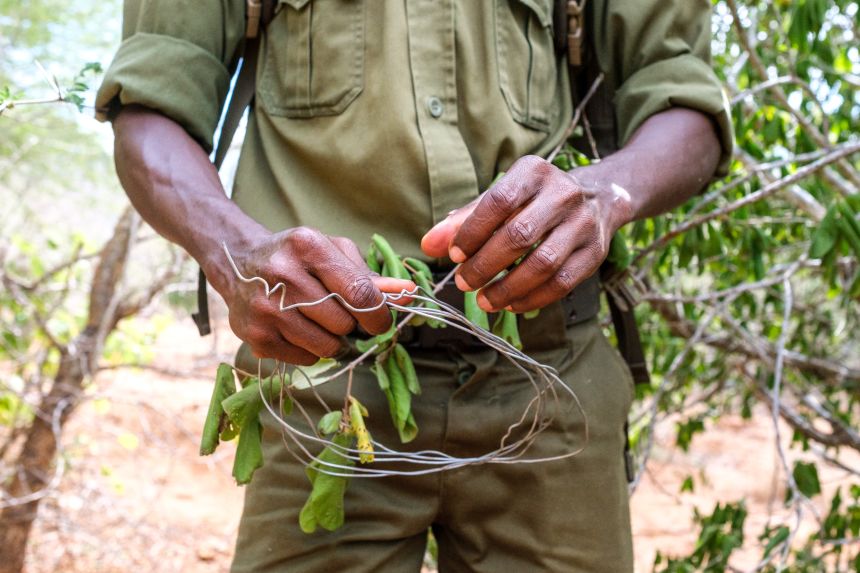
With wild dogs unable to recognize wire snares (some dogs have been snared as often as four times) and reluctant to leave behind fallen packmates, tracking data showed the two other Mayukuyuku sisters returning to their mortally wounded sibling before one of the pair stopped moving for good. A GPS collar, cut off by a knife, was later found at the site, leading researchers to conclude that she, too, had died in a snare. With the remaining sister not wearing a collar, her fate is unknown.
It is an all too familiar tragedy for Creel. When he started working in Tanzania almost four decades ago, he would head out with his wife and remove as many as 500 snares in a matter of days. He believes the issue has intensified since then, and fears the ramifications if solutions aren’t found to a “complicated problem.”
“If we don’t get on top of that, there’ll be nothing left to save,” he said.
“People don’t snare because it’s a fun hobby. They do it because they’re poor people living at the end of a long dirt road without a lot of options. So I’m not talking just about law enforcement. I’m also talking about finding ways to make it unnecessary.”
The greatest ramification of snares for wild dogs is not the direct threat to them, but to their prey. The decline of large herbivore populations across sub-Saharan Africa due to bushmeat poaching is forcing the canines to work harder and roam farther in search of food, a 2025 research paper co-authored by Creel found, in turn increasing their risk of becoming ensnared.
It is sobering reality check for anyone romanticizing the wild dogs’ journey like it’s a Disney movie. Yet Creel does not dismiss people who anthropomorphize these animals; he remains deeply invested in their survival.
“It’s pretty hard not to have some empathy for what a difficult task these animals face in the world as we’ve made it,” he said. “There’s 8.3 billion of us, but we’re sharing the world with almost 8 million other species. I care a lot about that.”