
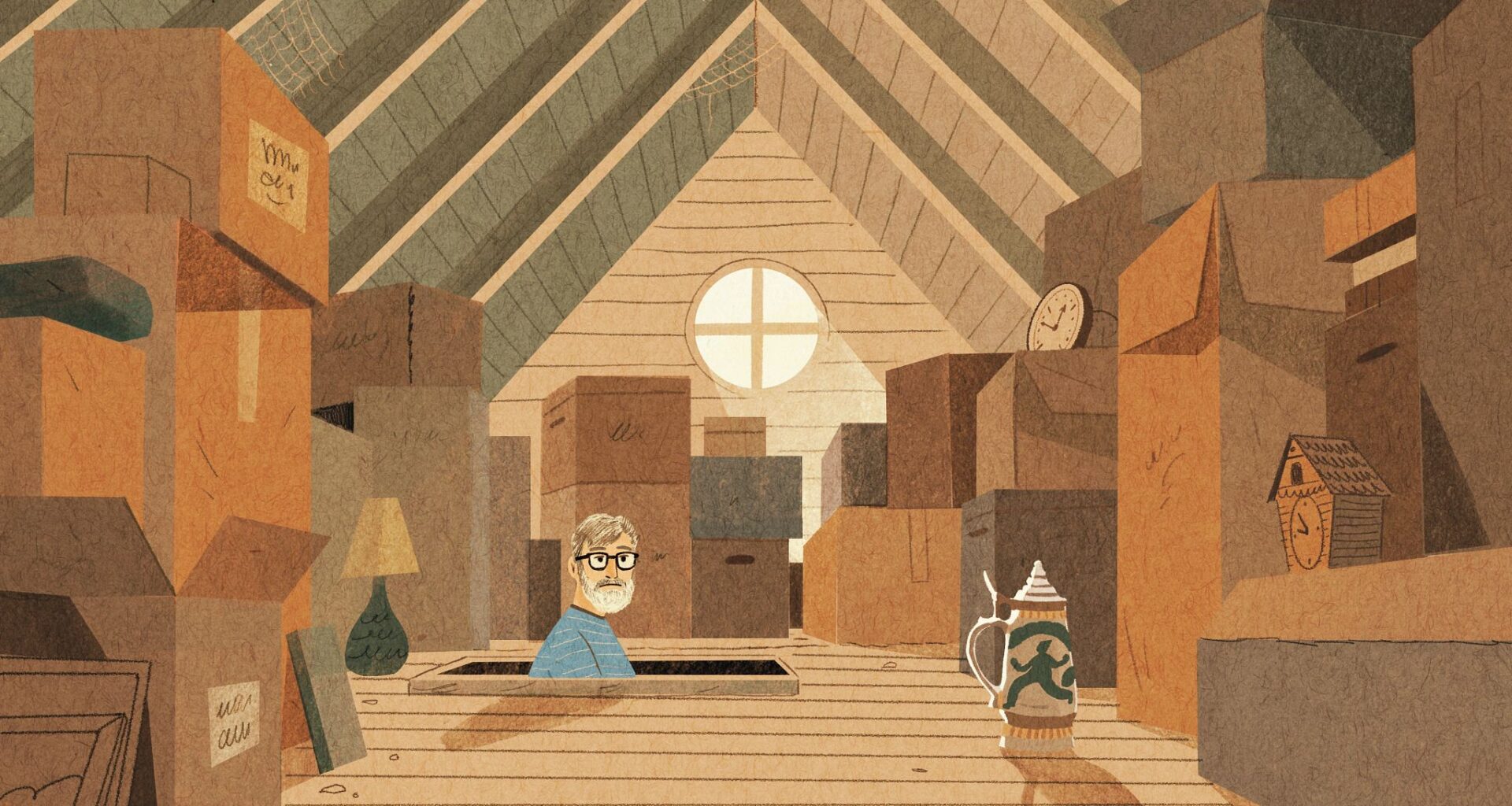
Ekerdt offered a few suggestions for adult children facing an advancing wall of family possessions.
1. Ask for the story, even if you don’t want the thing
If your parents are determined to give you something, ask them why it matters. Where did it come from? Who owned it first? What do they remember when they look at it?
Ekerdt said this would likely “gratify them enormously.” By listening, you’re allowing them to pass along the meaning, which may be what they wanted to give you in the first place. You can photograph the object, write down its history or record your parents talking about it. The beer stein may eventually disappear, but the story doesn’t have to.
It occurred to me that Kelly’s father had spent years assembling this collection and that I’d responded to it largely as a storage problem. I knew what the steins looked like, but almost nothing about why he’d wanted them. Before deciding their fate, I could at least give him the pleasure of remembering out loud.
2. Offer to help with the decision, not just accept the cargo
Parents may push possessions toward their children because the alternatives are exhausting. Every object that comes into the house must eventually leave it, and somebody has to decide whether it should be sold, donated, recycled or thrown away.
You can help by finding an auction house, donating what’s usable or bringing in someone to run an estate sale. You’ll also need to break the news that nobody is getting rich off those commemorative plates.
It can be emotionally exhausting, but it’s more useful than relocating everything to another storage unit, where the family continues paying rent to avoid making a decision.
3. Sometimes the kindest response is to ‘shut up and take it’
Most decluttering experts warn against letting unwanted possessions cross your threshold. Ekerdt looks at it differently. Once an older parent has begun seriously downsizing, accepting an object can be an act of generosity in itself.
“Just shut up and take it,” he says. “Affirm the giver with open arms. Flip your idea of what a gift should be about. A gift isn’t always in the giving; sometimes it’s in the receiving. That is what you’re doing.”
You are relieving your parents of an immediate problem and allowing them to feel that something important has been safely placed. You don’t have to announce that you hate the lamp, have no room for the china or intend to investigate whether 100 beer steins can be donated to community theater companies staging The Sound of Music.

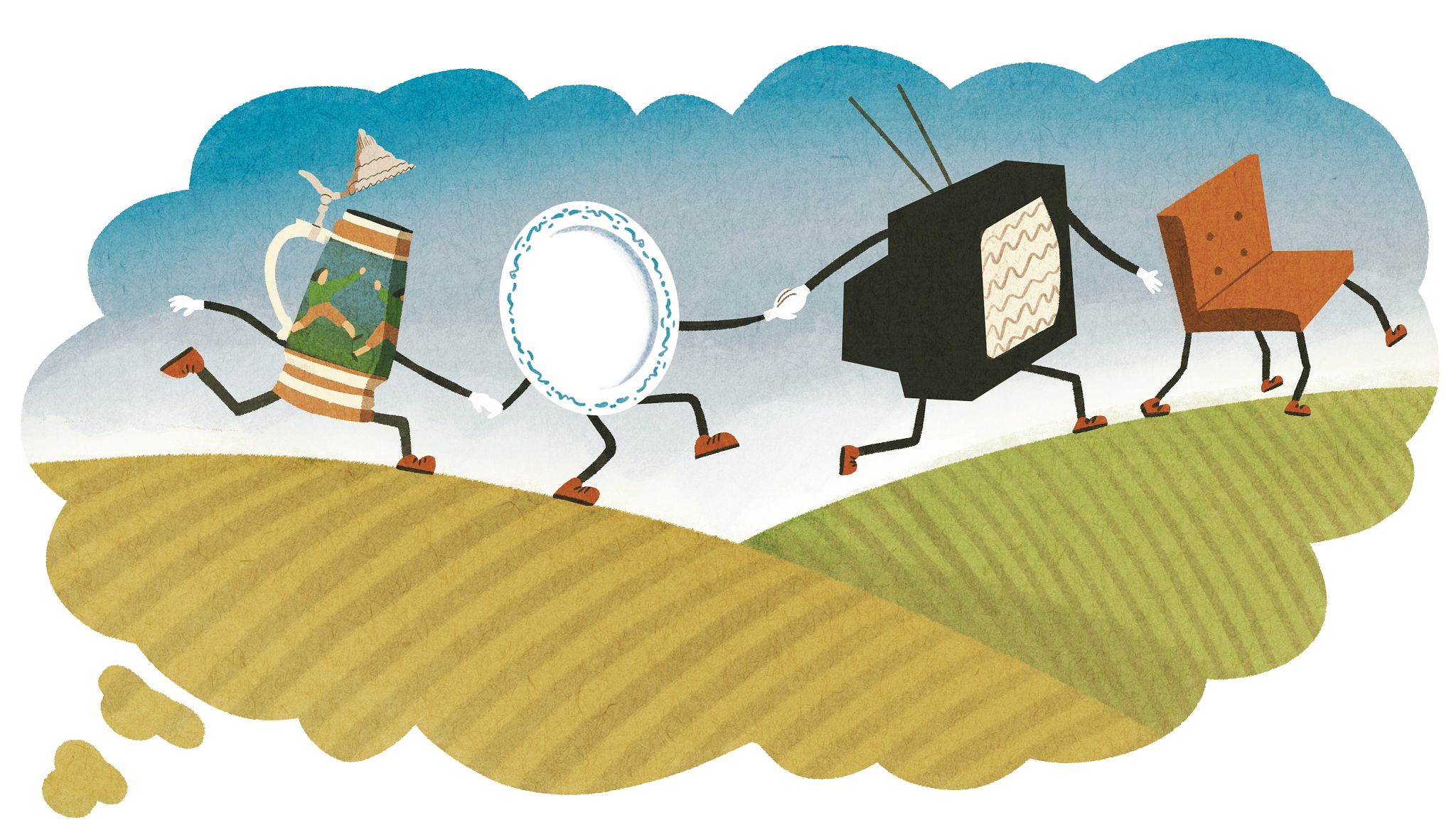
Somewhere on a lovely upstate farm, all our unwanted family heirlooms are running free together.
Ryan Johnson
Is there a rainbow bridge for your parents’ old stuff?
Your parents may already suspect that the object won’t remain in the family forever. Once it’s out of their house, says Ekerdt, they are not likely to remain fixated on its fate. If you can find another use for it, or another home, you’ve still helped.
There’s a small, loving deception involved. Taking your parents’ belongings with no intention of keeping them is the estate-planning equivalent of telling your children that the family dog has gone to live on a farm. The fantasy allows us to get through a painful transition without dwelling on what happens next.
Perhaps our parents need a farm for their possessions. Somewhere in the imagination, all the old lamps are glowing, the clocks are keeping perfect time and the beer steins are being raised nightly by grateful men in lederhosen.
The next time we visit Florida, I’m going to ask Kelly’s father to take me through the collection. I want to know which stein came first, which one is his favorite and whether any of them have a story more interesting than “I found it at a flea market.” Then Kelly and I can choose a few to keep. Our son may want one someday, though I can’t confirm this, and all available evidence suggests otherwise.
We’ll load the boxes into the car, thank Kelly’s father and let him watch his collection leave with the family. For a while, at least, the steins will have found a good home. After that, we will help them find the farm.