
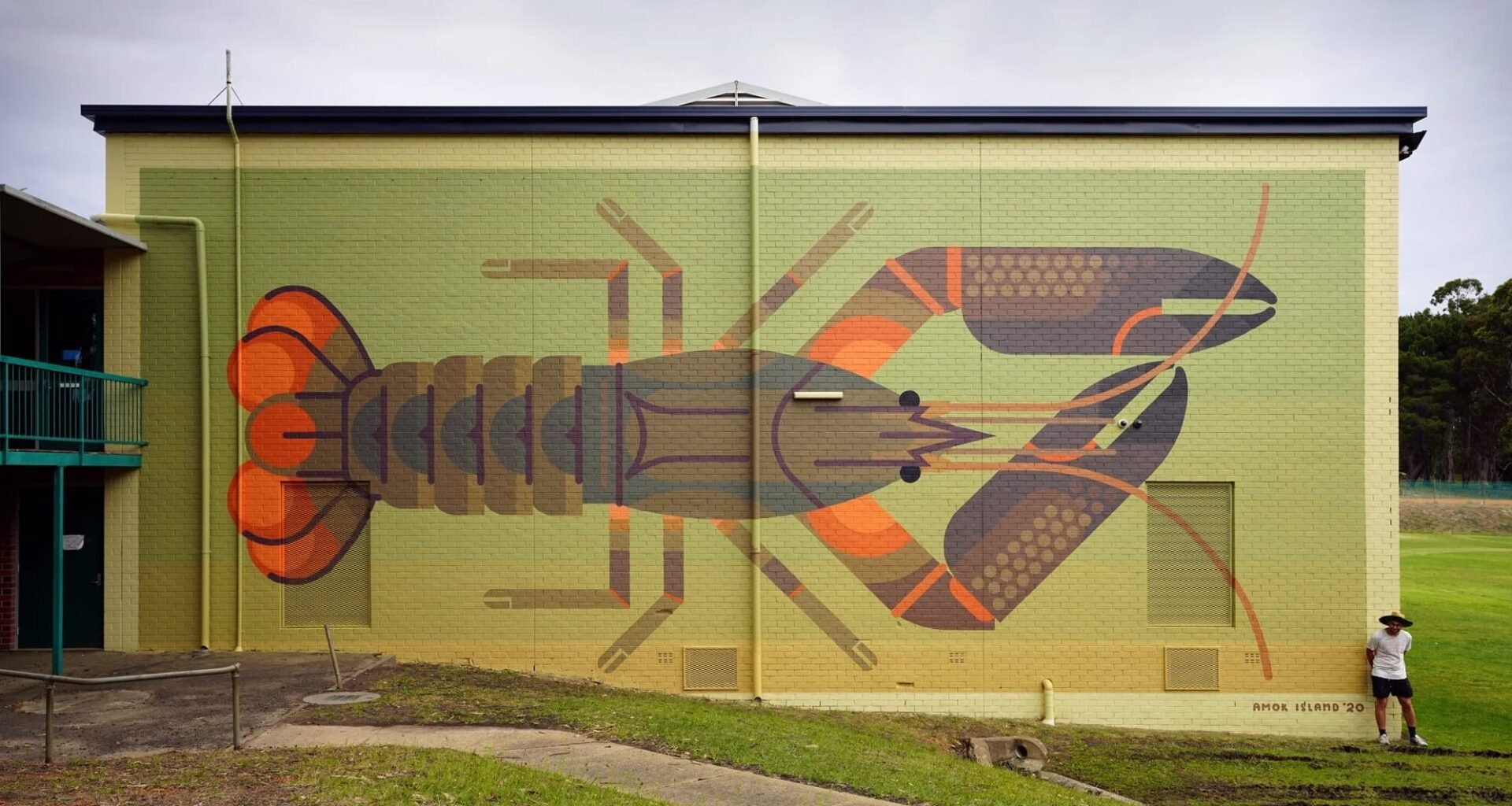
This year, an international team of scientists announced the discovery of a new species of wild cat in Bolivia, and research initiatives like Ocean Census continue to document hundreds of new marine species annually. Yet species are probably disappearing faster than we can find them. It’s difficult to gauge what goes extinct every year when we’re still so far from comprehending just how many different types of organisms there are in the first place. Possibly thousands of species disappear every year, however, and at a rate accelerated by human-caused habitat loss, pollution, and climate change.
For Amok Island, who was born in Amsterdam and is currently based in Fremantle, Western Australia, the fragility of the earth’s biodiversity plays a central role in vibrant, large-scale murals.
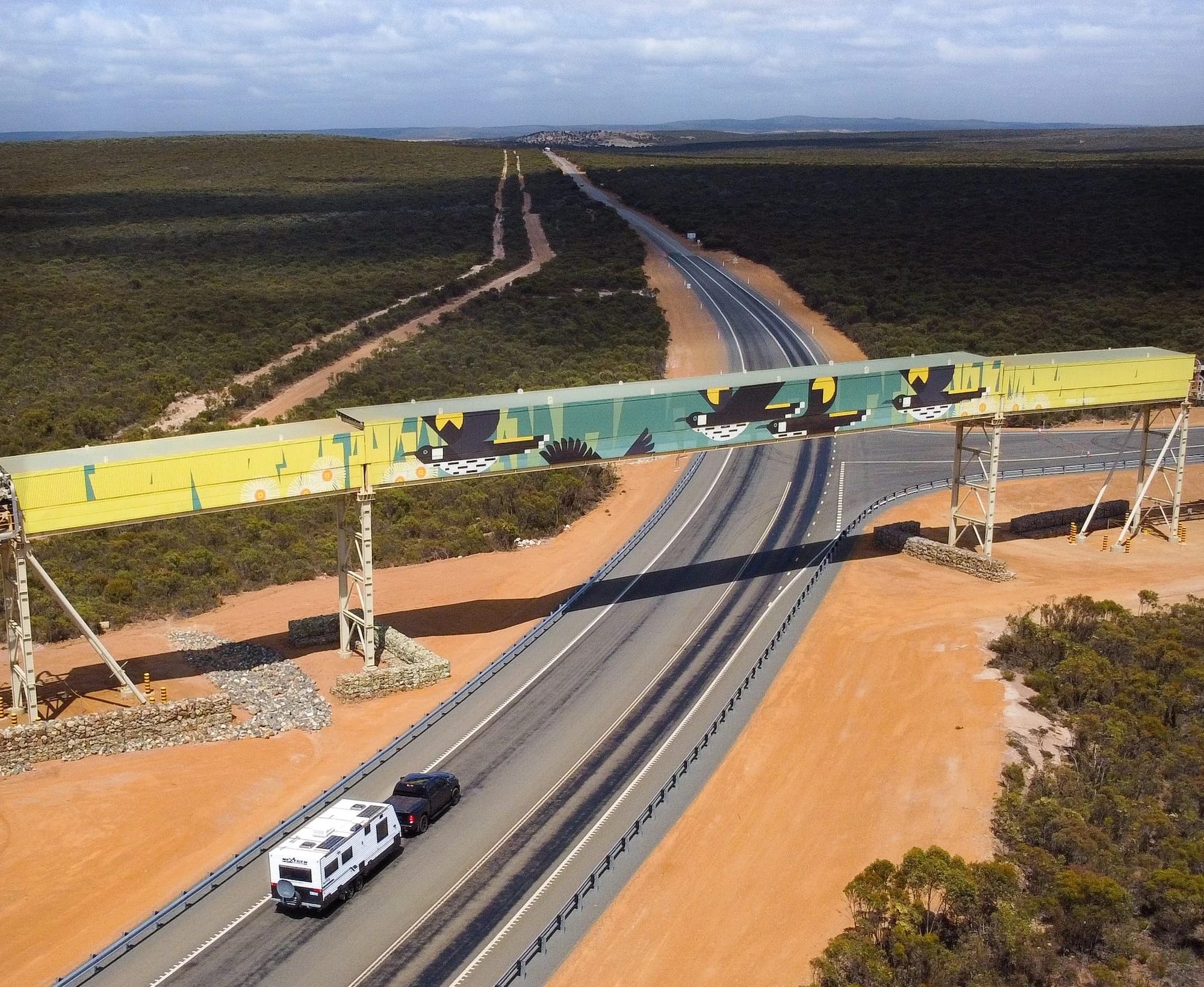 “The Honey Eaters” (2021), Ravensthorpe, Western Australia
Across his home state and other parts of the world, Amok Island portrays mammals, crustaceans, flowers, and more that reflect creatures and specimens found in those regions. Flocks of migrating birds swoop across industrial infrastructure, flowers bloom on community buildings, and roosters, butterflies, and cats adorn walls in urban spaces. Showcasing the beauty of living things that locals can learn about and enjoy nearby, Amok Island shines a light on the continued importance of conservation.
See more on the artist’s Instagram.
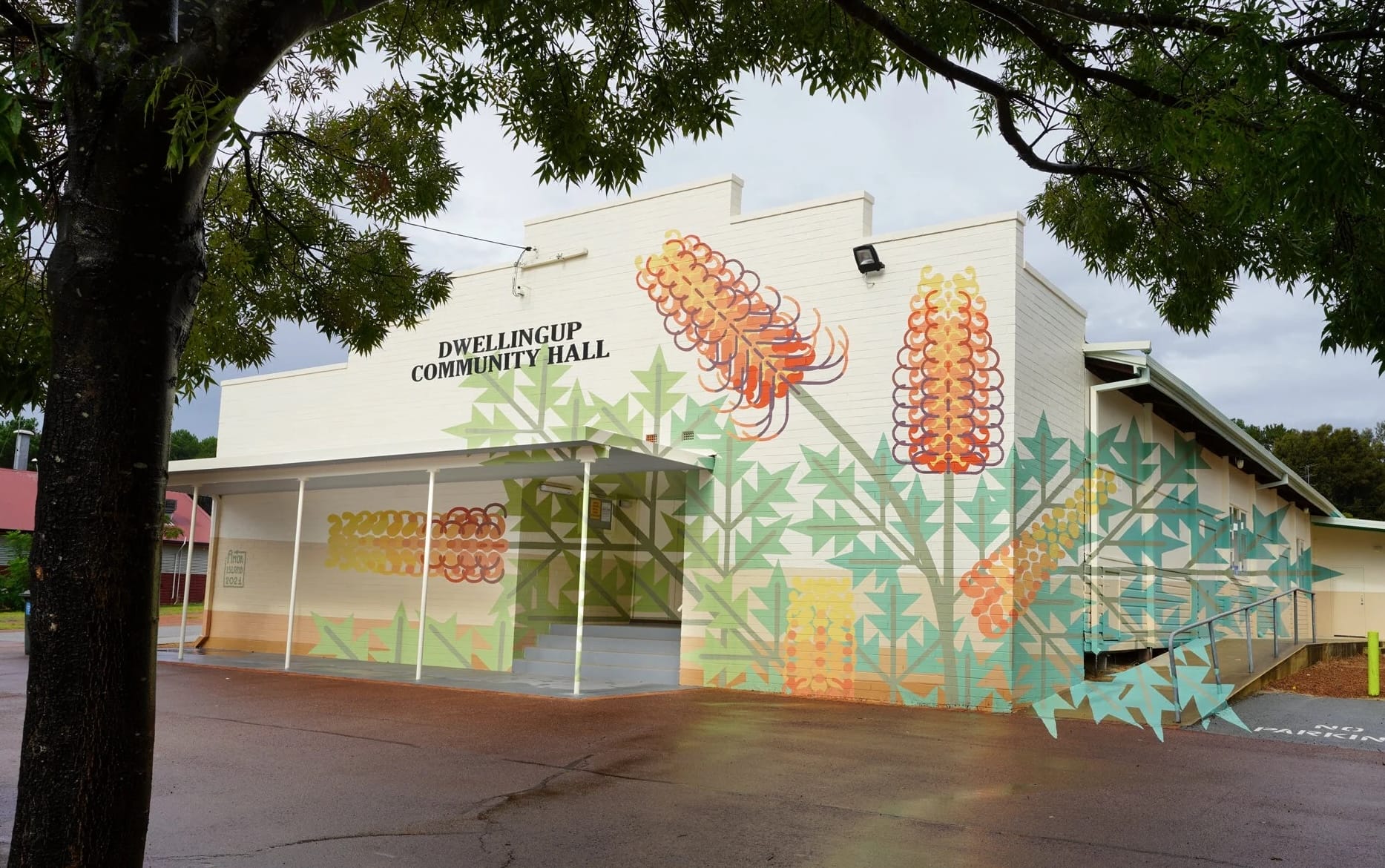 “Grevillea bipinnatifida” (2021), Dwellingup, Western Australia
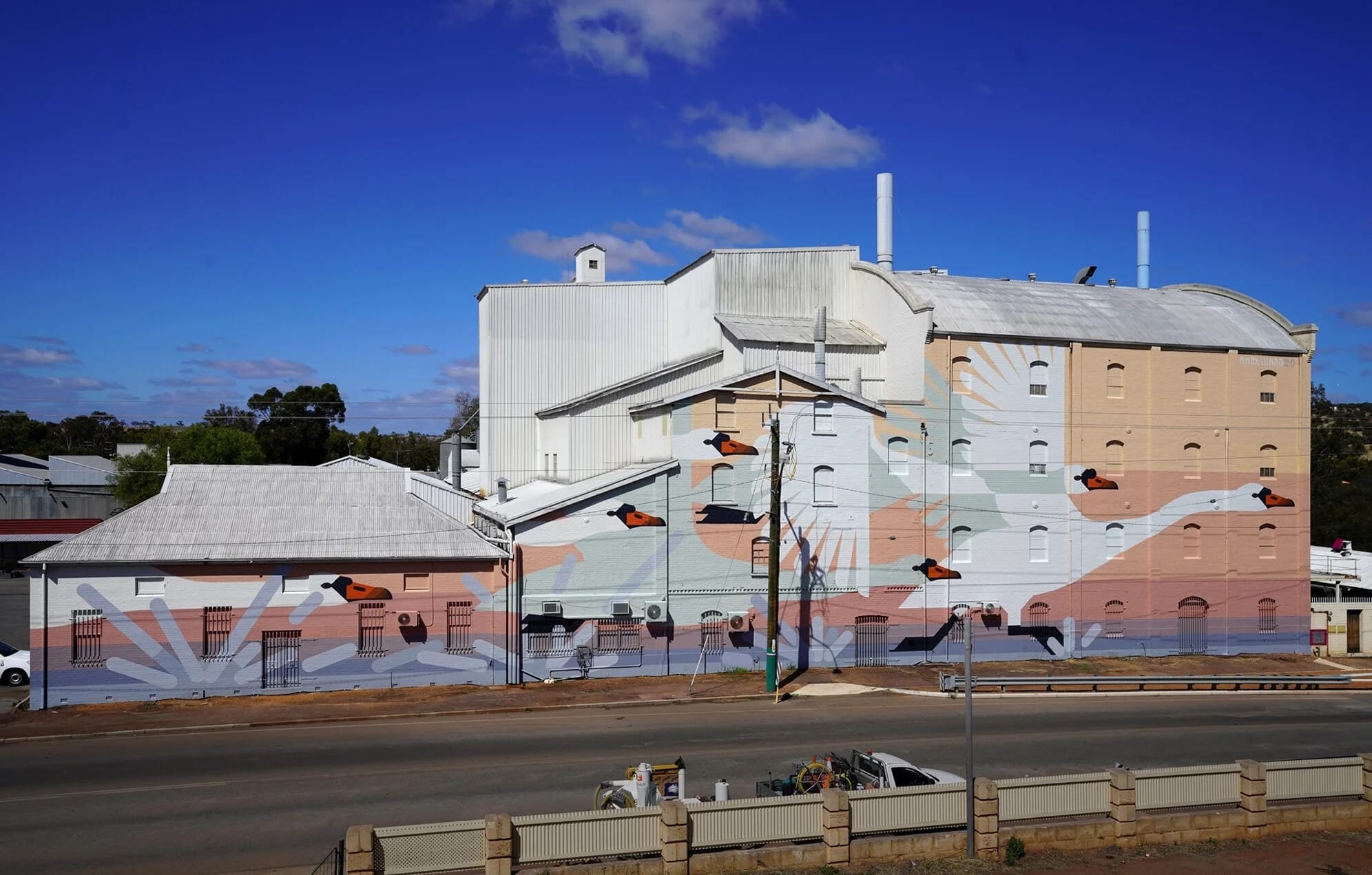 “The Last Swans” (2020), Northam, Western Australia
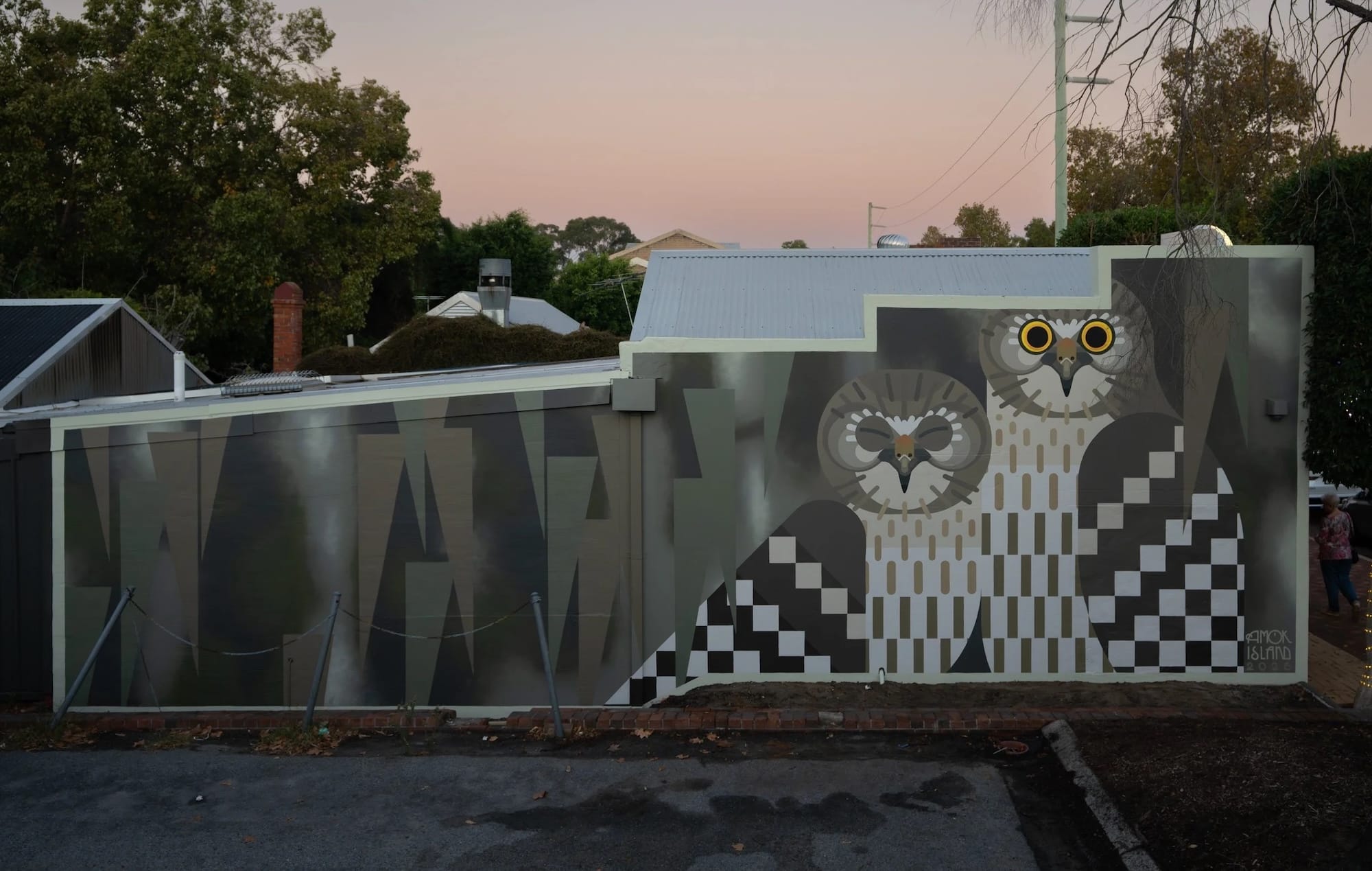 “The banning of Second-Generation Anticoagulant Rodenticides” (2026), South Perth, Western Australia, for NMBW Festival
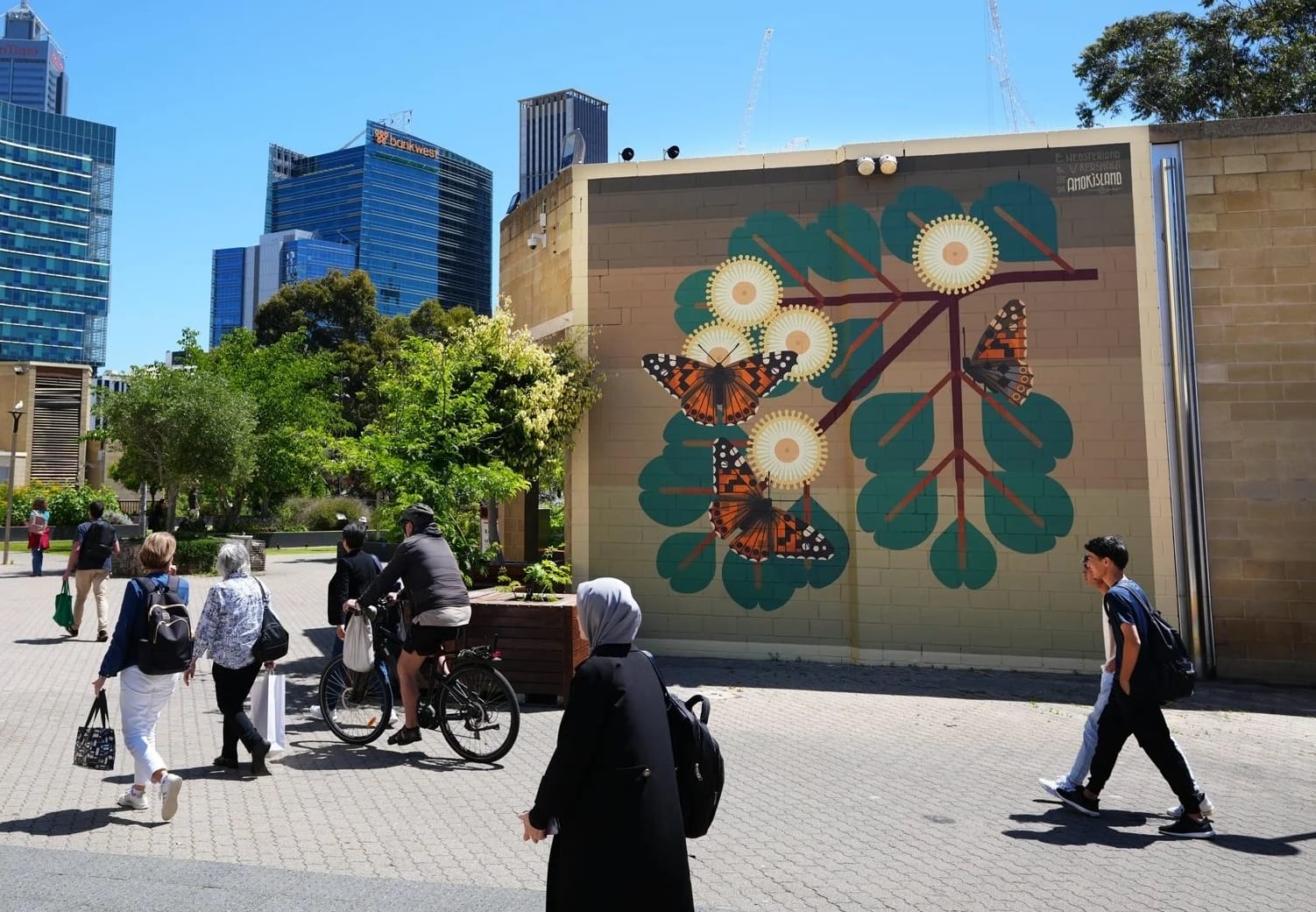 “V. kershawi on E. websteriana” (2024), Perth City, Western Australia
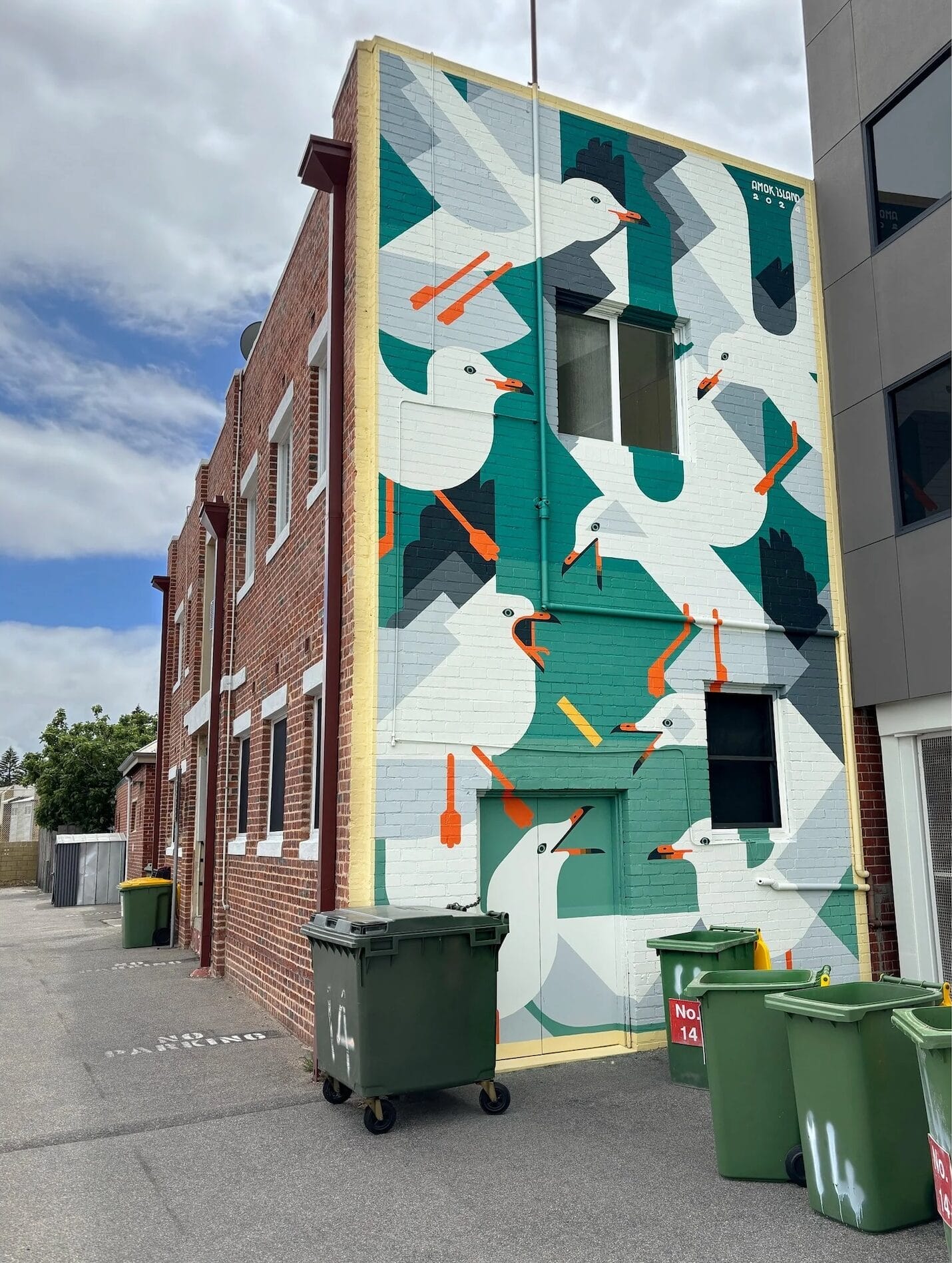 “Seagulls and Chip” (2024), Fremantle, Western Australia
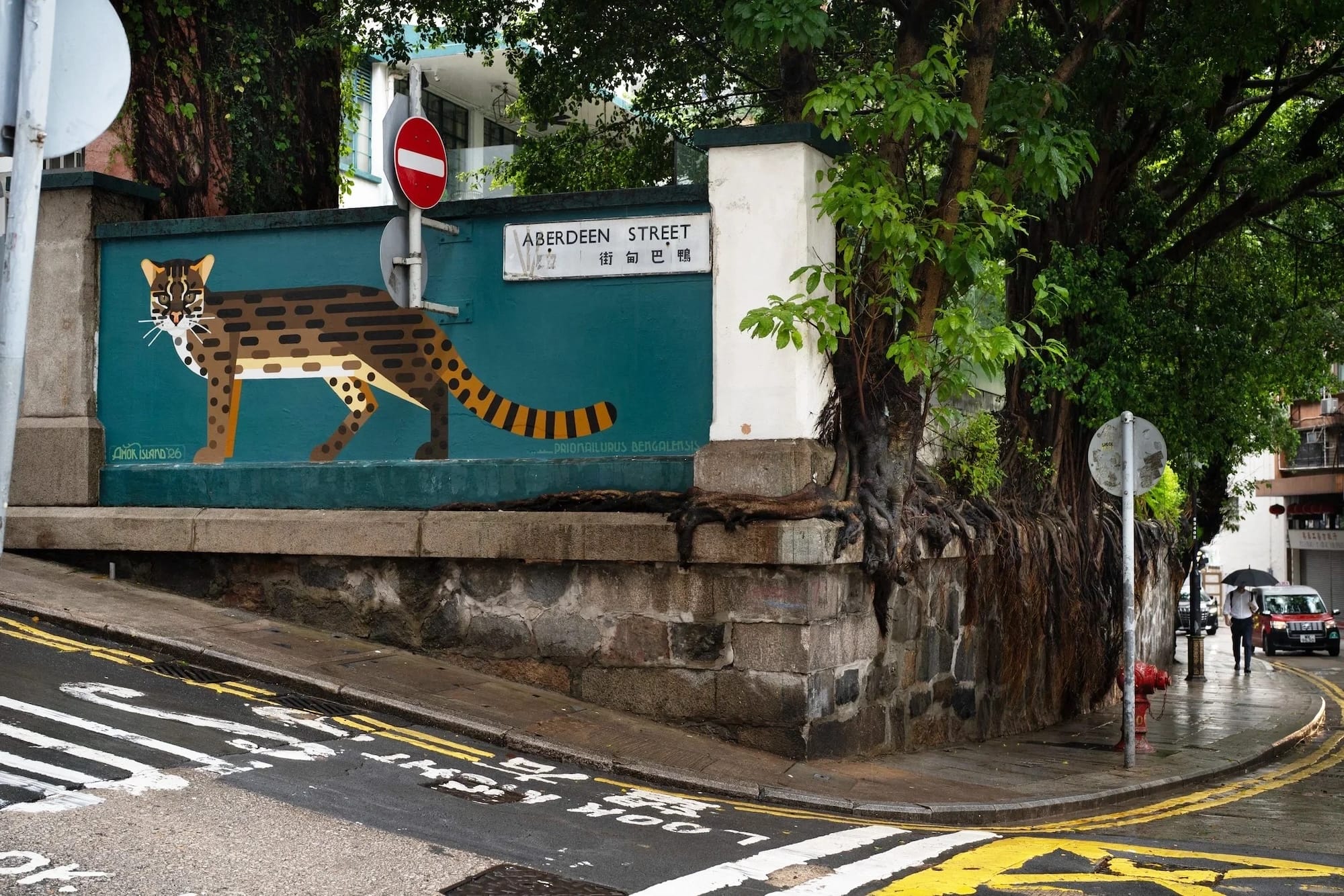 “Leopard Cat” (2026), Hong Kong
Do stories and artists like this matter to you? Become a Colossal Member now, and support independent arts publishing.
Hide advertising
Save your favorite articles
Get 15% off in the Colossal Shop
Receive members-only newsletter
Give 1% for art supplies in K-12 classrooms