
Photo: Brookwell-McNamara Entertainment/Courtesy: Everett Collection
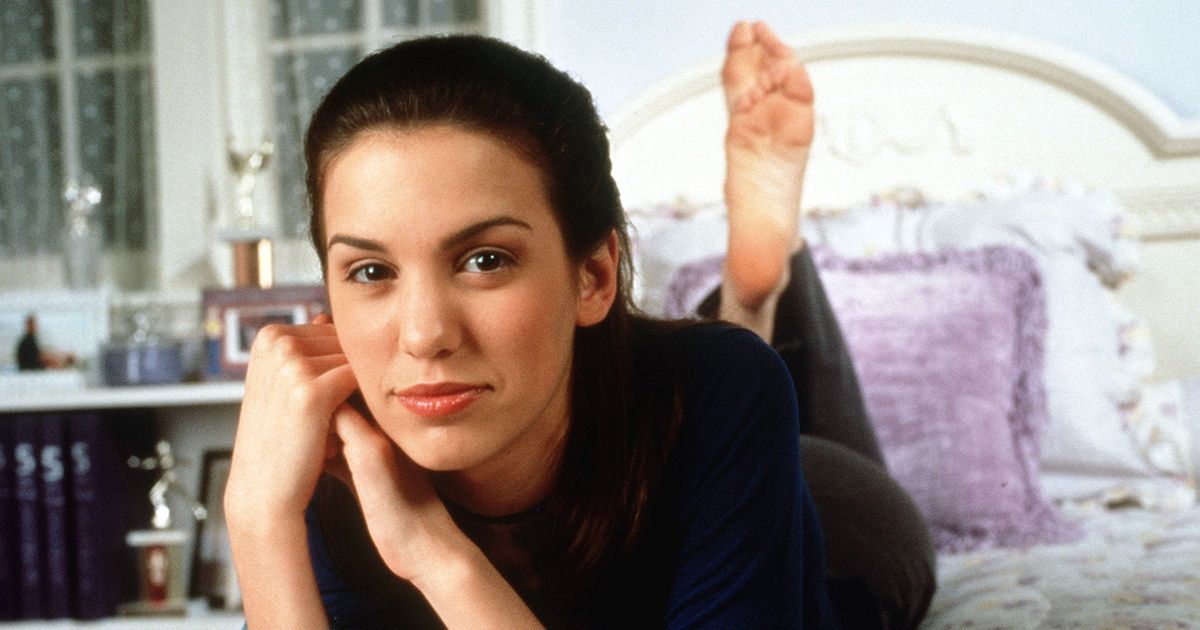
At 16, Christy Carlson Romano was living the dream of every girl born in the late ’90s. Simultaneously starring in Disney Channel’s Even Stevens as Ren Stevens, voicing Kim Possible, and playing Captain Jennifer Stone in the DCOM Cadet Kelly, Romano seemed on track to a long, successful career in the spotlight. And yet, in the vital transitional years from child star to adult actress that followed, she failed to “find her type” and virtually disappeared from public memory, resulting in her exclusion from Vanity Fair’s iconic “It’s Raining Teens” cover in 2003 and recent public debates about Disney Channel’s Mount Rushmore.
Now 42, Romano is looking back at her coming-of-age years in her new memoir, Once Upon a Trainwreck: The Fall and Rise of a Child Star, out now. She reveals that coming out of her prime Disney Channel days, she faced severe financial and personal hardship, struggling with teen alcoholism and drug use, emotional and sexual abuse, and bouts of depression that upended her career and life. Her memoir adds another damning account to the former child-star canon, alongside Jennette McCurdy’s I’m Glad My Mom Died and the late Hayden Panettiere’s This Is Me: A Reckoning. Romano recounts the toxicity of her past life as a child star in the book, while writing reflexively to her daughters in between chapters from her present position as a mother, wife, recovered alcoholic, and social-media influencer living in Texas. Here are the biggest takeaways from Romano’s tell-all.
Originally from Connecticut, Romano was scouted by a talent manager for kids while performing in a dance competition. (Luckily, the talent agent wasn’t in attendance for an earlier competition where she peed herself onstage). Romano was set up with classes and auditions in New York City so she could become a “triple threat” and a “booker” — and Romano made it her mission to do so. At 6, Romano booked her first role as an orphan in an Atlanta production of Annie, which opened doors for her to secure a later part in the first national tour of The Will Rogers Follies.
By the time she was 13, she also had minor roles in major movies like Henry Fool with Parker Posey and Woody Allen’s Everyone Says I Love You with Julia Roberts, Goldie Hawn, Edward Norton, and Drew Barrymore.
Balancing school, auditions, and bookings became difficult for Romano by the time middle school came around, so she enrolled in an elite New York City private school specifically for kids working in the arts-and-entertainment industry. Romano remembers Culkin as “about the most famous kid actor who ever lived because of Home Alone” and therefore the most popular in school, dressing like a grungy skater kid and pothead. “I can only think that he’s such a waste of talent,” Romano wrote of Culkin at the time. “And I feel embarrassed that he goes to our school looking like that.”
Later, Scarlett Johansson joins the school, and Romano describes her as the “exact opposite of her”: “She’s pretty short, she’s got big boobs, swollen lips, and grown-up curves, plus dirty-blond hair and squinty green eyes that look like they couldn’t care less what anyone thinks of her.” Although the two became acquaintances, Romano always felt “insecure” and “uneasy” around Johansson, who would openly talk about more mature topics like her period, hookups, and the parties she’d attend. Romano even recalled a time when Johansson tried to make a move on her older brother during a group sleepover at her house … not typically the makings of a close friendship.
Though most people probably recognize Romano as Ren Stevens on Even Stevens, she didn’t originally want the role. At 16, the actress felt like she had outgrown Disney; in fact, she felt like she had outgrown acting altogether. And yet, she secured the role because she matched Ren’s try-hard, perfectionist energy, and her chemistry test with Shia LaBeouf read like a real-sibling dynamic; that is, he annoyed the shit out of her.
On the set of Even Stevens, Romano and LaBeouf hardly interacted outside of scenes, and the onscreen Ren-Louis rivalry would only exacerbate their real-life tension. Like the dynamic between an actual younger brother and older sister, LaBeouf irked Romano, and she envied that he was somehow always able to get away with things. Still, when she once overheard LaBeouf’s dad yelling at him from her dressing room, she felt for him. According to her, their final scene together in the show felt like a real good-bye to each other:
“Sorry about blaming you for everything,” says Ren.
“Ren, look. I’m your brother. I love messing with you,” Louis says. “But I would never do anything to hurt you.”
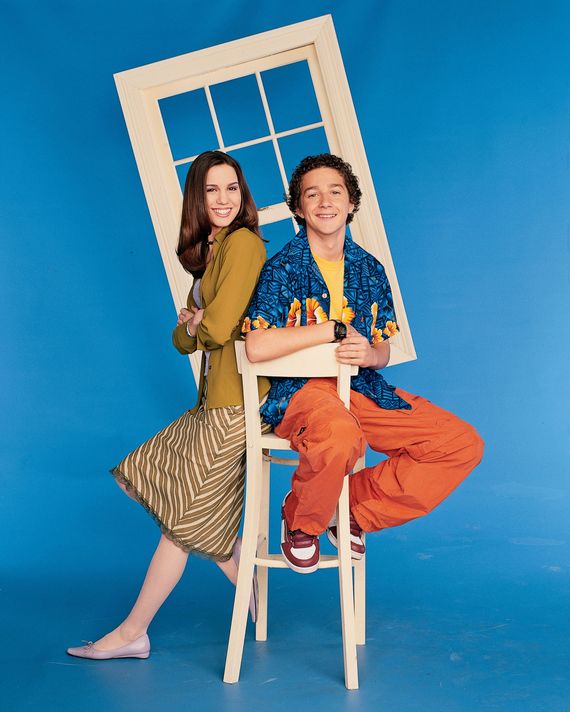
Photo: George Lange/Disney Channel via Getty Images
Much of Romano’s motivation to chase stardom and perfection stemmed from her mother, the stereotypical “stage mom” or “momager” archetype. Romano remembers her mother instilling in her the need to always act professional and agreeable — lessons that followed Romano into adulthood and made her easily exploitable.
The two were each other’s closest companions for most of Romano’s childhood and career, with her mother accompanying her everywhere she went for roles. Later in life, Romano felt like her mother took advantage of her, using her to escape an unhappy life and marriage and using her money to support a new L.A. lifestyle.
Romano’s resentment toward blondes comes up a lot throughout the book. At Disney, she often felt typecast as the “brunette, bad, unlikeable one,” while blond girls would play opposite her as “the sweet, fun one.” Though she got along well with her blonde Cadet Kelly co-star, Hilary Duff, Romano always viewed Duff as her competition. She’d often hear Disney executives saying that Lizzie McGuire and Hilary Duff were the “next big thing,” while she gradually fell to the wayside.
By the time Romano finished Even Stevens and Cadet Kelly, she was “too old to play one of the Disney Channel kids and too young to be a mom or a teacher,” so she became useless. While her past co-stars like Duff and LaBeouf broke out of child roles and maintained steady jobs, she was told by agents that she wasn’t pretty enough or that she would book more roles if she got a nose job (which she never did, though she did get a boob job after watching herself in Cadet Kelly).
Feeling forgotten by the industry and hoping to retain some sense of normalcy, Romano sought to shed her “Disney Kid” label by leaving L.A. and starting college. But without any prior experience of navigating life outside the industry, Romano fell into bad habits: She started overspending her Disney money, partying all the time, binge drinking, and using drugs to cope with feelings of inadequacy. She also spoke bluntly about when she “tried being bulimic” at one point “just to feel something.”
Romano writes about several toxic ex-boyfriends whom she once thought were “the one” despite their manipulative and suspect behavior toward her and her family. She was engaged twice, cheated on, had an ectopic pregnancy, and had her heart played with and broken over and over. She claims that one ex-boyfriend even threatened to sell her nudes online, and she had to get the FBI involved.
As a child, she alleges that she was flashed by a neighbor in his L.A. apartment, and later, in her 20s, she claims she was sexually assaulted by someone from her Al-Anon group in a nightclub. She writes to her daughters at the end of the chapter that discloses her darkest moments:
“If you should ever lose yourself, please know that the way back isn’t through numbing the pain or running from it. The way through is sitting with discomfort until you remember who you are underneath all the performance. You find yourself by stopping—stopping the chaos, the substances, the toxic relationships, the constant motion that keeps you from feeling anything real. I found myself by finally getting quiet enough to hear my own voice again. Not my mother’s voice, not the industry’s voice, not some man’s voice telling me who I should be.”
In her notes to her daughters that appear at the end of each chapter, Romano often writes about the pricelessness of childhood and the importance of having choice as a child. Though she wasn’t forced into child stardom, she felt like she couldn’t really escape it either. Before she realized it, her childhood was over, and all she was left with was a sense of worthlessness and a batch of self-destructive, people-pleasing tendencies. She spent the rest of her life trying to find her place in the world, outside of the spotlight, but, according to her, she’s finally found it in motherhood.
“My opposition to child labor in Hollywood — and high-functioning kids training and working in any elite field — isn’t about money. It’s about the pricelessness of childhood itself,” she writes. “There’s a fine line between supporting a child’s dreams and setting them up for failure … When you spend your childhood being rewarded for compliance, for never complaining, for being professional and easy and grateful, you lose the ability to recognize when someone is taking advantage of you. That muscle never develops.”
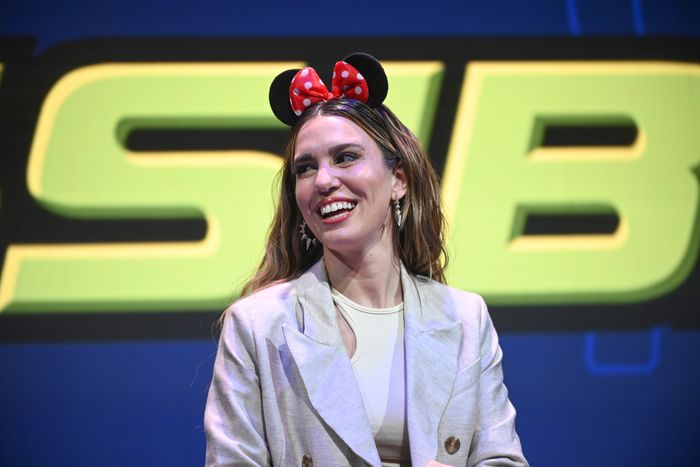
Photo: The Walt Disney Company via Getty Images
Sign up for the Vulture Daily
An entertainment newsletter for the pop-culture obsessed.
Vox Media, LLC Terms and Privacy Notice
Related