
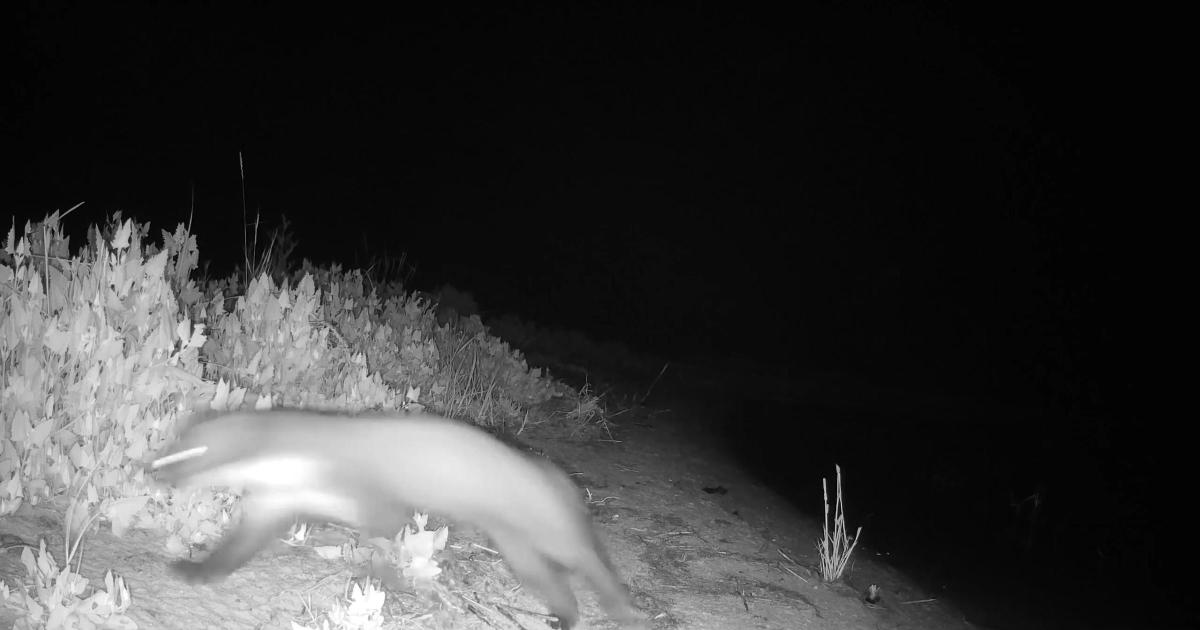
The elusive pine marten was captured on camera at Benacre National Nature Reserve on the beach, thanks to a device set up to monitor predators and disturbances affecting bird populations.
Adam Burrows, senior reserve manager at Natural England, said: “This fantastic find is a real thrill for everyone who works on this reserve, and seeing what we think is a pine marten in Suffolk for the first time shows just how special this landscape is.
“Pine martens are primarily nocturnal and hard to spot, but their light bib and bushy tail help set them apart from other mustelids.
The Benacre National Nature Reserve is a coastal area between Kessingland and Covehithe (Image: Allan Drewitt/Natural England)
“Their presence at Benacre National Nature Reserve reflects the natural balance of a healthy ecosystem, where predators and prey coexist as part of the site’s wildlife thriving together.”
Pine martens are cat-sized mammals related to weasels and stoats.
Once widespread across Britain, their numbers have declined sharply due to habitat loss and historical persecution.
According to the Woodland Trust, they are now critically endangered and extremely rare due to historical habitat loss and trapping.
The closest previous sighting to Benacre was recorded in Heacham, Norfolk, in 2024.
Camera traps will continue to be used at the reserve to monitor predators and disturbances, especially during the breeding season for ground-nesting birds like little terns and avocets.
The footage also helps conservationists understand how different species interact within the habitat.
Benacre National Nature Reserve is managed by Natural England and forms part of the Suffolk coast’s network of protected areas for breeding and migratory birds.
It supports more than 100 breeding bird species.
These include marsh harrier, bearded reedling, and bittern, as well as a range of coastal plants such as yellow horned poppy and sea holly.