

For years, we’ve been ripping down walls in favour of a more open-plan arrangement in our homes. Sometimes it’s about bringing more light into a space; sometimes it’s about improving the flow; and sometimes it’s about creating an environment better suited to family life where you can keep half an eye on your children while also cooking supper. The kitchen has long been at the heart of the open-plan dream. ‘For years, people have wanted everything in the kitchen,’ agrees Plain English founder Katie Fontana. ‘It’s where you cook, where you eat, where the children do their homework, where you have a little desk on the side and have your computer – we want sofas and a fireplace.’
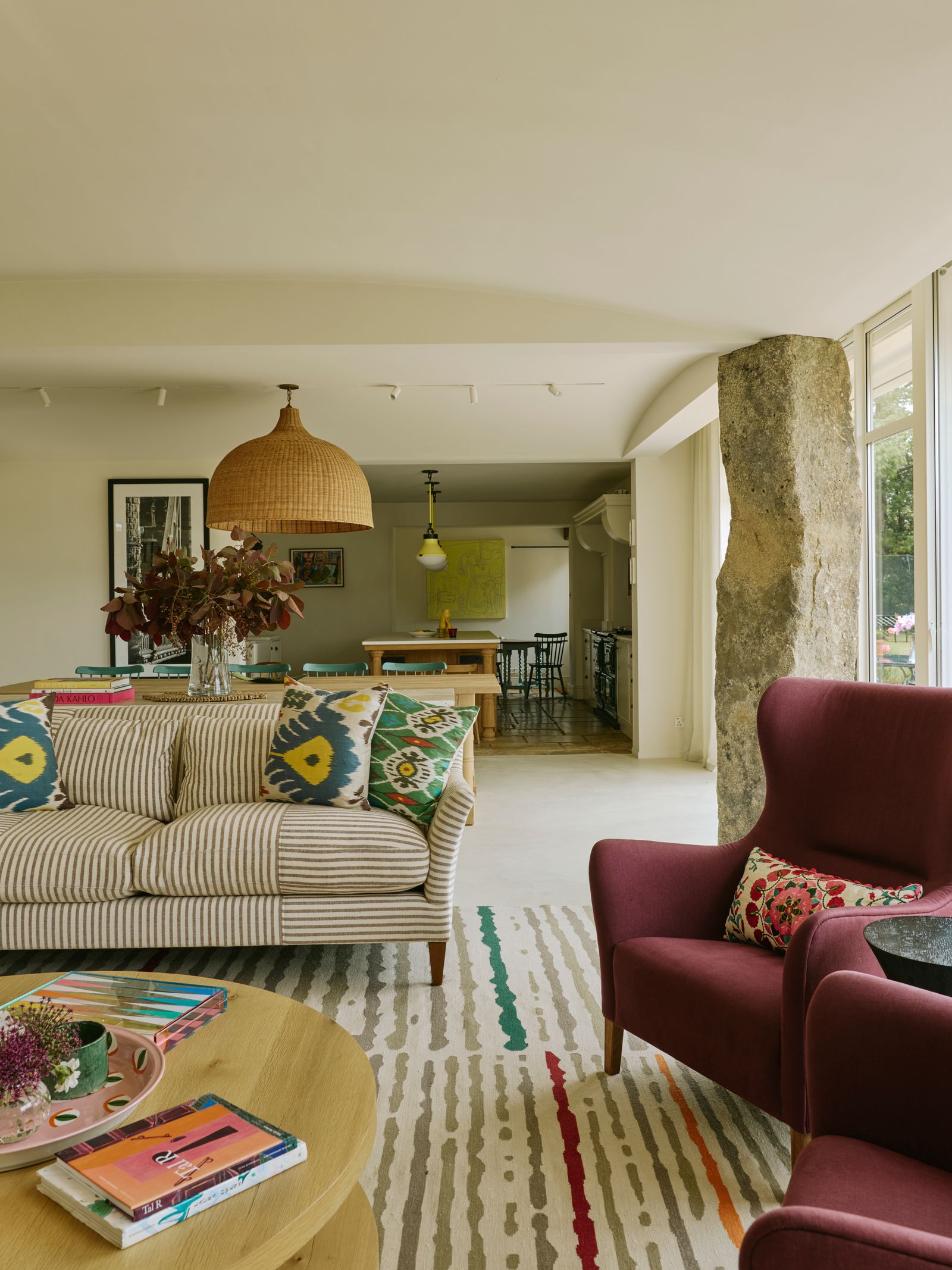
This 18th-century Cotswold house was sensitively extended to allow for a large open-plan kitchen, dining and sitting area where the whole family could come together.
Christopher Horwood
It’s an appealing idea, but is it one that has perhaps had its day? Are we returning to a world of nooks and delineated rooms? ‘I really do feel that there is a movement away from the ubiquitous desire for open plan,’ says interior designer Patrick Williams, whose practice Berdoulat specialises in period buildings and restoration projects. ‘It was lockdown five years ago that first made us tune into our interiors and how we can coexist in them and I wonder whether it catalysed a shift away from open-plan living back to separate individual spaces – ones that can be discovered, ones that might suit differing moods and ones where you can be alone!’ Interior designer Max Rollitt agrees: ‘We need distinct spaces so that we can think, work and separate our lives from media, so that one person can do one thing and someone else another.’
As well as the obvious benefit of delineated spaces providing privacy and meeting the needs of various family members, they also often work better in period houses. ‘In older properties, particularly terraced houses, open plan can often confuse the original intention,’ explains Max Rollitt. Not only can it be a challenge acoustically, but it’s also not brilliant for heat retention. ‘Smaller rooms, for instance, were easier to heat with a single fire – now if we knock through we often end up removing them,’ he explains. Large open-plan spaces can be hard and expensive to heat, which isn’t exactly the best idea in a world of rising energy costs and limited resources. For Patrick, open-plan arrangements can also be aesthetically jarring in older houses. ‘So often the stretched proportions of these spaces are not terribly pleasing,’ he explains. ‘Beyond delineating spaces, walls are quite useful for hanging pictures on, or housing pieces of furniture against.’ Walls, then, are not just good for privacy, but also provide a decorative opportunity.