
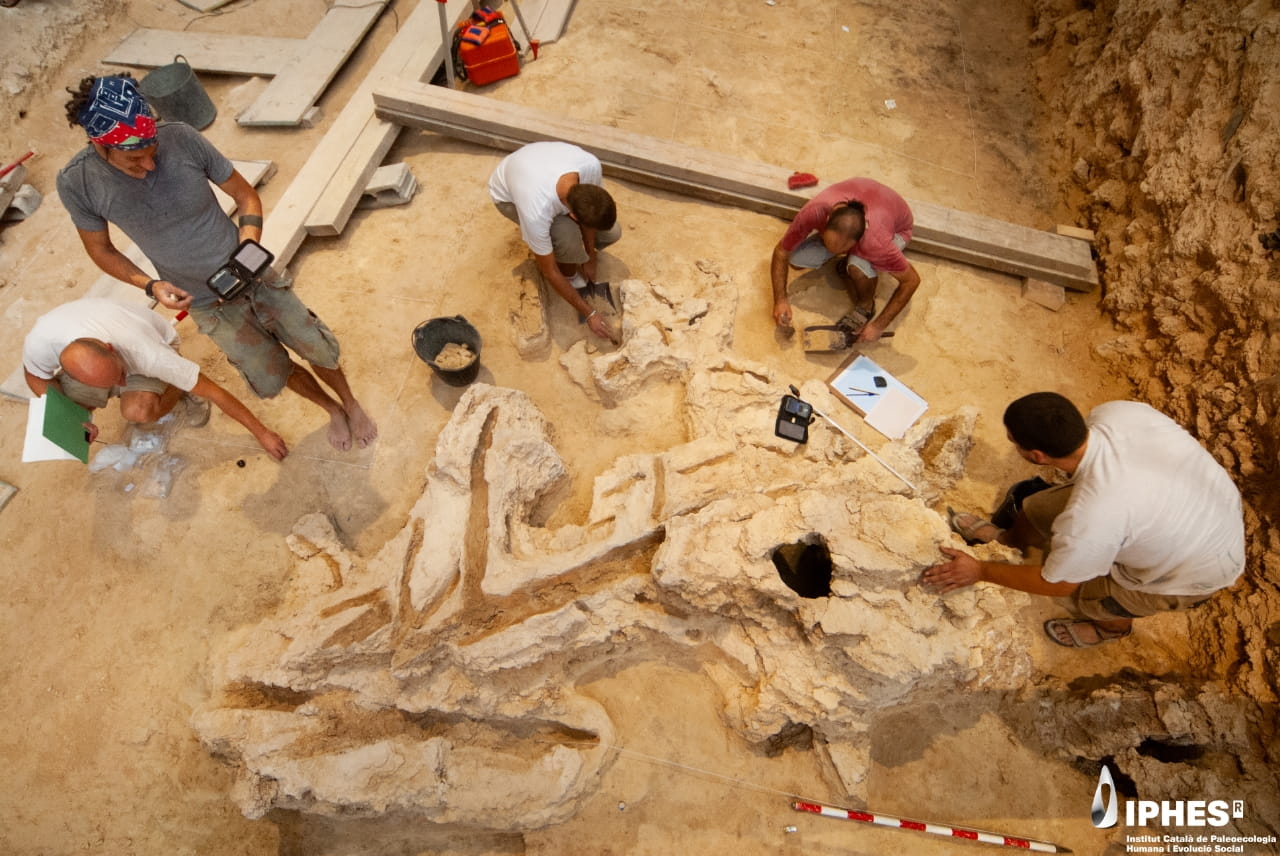
Neanderthals did far more with wood than burn it. A new study of 597 wooden remains and imprints from Abric Romaní, a rock shelter in Capellades near Barcelona, shows they made weapons, tools and household items from it. They may have built parts of their living space too. The finds span roughly 62,000 to 40,000 years ago and come from 16 archaeological levels.
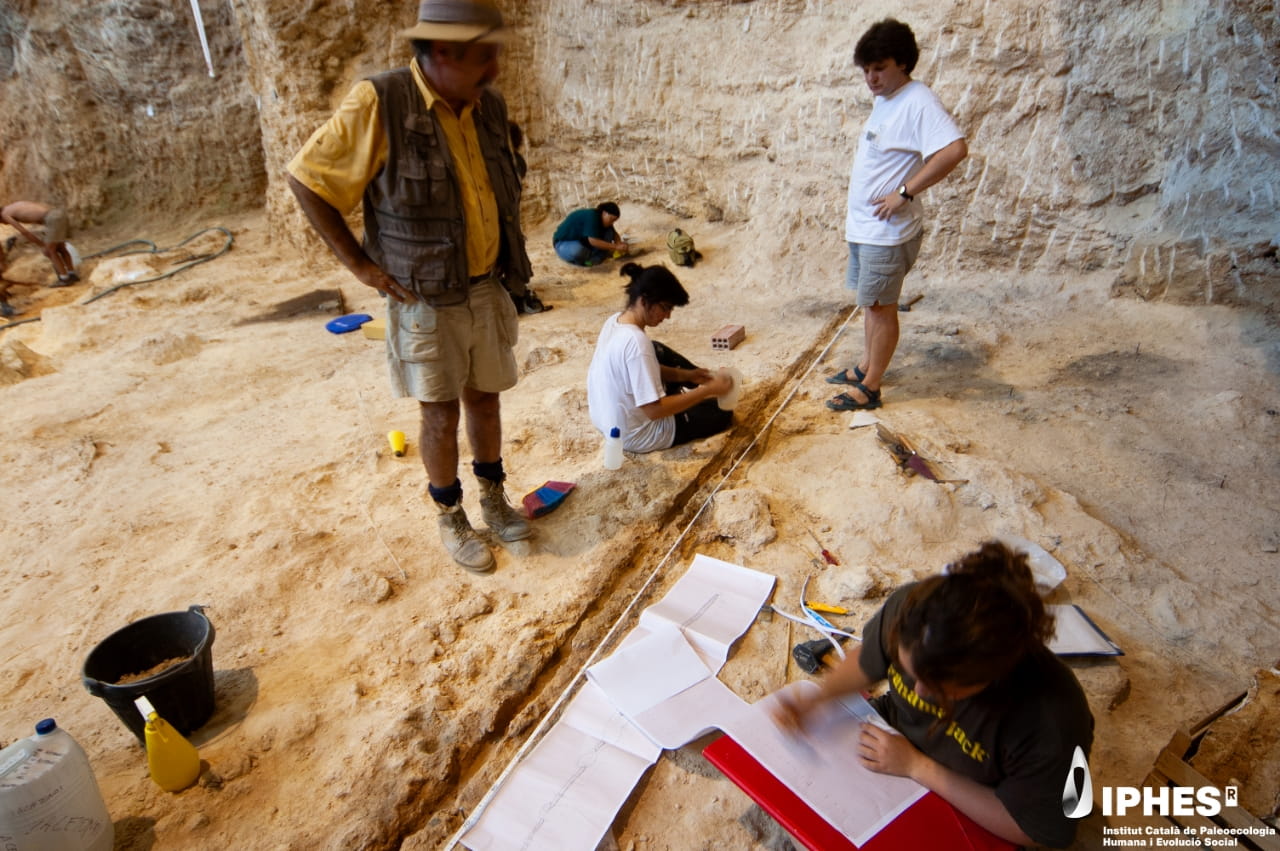
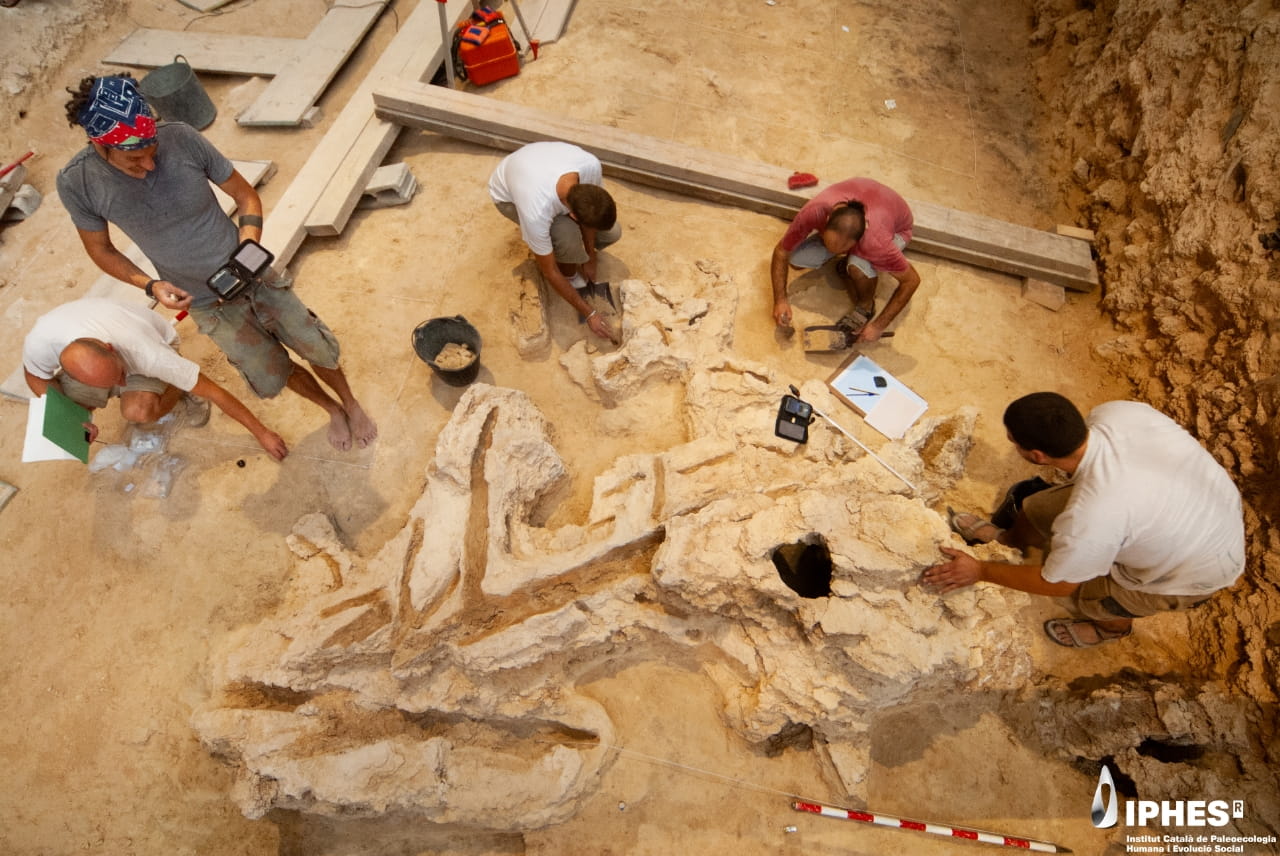 Drawing and recording work during the excavation of the wooden object at Abric Romaní. Credit: Gerard Campeny / IPHES-CERCA
For decades, stone tools shaped our picture of Neanderthal technology. Wood rarely survives, so a big piece of their material culture went missing. Abric Romaní changes that. The study appears in Science Advances and is led by Palmira Saladié of IPHES-CERCA and Universitat Rovira i Virgili. It’s the first full analysis of the wood recovered during more than four decades of digging at the site.
Other European sites already showed Neanderthals worked wood. What sets this one apart is the time depth. Researchers can follow wood use across thousands of years and many visits to the same spot. Wood turns out to be a steady part of daily life there, not an occasional resource.
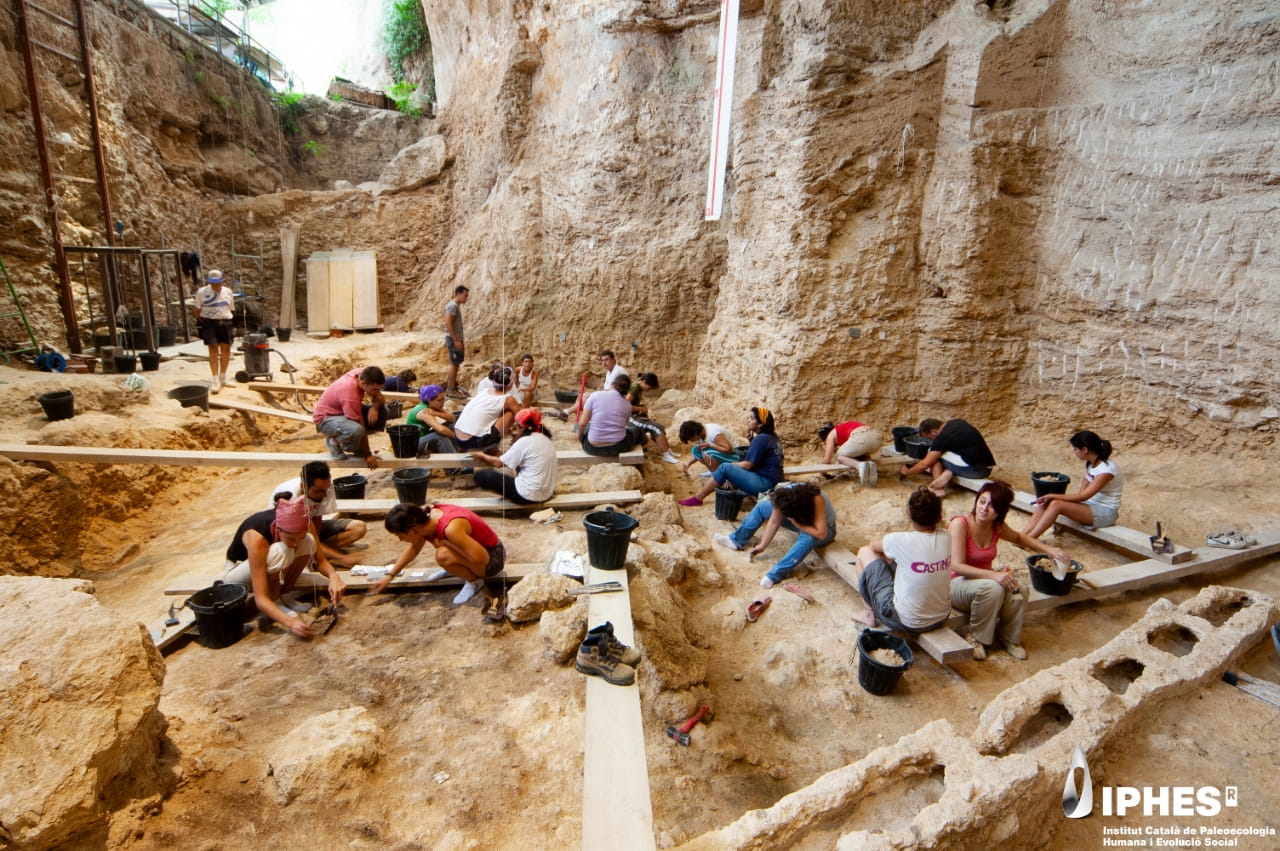 General view of the archaeological excavation at Abric Romaní, Capellades (Barcelona). Credit: Gerard Campeny / IPHES-CERCA
So how did wood last this long? Calcium carbonate built up around it. When the wood rotted away, it left natural molds in the travertine rock. These molds hold the original shape with great precision. Some are detailed enough to show the internal tissue structure of the wood.
 Drawing and recording of the wooden object interpreted as part of a hut-like structure. Credit: Gerard Campeny / IPHES-CERCA
The same layers also hold hearths, stone tools and animal bones. That lets the team study how Neanderthals organized their activities, handled fire and managed resources in one space.
Most of the 597 pieces are trunks, branches, twigs, roots and piles of firewood. The team picked out 13 pieces that Neanderthals made or used. They include domestic objects, structural parts, tools and weapons.
Two wooden spears came from Level R. One measures 2.45 meters and fits the shape of a thrusting spear, built for close range. The other survives at 1.99 meters and has a pointed tip with clear signs of deliberate shaping. Very few wooden weapons from the European Paleolithic survive. Schöningen and Lehringen in Germany are the best known sites.
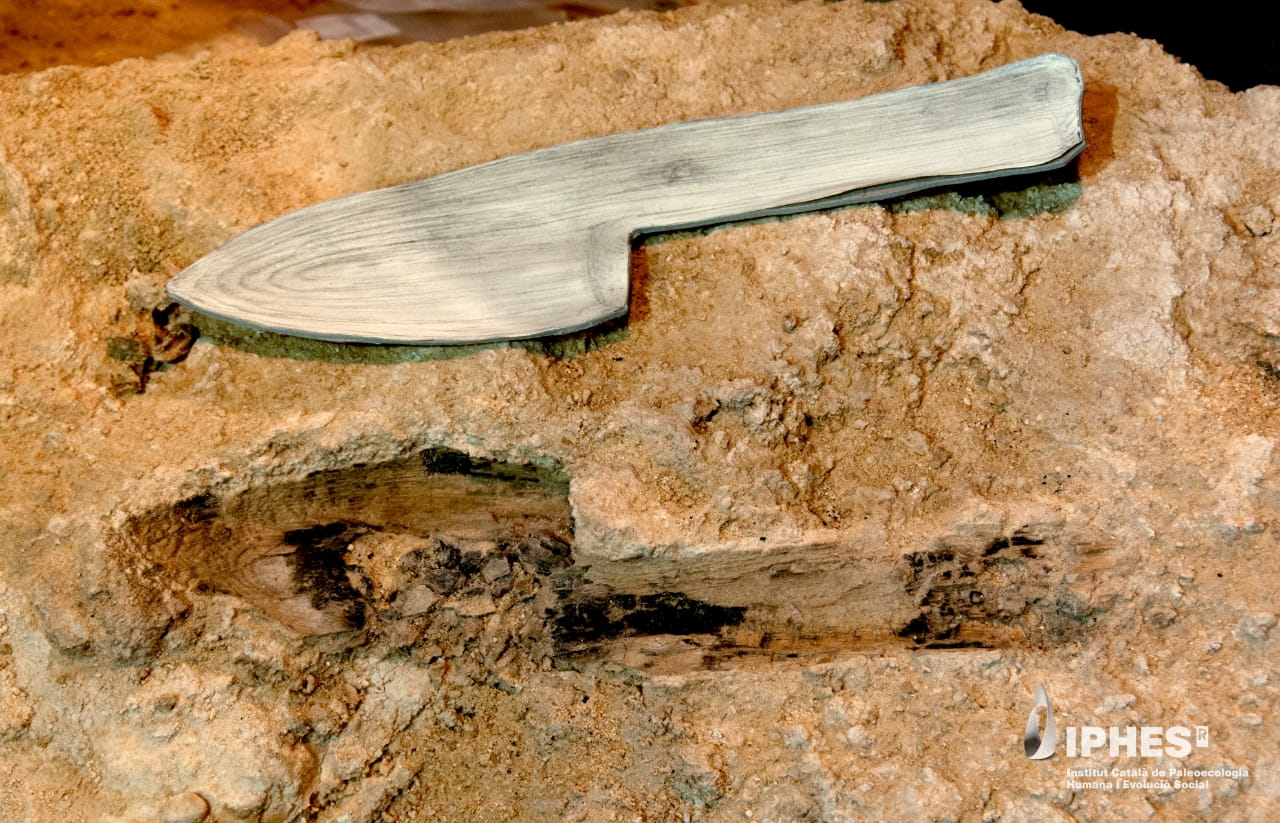 Wooden object from Abric Romaní interpreted as a wooden club. Credit: Gerard Campeny / IPHES-CERCA
Level P produced an odd object. It was carved from a single piece of wood, with a clear handle and a thick, pointed end, so it looks like a mace. Tool marks show someone shaped it on purpose. Nobody knows what it was for, and no known object matches it.
The wood record goes beyond weapons. The team found what look like bark containers or trays. They also found crossed poles that might have formed part of a raised platform for preparing food. One straight wooden piece stretches 5.10 meters. It could have been a structural element, or a way to alter the living area. Piles of firewood show that Neanderthals used different methods to collect, carry and store fuel.
 Illustration depicting different scenes of Neanderthal groups at Abric Romaní using wooden objects. Credit: Hugo Prades / IPHES-CERCA
“Neanderthal technology extended far beyond stone,” says Josep Vallverdú of IPHES-CERCA.
The site has a long research history. Systematic excavations began in 1983 under Eudald Carbonell. Dr Palmira Saladié, Dr M. Gema Chacón and Dr Josep Vallverdú now direct the work. Their decades of careful digging let researchers read the wood alongside hearths, bones and stone tools. Together, these finds restore a part of the Neanderthal world that most sites have lost.
Publication: Saladié, P., Chacón, M. G., Solé, A., Allué, E., Marín-Hernando, J., Gómez de Soler, B., … Vallverdú, J. (2026). Neanderthal woodworking at Abric Romaní: Insights into the role of wood in a Middle Palaeolithic domestic context. Science Advances, 12(41). doi:10.1126/sciadv.aeh2287