
Healthy cooking doesn’t have to be complicated. In fact, often the simpler it is, the better it tastes. In Good for You, Test Kitchen editor Rebecca Firkser shares feel-good recipes for any day of the week.
While you can’t scroll through a healthy-recipe collection without seeing a sweet potato or three, you’d be hard-pressed to find white potatoes like russets included on most lists. These spuds are often seen as bad for you, while their orange-hued brethren have taken on a health halo. But why? When you look at the nutrition facts, the two are nearly identical.
“Diets like keto and Atkins, and the recent TikTok protein craze can promote the idea that carbs drive weight gain or that they provide empty calories,” says Hannah Sorrell, a registered dietitian at Alike Nutrition. “However, carbohydrates are our brain and body’s main fuel source.” What’s more, Sorrell notes that carbs are also the only macronutrient that contain fiber (a large russet brings about four grams if eaten skin-on).
Energy-boosting carbohydrates like potatoes prove especially valuable to those who exercise vigorously. Ever sucked down a gel during a run or chugged coconut water after a tough workout? That boost of energy comes from carbs. While many active adults pat themselves on the back as they munch on a salad post–Barry’s Bootcamp, proper fuel and recovery can be much less green.
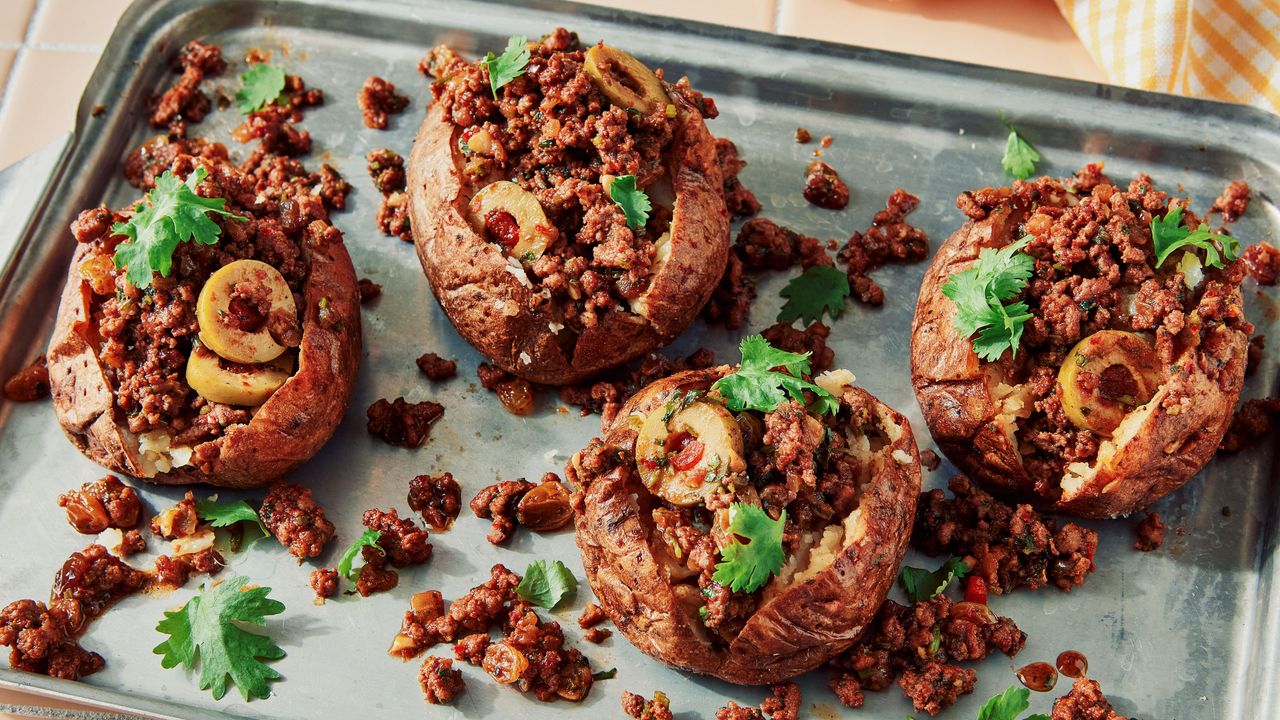
My new recipe is basically the opposite of a salad. It’s a big fat potato, smothered in saucy, spicy ground beef. And yeah, it’s for my column on healthy cooking.
Especially for high-intensity workouts, “fueling with carbs is the key to success,” says Julie Jefferson, a Brooklyn-based trainer and HYROX coach. Jefferson—who adds she’s been known to eat a slice of pizza before a run—says a big mistake she sees people make is underfueling. “White potatoes provide an easy way to increase carb intake. And because they are also an easy food to digest, they can help training and recovery feel easier on our bodies.”
But carbs—and protein and fat—are necessary for moderately active folks as well. You don’t need to be a marathoner to earn a filling dinner. You just need to be a human. That’s it.
We can point a finger at diet culture and careful marketing for the way that a rotating cast of foods have been characterized as “good” or “bad” over the years. Like carbs, red meat has had its own contentious journey in the spotlight. One minute, it’s an important source of protein, rich in iron, zinc, and vitamin B; the next, it’s high in saturated fat that can increase risk of heart disease and cancer. Technically, all true!