
Fink, H. et al. Global and regional cancer burden attributable to modifiable risk factors to inform prevention. Nat. Med. 32, 1306–1315 (2026).
Weeden, C. E., Hill, W., Lim, E. L., Grönroos, E. & Swanton, C. Impact of risk factors on early cancer evolution. Cell 186, 1541–1563 (2023).
Dai, X., Gakidou, E. & Lopez, A. D. Evolution of the global smoking epidemic over the past half century: strengthening the evidence base for policy action. Tob. Control. 31, 129–137 (2022).
World Health Organization. WHO Global Report on Trends in Prevalence of Tobacco Use 2000–2030. WHO https://www.who.int/publications/i/item/9789240088283 (2024).
Phelps, N. H. et al. Worldwide trends in underweight and obesity from 1990 to 2022: a pooled analysis of 3663 population-representative studies with 222 million children, adolescents, and adults. Lancet 403, 1027–1050 (2024).
Taylor, S. R., Falcone, J. N., Cantley, L. C. & Goncalves, M. D. Developing dietary interventions as therapy for cancer. Nat. Rev. Cancer 22, 452–466 (2022).
Kanarek, N., Petrova, B. & Sabatini, D. M. Dietary modifications for enhanced cancer therapy. Nature 579, 507–517 (2020).
Caspersen, C. J., Powell, K. E. & Christenson, G. M. Physical activity, exercise, and physical fitness: definitions and distinctions for health-related research. Public. Health Rep. 100, 126–131 (1985).
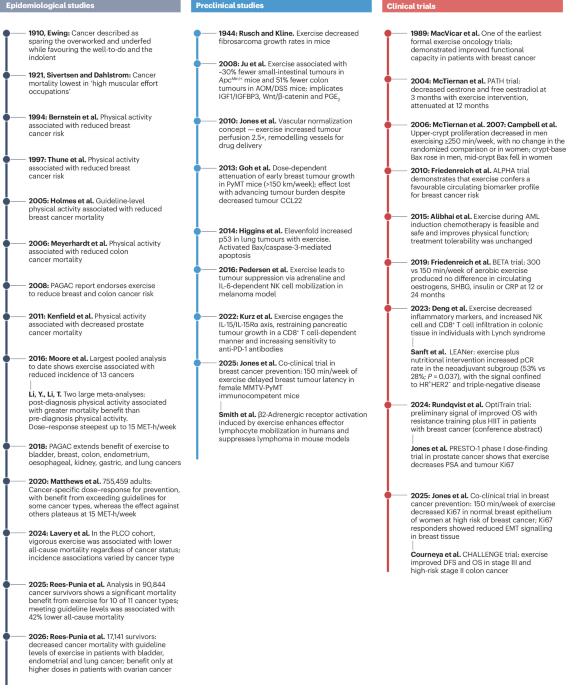
Ewing, J. Animal experimentation and cancer. JAMA LIV, 267–269 (1910).
Jones, L. W. & Alfano, C. M. Exercise-oncology research: past, present, and future. Acta Oncol. 52, 195–215 (2013).
Cormie, P. et al. Clinical Oncology Society of Australia position statement on exercise in cancer care. Med. J. Aust. 209, 184–187 (2018).
Campbell, K. L. et al. Exercise guidelines for cancer survivors: consensus statement from international multidisciplinary roundtable. Med. Sci. Sports Exerc. 51, 2375–2390 (2019).
Ligibel, J. A. et al. Exercise, diet, and weight management during cancer treatment: ASCO guideline. J. Clin. Oncol. 40, 2491–2507 (2022).
Rock, C. L. et al. American Cancer Society nutrition and physical activity guideline for cancer survivors. CA. Cancer J. Clin. 72, 230–262 (2022).
Koelwyn, G. J., Quail, D. F., Zhang, X., White, R. M. & Jones, L. W. Exercise-dependent regulation of the tumour microenvironment. Nat. Rev. Cancer 17, 620–632 (2017).
Ashcraft, K. A., Peace, R. M., Betof, A. S., Dewhirst, M. W. & Jones, L. W. Efficacy and mechanisms of aerobic exercise on cancer initiation, progression, and metastasis: a critical systematic review of in vivo preclinical data. Cancer Res. 76, 4032–4050 (2016).
Zhuang, X., Wong, E. S., Tammela, T. & Jones, L. W. Stem cells as an essential mediator of the exercise-tumorigenesis link. Nat. Rev. Cancer https://doi.org/10.1038/s41568-026-00933-z (2026).
Nash, D. M., Terry, L. V. & Febbraio, M. A. Exercising through cancer: physical activity as medicine for cancer care. Cancer Cell 43, 2175–2180 (2025).
Sivertsen, I. & Dahlstrom, A. W. The relation of muscular activity to carcinoma: a preliminary report. J. Cancer Res. 6, 365–378 (1921).
Rusch, H. P. & Kline, B. E. The effect of exercise on the growth of a mouse tumor. Cancer Res. 4, 116–118 (1944).
Frisch, R. E. et al. Lower prevalence of breast cancer and cancers of the reproductive system among former college athletes compared to non-athletes. Br. J. Cancer 52, 885–891 (1985).
Bernstein, L. et al. The effects of moderate physical activity on menstrual cycle patterns in adolescence: implications for breast cancer prevention. Br. J. Cancer 55, 681–685 (1987).
Albanes, D., Blair, A. & Taylor, P. R. Physical activity and risk of cancer in the NHANES I population. Am. J. Public. Health 79, 744–750 (1989).
Thune, I., Brenn, T., Lund, E. & Gaard, M. Physical activity and the risk of breast cancer. N. Engl. J. Med. 336, 1269–1275 (1997).
Bernstein, L., Henderson, B. E., Hanisch, R., Sullivan-Halley, J. & Ross, R. K. Physical exercise and reduced risk of breast cancer in young women. J. Natl Cancer Inst. 86, 1403–1408 (1994).
Giovannucci, E. et al. Physical activity, obesity, and risk for colon cancer and adenoma in men. Ann. Intern. Med. 122, 327–334 (1995).
Martínez, M. E. et al. Leisure-time physical activity, body size, and colon cancer in women. Nurses’ Health Study Research Group. J. Natl Cancer Inst. 89, 948–955 (1997).
Physical Activity Guidelines Advisory Committee. Physical Activity Guidelines Advisory Committee Report, 2008. US Department of Health and Human Services https://odphp.health.gov/sites/default/files/2019-10/CommitteeReport_7.pdf (2008).
Moore, S. C. et al. Association of leisure-time physical activity with risk of 26 types of cancer in 1.44 million adults. JAMA Intern. Med. 176, 816–825 (2016).
Lavery, J. A. et al. Association of exercise with pan-cancer incidence and overall survival. Cancer Cell 42, 169–171 (2024).
Matthews, C. E. et al. Amount and intensity of leisure-time physical activity and lower cancer risk. J. Clin. Oncol. 38, 686–697 (2020).
Nascimento, W. et al. Muscle-strengthening activities and cancer incidence and mortality: a systematic review and meta-analysis of observational studies. Int. J. Behav. Nutr. Phys. Act. 18, 69 (2021).
McTiernan, A. et al. Physical activity in cancer prevention and survival: a systematic review. Med. Sci. Sports Exerc. 51, 1252–1261 (2019).
Rey-López, J. P., Lee, D. H., Ferrari, G., Giovannucci, E. & Rezende, L. F. M. Physical activity intensity measurement and health: state of the art and future directions for scientific research. Int. J. Environ. Res. Public. Health 20, 6027 (2023).
Shreves, A. H. et al. Amount and intensity of daily total physical activity, step count and risk of incident cancer in the UK Biobank. Br. J. Sports Med. 59, 839–847 (2025).
Parada, H. et al. Associations of accelerometer-measured physical activity and physical activity-related cancer incidence in older women: results from the WHI OPACH study. Br. J. Cancer 122, 1409–1416 (2020).
Del Pozo Cruz, B., Ahmadi, M. N., Lee, I.-M. & Stamatakis, E. Prospective associations of daily step counts and intensity with cancer and cardiovascular disease incidence and mortality and all-cause mortality. JAMA Intern. Med. 182, 1139–1148 (2022).
Prince, S. A. et al. A comparison of direct versus self-report measures for assessing physical activity in adults: a systematic review. Int. J. Behav. Nutr. Phys. Act. 5, 56 (2008).
Ding, D., Tarp, J., Giovannucci, E. & Clare, P. J. Causal inference in physical activity epidemiology research: an opportunity for better evidence. Br. J. Sports Med. 59, 963–965 (2025).
Shrank, W. H., Patrick, A. R. & Brookhart, M. A. Healthy user and related biases in observational studies of preventive interventions: a primer for physicians. J. Gen. Intern. Med. 26, 546–550 (2011).
Inayama, Y. et al. Changes in physical activity across cancer diagnosis and treatment based on smartphone step count data linked to a Japanese claims database: retrospective cohort study. JMIR Cancer 11, e58093 (2025).
Cook, N. R., Rosner, B. A., Hankinson, S. E. & Colditz, G. A. Mammographic screening and risk factors for breast cancer. Am. J. Epidemiol. 170, 1422–1432 (2009).
Pinsky, P. F. et al. Evidence of a healthy volunteer effect in the prostate, lung, colorectal, and ovarian cancer screening trial. Am. J. Epidemiol. 165, 874–881 (2007).
Carethers, J. M. & Doubeni, C. A. Causes of socioeconomic disparities in colorectal cancer and intervention framework and strategies. Gastroenterology 158, 354–367 (2020).
Neilson, H. K. et al. Moderate-vigorous recreational physical activity and breast cancer risk, stratified by menopause status: a systematic review and meta-analysis. Menopause 24, 322–344 (2017).
Chalitsios, C. V. et al. Physical activity and molecular subtypes of colorectal cancer: a pooled observational analysis and Mendelian randomization study. JNCI Cancer Spectr. 9, pkaf095 (2025).
Papadimitriou, N. et al. Physical activity and risks of breast and colorectal cancer: a Mendelian randomisation analysis. Nat. Commun. 11, 597 (2020).
Hernán, M. A., Wang, W. & Leaf, D. E. Target trial emulation: a framework for causal inference from observational data. JAMA 328, 2446–2447 (2022).
Schatzkin, A. & Gail, M. The promise and peril of surrogate end points in cancer research. Nat. Rev. Cancer 2, 19–27 (2002).
Key, T. J. et al. Circulating sex hormones and breast cancer risk factors in postmenopausal women: reanalysis of 13 studies. Br. J. Cancer 105, 709–722 (2011).
Gunter, M. J. et al. Insulin, insulin-like growth factor-I, and risk of breast cancer in postmenopausal women. J. Natl Cancer Inst. 101, 48–60 (2009).
Chan, D. S. M., Bandera, E. V., Greenwood, D. C. & Norat, T. Circulating C-reactive protein and breast cancer risk-systematic literature review and meta-analysis of prospective cohort studies. Cancer Epidemiol. Biomarkers Prev. 24, 1439–1449 (2015).
McTiernan, A. et al. Effect of exercise on serum estrogens in postmenopausal women: a 12-month randomized clinical trial. Cancer Res. 64, 2923–2928 (2004).
Friedenreich, C. M. et al. Alberta physical activity and breast cancer prevention trial: sex hormone changes in a year-long exercise intervention among postmenopausal women. J. Clin. Oncol. 28, 1458–1466 (2010).
Friedenreich, C. M. et al. Changes in insulin resistance indicators, IGFs, and adipokines in a year-long trial of aerobic exercise in postmenopausal women. Endocr. Relat. Cancer 18, 357–369 (2011).
Friedenreich, C. M. et al. Inflammatory marker changes in a yearlong randomized exercise intervention trial among postmenopausal women. Cancer Prev. Res. 5, 98–108 (2012).
Friedenreich, C. M. et al. Study design and methods for the Breast Cancer and Exercise Trial in Alberta (BETA). BMC Cancer 14, 919 (2014).
Friedenreich, C. M. et al. Long-term effects of moderate versus high durations of aerobic exercise on biomarkers of breast cancer risk: follow-up to a randomized controlled trial. Cancer Epidemiol. Biomarkers Prev. 28, 1725–1734 (2019).
Chlebowski, R. T. Lifestyle and breast cancer risk: the way forward? J. Clin. Oncol. 28, 1445–1447 (2010).
McTiernan, A. et al. Effect of exercise on serum androgens in postmenopausal women: a 12-month randomized clinical trial. Cancer Epidemiol. Biomarkers Prev. 13, 1099–1105 (2004).
Ballard-Barbash, R. et al. Physical activity, biomarkers, and disease outcomes in cancer survivors: a systematic review. J. Natl Cancer Inst. 104, 815–840 (2012).
Francis, E. R., Syed, F. Z., Rajan, A. & Szabo, E. Cancer prevention clinical trials: advances and challenges. Cancers 18, 390 (2026).
Gorski, D. H. Integrative oncology: really the best of both worlds? Nat. Rev. Cancer 14, 692–700 https://doi.org/10.1038/nrc3822 (2014).
Jones, L. W. et al. A co-clinical trial of exercise therapy in breast cancer prevention. Clin. Cancer Res. 31, 3377–3387 (2025).
McTiernan, A. et al. Effect of a 12-month exercise intervention on patterns of cellular proliferation in colonic crypts: a randomized controlled trial. Cancer Epidemiol. Biomarkers Prev. 15, 1588–1597 (2006).
Campbell, K. L. et al. Effect of a 12-month exercise intervention on the apoptotic regulating proteins Bax and Bcl-2 in colon crypts: a randomized controlled trial. Cancer Epidemiol. Biomarkers Prev. 16, 1767–1774 (2007).
Deng, N. et al. Exercise training reduces the inflammatory response and promotes intestinal mucosa-associated immunity in Lynch syndrome. Clin. Cancer Res. 29, 4361–4372 (2023).
Holmes, M. D., Chen, W. Y., Feskanich, D., Kroenke, C. H. & Colditz, G. A. Physical activity and survival after breast cancer diagnosis. JAMA 293, 2479–2486 (2005).
Friedenreich, C. M., Stone, C. R., Cheung, W. Y. & Hayes, S. C. Physical activity and mortality in cancer survivors: a systematic review and meta-analysis. JNCI Cancer Spectr. 4, pkz080 (2020).
Lavery, J. A. et al. Pan-cancer analysis of postdiagnosis exercise and mortality. J. Clin. Oncol. 41, 4982–4992 (2023).
Rees-Punia, E. et al. Leisure-time physical activity and cancer mortality among cancer survivors. JAMA Netw. Open 9, e2556971 (2026).
German, R. R. et al. The accuracy of cancer mortality statistics based on death certificates in the United States. Cancer Epidemiol. 35, 126–131 (2011).
Sternfeld, B. et al. Physical activity and risk of recurrence and mortality in breast cancer survivors: findings from the LACE study. Cancer Epidemiol. Biomarkers Prev. 18, 87–95 (2009).
Nechuta, S. J. et al. The After Breast Cancer Pooling Project: rationale, methodology, and breast cancer survivor characteristics. Cancer Causes Control. 22, 1319–1331 (2011).
Beasley, J. M. et al. Meeting the physical activity guidelines and survival after breast cancer: findings from the After Breast Cancer Pooling Project. Breast Cancer Res. Treat. 131, 637–643 (2012).
Soldato, D. et al. Dose/exposure relationship of exercise and distant recurrence in primary breast cancer. J. Clin. Oncol. 42, 3022–3032 (2024).
Jones, L. W. et al. Exercise and prognosis on the basis of clinicopathologic and molecular features in early-stage breast cancer: the LACE and Pathways studies. Cancer Res. 76, 5415–5422 (2016).
Cariolou, M. et al. Postdiagnosis recreational physical activity and breast cancer prognosis: Global Cancer Update Programme (CUP Global) systematic literature review and meta-analysis. Int. J. Cancer 152, 600–615 (2023).
Meyerhardt, J. A. et al. Impact of physical activity on cancer recurrence and survival in patients with stage III colon cancer: findings from CALGB 89803. J. Clin. Oncol. 24, 3535–3541 (2006).
Brown, J. C. et al. Physical activity in stage III colon cancer: CALGB/SWOG 80702 (Alliance). J. Clin. Oncol. 41, 243–254 (2023).
An, K.-Y. et al. Postdiagnosis physical activity is associated with improved survival in prostate cancer patients treated with surgery but not with radiation therapy. Br. J. Cancer 133, 1029–1037 (2025).
Guercio, B. J. et al. Associations of physical activity with survival and progression in metastatic colorectal cancer: results from Cancer and Leukemia Group B (Alliance)/SWOG 80405. J. Clin. Oncol. 37, 2620–2631 (2019).
Zimmer, P. et al. Physical activity levels are positively related to progression-free survival and reduced adverse events in advanced ER+ breast cancer. BMC Med. 22, 442 (2024).
Ziegler, P. et al. The impact of physical activity on progression-free and overall survival in metastatic breast cancer based on molecular subtype. BMC Cancer 24, 1284 (2024).
Patel, A. V. et al. American College of Sports Medicine Roundtable Report on physical activity, sedentary behavior, and cancer prevention and control. Med. Sci. Sports Exerc. 51, 2391–2402 (2019).
Demark-Wahnefried, W., Wilson, O. W. A. & Courneya, K. S. Target trial emulation to estimate the effects of lifestyle interventions on mortality among cancer survivors: an editorial commentary. Ann. Cancer Epidemiol. 9, 4 https://doi.org/10.21037/ace-2025-12 (2025).
Courneya, K. S. et al. Structured exercise after adjuvant chemotherapy for colon cancer. N. Engl. J. Med. 393, 13–25 (2025).
Bartoletti, M. et al. Number needed to treat in trials of targeted therapies for advanced ovarian cancer. JAMA Netw. Open 5, e2245077 (2022).
Sugarman, R., Nunna, S., Betts, K. A., Nie, X. & Nguyen, H. Number needed to treat (NNT) analysis of patients in CheckMate 649 (CM 649): nivolumab plus chemotherapy versus chemotherapy as first-line (1 L) treatment for advanced gastric cancer, gastroesophageal junction cancer, and esophageal adenocarcinoma (GC/GEJ/EAC) [abstract]. J. Clin. Oncol. 40, 307 (2022).
Dhillon, N., Kaura, S., Dranitsaris, G. & Rugo, H. Number needed to treat (NNT) to compare benefits of letrozole (LET) with adjuvant chemotherapy (CT) in patients (pts) with node-positive (N + ) breast cancer (BC) [abstract]. J. Clin. Oncol. 27, 581 (2009).
Kanani, A. et al. Neoadjuvant immunotherapy followed by surgery compared with upfront surgery alone in operable colon cancer with deficient mismatch repair: modeling oncological outcomes and numbers needed to treat. Ann. Surg. Oncol. 32, 3068–3077 (2025).
Hayes, S. et al. Exercise during Chemotherapy for Ovarian cancer (ECHO) trial: design and implementation of a randomised controlled trial. BMJ Open 13, e067925 (2023).
Hayes, S. et al. Exercise therapy added to first-line chemotherapy for ovarian cancer: effects on progression-free survival and physical wellbeing in the randomised, phase 3 ECHO trial (ANZGOG1304/CTC121) [abstract]. Int. J. Gynecol. Cancer 35, 102735 (2025).
Dubu, J. et al. Physical activity program for the survival of elderly patients with lymphoma: study protocol for randomized phase 3 trial. JMIR Res. Protoc. 11, e40969 (2022).
Betof, A. S., Dewhirst, M. W. & Jones, L. W. Effects and potential mechanisms of exercise training on cancer progression: a translational perspective. Brain. Behav. Immun. 30, S75–S87 (2013).
Schmitz, K. H., Ahmed, R. L., Hannan, P. J. & Yee, D. Safety and efficacy of weight training in recent breast cancer survivors to alter body composition, insulin, and insulin-like growth factor axis proteins. Cancer Epidemiol. Biomarkers Prev. 14, 1672–1680 (2005).
Winters-Stone, K. M., Wood, L. J., Stoyles, S. & Dieckmann, N. F. The effects of resistance exercise on biomarkers of breast cancer prognosis: a pooled analysis of three randomized trials. Cancer Epidemiol. Biomarkers Prev. 27, 146–153 (2018).
Meyerhardt, J. A. et al. Randomized phase II trial of exercise, metformin, or both on metabolic biomarkers in colorectal and breast cancer survivors. JNCI Cancer Spectr. 4, pkz096 (2020).
Kleckner, I. R. et al. Effects of exercise on inflammation in patients receiving chemotherapy: a nationwide NCORP randomized clinical trial. Support. Care Cancer 27, 4615–4625 (2019).
Schauer, T. et al. Exercise intensity and markers of inflammation during and after (neo-) adjuvant cancer treatment. Endocr. Relat. Cancer 28, 191–201 (2021).
Toffoli, E. C. et al. Effects of physical exercise on natural killer cell activity during (neo)adjuvant chemotherapy: a randomized pilot study. Physiol. Rep. 9, e14919 (2021).
Parent-Roberge, H. et al. Acute natural killer cells response to a continuous moderate intensity and a work-matched high intensity interval exercise session in metastatic cancer patients treated with chemotherapy. Brain Behav. Immun. Health 40, 100825 (2024).
Koivula, T. et al. The effect of acute exercise on immune cell counts in newly diagnosed breast cancer patients [abstract 2835]. Med. Sci. Sports Exerc. 55, 967–968 (2023).
MacDonald, G. et al. A pilot study of high-intensity interval training in older adults with treatment naïve chronic lymphocytic leukemia. Sci. Rep. 11, 23137 (2021).
Joseph, J. M. et al. T cell exhaustion markers in multiple myeloma patients are lower after physical activity intervention. Clin. Lymphoma Myeloma Leuk. 24, 621–628 (2024).
Marron, T. U. et al. Neoadjuvant clinical trials provide a window of opportunity for cancer drug discovery. Nat. Med. 28, 626–629 (2022).
Glimelius, B. & Lahn, M. Window-of-opportunity trials to evaluate clinical activity of new molecular entities in oncology. Ann. Oncol 22, 1717–1725 (2011).
Ligibel, J. A. et al. Impact of a pre-operative exercise intervention on breast cancer proliferation and gene expression: results from the Pre-Operative Health and Body (PreHAB) Study. Clin. Cancer Res. 25, 5398–5406 (2019).
Jones, L. W. et al. Neoadjuvant exercise therapy in prostate cancer: a phase 1, decentralized nonrandomized controlled trial. JAMA Oncol. 10, 1187–1194 (2024).
Iyengar, N. M. & Jones, L. W. Development of exercise as interception therapy for cancer: a review. JAMA Oncol. 5, 1620–1627 (2019).
Burn, J. et al. Cancer prevention with aspirin in hereditary colorectal cancer (Lynch syndrome), 10-year follow-up and registry-based 20-year data in the CAPP2 study: a double-blind, randomised, placebo-controlled trial. Lancet 395, 1855–1863 (2020).
Reyes-Uribe, L. et al. Naproxen chemoprevention promotes immune activation in Lynch syndrome colorectal mucosa. Gut 70, 555–566 (2021).
Blagden, S. P., Dodd, K. W., Brown, K. & Szabo, E. Precision prevention studies: a targeted approach to cancer prevention. Cancer Prev. Res. 18, 499–507 (2025).
Betof, A. S. et al. Modulation of murine breast tumor vascularity, hypoxia, and chemotherapeutic response by exercise. J. Natl Cancer Inst. 107, djv040 (2015).
Jones, L. W. et al. Exercise modulation of the host-tumor interaction in an orthotopic model of murine prostate cancer. J. Appl. Physiol. 113, 263–272 (2012).
Schadler, K. L. et al. Tumor vessel normalization after aerobic exercise enhances chemotherapeutic efficacy. Oncotarget 7, 65429–65440 (2016).
Jones, L. W. et al. Effect of aerobic exercise on tumor physiology in an animal model of human breast cancer. J. Appl. Physiol. 108, 343–348 (2010).
Chen, Z., Han, F., Du, Y., Shi, H. & Zhou, W. Hypoxic microenvironment in cancer: molecular mechanisms and therapeutic interventions. Signal. Transduct. Target. Ther. 8, 70 (2023).
Vaupel, P. & Mayer, A. Hypoxia in cancer: significance and impact on clinical outcome. Cancer Metastasis Rev. 26, 225–239 (2007).
Wicks, E. E. & Semenza, G. L. Hypoxia-inducible factors: cancer progression and clinical translation. J. Clin. Invest. 132, e159839 (2022).
Ballarò, R. et al. Aerobic exercise activates S1PR1 signaling in tumor endothelial cells to promote vascular function in pancreatic cancer. Cancer Res. https://doi.org/10.1158/0008-5472.CAN-25-4733 (2026).
Sanft, T. et al. Randomized trial of exercise and nutrition on chemotherapy completion and pathologic complete response in women with breast cancer: the Lifestyle, Exercise, and Nutrition Early After Diagnosis Study. J. Clin. Oncol. 41, 5285–5295 (2023).
Iyengar, N. M. et al. Effects of exercise therapy on chemotherapy delivery and response in primary breast cancer: a secondary analysis of a randomized trial. Cancer 131, e35575 (2025).
Kjeldsted, E. et al. Effects of supervised exercise during neoadjuvant chemotherapy on tumor response in patients with breast cancer (Neo-train): a randomized controlled trial. Clin. Cancer Res. 31, 4265–4277 (2025).
Schmidt, M. E. et al. Effects of aerobic or resistance exercise during neoadjuvant chemotherapy on tumor response and therapy completion in women with breast cancer: the randomized controlled BENEFIT trial. J. Sport. Health Sci. 14, 101064 (2025).
de Boniface, J., Altena, R., Ringborg, C. H., Bolam, K. A. & Wengström, Y. Physical exercise during neoadjuvant chemotherapy for breast cancer as a mean to increase pathological complete response rates: trial protocol of the randomized Neo-ACT trial. PLoS ONE 17, e0274804 (2022).
Giraldo, N. A. et al. The clinical role of the TME in solid cancer. Br. J. Cancer 120, 45–53 (2019).
Phelps, C. M. et al. Exercise-induced microbiota metabolite enhances CD8 T cell antitumor immunity promoting immunotherapy efficacy. Cell 188, 5680–5700.e28 (2025).
Rundqvist, H. et al. Cytotoxic T-cells mediate exercise-induced reductions in tumor growth. eLife 9, e59996 (2020).
Gomes-Santos, I. L. et al. Exercise training improves tumor control by increasing CD8+ T-cell infiltration via CXCR3 signaling and sensitizes breast cancer to immune checkpoint blockade. Cancer Immunol. Res. 9, 765–778 (2021).
Kurz, E. et al. Exercise-induced engagement of the IL-15/IL-15Rα axis promotes anti-tumor immunity in pancreatic cancer. Cancer Cell 40, 720–737.e5 (2022).
Verheijden, R. J. et al. Physical activity and checkpoint inhibition: association with toxicity and survival. J. Natl Cancer Inst. 116, 573–579 (2024).
Loo, K. et al. Association between exercise and clinical outcomes in patients treated with immunotherapy for solid tumors. Front. Immunol. 16, 1694045 (2025).
Yamauchi, M. et al. Physical activity, tumor PTGS2 expression, and survival in patients with colorectal cancer. Cancer Epidemiol. Biomarkers Prev. 22, 1142–1152 (2013).
Morikawa, T. et al. Association of CTNNB1 (β-catenin) alterations, body mass index, and physical activity with survival in patients with colorectal cancer. JAMA 305, 1685–1694 (2011).
Meyerhardt, J. A. et al. Interaction of molecular markers and physical activity on mortality in patients with colon cancer. Clin. Cancer Res. 15, 5931–5936 (2009).
Fitzgerald, R. C., Antoniou, A. C., Fruk, L. & Rosenfeld, N. The future of early cancer detection. Nat. Med. 28, 666–677 (2022).
Widman, A. J. et al. Ultrasensitive plasma-based monitoring of tumor burden using machine-learning-guided signal enrichment. Nat. Med. 30, 1655–1666 (2024).
Kotani, D. et al. Molecular residual disease and efficacy of adjuvant chemotherapy in patients with colorectal cancer. Nat. Med. 29, 127–134 (2023).
Herrmann, S. D. et al. Adult compendium of physical activities: a third update of the energy costs of human activities. J. Sport. Health Sci. 13, 6–12 (2024).
Meyerhardt, J. A. et al. Physical activity and survival after colorectal cancer diagnosis. J. Clin. Oncol. 24, 3527–3534 (2006).
Contrepois, K. et al. Molecular choreography of acute exercise. Cell 181, 1112–1130.e16 (2020).
Pedersen, L. et al. Voluntary running suppresses tumor growth through epinephrine- and IL-6-dependent NK cell mobilization and redistribution. Cell Metab. 23, 554–562 (2016).
Smith, K. A. et al. Exercise-induced β2-adrenergic receptor activation enhances effector lymphocyte mobilization in humans and suppresses lymphoma growth in mice through NK-cells. Brain. Behav. Immun. 128, 751–765 (2025).
Gomes-Santos, I. L. et al. Exercise intensity governs tumor control in mice with breast cancer. Front. Immunol. 15, 1339232 (2024).
Jones, L. W. Precision oncology framework for investigation of exercise as treatment for cancer. J. Clin. Oncol. 33, 4134–4137 (2015).
Monninkhof, E. M., Velthuis, M. J., Peeters, P. H. M., Twisk, J. W. R. & Schuit, A. J. Effect of exercise on postmenopausal sex hormone levels and role of body fat: a randomized controlled trial. J. Clin. Oncol. 27, 4492–4499 (2009).
Friedenreich, C. M. et al. Adiposity changes after a 1-year aerobic exercise intervention among postmenopausal women: a randomized controlled trial. Int. J. Obes. 35, 427–435 (2011).
Woolcott, C. G. et al. Mammographic density change with 1 year of aerobic exercise among postmenopausal women: a randomized controlled trial. Cancer Epidemiol. Biomarkers Prev. 19, 1112–1121 (2010).
van Gemert, W. A. et al. Effect of weight loss, with or without exercise, on body composition and sex hormones in postmenopausal women: the SHAPE-2 trial. Breast Cancer Res. 17, 120 (2015).
Schmitz, K. H. et al. Dose–response effects of aerobic exercise on estrogen among women at high risk for breast cancer: a randomized controlled trial. Breast Cancer Res. Treat. 154, 309–318 (2015).
Sturgeon, K. et al. Exercise-induced dose-response alterations in adiponectin and leptin levels are dependent on body fat changes in women at risk for breast cancer. Cancer Epidemiol. Biomarkers Prev. 25, 1195–1200 (2016).
Dash, C. et al. An exercise trial targeting African-American women with metabolic syndrome and at high risk for breast cancer: rationale, design, and methods. Contemp. Clin. Trials 43, 33–38 (2015).
Adams-Campbell, L. L., Taylor, T., Hicks, J., Lu, J. & Dash, C. The effect of a 6-month exercise intervention trial on allostatic load in black women at increased risk for breast cancer: the FIERCE study. J. Racial Ethn. Health Disparities 9, 2063–2069 (2022).
Rees-Punia, E. et al. Leisure-time physical activity after diagnosis and survival by cancer type: a pooled analysis. J. Natl Cancer Inst. 117, 1689–1698 (2025).
Holick, C. N. et al. Physical activity and survival after diagnosis of invasive breast cancer. Cancer Epidemiol. Biomarkers Prev. 17, 379–386 (2008).
Irwin, M. L. et al. Influence of pre- and postdiagnosis physical activity on mortality in breast cancer survivors: the Health, Eating, Activity, and Lifestyle Study. J. Clin. Oncol. 26, 3958–3964 (2008).
Fortner, R. T. et al. Physical activity and breast cancer survival: results from the Nurses’ Health Studies. JNCI Cancer Spectr. 7, pkac085 (2023).
Campbell, P. T., Patel, A. V., Newton, C. C., Jacobs, E. J. & Gapstur, S. M. Associations of recreational physical activity and leisure time spent sitting with colorectal cancer survival. J. Clin. Oncol. 31, 876–885 (2013).
Kenfield, S. A., Stampfer, M. J., Giovannucci, E. & Chan, J. M. Physical Activity and survival after prostate cancer diagnosis in the health professionals follow-up study. J. Clin. Oncol. 29, 726–732 (2011).
Wang, T. et al. Prediagnosis and postdiagnosis leisure time physical activity and survival following diagnosis with ovarian cancer. Int. J. Cancer 149, 1067–1075 (2021).
Hanyuda, A. et al. Survival benefit of exercise differs by tumor IRS1 Expression Status in Colorectal Cancer. Ann. Surg. Oncol. 23, 908–917 (2016).
Courneya, K. S. et al. Effects of supervised exercise on progression-free survival in lymphoma patients: an exploratory follow-up of the HELP trial. Cancer Causes Control. 26, 269–276 (2015).
Rundqvist, H., Rietz, M., Mijwel, S., Lindström, L. S. & Wengström, Y. Effects of a high-intensity exercise intervention on recurrence and survival: the OptiTrain breast cancer trial [abstract 232O]. Ann. Oncol. 35, S309 (2024).
Iyengar, N. M. et al. Phase 1 trial of exercise as first-line therapy for hormone receptor (HR)-positive advanced breast cancer (TBCRC 054) [abstract]. J. Clin. Oncol. 43, 1088 (2025).
Jones, L. W. et al. Modulation of circulating angiogenic factors and tumor biology by aerobic training in breast cancer patients receiving neoadjuvant chemotherapy. Cancer Prev. Res. 6, 925–937 (2013).
Courneya, K. S. et al. Effects of aerobic and resistance exercise in breast cancer patients receiving adjuvant chemotherapy: a multicenter randomized controlled trial. J. Clin. Oncol. 25, 4396–4404 (2007).
Courneya, K. S. et al. Effects of exercise dose and type during breast cancer chemotherapy: multicenter randomized trial. J. Natl Cancer Inst. 105, 1821–1832 (2013).
van Waart, H. et al. Effect of low-intensity physical activity and moderate- to high-intensity physical exercise during adjuvant chemotherapy on physical fitness, fatigue, and chemotherapy completion rates: results of the PACES randomized clinical trial. J. Clin. Oncol. 33, 1918–1927 (2015).
Carayol, M. et al. Short- and long-term impact of adapted physical activity and diet counseling during adjuvant breast cancer therapy: the “APAD1” randomized controlled trial. BMC Cancer 19, 737 (2019).
Physical Activity Guidelines Advisory Committee. 2018 Physical Activity Guidelines Advisory Committee Scientific Report. US Department of Health and Human Services https://odphp.health.gov/sites/default/files/2019-09/PAG_Advisory_Committee_Report.pdf (2018).
Li, Y. et al. Association between physical activity and all cancer mortality: dose–response meta-analysis of cohort studies. Int. J. Cancer 138, 818–832 (2016).
Li, T. et al. The dose–response effect of physical activity on cancer mortality: findings from 71 prospective cohort studies. Br. J. Sports Med. 50, 339–345 (2016).
Ju, J. et al. Voluntary exercise inhibits intestinal tumorigenesis in ApcMin/+ mice and azoxymethane/dextran sulfate sodium-treated mice. BMC Cancer 8, 316 (2008).
Higgins, K. A., Park, D., Lee, G. Y., Curran, W. J. & Deng, X. Exercise-induced lung cancer regression: mechanistic findings from a mouse model. Cancer 120, 3302–3310 (2014).
Goh, J. et al. Exercise training in transgenic mice is associated with attenuation of early breast cancer growth in a dose-dependent manner. PLoS ONE 8, e80123 (2013).
MacVicar, M. G., Winningham, M. L. & Nickel, J. L. Effects of aerobic interval training on cancer patients’ functional capacity. Nurs. Res. 38, 348–351 (1989).
Alibhai, S. M. H. et al. A phase II exercise randomized controlled trial for patients with acute myeloid leukemia undergoing induction chemotherapy. Leuk. Res. 39, 1178–1186 (2015).