

Want to bookmark your favourite articles and stories to read or reference later? Start your Independent Membership today.
Already a member?
Log in
I can’t face opening my fridge door – the thought of another meal or snack fills me with absolute dread. It’s not that I’m on Mounjaro and have lost my appetite. It’s because I’m sick to death of cottage cheese, greek yoghurts, and eggs.
The problem is I’m trying to hit my protein goal for the week: a whopping 100g of protein a day. The daily recommended amount in the UK for protein is set at 0.75g per kilogram of body weight per day. But I’ve been advised to aim for 1.8g to 2g of protein per kg of body weight while I’m resistance training for three months to improve muscle growth and repair. I weigh around 50 to 51kg which makes it up to 100g of protein per day.
I’m not the only one trying to up my protein. There’s plenty of hype around it now – and much of it is legitimate. Protein is essential for midlife and menopausal women concerned about bone density, as well as bodybuilders and fitness enthusiasts. It’s also recommended for those trying to lose weight because it keeps you fuller for longer. More recently, people taking weight-loss drugs such as Wegovy and Mounjaro have been advised to increase their protein intake to help preserve muscle. Higher daily amounts than the UK’s Reference Nutrient Intake (RNI) of 0.75g per kilogram of body weight are often recommended.
“Protein-maxxing” has become a buzzword on social media, something of a lifestyle trend which sees people prioritising protein at every meal and snack – often consuming far more than standard nutritional requirements. Some are aiming for as much as 200g a day.
I’m being advised to try to eat half of that, 100g a week, but I have the added challenge that I’m vegetarian, so meat and fish are out. “For a focused three-month intensive phase, it is a smart targeted goal for you,” says Aimee Victoria Long, my personal trainer in West London. “For anyone doing resistance training, the evidence consistently supports 1.6 to 2.2g per kg of bodyweight to support muscle building and recovery.”
After losing over two-and-a-half stone in 2024 using weight loss drugs – something I decided to do after piling on the pounds during two pregnancies and stress eating afterwards – I am what is known as “skinny fat”. Aimee explains: “When you’re in calorie deficit and not eating enough protein, your body doesn’t just burn fat, it starts breaking down muscle tissue for energy too.”
The goal now is to preserve or build muscle while losing fat, something which I didn’t do the first time round. To achieve this, Aimee says adequate protein is “non-negotiable” alongside a balanced diet including carbs to fuel my workouts. “Prioritising protein now isn’t just useful, it’s probably the single most important nutritional lever you have.”
It’s why I’ve committed to the challenge.
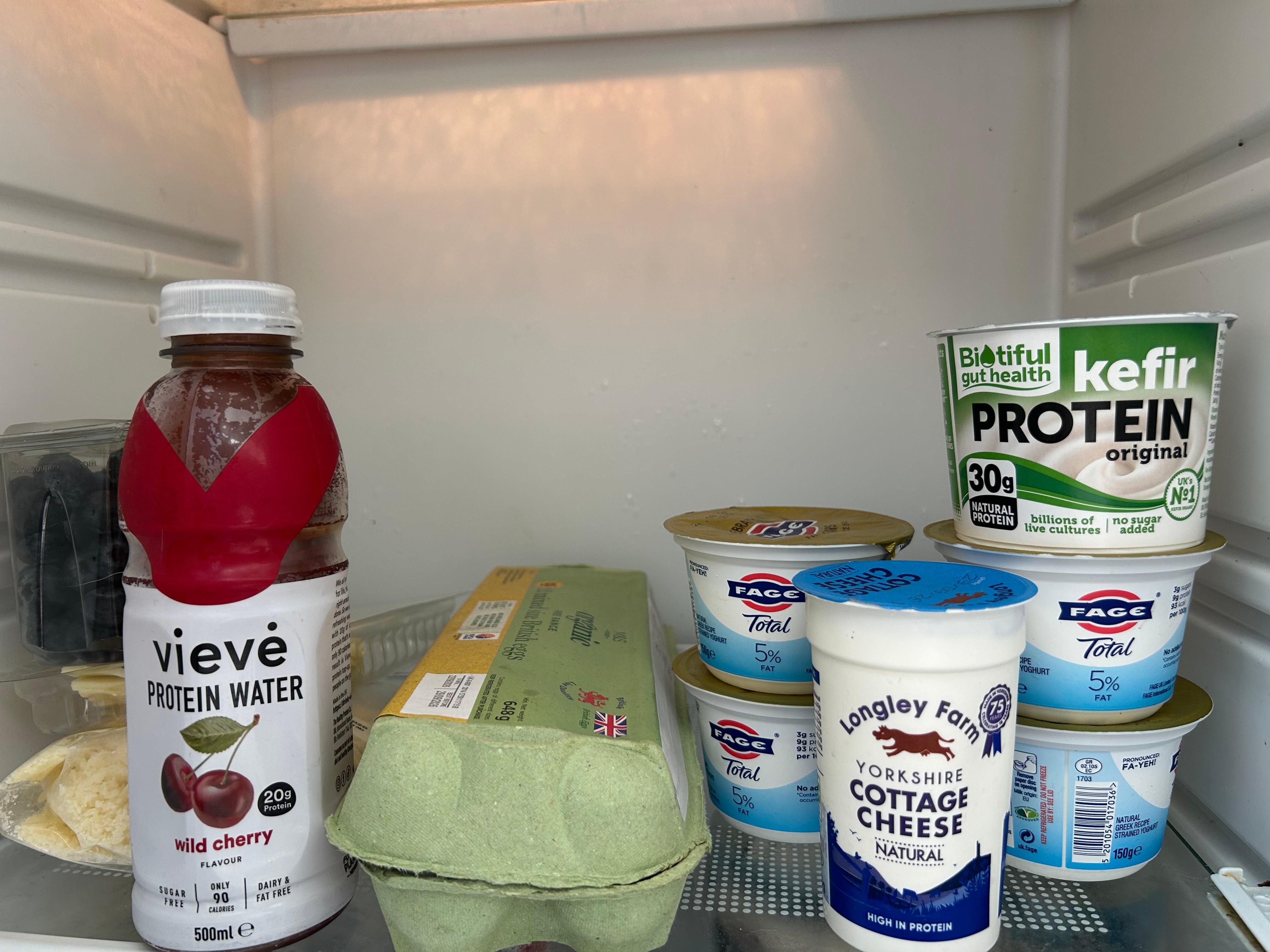 My fridge looks depressingly unappetising (Charlotte Cripps)
At the start of my week, I shoot off to my local supermarket to stock up on protein. Protein-maxxers typically top up on lean protein like chicken and bone broth, but as a vegetarian the options are carb-heavy proteins such as beans and lentils. The problem is, pulses could make me feel too full in large quantities and give me surplus calorie intake before I’ve hit my target.
And then I discover Kefir protein yoghurts packed with 30 g of protein. ‘Could I just eat three of them a day to meet my protein intake?’ I wonder. Ha. I later find out it is like eating cement and I can hardly get through one pot. I also add cottage cheese, more eggs than I’ve ever bought before and Greek yoghurts to my basket, which will be my staple lean protein source.
Annoyingly, I forget tofu and tempah, only later realising it would be an excellent source of protein with 22g in half a pack of tempah. But I’m still ready to give the challenge a go, in the hope of achieving the toned body of my dreams.
Here’s what happened – and what I ate – during my week of protein-maxxing.
Day One:
I have a 150g pot of Fage Greek yoghurt with blueberries for breakfast, with 9g protein, followed by another one mid-morning (total 18g). I am dismayed to discover that one large egg is only about 6g of protein.
You need about five large whole eggs or roughly eight egg whites to get a good 30g of protein. But I can’t handle more than three eggs in my omelette (total 18g), which I eat with sourdough bread and half an avocado.
When I find some chocolate nut protein bars in my local corner shop boasting 12g of protein each, I buy two and eat them both (total 24g). I have three hard boiled eggs later with some more avocado on toast (18g). I eat two slices of thin crust magharita pizza that I make for the kids. There is protein in the mozzarella but I don’t count it as it’s too tricky to calculate. I can’t eat anymore protein: it’s a fail today at 78g.
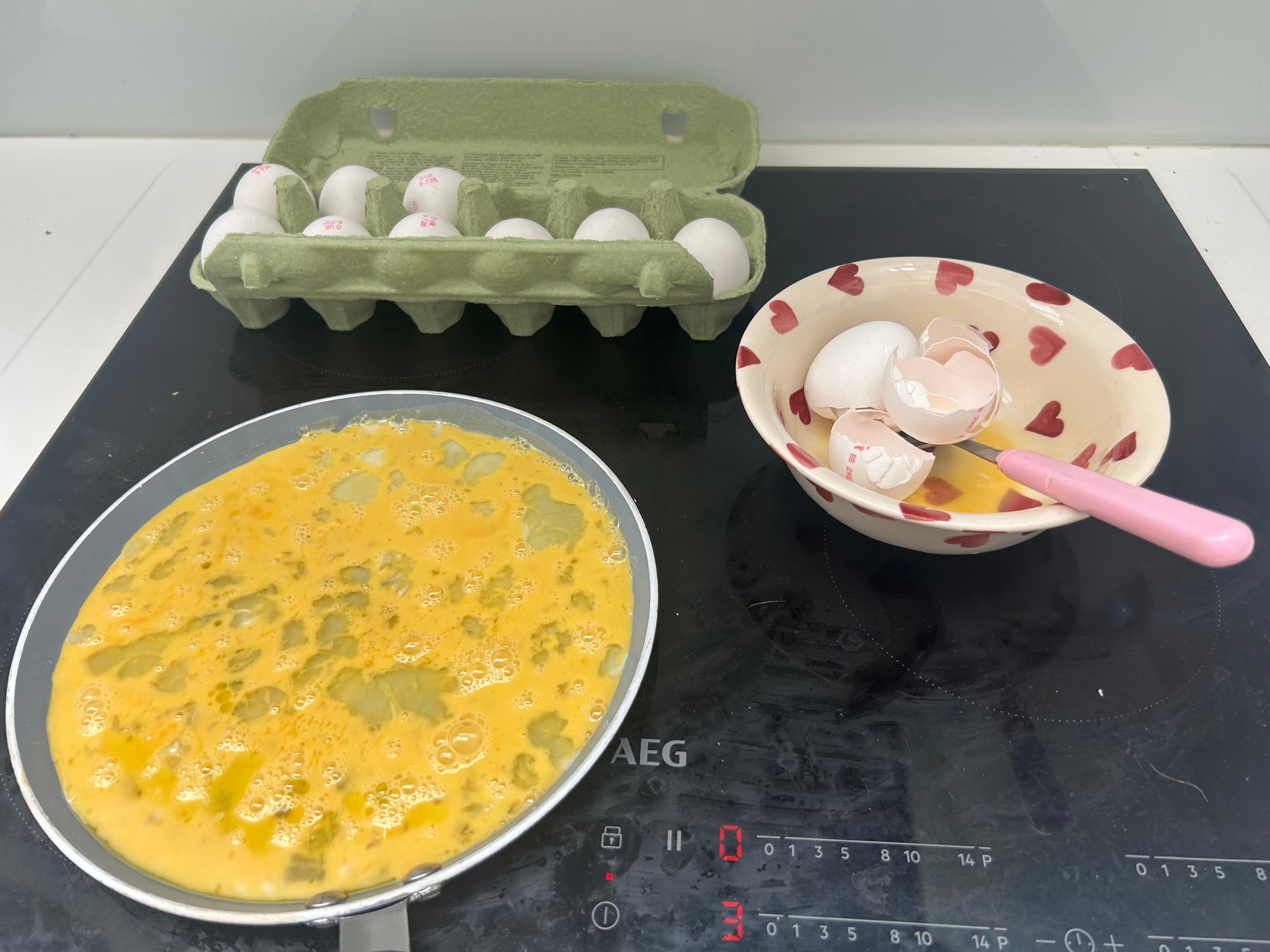 I can’t stand the thought of eating any more eggs by the end of day two (Charlotte Cripps)
Day Two:
I am determined to make it to 100g of protein. I have three Fage Greek yoghurts (27g of protein). I’ve found bottled protein water in wild cherry and watermelon flavours, with 20g protein per 500ml bottle. It’s only got 90 calories and no nasty additives. I have one bottle (20g) – no messy powder or milky drink. Hurrah!
The thought of getting another 53g of protein by the end of the day seems feels like an uphill struggle. I’ve stocked up on cottage cheese – the magic high protein food with 10.3g of protein in 100g. With this in mind, I endeavour to eat a standard 250g pot with lemon squeezed over it and black pepper, with avocado. Tick: that is about 25g of protein. I’ve reached 72g of protein.
So, what about dinner? Omelette, salmon, more cottage cheese? But I also have to eat carbs because I I don’t want to lose weight, I just want to gain muscle. So I have three hard-boiled eggs (18g protein) with sourdough bread and a caesar salad with croutons. There is protein in the caesar salad dressing which is a bonus (16g in a 250g serving). That’s 116g of protein today after I stuff in a Fage yoghurt. I got over my target with flying colours.
Day Three:
I can’t face eating another egg. I don’t care if it’s an omelette, hard boiled, soft, scrambled – whatever. As I am busy struggling to eat proper meals – and existing on high levels of protein – it is causing havoc with any attempts at healthy eating.
I am eating an array of other foods this week alongside my high protein intake: bread, greek salads, avocados, oranges, apples, blueberries , milk, nut muesli, and pizza and pasta, some of which includes protein but to get to 100g, I find it easier to calculate it from just the lean protein sources.
So today, I had one Kefir yoghurt (30g) and then I had two Fage Greek yoghurts (18g).
 Celebrity trainer Aimee Victoria Long tells me to prioritise protein while I do resistance training (Aimee Victoria Long)
I’m struggling to think of what else to eat. I am a busy single working mum with two children and have limited time to plan my meals. My stomach is hard, but it also feels bloated – and my digestion feels messed up. I’m very windy. I am not drinking enough water which is vital, but after so many yoghurts I can’t get much else down me.
I knock back a grounded mint chocolate plant protein shake with 20g of protein. It has quite a high sugar content – 24g sourced primarily from organic raw cane sugar – but as a one-off, for me as a chocolate lover, it’s an okay option. Total protein today: 68g.
Day Four:
I go into the office and I can’t take a fridge full of protein with me. I have a Fage yoghurt before I leave (9g). The juggle of school pick-up, deadlines, and life takes over – and I just grab a cheese sandwich from the supermarket – which is surprisingly high with 16g of protein.
I contemplate how I could efficiently get 75g of protein down me this evening, but it is too horrendous to consider, so I just eat tomato pasta with my kids which has no protein, although, I sprinkle a bit of cheddar cheese on top. For health. One more Fage Greek yoghurt (9g of protein) before bed. I accept defeat today with only 34g of protein.
Day Five:
I start off with a Fage yoghurt (9g of protein) , then another (9g of protein) and another (9 g of protein), followed by a protein water – 20 g of protein by 11am.
I eat another Fage yoghurt (9g) and get my calculator out: 56g of protein. I eat avocado sushi mid-afternoon. A pizza has never felt so good as it did tonight. Total protein: 56g.
Day Six:
I have two Fage yoghurts for breakfast with blueberries (18g) and some muesli. For lunch I have scrambled eggs with four eggs (27g of protein) with broccoli and sourdough bread. Later, I eat a pot of cottage cheese (25g of protein) with half an avocado. I now just want this to end. I don’t want to think about protein anymore. I have a caesar salad (16g of protein) for supper with two hard boiled eggs (12g) and a sweetcorn cob. Total protein: 98g. It’s my last (almost) hurrah.
I feel exhausted though, probably due to a very disturbed sleeping pattern. I’m not waking up feeling hungry in the night, the protein kept me full, but according to some studies, a higher daily protein percentage is linked with difficulty staying asleep or maintaining consistent sleep patterns.
Day Seven:
How am I meant to do this for three months? It is totally mad. I can’t believe that anybody in their right mind could keep this up. I give up. Goodbye protein nightmare. I won’t miss you. All I want is a proper home cooked meal – and not to have to count the protein.
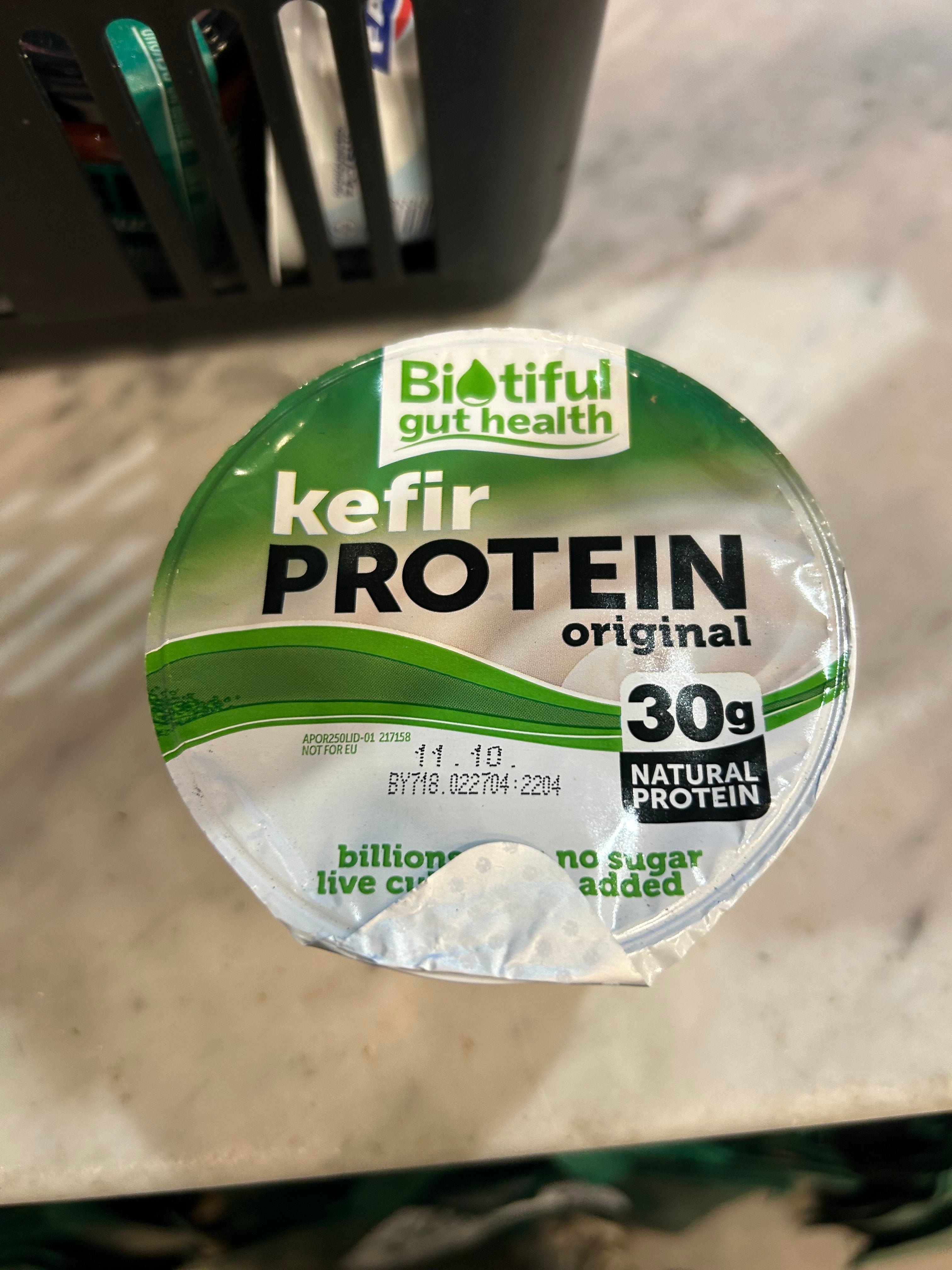 At first I thought these yoghurts with 30 g of protein would make it easy (Charlotte Cripps)
So what went wrong? Dr Linia Patel, women’s health dietitian, performance nutritionist, and author of 2026’s Food for Menopause and Life After Weight Loss Medications, explains: “Protein is essential — but more isn’t always better. Beyond about 2g per kg of your body weight per day, there’s limited evidence of added benefit for most people, and an excessive focus on protein can crowd out other key nutrients, especially fibre, which plays a vital role in gut health.”
She believes that I might have been aiming too high with 100g – “Seventy grams if spread out evenly like 20- 25g per meal and 25g around training may be more manageable. It should not be about having to force feed yourself!”
However, she approves of my main staples – “cottage cheese, Greek yogurt and eggs are good choices – and also give you calcium and other micronutrients like choline (egg)”. Moving forward, she suggests, that I focus on building protein into balanced meals, considering nutritional top-ups like edamame beans and tofu, and a handful of mixed seeds or hemp seeds (all high in protein). They add more calories, but they also add more nutrient density.
“The overall intake was okay on these days but you definitely wouldn’t be able to sustain this. You’d get bored of having so much yogurt – variety is the key,” she explains. “The is to find something that supports strength and recovery and that you enjoy beyond just a three-month challenge.”
My diet left me feeling bloated, and I felt puffy all over my body. Looking back now, I think my body was in a dehydrated state. Most adults need about 1.5 to 2 litres (six to eight glasses) of fluid a day, according to the NHS, and I was only drinking two glasses. It’s even more important to be hydrated when the body is processing large quantities of protein because it strains the kidneys and requires a substantial amount of water to flush out waste products like urea, but I found it hard to drink tons of water on top of so many yoghurts.
I still lost a kilogram in a week – which I didn’t want to do. But, it did feel easier to work out at the gym. I felt surprisingly energised though, but that could have also been the feel-good hormones of being back in the gym kicking in.
As Dr Patel points out to me, a common pitfall she sees in clients includes “all-or-nothing protein intake”. “[It’s] going from zero to excessive based on protein propaganda trends”. That, I now realise, was my mistake – protein blocked out most other food groups as I had to consume so much of it from dairy.
Beyond about 2 g/kg/day, there’s limited evidence of added benefit for most people, and an excessive focus on protein can crowd out other key nutrients”
Dr Linia Patel
Our gut and muscles and brain are in constant conversation, and it’s important to also have a “diverse, fibre-rich diet” to support a healthy gut microbiome, which can affect our mood as well as nourish our muscle health.
I did eat muesli, granola, bread and apples – but I probably should have been eating more legumes such as beans, lentils, chickpeas, and split peas, even if as a side dish for the fibre. My experiment didn’t leave my body feeling great. I did lose weight – but that wasn’t my goal, I’d already done that and wanted to be toned. Above all, it left me feeling depressed. But, ultimately, this challenge felt so arduous because it was so boring.
Moving forward, I won’t be abandoning protein altogether – I’ll just be aiming for a more manageable 70g a day, rather than 100g. That means less yoghurts, but investing in a high-protein cookbook so I can find new, healthier ways to up my protein.