
Mars and Jupiter are currently the planets of the moment, shining like two beautiful bright ‘stars’ in the early morning sky before dawn.
They’re visible in the east before sunrise, with Jupiter the lower and the brighter of the two.
If you catch Jupiter in the eastern sky before dawn, look above and to the right to see Mars as a slightly dimmer, redder ‘star’ higher up.
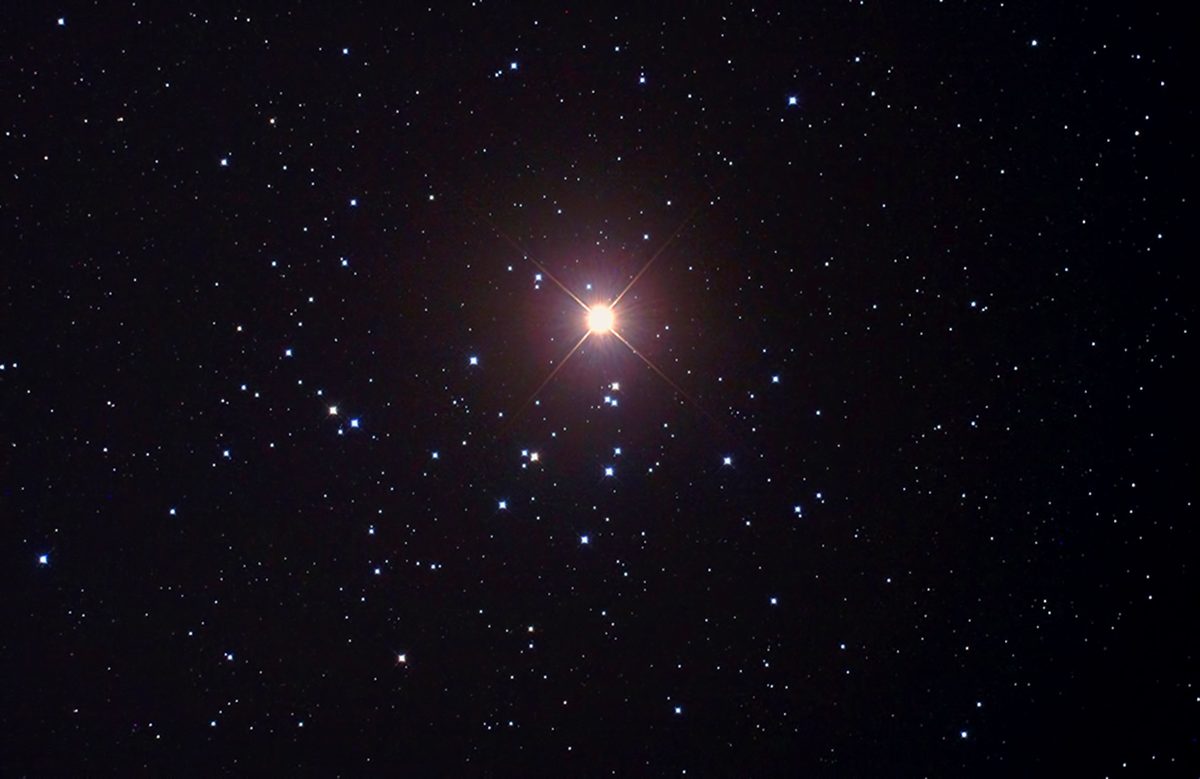
This weekend, 9–12 October, Mars is set to pass in front of a beautiful star cluster called the Beehive Cluster.
Here’s how to see it.
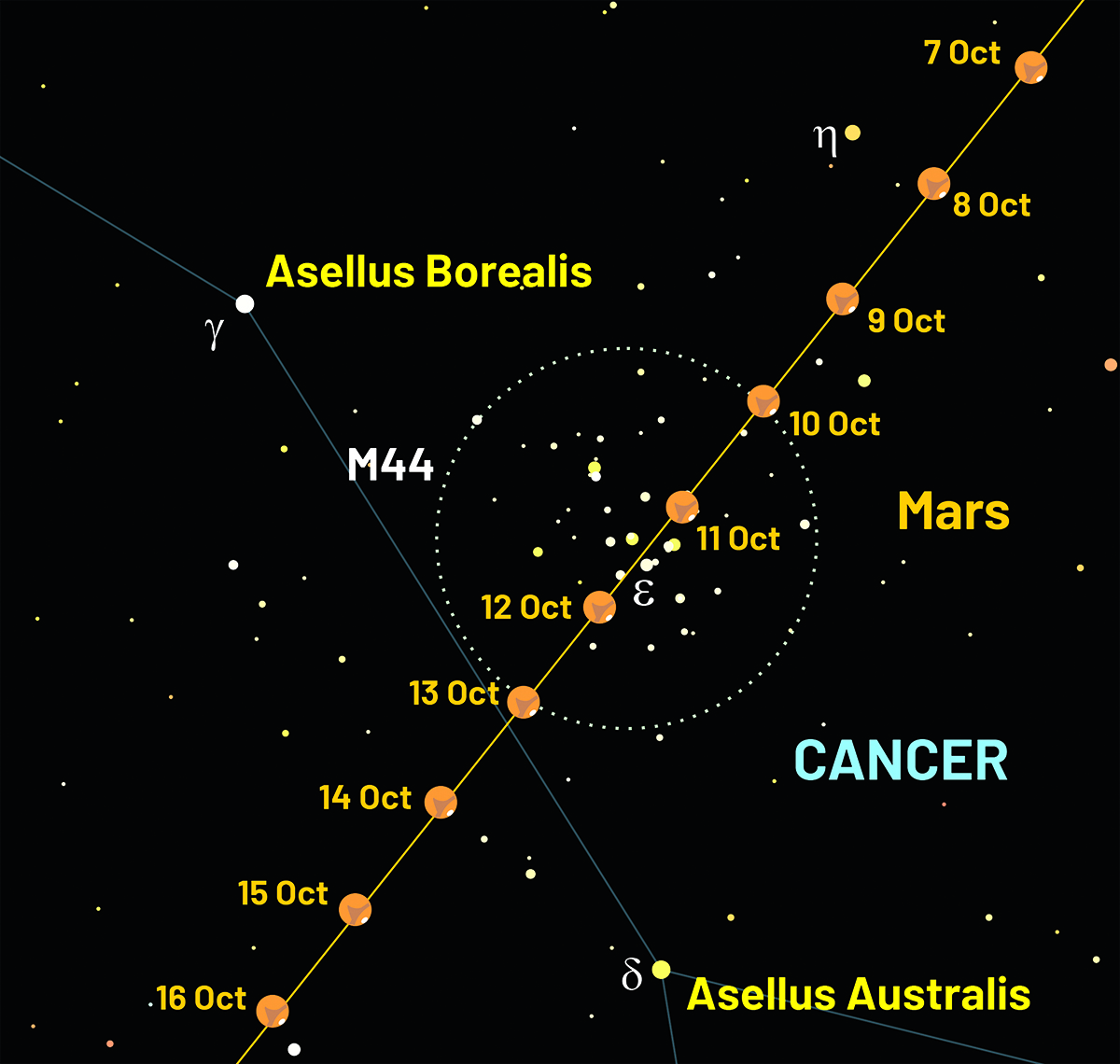 Chart showing Mars passing in front of the Beehive Cluster, October 2026. Credit: BBC Sky at Night Magazine
Quick tips on how to see Mars pass the Beehive
Between 9 and 12 October 2026, Mars passes in front of the Beehive Cluster, M44.
Mars will appear to be right ‘within’ the cluster on mornings of 11 and 12 October before dawn.
Of course, Mars isn’t actually anywhere near the Beehive Cluster – it’s a matter of perception.
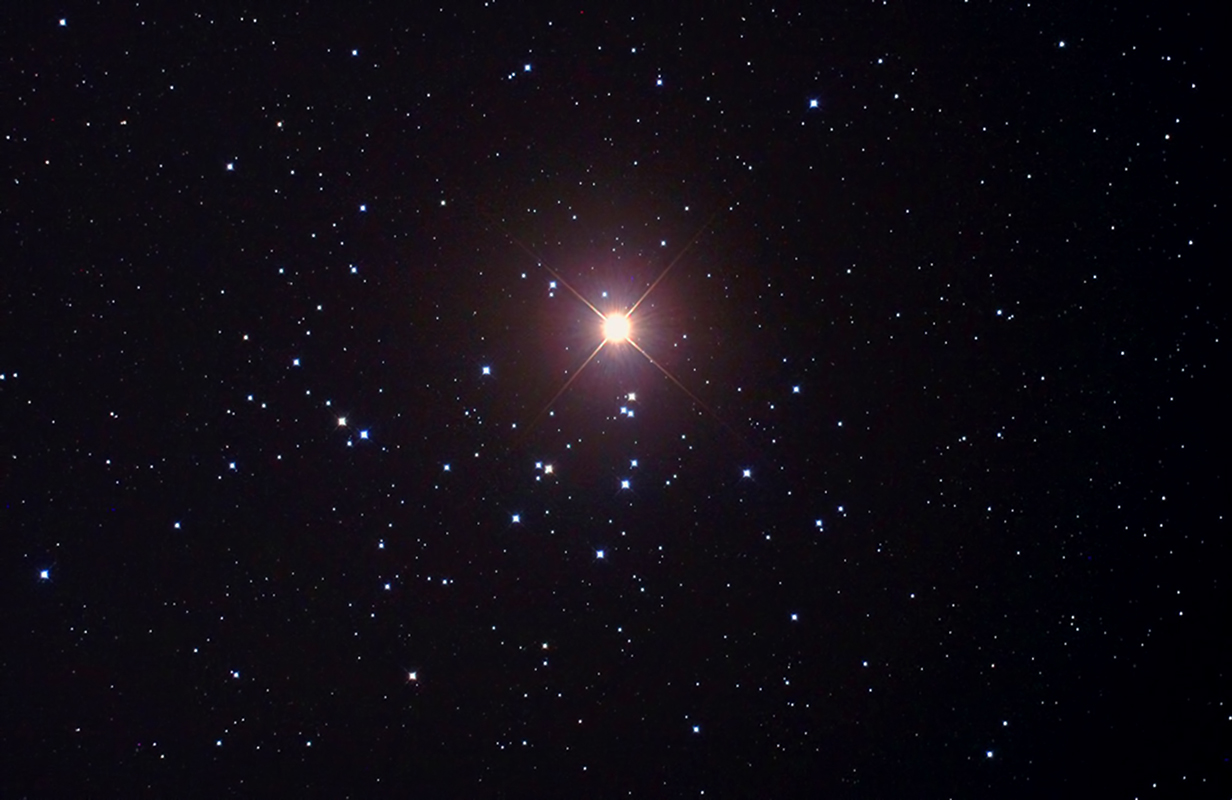 Mars passing across the Beehive Cluster in October 2011, imaged through a f/3.3 reflector. Credit: Pete Lawrence
Find Mars in the east before sunrise, then use binoculars or a small telescope to see the stars of the Beehive Cluster surrounding it.
Get more key observing dates in our full guide to observing Mars and Jupiter in October 2026.
Share your observations and images with us by emailing contactus@skyatnightmagazine.com