
Jazz is a story. Not all stories are told in words; they are also told in emotion, communication, cadence, and rhythm. Jazz is a story told between and among people, involving improvised riffs, questions and answers, and call and response. Jazz touches our souls and syncs our brains.
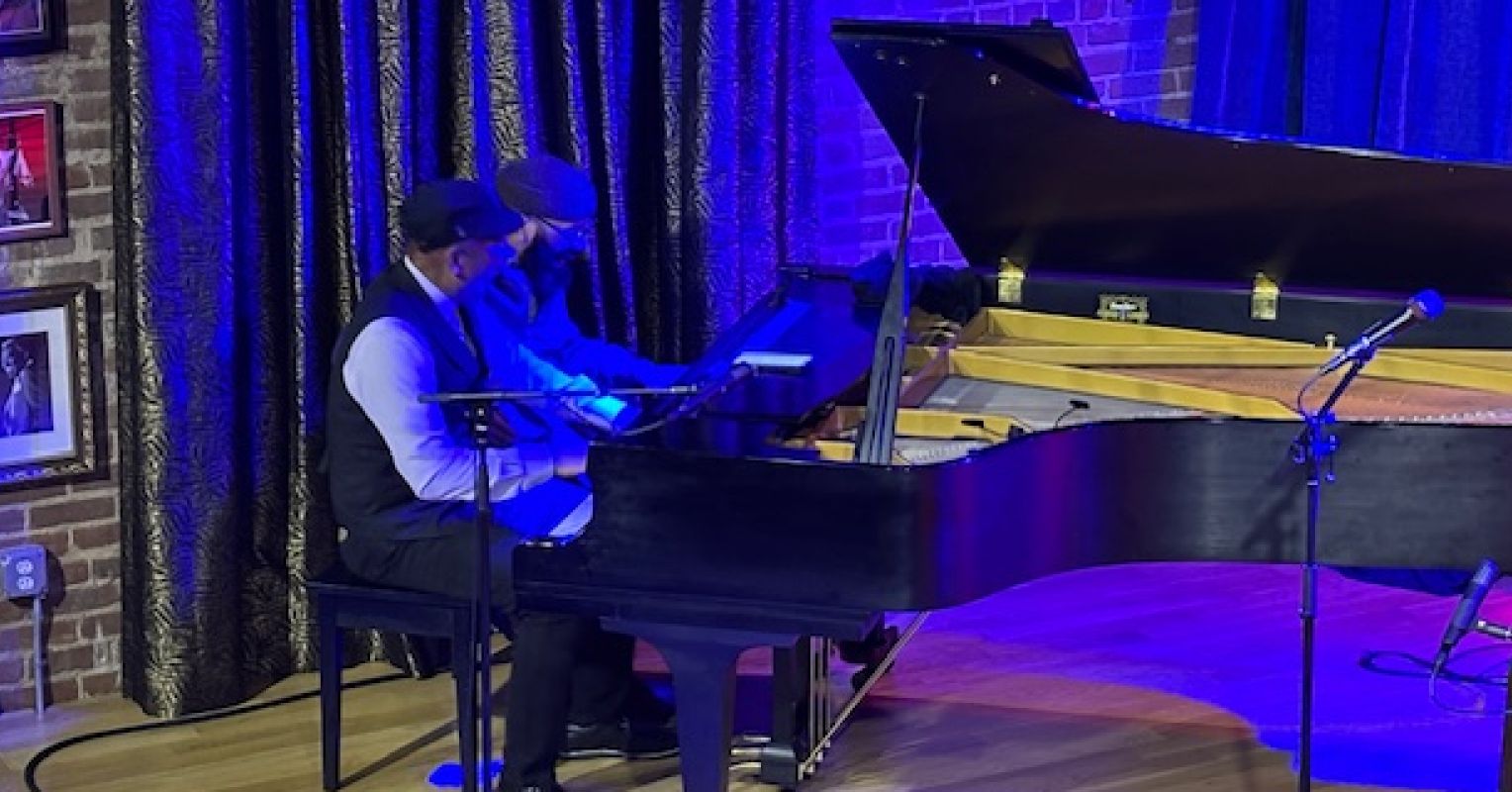
Last night I was privileged to hear a remarkable story told between father and son, an intergenerational jazz story. Kenny Banks Sr. and Jr., both accomplished jazz pianists, sat together on the same piano bench at Churchill Downs, an elegant reincarnation of a revered Atlanta jazz club that just opened in Decatur, GA. The sheer exuberance, joy, and love that emerged from their performance were breathtaking. Through their musical exchange, they told a story of their relationship, both to the music and to each other. Why is music, and especially jazz, so powerfully evocative?
I often write about the power of storytelling, and especially how family storytelling, sharing and listening, is foundational both for the family as a whole and for each individual family member in building a sense of identity, meaning, and purpose in life. Importantly, it is not the story itself, but the telling and sharing. Certainly, knowing family histories and having stories of trials and triumphs of generations past matters; these stories provide the ground from which resilience grows. But it is the active, living stories, the sitting down together, the asking and the answering, the changing bits and pieces that come into focus, the meanings that shift and fall into place, as we share the stories together.
Sharing stories in this way has physical consequences. When we share stories, we show what is called “interbrain synchronization”— the storyteller and listener’s brains actually align, showing the same activation patterns as the story unfolds, and, as Xie and colleagues have shown, this may be a stronger effect for happy than for sad stories. Stories, quite literally, connect us.
Music, and particularly improvisational jazz, connects us in much the same way. Whereas all music, like all stories, creates emotional resonance and meaning, improvisational jazz creates a conversation, both between the players and between the players and the audience. Bob Reynolds, writing about jazz, explains the rule of three: just like stories, jazz begins with a statement, moves into a response (the development of a new idea, introducing tension), and arrives at a destination, a cohesive conclusion. Jazz is a narrative arc.
Kenny Banks Sr. and Jr. have told this story before—the piece they played was clearly well-known and well-loved. But in this moment, they created something new, a new response, a new interpretation, a new way of sharing the story. This is what we do as storytellers all the time. Storytelling is not static but changes depending on the teller, the listener, the reasons for sharing. It is this aspect of family storytelling that makes it so powerful—it adapts to the moment. As does jazz.
Jazz has a long history intertwined with political, economic, and historical factors that defined a genre and an identity. Just as family stories build resistance and strength, so does jazz. Sharing jazz across the generations, telling stories that might only be able to be told through music, as no words can express it, jazz creates an emotional resonance that connects us all, family to family, neighbor to neighbor, person to person. Listening to live improvisational jazz is a privilege and a pleasure. And to listen in on the creation of such a beautiful intergenerational story told through jazz was amazing.