
 SpaceX Puts a Satellite Shadow Over Deutsche Telekom – Moby THE GIST
Our analysts just identified a stock with the potential to be the next Nvidia. Tell us how you invest and we’ll show you why it’s our #1 pick. Tap here.
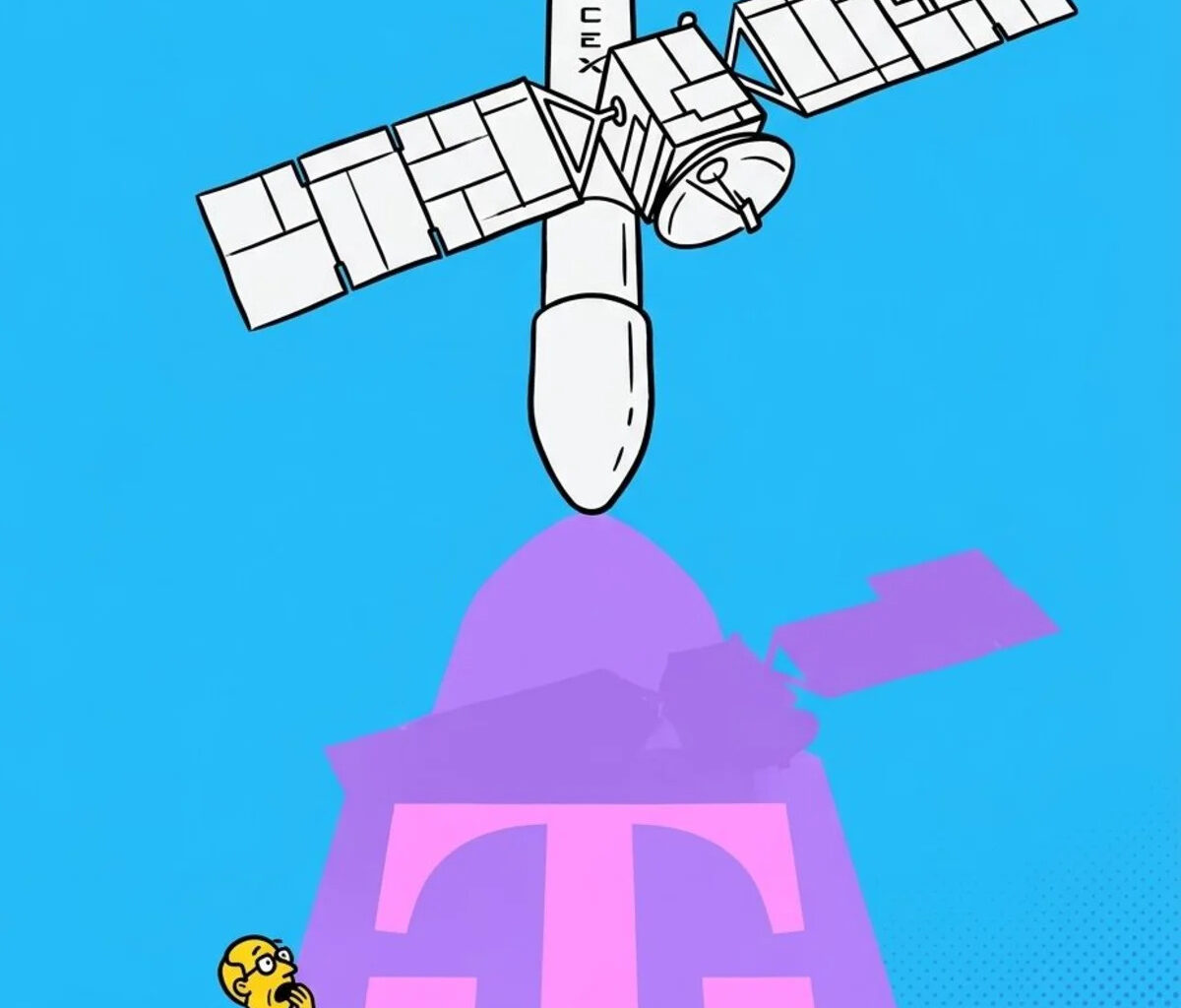
Deutsche Telekom’s most valuable growth engine suddenly has a new potential competitor to worry about. SpaceX is buying nationwide low-band spectrum that could turn Starlink Mobile from a satellite add-on into a more credible US wireless network, forcing investors to rethink how durable T-Mobile’s competitive advantage really is.
WHAT HAPPENED
Deutsche Telekom shares fell around 7% to 8%, putting them on course for their worst session in more than three years after SpaceX announced an agreement to acquire a nationwide portfolio of 800 MHz spectrum licenses from Grain Management.
The portfolio includes up to 14 MHz of paired low-band spectrum and still requires approval from the Federal Communications Commission.
SpaceX says the licenses fill one of the main technical gaps in its mobile strategy. Its existing 2 GHz spectrum is designed to provide high-capacity satellite connectivity, while the newly acquired low-band frequencies travel farther and penetrate walls, trees and other obstacles more effectively.
That combination would allow Starlink Mobile to pair satellite coverage with terrestrial infrastructure and potentially offer a broader consumer wireless service rather than simply providing connectivity in remote areas or emergency situations.
The U.S. telecom sector reacted immediately. T-Mobile US, Verizon and AT&T all sold off sharply as investors considered what another deep-pocketed competitor could mean for an already mature wireless market.
The read-through to Deutsche Telekom is particularly important because the German group owns about 54% of T-Mobile US after accounting for treasury shares, and the American business has become the central driver of group earnings, cash flow and valuation.
T-Mobile’s strong US performance helped Deutsche Telekom raise its 2026 free-cash-flow outlook to roughly €20 billion earlier this year, while T-Mobile itself expanded its shareholder-return program to as much as $18.2 billion.
WHY IT MATTERS
The immediate threat is probably smaller than the share-price move suggests because owning spectrum does not instantly create a nationwide mobile network.
T-Mobile, Verizon and AT&T have spent decades building towers, fiber connections, retail networks, billing platforms and customer-service operations. Replicating that infrastructure would require enormous capital and years of deployment.
Story Continues
SpaceX also needs FCC approval and would likely require significant terrestrial infrastructure if it wants to deliver the speed and capacity consumers expect from a mainstream wireless provider.
One stock. Nvidia-level potential. 30M+ investors trust Moby to find it first. Get the pick. Tap here.
That explains why some telecom analysts still see the near-term competitive risk as limited.
The strategic threat, however, is much harder to dismiss because SpaceX is increasingly assembling the pieces needed to compete rather than simply partner with traditional carriers.
Starlink already operates a global satellite network, serves millions of broadband customers and has direct-to-device technology capable of connecting ordinary smartphones without specialized satellite hardware. Adding nationwide low-band spectrum improves indoor and ground-level coverage, while the FCC has also approved the deployment of thousands of next-generation Starlink satellites.
The company could therefore attack the market differently from a traditional fourth carrier. Rather than duplicating every tower from day one, it could combine satellites, selective terrestrial infrastructure and roaming arrangements to build coverage gradually.
That matters for T-Mobile because much of its investment story rests on having turned the Sprint merger and its large mid-band spectrum holdings into a lasting network advantage.
T-Mobile has used that lead to add customers, grow free cash flow and return billions of dollars through dividends and buybacks, which in turn has made Deutsche Telekom’s controlling stake increasingly valuable.
If SpaceX eventually forces the US carriers to cut prices, raise network investment or spend more aggressively at future spectrum auctions, the impact could reach T-Mobile’s margins even before Starlink wins substantial market share.
There is also an auction angle. SpaceX is expected to become a serious bidder when the FCC sells additional mid-band spectrum in 2027, potentially increasing the price traditional operators must pay for frequencies they previously competed for mainly among themselves.
WHAT’S NEXT
The first hurdle is FCC approval of the Grain spectrum transaction, after which investors will watch how quickly SpaceX moves from spectrum ownership toward a commercial terrestrial mobile offering.
The 2027 US spectrum auction will provide another important clue. Aggressive bidding from SpaceX would confirm that the company sees Starlink Mobile as more than a niche satellite service and is prepared to spend heavily to become a genuine wireless competitor.
T-Mobile’s upcoming quarterly results will meanwhile be judged against a higher competitive-risk premium, even if customer growth and cash generation remain strong.
Deutsche Telekom still owns one of the best-performing mobile businesses in the world, and SpaceX remains years away from matching its infrastructure. The market’s message is that investors can no longer assume T-Mobile’s next decade will be fought only against the same two rivals it knows today.