
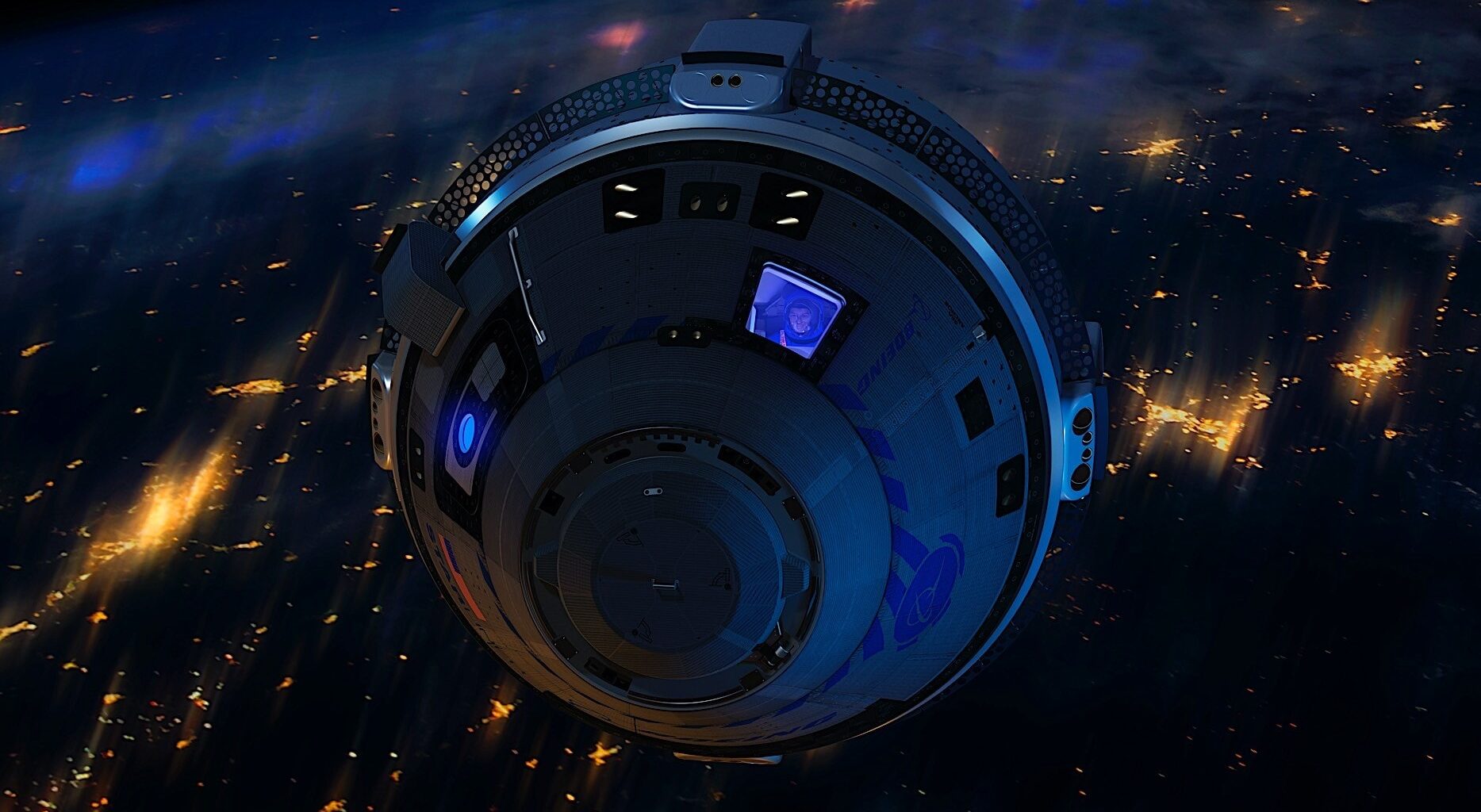
It’s not uncommon for rockets and ships designed for the exploration of space to go through some very difficult times before actually getting to fly operationally. It does seem, though, that Boeing’s Starliner has had it a lot tougher than most.
The space capsule has been, for a while, fighting with SpaceX’s Crew Dragon to become a regular means of transportation for astronauts going to the International Space Station (ISS) or back down to Earth. Then, a series of botched launch attempts and a monumental failure in Earth orbit almost sent it back to the drawing board.
The last time we heard anything about the Starliner was back in February, when American space agency NASA officially classified the only crewed flight of the design so far as a Type A mishap. For the record, that places the mission on equal footing with the destruction of Space Shuttles Challenger (1986) and Columbia (2003), and resulted in more than $2 million in damage.
As a quick reminder of what happened, back in 2024 NASA sent astronauts Butch Wilmore and Suni Williams to the ISS with the Boeing spacecraft as part of the Crew Flight Test mission. It got them there safely, all right, but a number of issues that arose en route, including a helium leak and improper functioning of the thrusters, meant the two Americans would not use it to come back to Earth.

Photo: Boeing
That resulted in the two having to stay on the station, unable to return, for nine months (the original mission duration was two weeks), eventually being rescued by a SpaceX Crew Dragon. The Starliner, on the other hand, ended its mission, called CST-100, by coming back home empty and alone.
The previous missions of the spacecraft were equally as dramatic. The first time it tried to serve NASA’s needs, in 2019, it failed to dock with the ISS. Then, in 2021, several launch attempts were scrubbed after the Starliner experienced a series of hardware and software issues, including leaks. One year later, flying with no crew on board, the ship eventually managed to attach itself to the station.
Then, the crewed mission of 2024 was deemed a Type A mishap on account of it losing maneuverability as it approached the ISS, and that prompted NASA to rethink its use strategy for the Boeing design. The initial plan of 2014, which called for the Starliner to be used for six crewed missions, was scaled down to just four of them, including uncrewed flights.
The first of them, Starliner-1, was supposed to take off in April 2026, but for one reason or another it was pushed to the end of the year at the earliest. This is the flight meant to test and validate the changes made following the problems the spacecraft experienced over the years.

Photo: Boeing
NASA didn’t say back then when we are to expect astronauts to step inside the Starliner once more, but it did so at the end of September, when it updated the world on the future of what is probably one of the most flawed designs in space exploration history.
According to both NASA and Boeing, Starliner will be back to serving the needs of the ISS, and it could fly with people on board once more as soon as 2028 as part of the Starliner-2 mission, but only if Starliner-1 goes according to plan. Also, the space agency announced its intention to exercise options for the fifth and sixth flights that were mentioned as a sort of reserve at the beginning of the year.
Apparently, the decision to extend the mission roster for the Starliner came after NASA concluded that the issues experienced before have been ironed out, and no less than 61 recommendations are presently being implemented to avoid further problems.
The investigation into the Crew Flight Test mishap has found that the most likely culprit was the Starliner’s service module reaction control thrusters operating outside of their engineering qualification, due to a variety of factors, including the thermal environment and unnamed design flaws.

Photo: Boeing
Changes were made to the service module, including the fitting of an additional thruster valve design modification, all of which will be tested during Starliner-1. After this mission, Boeing will also have to install new crew module thrusters, batteries, and perform minor modifications to the parachute system.
On top of everything, the spacecraft will be flown in its upcoming missions on a new kind of rocket. The previous flights, flawed as they were, relied on United Launch Alliance (ULA) Atlas V boosters to get going, but as this design is being retired, Boeing will use the newer ULA Vulcan instead to fly its fifth and sixth missions, so steps are now being made to certify the new arrangement.
If NASA and Boeing manage to get everything in order, the United States will have two different crew-rated orbital spacecraft at its disposal at the same time, and that’s something that has never happened before on this world.