
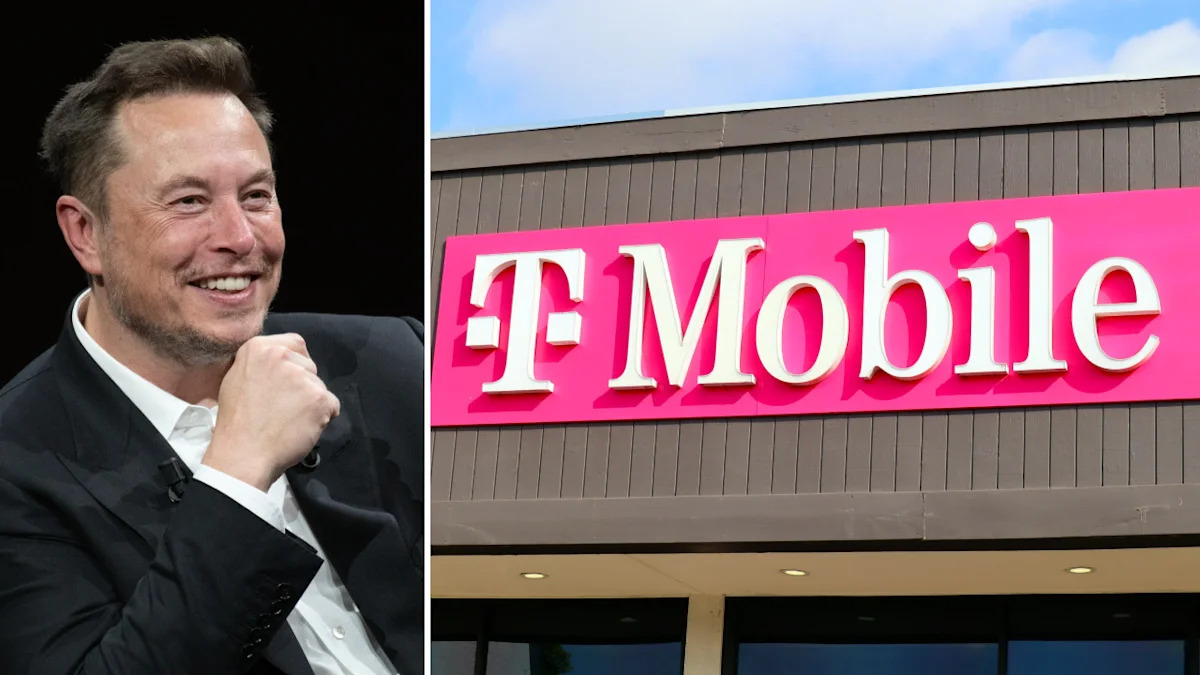
When T-Mobile and Sprint completed their merger in 2020, one of the conditions the company agreed to was selling off its 800 MHz spectrum portfolio. It took a while, but that sale was completed in August.
Authorities at the company didn’t realize it at the time, but the deal opened the door for a major new competitor to emerge: SpaceX. And that’s hitting shares of not just T-Mobile, but all cellular carriers, hard.
Must Read
Shares of T-Mobile have dropped 10% since SpaceX announced on Thursday that it had agreed to purchase the spectrum portfolio from Grain Management, who bought the rights from T-Mobile. The deal still requires Federal Communications Commission approval. Verizon and AT&T stock are both down 8% in the same period.
An unexpected twist
The sale of the spectrum was supposed to be mundane. The 800 MHz airwaves were used by Sprint to power their push-to-talk phones in 2004, which have walkie-talkie-like features. Dish, initially, was going to buy the spectrum, but couldn’t raise the money. That opened the door for Grain, which initially planned to sell it to utilities for private networks, Aakash Gupta, a product management leader, creator, and educator, posted on X.
But SpaceX saw a better use, he added.
“Starlink’s satellite signal at 2 GHz can reach your phone outdoors, but it dies at the first wall,” he wrote in a social media post. “800 MHz penetrates buildings. Most phones already have the band built in. So satellites handle the open sky, this low-band layer handles indoors, and suddenly Starlink Mobile covers everywhere a normal carrier does without the tower network.”
What’s next?
Assuming SpaceX gets FCC approval for the purchase, the company says the addition of low-band spectrum “will pave the way for Starlink Mobile to become a major mobile carrier in the US.”
Importantly, SpaceX eliminates the need to build an expensive, complex network of repeaters across the country and world. Once it deploys an architecture that combines the satellite-to-mobile capabilities it already has with the spectrum it has acquired, it will be able to offer what it says is reliable service not only indoors and outdoors, but in so-called ‘dead zone’ areas where cellular coverage is spotty.