
Credit: Far Out / Alamy
Sun 11 October 2026 19:15, UK
They never saw it coming, but one idle jam and a lightning bolt of lyrical inspiration would win Deep Purple their defining smash.
Headbangers around the world will all agree that heavy metal’s core foundations were burnished by a certain Brummie quartet from the Aston suburbs. Yet, alongside Black Sabbath’s pioneering leaden blues attack were the hefty guitar chops of Led Zeppelin and Deep Purple’s swallowing organ score. Taking cues from Cream and Vanilla Fudge, Ritchie Blackmore’s classical-leaning fret melodies and Jon Lord’s amplified organs earned the London band their place in heavy metal’s essential founding trinity.
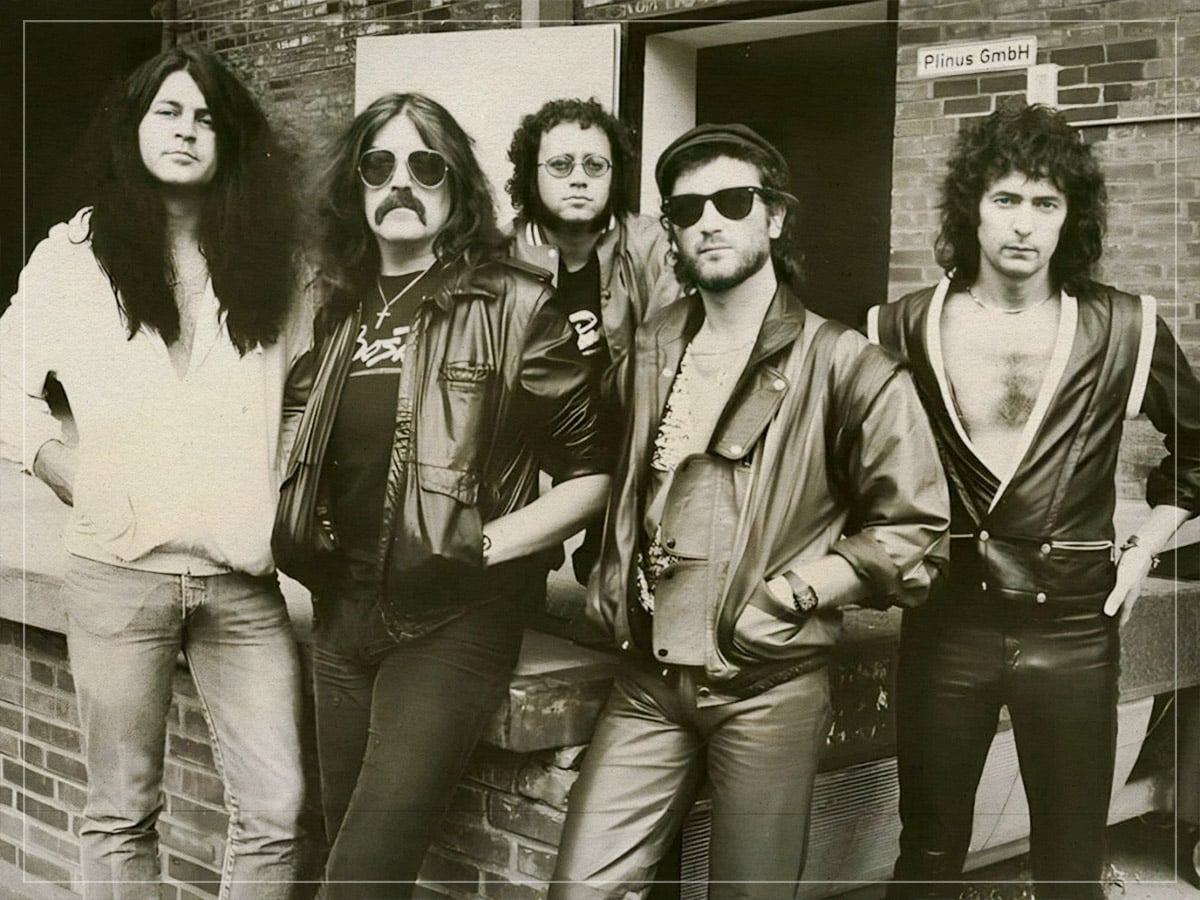
As fans know, Deep Purple have existed in countless incarnations over the years, currently in their Mark IX era, but the classic chapter is the second phase of the band’s evolution, when Blackmore and Lord were joined by future Sabbath frontman Ian Gillan, later Whitesnake drummer Ian Paice, and Roger Glover on bass in 1969. During the lineup, the band would drop their lauded Deep Purple in Rock and Machine Head albums, plus the Made in Japan live double LP.
Amid this electric unit, Deep Purple’s signature number would be stumbled upon. “I almost hate to admit it, but we wrote ‘Smoke on the Water’ as a filler track,” Glover confessed to OnMilwaukee in 2019.
The single’s birth has become the stuff of rock and roll lore. In Switzerland, to commence the Machine Head sessions, the Montreux Casino Deep Purple had planned to record hosted Frank Zappa and the Mothers of Invention band for a live show the night before in December 1971. Towards the end of the set, a fired flare gun impacted with the rattan-covered ceiling, engulfing the entire casino in flames.
Deep Purple were now without a recording space as the fire’s smoke descended over Lake Geneva. Hauling the Rolling Stones Mobile Studio to various spots, the bulk of Machine Head was cut at the nearby Grand Hôtel de Territet, but a brief spell at Le Pavilion theatre saw Blackmore’s bluesy four-note riff first rear its head.
This was just a jam noodle, however. Little was thought of Blackmore’s right until the end of their scheduled stay at the Grand Hôtel, when an extra number was needed to pad out Machine Head’s runtime. The riff was fleshed out, and, sparked by Glover’s title suggestion, Gillan penned ‘Smoke on the Water’s lyrical narration, essentially a recount of that night’s fire in Montreux. Job done, a rushed cut tacked on the record with little thought of any further life.
Further reading: From The Vault
In fact, it took a Warner Bros bigwig to push for ‘Smoke on the Water’s release. Machine Head was dropped in March 1972, but the label saw hit potential with Deep Purple’s last-minute number, managing a single release as late as May the next year. Warner Bros knew the pop charts. ‘Smoke on the Water’ would crack the Top Ten of the Billboard Hot 100 and stand as their signature theme, even if Glover and the band could never quite wrap their heads around such success.
“You can analyse it until the cows come home, and I still don’t know why a song catches on like that,” the bassist confessed.
