
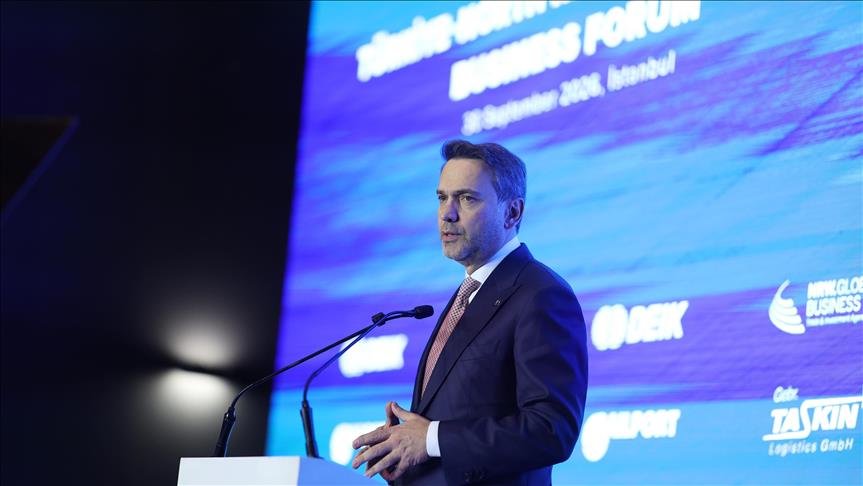
Türkiye will put electrification at the center of its agenda for the 31st United Nations Climate Change Conference (COP31), as rising electricity demand and decarbonization goals drive the country’s energy strategy, Energy and Natural Resources Minister Alparslan Bayraktar said Monday.
Speaking at the 25th World Petroleum Council Energy Congress in Riyadh, Bayraktar said Türkiye aimed to convey a message to the international community at COP31 on the need to advance electrification while addressing energy security and climate change.
Electricity demand in Türkiye is growing not only due to conventional consumption patterns but also emerging sources, including artificial intelligence-driven data centers, cooling needs, and desalination, he said.
Meeting this demand while advancing decarbonization would require investment across several areas, including renewable energy, energy efficiency, natural gas infrastructure and nuclear power, Bayraktar added.
Türkiye aims to achieve decarbonization by 2053 and is targeting 20 gigawatts of nuclear power generation capacity by 2050, he said.
– Renewables and nuclear to support transition
Bayraktar said Türkiye was pursuing an ambitious renewable energy strategy covering solar, wind, offshore wind and geothermal power.
Energy efficiency was another key priority, with potential for improvements across the economy, including agriculture, transportation and buildings, he said.
Nuclear energy would also help Türkiye meet rising electricity demand while supporting its decarbonization and carbon neutrality goals, Bayraktar added.
He said the country’s aging coal-fired power infrastructure needed to be transformed toward cleaner alternatives, while securing natural gas was becoming increasingly difficult under current market conditions.
Türkiye continues to invest in oil and gas infrastructure, including pipelines, underground storage facilities and regasification terminals, as well as offshore exploration and production activities at home and abroad, he said.
Bayraktar also stressed the importance of critical minerals, saying the energy transition depended on effective strategies for developing mineral resources.
– Energy security remains central to climate goals
Bayraktar said global energy markets had faced successive challenges since the COVID-19 pandemic, including supply chain disruptions linked to the Russia-Ukraine war, economic difficulties, high capital costs and the recent conflict involving Iran.
These developments have underscored the importance of resilient energy markets and international cooperation, he said.
Energy security would become a top priority, Bayraktar said, adding that countries needed more coherent policies to address energy security alongside climate change.
He also emphasized regional connectivity as a means of diversifying energy supplies, saying Türkiye was pursuing pipeline projects with neighboring countries, including Iraq and Syria, and seeking to expand cross-border connections for oil, natural gas and electricity.
Bayraktar also expressed solidarity with Saudi Arabia following attacks by Yemen’s Houthi group, saying the Turkish government and people strongly condemned the attacks.
By Ebru Sengul Cevrioglu
Anadlu Agency
energy@aa.com.tr
related news