
Credit: Alamy
Mon 12 October 2026 20:00, UK
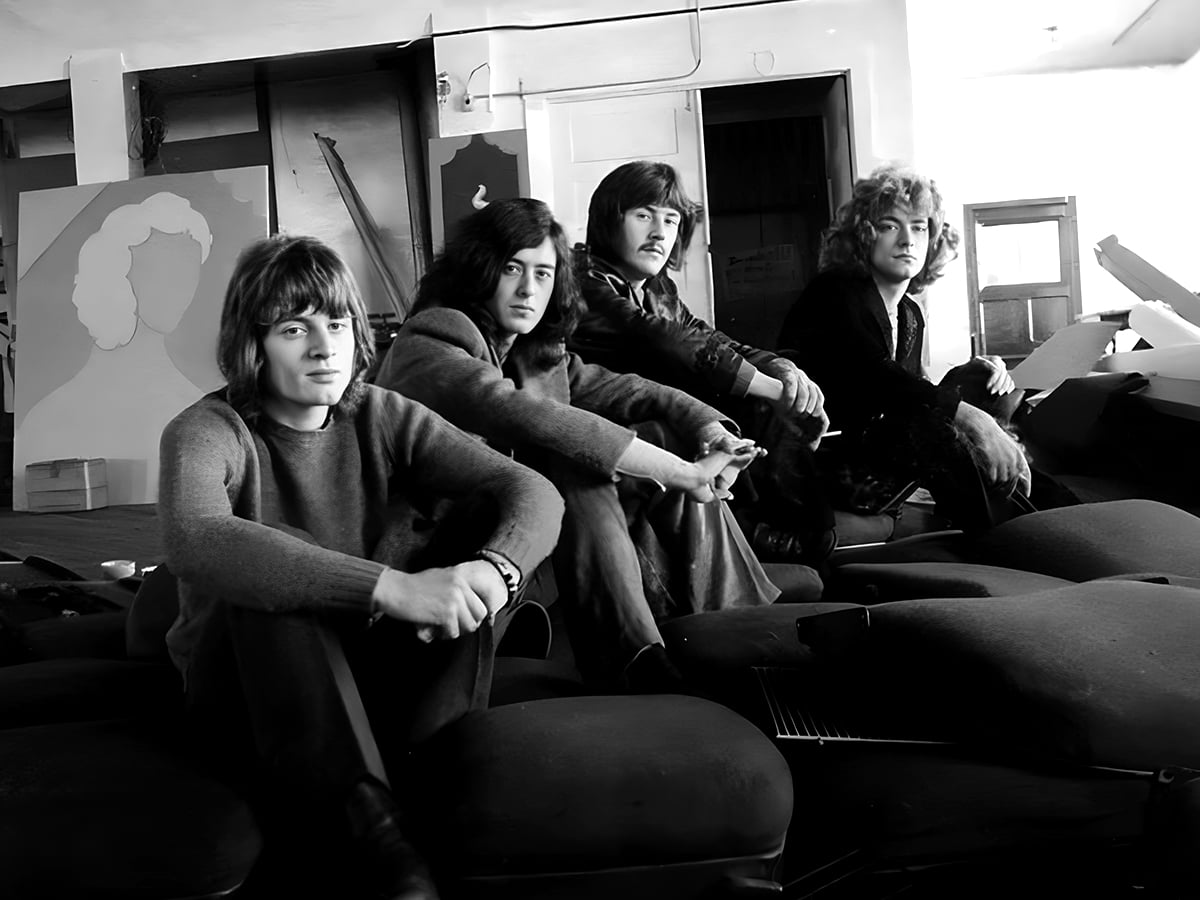
There is an adage that all a songwriter is really trying to do is write songs that sound as though they were forged in stone, and in the case of Led Zeppelin‘s ‘Over the Hills and Far Away’, that idea almost takes on a literal meaning.
The title was taken from a traditional English song of the same name that dates back to at least the late 17th century, with a version of it also popping up in John Gay’s 1728 The Beggar’s Opera, and while its lyrics have changed over the years, the familiar title and tune have endured. Some of the best-known iterations tell the story of recruiting soldiers for the British Army, encouraging young men to enlist and march off to fight in foreign wars.
Given this history, it might seem an unlikely starting point for a Led Zeppelin song, but the band’s version of ‘Over the Hills and Far Away’ was brought about in 1970, when Robert Plant and Jimmy Page retreated to a small 18th-century cottage in Wales called Bron-Yr-Aur after an exhausting North American tour. The property had neither running water nor electricity, but it offered something the pair badly needed: time and space to write.
“We’d been working solidly right up to that point. Even recordings were done on the road,” Page recalled, “We had this time off, and Robert suggested the cottage. I certainly hadn’t been to that area of Wales. So, we took our guitars down there and played a few bits and pieces. This wonderful countryside, panoramic views and having the guitars… It was just an automatic thing to be playing, and we started writing.”
Despite having been in the same band for more than two years, Page described the experience as the first time he had really come to know Plant, away from the demands of touring, which led to the pair developing ideas that would eventually find their way onto Houses of the Holy.
A wistful, Celtic-tinged tune initially titled ‘Many Many Times’ began to take shape at the cottage before evolving into ‘Over the Hills and Far Away’, and the connection to the traditional song was largely in the title, rather than the lyrics or melody, wherein they took a familiar phrase with centuries of history behind it and made it their own.
Recording the track presented its own challenges, however, as while the cottage might have been an inspiring place to write, Page admitted it was less than ideal as a recording studio, as compared to Headley Grange, where portions of Houses of the Holy were also recorded.
Further reading: From The Vault
Engineer Eddie Kramer recalled the makeshift arrangements, including “putting a Fender amp in the fireplace and putting a mic in there”, but the unconventional setting did not stop the song from taking shape, which was released on May 24th, 1973, as a single in the United States, backed by ‘Dancing Days’.
It became one of the band’s relatively few official singles, while Bron-Yr-Aur also provided kindling for other material, including ‘The Crunge’, ‘The Rover’ and ‘Down by the Seaside’, beyond offering Plant and Page a chance to step away from the machinery of a touring rock band and rediscover the simple pleasure of playing together. While the traditional song behind their title had already travelled through centuries of changing lyrics and meanings, Zeppelin’s version turned it into something uniquely theirs.
ADD AS A PREFERRED SOURCE ON GOOGLE  The Far Out Led Zeppelin Newsletter
All the latest stories about Led Zeppelin from the independent voice of culture.
Straight to your inbox.