
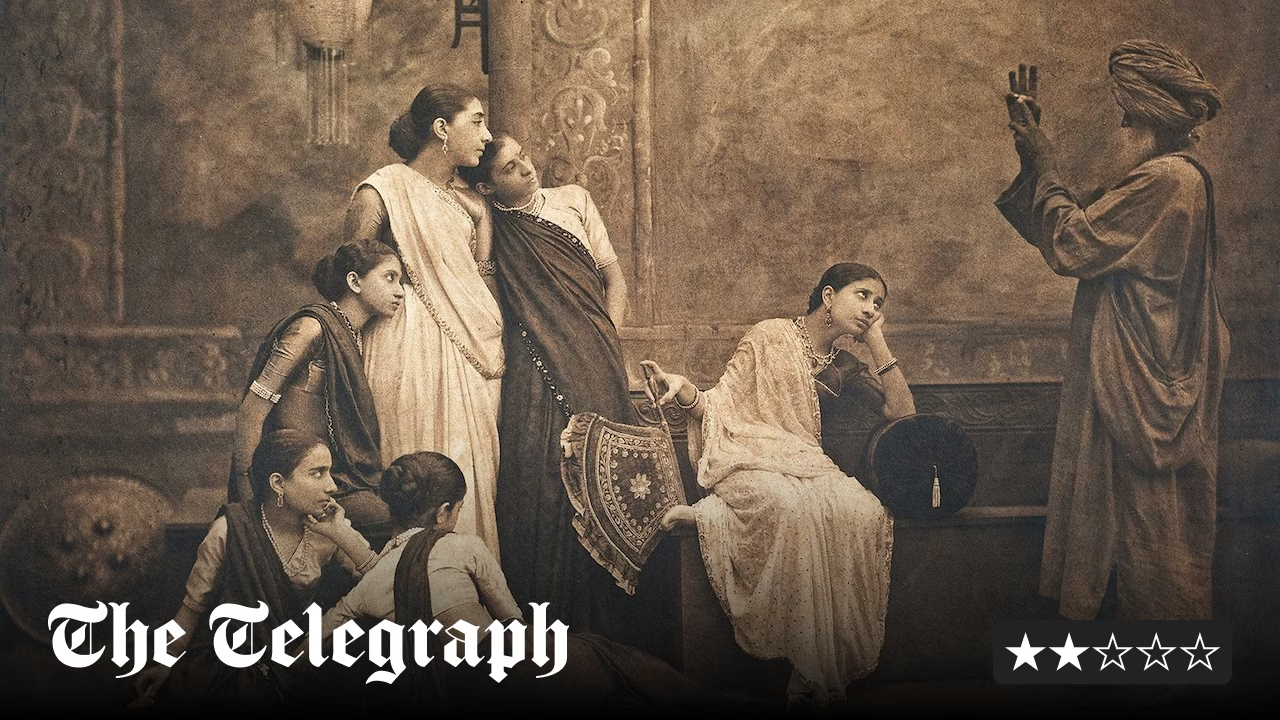
Indeed, the “modernity” of a Pictorialist artwork is often only, and merely, derived from the fact that it’s a photograph. Pictorialism was a movement of camera clubs and societies, but the archaic name of one of the most important, London’s Brotherhood of the Linked Ring, does little to dispel this show’s prevailing atmosphere of dustiness. Neither does a geeky display reproducing photography-salon stickers. What’s more, the Pictorialists’ concern with producing “Art” with a capital “A” surely accounts for their pretentious, pseudo-poetic titles (Spring Allegory; City of Ambition; The Days of Innocence). They smack of trying to instil ho-hum, conventional imagery with import.
Another issue with the exhibition is, as it were, the width of its field of view. These days Tate is obsessed with a “transnational” approach to art history (to rethink modernism’s “foundations” via “a more inclusive perspective”, as the institution’s interim director, Karin Hindsbo, puts it in the catalogue). Here, the curators adhere to this in-house creed by assembling disparate work from far-flung places in rooms with bland titles such as “Cosmopolitan Networks” and “Local Voices, Global Conversations”. This may please Tate’s managers, but I’m not sure it elucidates much, since it makes it hard to get a handle on Pictorialism, except in the loosest sense. Pictorialists, we’re told vaguely, were keen on effects of “poetry”. Light and Magic could have been called “Smoke and Mirrors”.