
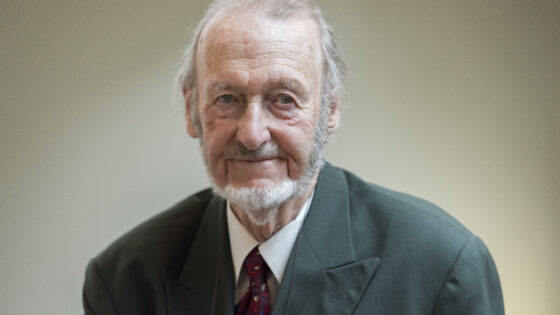
During his life, Insall was instrumental in championing the cause of conservation for UK buildings, not only delivering major restoration projects on beloved British icons, but also helping to institutionalise conservation in the planning process.
Keen to distinguish conservation from preservation, he once quipped that preservation was ‘what you do for marmalade’, while conserving a building meant working to keep it living on usefully for future generations.
Born in Bristol in February 1926, Insall grew up in a family of leather, trunk and portmanteau manufacturers. He attended Bristol Grammar School, where he watched his father commission and build a family home in Henleaze, in the north of the city.
The destruction of Bristol’s ancient churches and historic buildings during the Second World War helped direct his attention towards architecture and its preservation.
He began studying at the Royal West of England Academy School of Architecture in 1942, and after graduating moved to London to study civic design at the Royal Academy Schools and later at the School of Planning.
In the AJ Buildings Library
He became a Lethaby scholar at the Society for the Protection of Ancient Buildings (SPAB) in 1950, where he worked alongside traditional craftspeople, then got a job at London practice Phillimore and Jenkins, which specialised in the design and restoration of country houses.
The SPAB said it was saddened to learn of Insall’s death, adding that he made ‘an enormous contribution as an expert volunteer and, in architectural practice, carried out pioneering conservation work that helped numerous historic buildings’.
Insall set up his practice, Donald Insall Associates, in 1958, working from the kitchen table in his small flat off Belgrave Square. The practice grew to be one of the leading conservation firms in the UK.
Its landmark projects include conservation works to the House of Lords ceiling in 1980, the repair of Kelmscott Manor in 1961, and the restoration of Windsor Castle after the fire of 1992.
Insall’s study of Chester in 1968 established many of the principles of conservation management used today, and propelled him to become conservation consultant for the city.
His work in Chester also helped create the role of conservation officers in local planning, which are now used by local authorities across the country.
The practice was a frequent collaborator, working with a variety of other firms.
Squire & Partners described its work with the practice, including 30 Warwick Street, the Elizabeth Garret Anderson Hospital, Haggerston Baths and most lately Space House, as ‘some of the best architectural journeys that we have been on’.
Squires senior partner Tim Gledstone added: ‘Donald Insall and his team have been a guiding light in conservation and collaboration, and have always led with professionalism, passion and inquisitiveness – attributes which are very close to our hearts at Squire & Partners.’
Insall was chairman of his practice until 1998, and remained a trustee of its Employee Ownership Trust for the rest of his life.
The practice described its founder as ‘a man of great tact, charm and humour’, adding that he continued as a regular consultant to the practice until his death.
Insall was knighted in 2010, after having received a CBE in 1995 and an OBE in 1981.
He is survived by his wife, Libby Insall, and his three children, Robert, Christopher and Hilary.
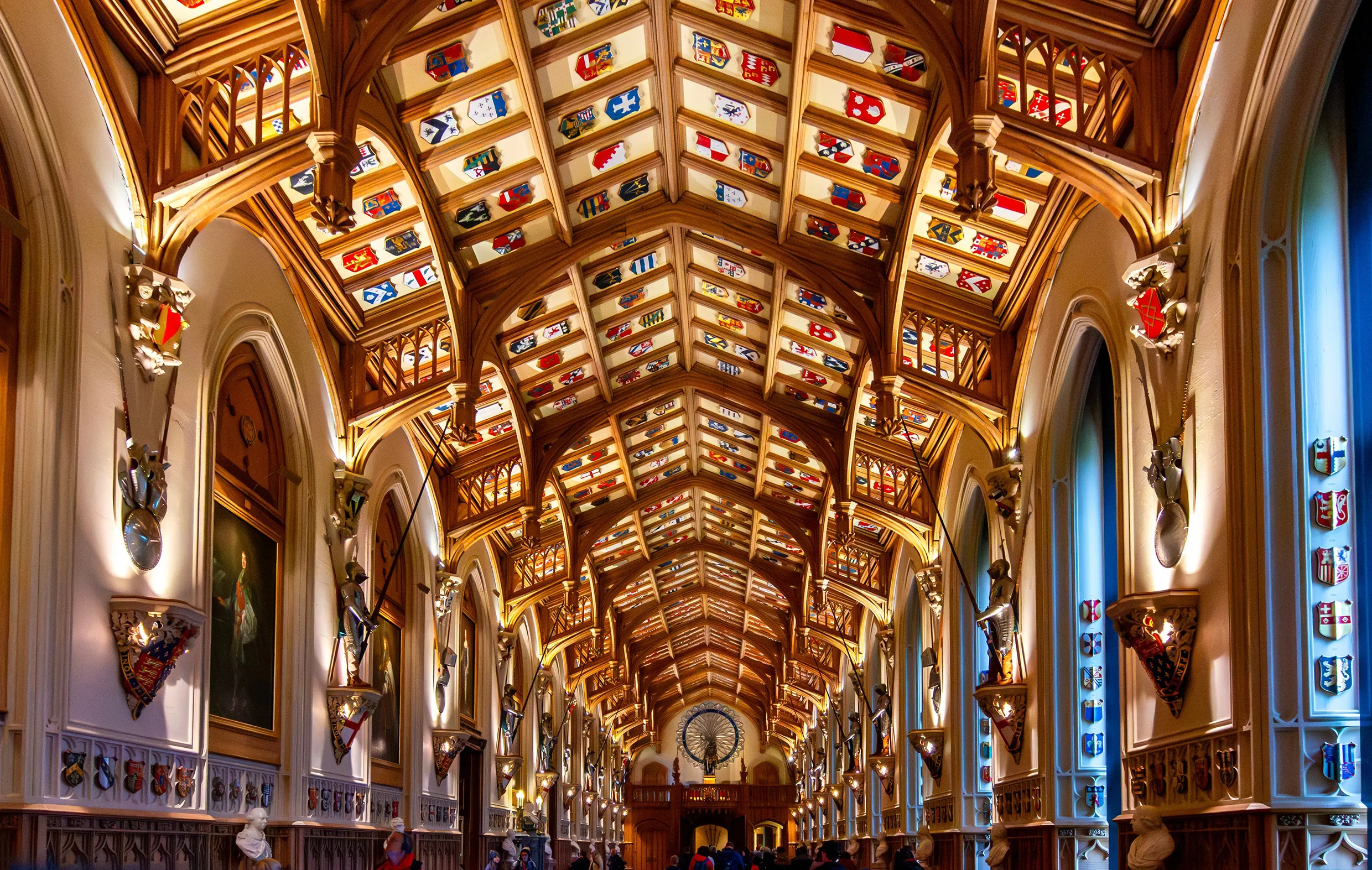
St George’s Hall, Windsor, after restoration following the fire in 1992
Source: Shutterstock
2018 predictions: Will the profession continue to be marginalised?