
Westermost Rough is approaching the midpoint of its estimated operational life. It was designed to operate for 25 years and was the first in the world to make commercial use of Siemens 6MW offshore wind turbines, with components built in Hull.
Three other wind farms, Hornsea 1, 2 and 3, have been constructed nearby, but in 2025, Orsted decided to “discontinue” Hornsea 4, which would have been one of the country’s largest, saying it no longer made economic sense.
In August this year, the company said it was “evaluating options for future development, external” at the site.
In January, the government awarded contracts to build a record amount of offshore wind around the UK, arguing that these projects are cheaper than new gas power stations and will “bring down bills for good”.
However, at the time, the Conservatives said climate targets and increasing costs in the sector were raising energy prices.
The way engineers work could also change in the years ahead.
Last week, Orsted announced successful trials of large cargo drones, capable of delivering tools and spare parts directly to offshore turbines, potentially reducing lifting operations and helping maintenance teams respond more quickly.
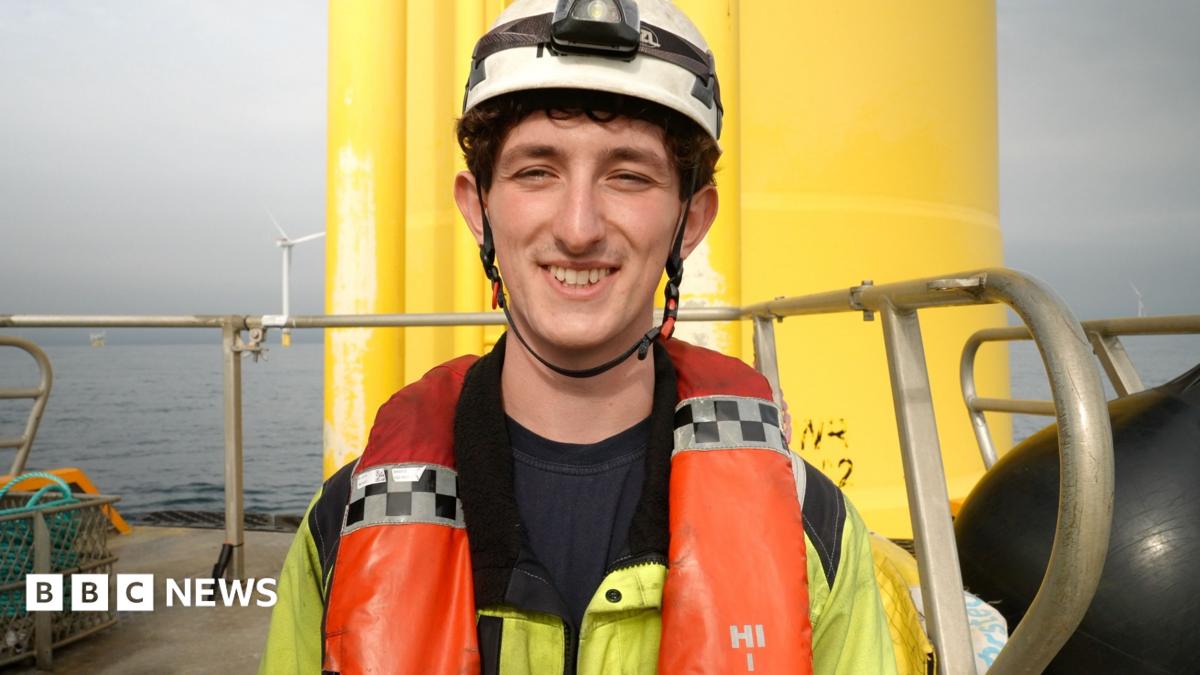
For now, however, offshore wind still very much depends on people like Torrance.
As the vessel returns to Grimsby at the end of the day, he reflects on an industry that has shaped his own career and, to some extent, the Humber’s economy.
“It’s rewarding at the end of the day,” he says. “Amazing to be a part of.”
Listen to highlights from Hull and East Yorkshire or Lincolnshire on BBC Sounds, watch the latest episode of Look North.
Download the BBC News app from the App Store, external for iPhone and iPad or Google Play, external for Android devices