
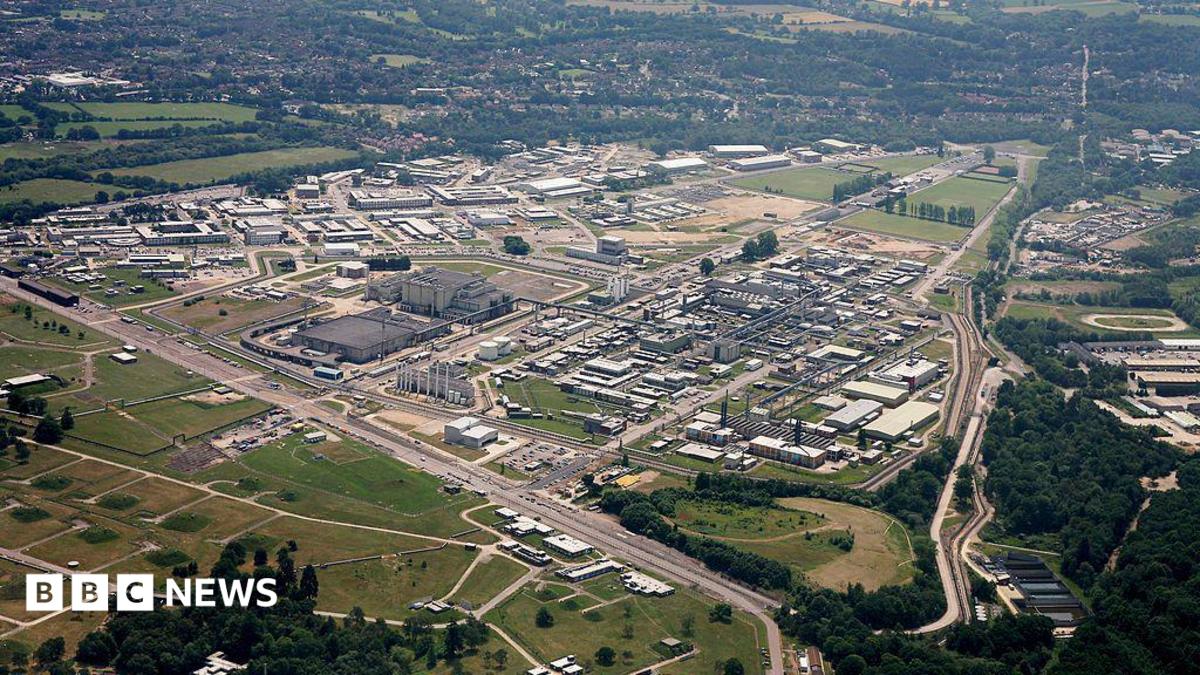
The planned Future Materials Campus is to support the UK’s next-generation Astraea nuclear warhead programme.
The investment secures and supports around 9,000 jobs at AWE Aldermaston, with more than 1,500 new jobs created over the preceding year.
“We first had to consider the operational demands that will be placed upon AWE plc in the 21st century,” said AWE.
“Our mission is to provide the warheads for the United Kingdom’s nuclear deterrent.
“We are, in fact, responsible for the whole life cycle of warheads, from initial research and design, manufacturing and in-service support, through to final disposal.”
The site will also enhance scientific analysis, and improve nuclear material recovery and waste reduction.
AWE Aldermaston conducts hydrodynamics experiments in which weapon mock-ups and small amounts of fissile material are subjected to explosive shocks.
The experiments are ‘photographed’ by giant x-ray machines and analysed with a range of diagnostic equipment.
The new plans for AWE in Aldermaston are also said to include a new Hydrodynamics Research Facility, with greatly improved diagnostics.
A 10-year, up to £900m, framework targeting non-nuclear and supporting infrastructure, including new office spaces, advanced manufacturing facilities, testing laboratories, and site-wide services is also planned.
Following the Ministry of Defence’s acquisition of the adjacent 139-acre Aldermaston Park, AWE is integrating the historical site – while developing long-term site perimeter and community access plans.
There are more than 1,200 buildings on the Aldermaston site, more than half of which were constructed before 1960.
The programme is set to span a decade of construction, supported by a broader £15bn Government investment into the UK nuclear warhead enterprise.
Peak construction is expected to generate significant transport and logistical activity along local routes like the A340 corridor.