
A Devon charity that plays a fundamental role in expediting the transport of tens of thousands of health-related test samples each year is revving up its plea for extra volunteers.
While the Devon Freewheelers blood bike service is most visually represented by its band of volunteer riders who ferry test samples on specially adapted motorcycles, the organisation relies on a host of different expertise.
Call handlers who can work from home co-ordinate schedules for riders, volunteers ensure motorcycles are mechanically sound, and car drivers help replenish frozen blood stocks for the Devon Air Ambulance, as well as others that provide vital organisational and fundraising support.
And with its funding coming entirely from donations and grants at a time when its fuel costs have doubled, pot-holed roads are causing expensive repairs, and demand is as high as ever, any help that people can give will be embraced.
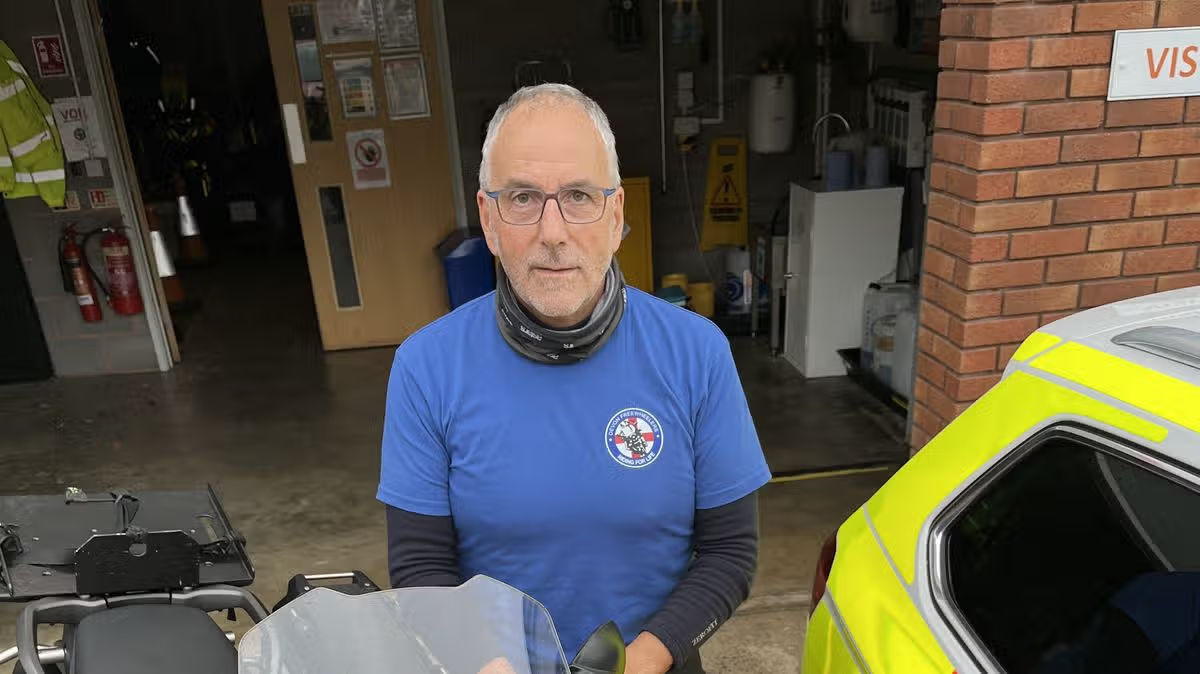
“Helping provide quicker results for patients is the main thing that we do,” said Nigel Denny, who has volunteered as a rider for five years and is now a trustee of the charity.
“And most people won’t have any idea about what we do.”
The charity’s service means that medical facilities, such as doctor’s surgeries or hospital units, can have test samples taken to labs at the likes of the Royal Devon & Exeter hospital, or Derriford hospital, more frequently and for free.
While the NHS does provide a logistics service, Devon Freewheelers tend to collect samples after business hours, predominantly riding during the evening or on Saturdays to take blood, medical samples, medication, equipment and other essential supplies where they need to go.
Its work can also be fundamental in reducing hospital bed-blocking, because patients can be discharged before their ongoing medication is dispensed, because a Devon Freewheeler can deliver it to their home afterwards, and the charity also collects dialysis samples from patients’ homes.
“As riders, we normally start around 6pm and are usually back home by 11pm,” Mr Denny said. “We are on call until the next morning, but it is rare for anything to happen overnight.”
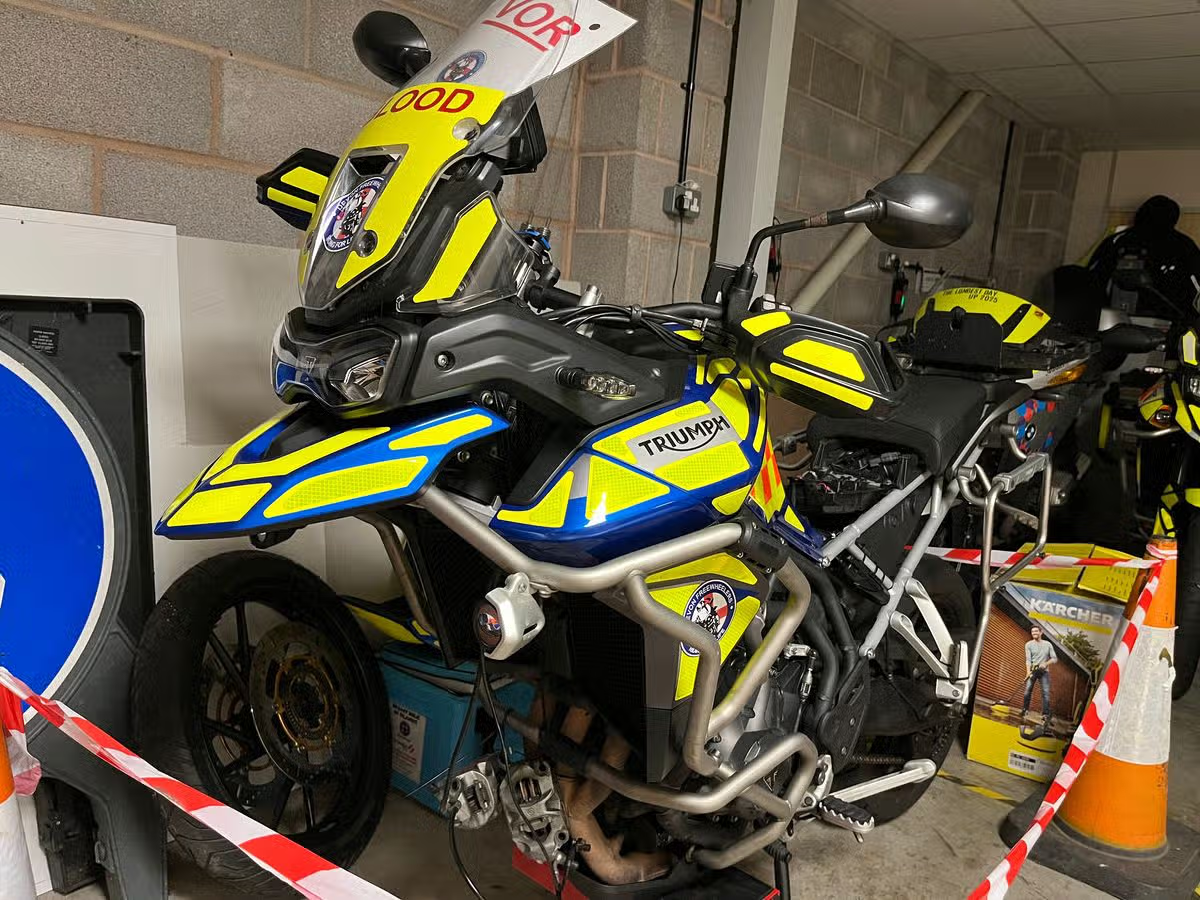
One of the Devon Freewheeler bikes temporarily off the road while its volunteer mechanic awaits new parts.(Image: Bradley Gerrard)
The charity requires riders to fund their own advanced motorcycle course, but provides subsequent training to cover the scope of the role.
Riders must abide by traffic and road laws, and do not have dispensation to speed in the way blue light services would in response to an urgent emergency.
Mr Denny said call handlers only needed a laptop and an internet connection, and could conduct the role from home, meaning it can more flexibility fit into busy lives.
The charity does now employ three part-time office-based staff, including a grant expert who seeks out funding for the organisation, which supplements its other donated income that comes from the likes of collection pots in petrol stations through to heart-felt donations from bereaved families.
“We had one of our bikes funded by a donation from a local family whose son had passed away, and a trust in Devon saw what we did and gave us the money for another new bike,” Mr Denny said.
High safety standards mean that the motorbikes – usually 850cc Triumph Tigers now because of their better fuel efficiency than previously larger bikes – are only kept until they have reached 60,000 miles, after which the charity removes the brackets and panniers that hold the samples in and the high-vis livery, and recoups some cash via resales.
“We sold two of our bikes in 24 hours because people know that we take extremely good care of them,” Mr Denny said.
But while he praised the incredible efforts of one volunteer who freely offers his mechanical expertise to ensure the fleet of bikes at his East Devon area were in prime condition, that’s getting harder.
“We’re getting wheel buckles and splits, which we have never had before,” Mr Denny said, referencing the increasing number of potholes on Devon’s roads.
“I’ve been riding motorbikes for 50 years, and it’s never happened to me before as the wheels are die cast aluminium, but in the past two years we have been seeing it.
“It’s £1,000 for a new wheel and that’s an unseen cost. It’s the sort of damage that should be happening to motocross bikes, not ones travelling on a road.”
Devon Freewheelers is one of the longest running blood bike groups in the country, having started in 2009. It splits the county into four areas – east, west, north and south – meaning Mr Denny covers the likes of Honiton, Sidmouth, Exmouth and Tiverton as part of his ‘east sector’ routes.
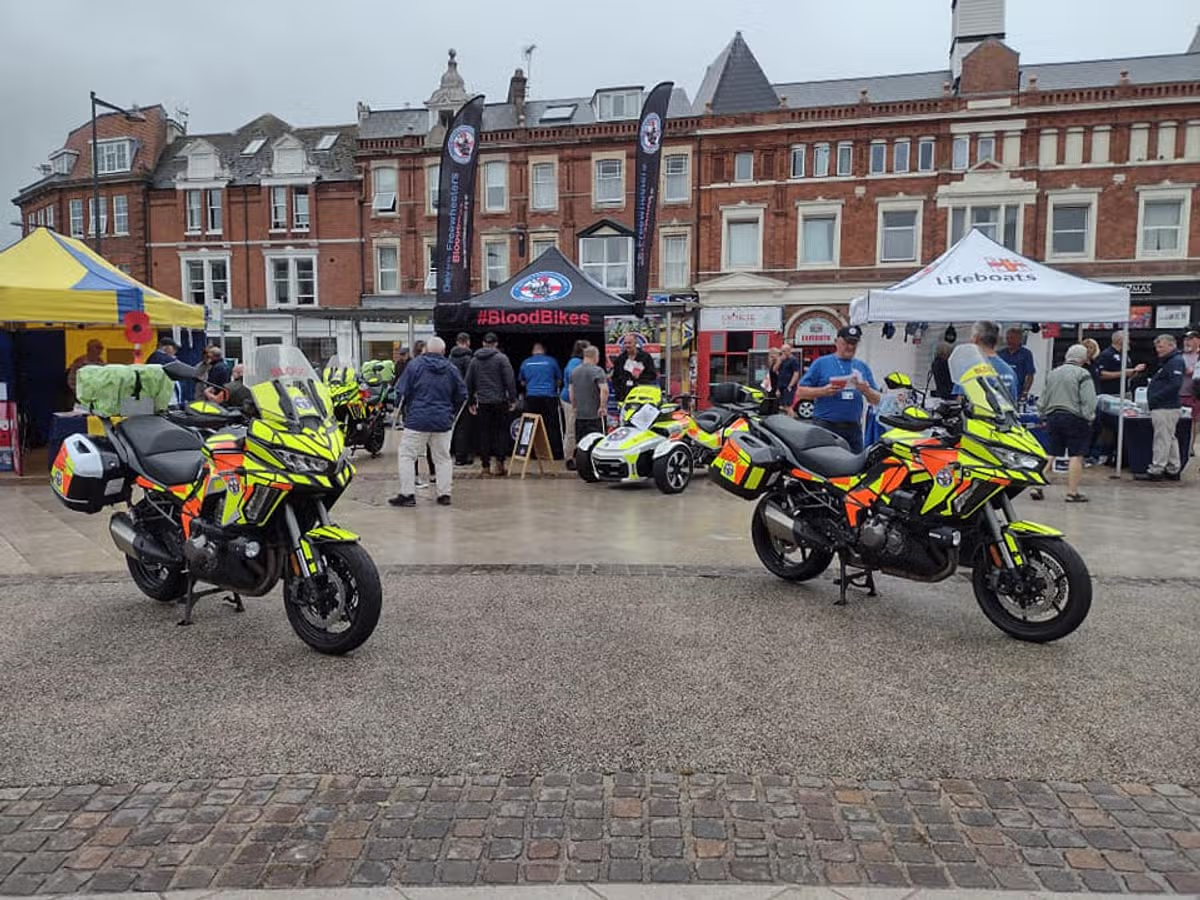
Devon Freewheelers volunteers and vehicles. Credit: Devon Freewheelers.
The riders retrieve samples from lockboxes outside doctor’s surgeries and take them to test labs. This means patients get test results – and therefore diagnoses – more quickly.
“We had one urgent case recently from Tiverton neo-natal unit,” Mr Denny recalled. “Because it was deemed urgent, we prioritised it in our schedule, and I collected it from a nurse waiting at the unit and transported it to a lab technician in Exeter, who was also waiting for it.
“That meant the parents had the results in three-and-a-half hours on a Saturday afternoon, which they wondered how that had happened, and asked the clinicians to thank us when they found out our role in it.”
Incredibly, Mr Denny said he believed around half of Devon’s doctor’s surgeries were unaware of the service, meaning they were either only sending samples via the NHS logistics service, or even using taxis to transport samples.
“We raised money to mark our 15th anniversary last year specifically to raise awareness, including writing to all 196 doctor’s surgeries in Devon,” he said.
“While we did get some work from it as a result, it’s nothing like we thought it would be,” suggesting some surgeries are not benefitting from faster test results or are paying taxi fares to secure expedited results.
The charity states it helped more than 128,000 patients in the 12 months to March this year, saving the health service hundreds of thousands of pounds.
With more volunteers, it could do even more. To find out more, visit www.devonfreewheelers.org.uk