
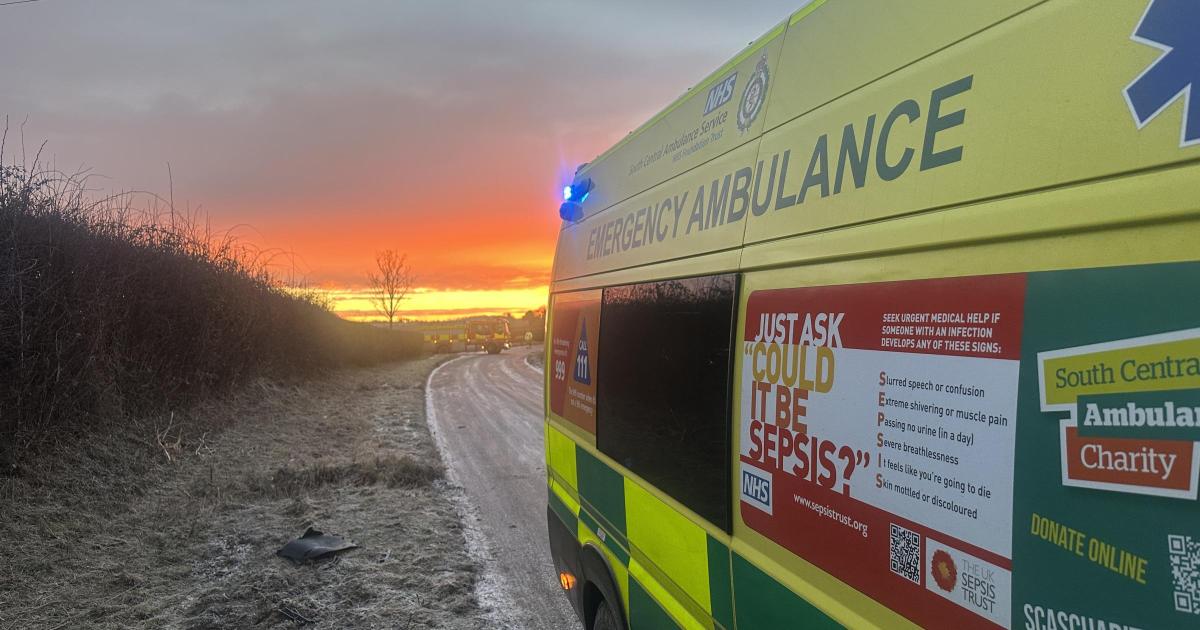
A Freedom of Information response from South Central Ambulance Service NHS Foundation Trust, covering September 2025 to August 2026, shows 10,329 Category three urgent and Category four non-urgent calls exceeded national response standards.
A further 6,694 were classed as delayed responses, including category one, life-threatening and category two, potentially serious conditions.
The data covers 80,321 ambulance incidents in the county during the 12-month period.
Ambulance (Image: NQ)
There were over 7,000 category one life-threatening emergencies, which were responded to in an average of 10 minutes and 13 seconds, compared with the national standard of seven minutes.
Category two calls averaged 34 minutes and 35 seconds for the 51,409 calls received, against a national standard of 18 minutes.
Particularly severe delays were recorded for category three urgent calls, where patients waited an average of two hours, 39 minutes and 44 seconds.
Nearly half of those calls, 9,957 out of 20,827, exceeded the national target of two hours.
The longest wait recorded in Oxfordshire was in the Vale of White Horse, where a category three patient waited 30 hours, five minutes and one second for an ambulance.
Long waits were also recorded across the county, including Cherwell at 23 hours, 25 minutes and seven seconds.
MP Calum Miller for Bicester and Woodstock (Image: Supplied)
Commenting on the figures, Calum Miller, Liberal Democrat MP for Bicester and Woodstock, said: “It is appalling that anyone should be left to wait nearly an entire day for an ambulance after an urgent call.
“Our paramedics, doctors and nurses go above and beyond, but years of Tory cuts and underfunding have stretched services to breaking point, leaving NHS staff and patients to pay the price.
“This Government must now give our NHS the crucial resource it needs, starting with more staffed hospital beds to end degrading corridor care and an immediate plan for social care.
“We need to reduce hospital backlogs so ambulance crews can turn around faster to help the next person.”
Longest response times for other areas include: Oxford city at 20 hours, 55 minutes and 54 seconds; Vale of White Horse at 30 hours, five minutes and one second; South Oxfordshire at 29 hours, 14 minutes and 47 seconds; and West Oxfordshire at 21 hours, 49 minutes and 34 seconds.
Among the worst-affected postcode areas were: OX2 in Oxford, OX29 in Witney, OX49 in Watlington, OX10 in Wallingford and OX15 in Bloxham near Banbury.
Other areas listed included: OX18 in Carterton, OX25 in Ambrosden, near Bicester, OX33 in Wheatley and SN7 in Faringdon.
South Central Ambulance Service ambulance (Image: Wikimedia Commons)
In response, South Central Ambulance Service said response times were measured across its entire footprint, and not every individual call would meet target standards.
It said: “We recognise the current response times are not where they need to be.
“The solutions are complex, and we have a wide-ranging improvement plan tackling multiple contributing factors. This is Trust-wide and not specific to Oxfordshire.”
It said category three calls are triaged as non-emergencies with no immediate threat to life, meaning more serious category one and two incidents are prioritised.
Rural areas also generally experienced longer waits because ambulance crews were more likely to be concentrated in urban locations where demand was higher.
It said: “Our call centres give patients advice on what to do if symptoms change and alternative urgent care services which may be able to provide the care they need. If symptoms do change, calls will be upgraded to a higher priority.”
Improvement work includes expanding clinical support in 999 call centres, recruiting staff, modernising its ambulance fleet and working with hospitals to reduce delays in transferring patients from ambulances into emergency departments.
Jane Hanna, chair of Oxfordshire’s Joint Health Overview and Scrutiny Committee. (Image: Ed Nix)
Jane Hanna, chair of Oxfordshire’s Joint Health Overview and Scrutiny Committee, said increasing demand for urgent and emergency care since the pandemic had placed significant pressures on services.
She said: “Demand on urgent and emergency care has continued to increase since the pandemic and year on year across Oxfordshire, reflecting Oxfordshire’s increasing and changing population as well as complexity of need, including the impact on vulnerable residents of extreme heat for the first time this summer.
“South Central Ambulance Service deploys local community first responders to begin care to offset travel delays in Oxfordshire’s largely rural county.
“All services are prioritising safety and quality, with an urgent community response service currently supporting the ambulance service by identifying people who can be treated in the community who do not have a clinical need to go to A and E.”
She said the volume of the most serious emergencies often meant category three and four calls faced longer waits.
“Making improvement here cannot be addressed by the ambulance service alone”, she added.
Ms Hanna said the committee had recently reviewed urgent and emergency care services and made four recommendations to both the ambulance trust and wider NHS and care partners, including calls to escalate workforce pressures nationally.
Dr Veronica Barry, executive director of Healthwatch Oxfordshire, described the delays as “concerning”.
She said: “Delays can be very frightening and distressing for patients and their loved ones, particularly when they are unsure when help will arrive.”
Dr Barry added that people living in rural parts of Oxfordshire could face additional challenges accessing healthcare and transport services.
Calling for clearer public information about urgent care options, she said: “Patients need clear and consistent information about the different options for accessing urgent and emergency care.
“We know that many people find navigating this confusing, and clearer guidance would help ensure people are able to access the right support at the right time, at the most appropriate point of care.”