
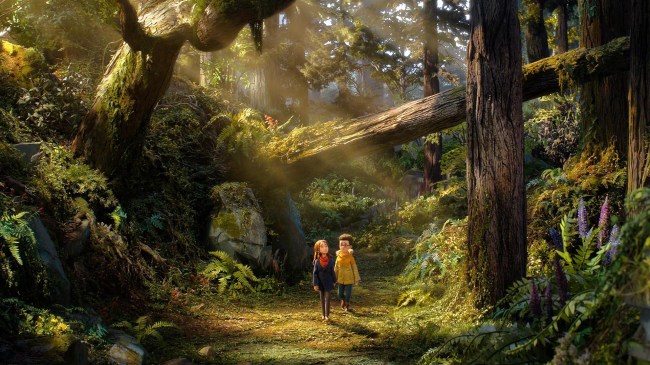
Even unanimated, Wildwood is an enchanting place to wander. Set across a complex of soundstages on the outskirts of Portland — not unlike the Impassable Wilderness of the film — the Laika studios are an arts-and-crafts project run amok. A small army of artists works on models, sets, and costumes, painstakingly conjuring entire worlds from scratch. Their task in late July is to complete the most ambitious stop-motion feature ever assembled, a decade-long undertaking from script to screen. With less than three months before Wildwood’s arrival in theaters, a few elements still need touch-ups, but, as we make our way from set to set, the achievement is undeniable.

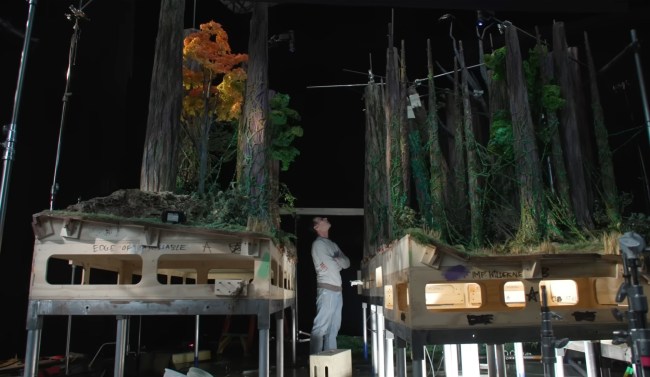 Building a forest from the (under)ground upLaika
“It’s 130,000 square feet. We had 130 sets on this movie, over 200 puppets. It took five years to shoot the movie,” says producer Sam Wilson, channeling a proud father. “There will be over 165,000 individual frames in the film, which we all captured one frame at a time — variously between 15 minutes and an hour in some cases. So it is definitely a labor of love.” Chris Butler, the studio’s Oscar-nominated screenwriter, picks up that point. “Every time we bring out a movie, we say, ‘This is the biggest thing we’ve ever done,’ and it’s always true,” he explains. “It’s because we’re always, from one movie to the next, trying things, we’re innovating, and we’re taking that through to the next movie. So 10 years ago, we couldn’t have made Wildwood.”
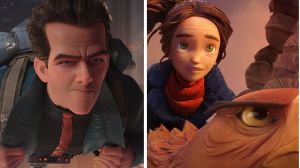
Directed by Laika mastermind and three-time Oscar nominee Travis Knight from the bestselling YA fantasy novel by local rock hero Colin Meloy of the Decemberists, Wildwood tells the epic story of a rebellious teenager, Prue, who must enter the foreboding forest on the edge of Portland to rescue her brother, who’s been abducted by a murder of crows. Along for the ride is a reluctant sidekick: her awkward classmate Curtis. Together they encounter the fantastic denizens of the woods and wind up caught in a battle that virtually everyone at Laika compares to Lord of the Rings.
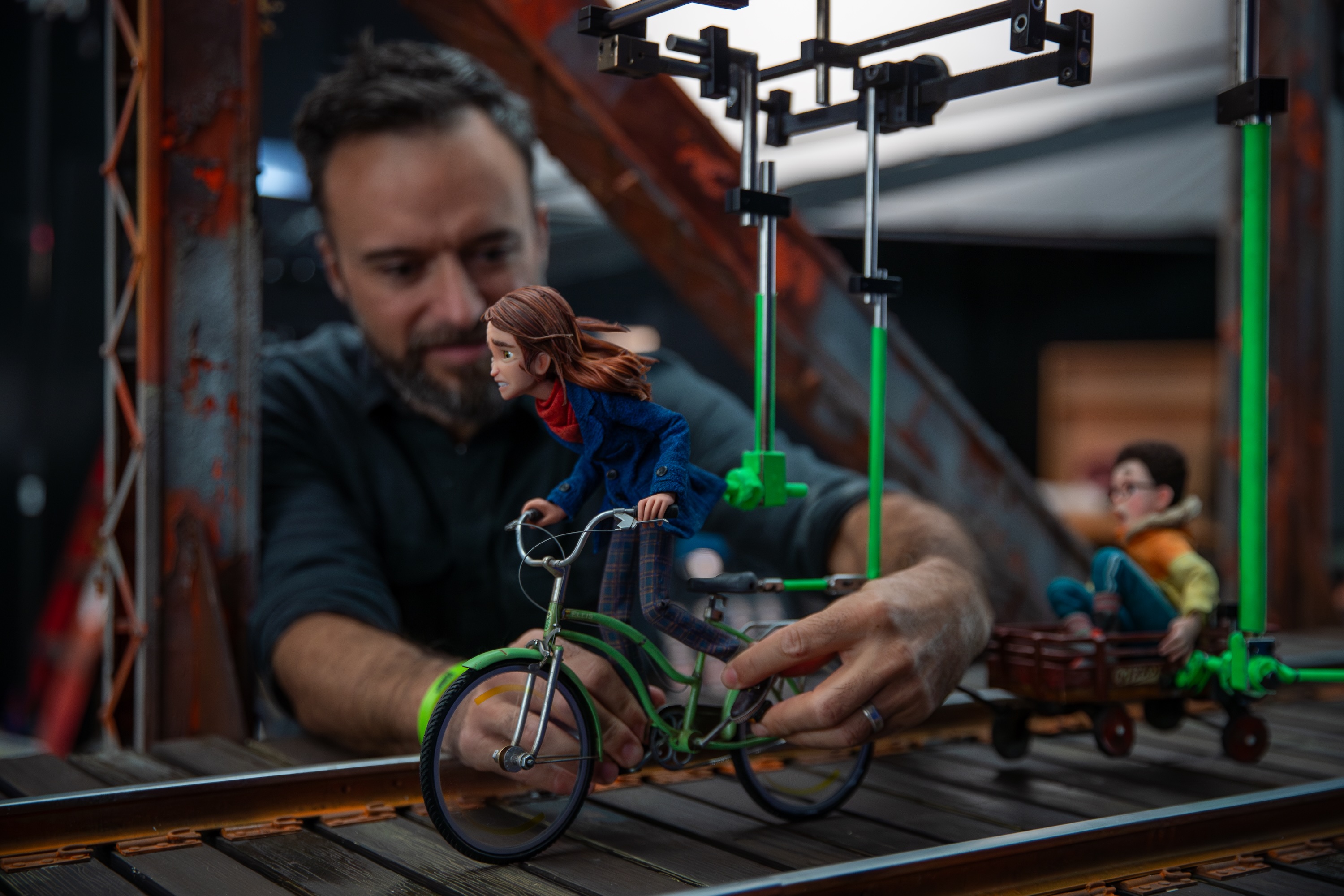 Prue and Curtis set off on adventure
Like Lord of the Rings, Wildwood is also tracking toward Oscar contention, leading the race for Best Animated Feature and in the mix for adapted screenplay, score, and song — it’s even in the Top 25 of the Gold Derby odds for Best Picture, albeit sight unseen. Each of Laika’s previous five films was nominated in the animated feature category.
Taking the Tolkien of it all as our cue, we’ve assembled our interviews with the creative team into an oral history of how Wildwood became the most epic stop-motion undertaking ever, just in time for its Oct. 23 release.
The Wildwood team:
Travis Knight — director; Laika president and CEO
Chris Butler — screenwriter
Sam Wilson — producer
Caleb Deschanel — director of photography
Nelson Lowry — production designer
Brad Schiff — head of animation
Brian McLean — director of rapid prototyping
Oliver Jones — head of character and practical effects
Deb Cook — costume designer
Peyton Elizabeth Lee — voice of Prue
Jacob Tremblay — voice of Curtis
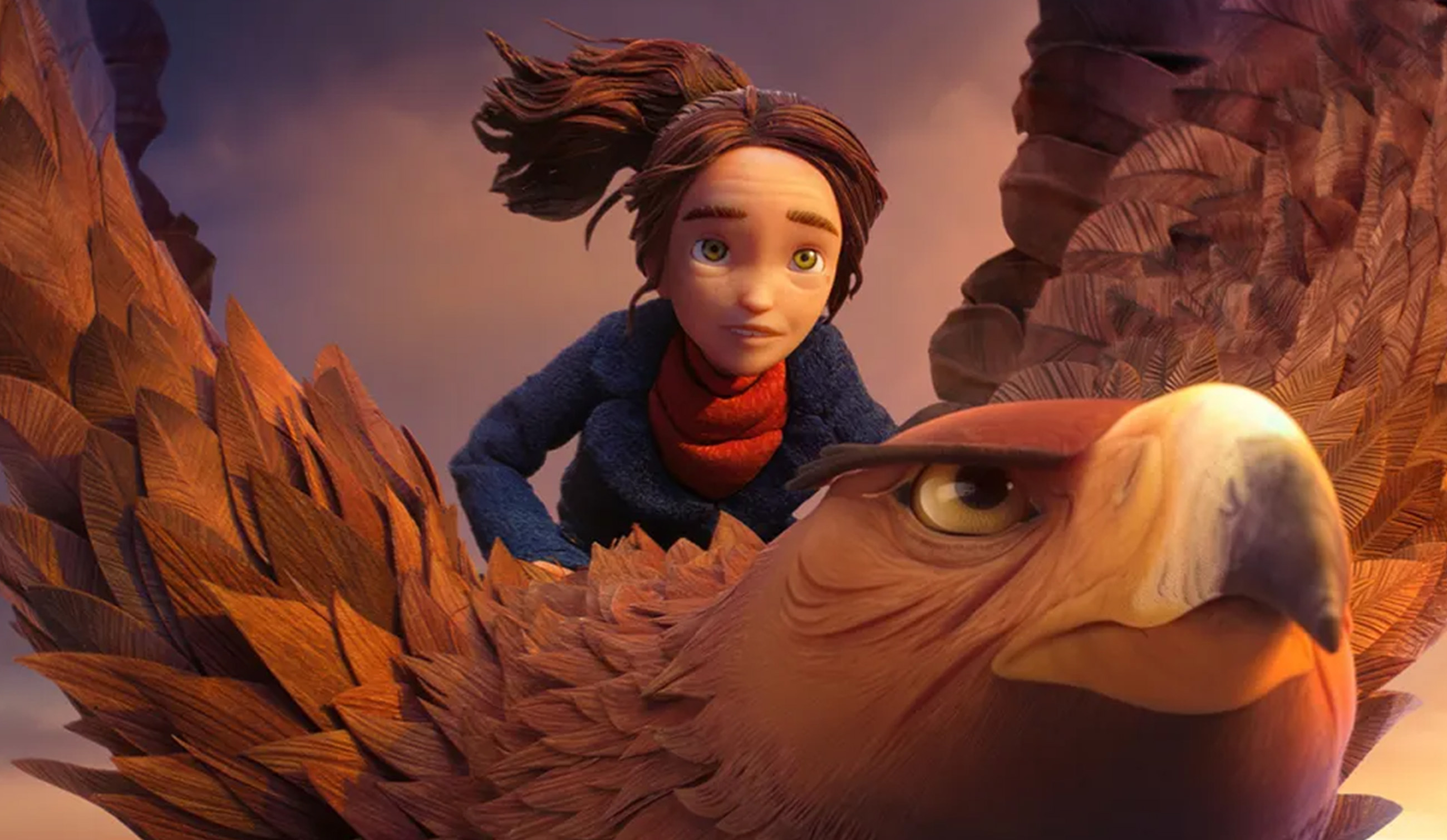 Prue and the GeneralLaika
“This is the biggest thing we’ve ever done — and it’s always true.”
After Colin Meloy shared his unfinished manuscript with Travis Knight back in 2010, the filmmaker had one thought: “I had to make it.” Meloy had a request: wait until all three books in the Wildwood saga were published. Knight agreed, slotting Wildwood as the follow-up to 2019’s Missing Link.
Sam Wilson (producer): Laika started as a stop-motion company. Stop-motion is a time-honored, classic form of cinema where you take individual frames, one pose at a time, and then stitch them together at 24 frames per second. Traditionally, it’s been a kind of down-and-dirty, cheap way of making art and cinema. Laika very much does not make cheap and fast cinema.
Travis Knight (director): Stop-motion is filmmaking at the pace of a glacier. You have these little puppets shot on real sets, with real light and real cameras. They have little metal skeletons inside. An animator goes in there, moves it a little bit, takes a picture, moves it a little bit, takes a picture — and you repeat that process over and over again until either the film is done or society collapses.
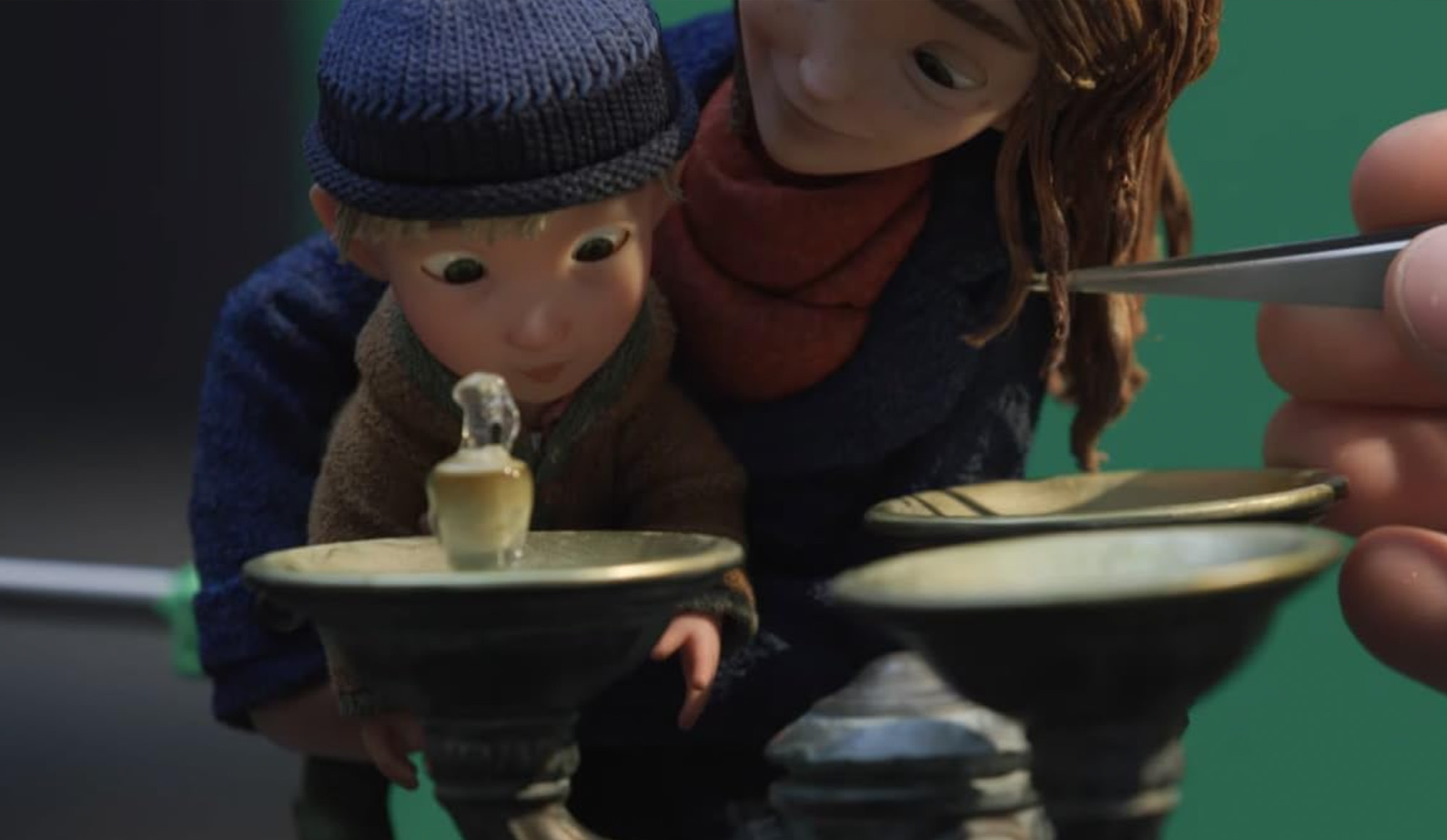 Even the water in Portland’s famed Benson Bubblers was stop-motion animatedLaika
Wilson: We want to make handcrafted films that have an enduring and emotional impact on our audiences. More than 1,000 people had to work on Wildwood to realize it — so it’s 1,000 people collaborating every day across multiple disciplines, from story to fabrication to animation on the shooting floor, through visual effects and now post.
Chris Butler (screenwriter): With Wildwood in particular, it’s definitely the most technically ambitious thing we’ve ever done. I feel like we say that every time. Every time we bring out a movie, we say, “This is the biggest thing we’ve ever done,” and it’s always true. I think it’s because we’re always, from one movie to the next, trying things, we’re innovating, and we’re taking that through to the next movie. So 10 years ago, we couldn’t have made Wildwood. Even when I wrote the first draft, which was 2014, I knew that a lot of what I was writing was going to be incredibly difficult to achieve — but it’s never stopped me.
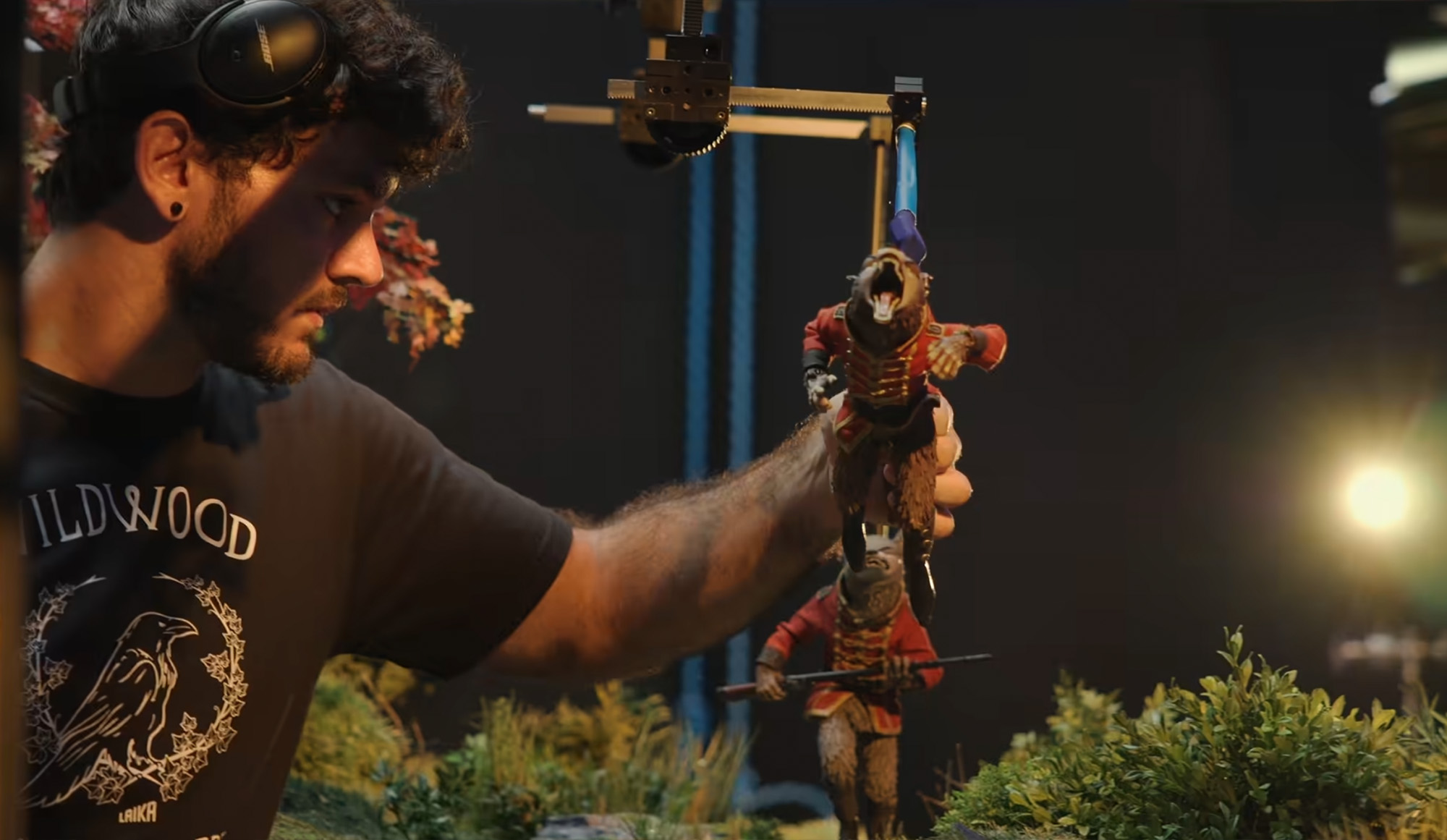 Positioning the coyote army Laika
I always doubt everything we do will get made. Typically it’s five years, and this was longer than that because of COVID and other reasons. I knew it would happen eventually — I just didn’t know exactly when. When I first wrote it, I was like, “I would love to see this. I know I’m not going to see this for a while.”
Nelson Lowry (production designer): I’ve often joked that logic doesn’t often enter the conversation — because it doesn’t make a lot of sense to do what we do. Why don’t you just do it in the computer? Because it’s hard, because it’s never been done before. Those are enough of a reason, where most other places would say, “No, we’re going to go the easy way, the known way.”
Wilson: Coraline took place in a house. That was a very contained film — almost the entire film was practically made and assembled. As we got larger, ParaNorman takes place in a town, The Boxtrolls takes place in a city, Kubo and the Two Strings takes place in the country, Missing Link takes place on planet Earth — and now we have Wildwood, which kind of takes place in two different worlds. Each time, we don’t want to be complacent. We want to do something new that really challenges us to up our game.
Knight: When we started Laika, stop-motion was always on the verge of dying. Thirty years ago, when CG was on the ascendancy, it was like, “Oh no, we are screwed — CG can do everything we can do, but better and faster and cheaper.” So my thought was: How can we embrace the author of our demise? How can we wrap our arms around the infernal machine and be like a Luddite embracing the loom? That’s when we started involving technology in what we do. The sum total of the last five movies we’ve done has been building to this movie.
The record-breaker: “That 20 minutes was nothing.”
By the numbers, Wildwood is the largest production in Laika’s history — and, by the team’s account, the biggest stop-motion film ever. It’s 20 minutes longer than any previous undertaking.
Brian McLean (director of rapid prototyping): There were so many challenges from this original script — from the sheer number of puppets, sheer design challenges, number of animals — that the length of the movie wasn’t the first thing. If we’re going to solve this at all, it’s small, digestible little chunks. So the length didn’t scare me nearly as much as some of the designs did.
Oliver Jones (head of character and practical effects): We ended up making 236 individual puppets, which is twice as much as Missing Link. So that 20 minutes — that was nothing, really. It was the multiplicity, because of the nature of the show. There’s also 2,700 shots, which is twice as many as Missing Link. So even in that 20 minutes, you’re still getting twice as many shots.
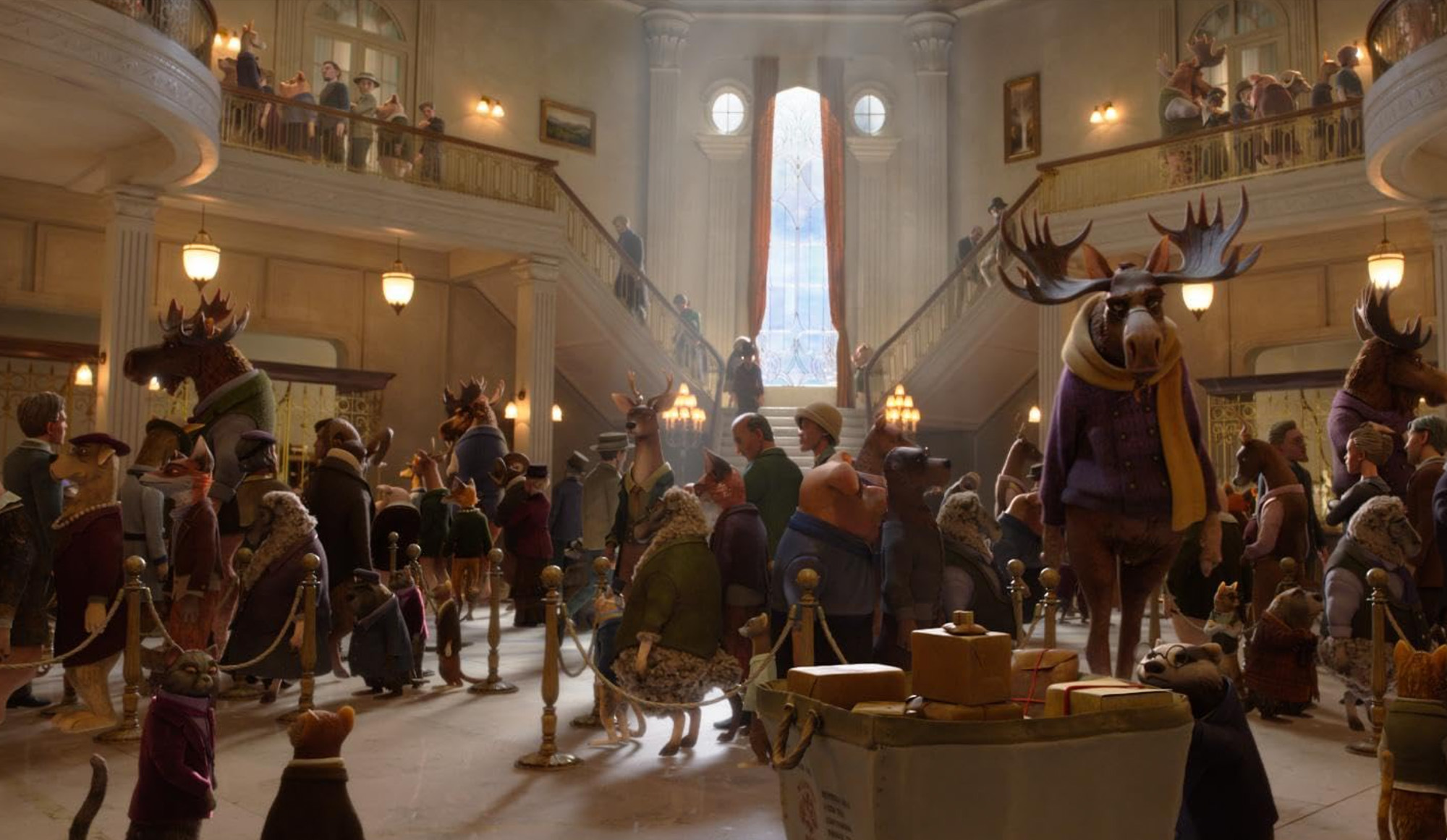 Hundreds of characters were created to populate ‘Wildwood’Laika
Deb Cook (costume designer): We had multiple characters — Prue, Alexandra, [and others] — who all have, like, eight costumes each, which then you end up having to make multiples of. So that’s really where the task was: the multiplicity, because of the nature of the show.
And then there are the faces — the component that already earned Laika a Guinness World Record on Missing Link.
McLean: We’ve already broke our record. We just got to let them know. We’re at 142,000 faces now for Wildwood, and counting. [As a joke] I don’t think anyone else is [doing this], so you’re basically competing against yourself.
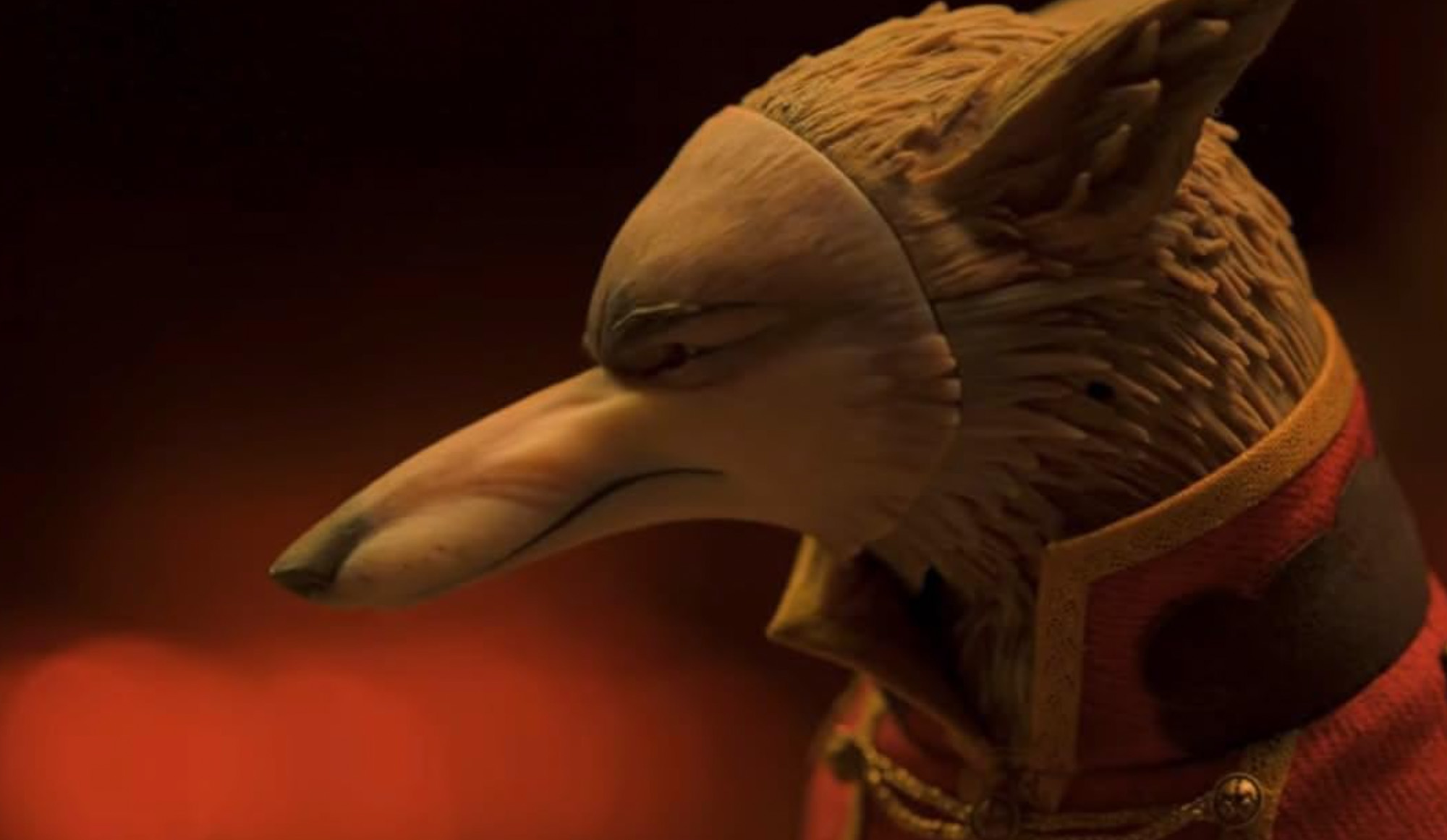 The rapid prototyping department makes individual faces for each expressionLaika
Wilson: It’s 130,000 square feet. We had 130 sets on this movie, over 200 puppets. It took five years to shoot the movie. … There will be over 165,000 individual frames in the film, which we all captured one frame at a time — variously between 15 minutes and an hour in some cases. So it is definitely a labor of love.
New to the team for Wildwood is legendary cinematographer Caleb Deschanel — a six-time Oscar nominee making his first stop-motion film.
Knight: This was my pitch to Caleb. I said, “Hey, Caleb, you want to come out to Oregon for a few years and shoot a woman the size of a burrito?” And he said, “Damn right, I do.”
Caleb Deschanel (director of photography): With most movies, we would do the whole scene, complete all the coverage, and finish it in a day or two. In this movie, you do one little piece at a time, and it’s like this giant mosaic you have to piece together. You’re basically in a giant building that’s been divided up into a hundred-something sets, all designated by color and numbers, and you wander around depending on where the animation is being done, constantly reminding yourself where you are.
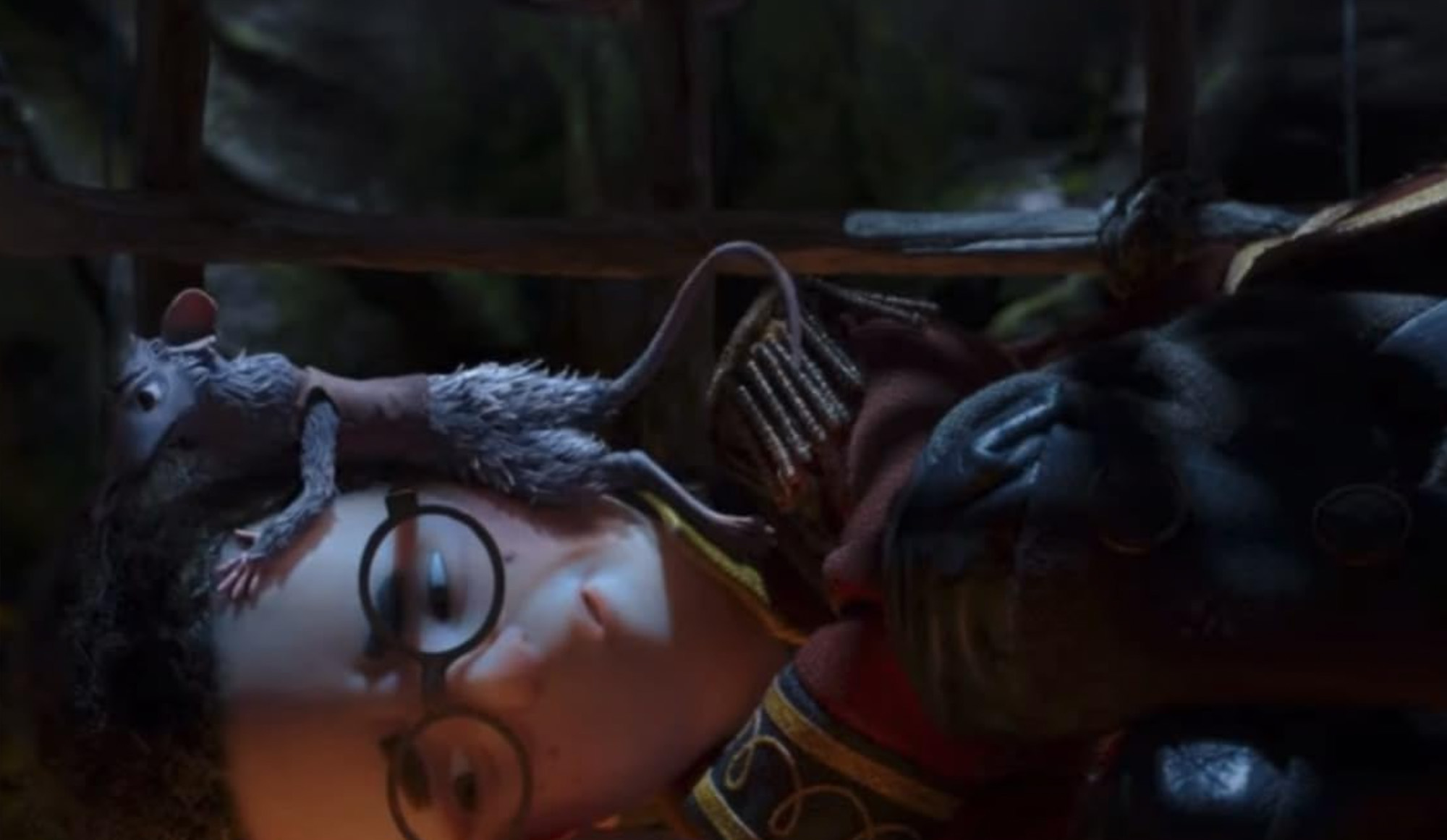 Curtis and his rodent palLaika
One of the big characters is a rat that sometimes sits on the shoulder of Curtis — and a rat on Curtis’s shoulder is only that big, so it’s almost impossible to animate him. There are parts of this movie where you had to blow that character up 500 percent — sets and props and everything at 500 percent to tie together with the small one — and then build a maquette of Curtis that’s 500% with blue screen. It’s permutations and combinations. I thought I was coming in to do algebra, and it’s analytic geometry and calculus.
Knight: Wildwood doesn’t look like any stop-motion film ever made. It’s tactile and handmade, but also sweeping, elemental, and alive. That’s Caleb’s gift. He doesn’t light a world. He finds its soul.
Building the Beasts: Alexandra’s Coyote Army and The General
If the film’s length didn’t rattle the team, its menagerie did. The anthropomorphic animals presented the toughest design problems — chief among them the coyote army and the heroic eagle known as “The General” (voiced by Angela Bassett). Those coyotes answer to Alexandra (voiced by Carey Mulligan), whose unimaginable lost has warped her worldview.
Jones: All of the animals took a long time. I think each species has its own story. Something we didn’t talk about was even going from quadruped to biped with the coyotes — their limb lengths are changing when they’re down on all fours versus when they’re standing. They have long legs and short arms, and then when you put them [upright], it doesn’t look right. So we did a lot of reverse engineering. We ended up creating extra pieces that sit inside the wrists, so their arms could be longer when they went on all fours — and when they kick their boots off, they have to have dog feet underneath. There are a lot of these tricks where, hopefully, when you’re watching the movie, everything makes sense.
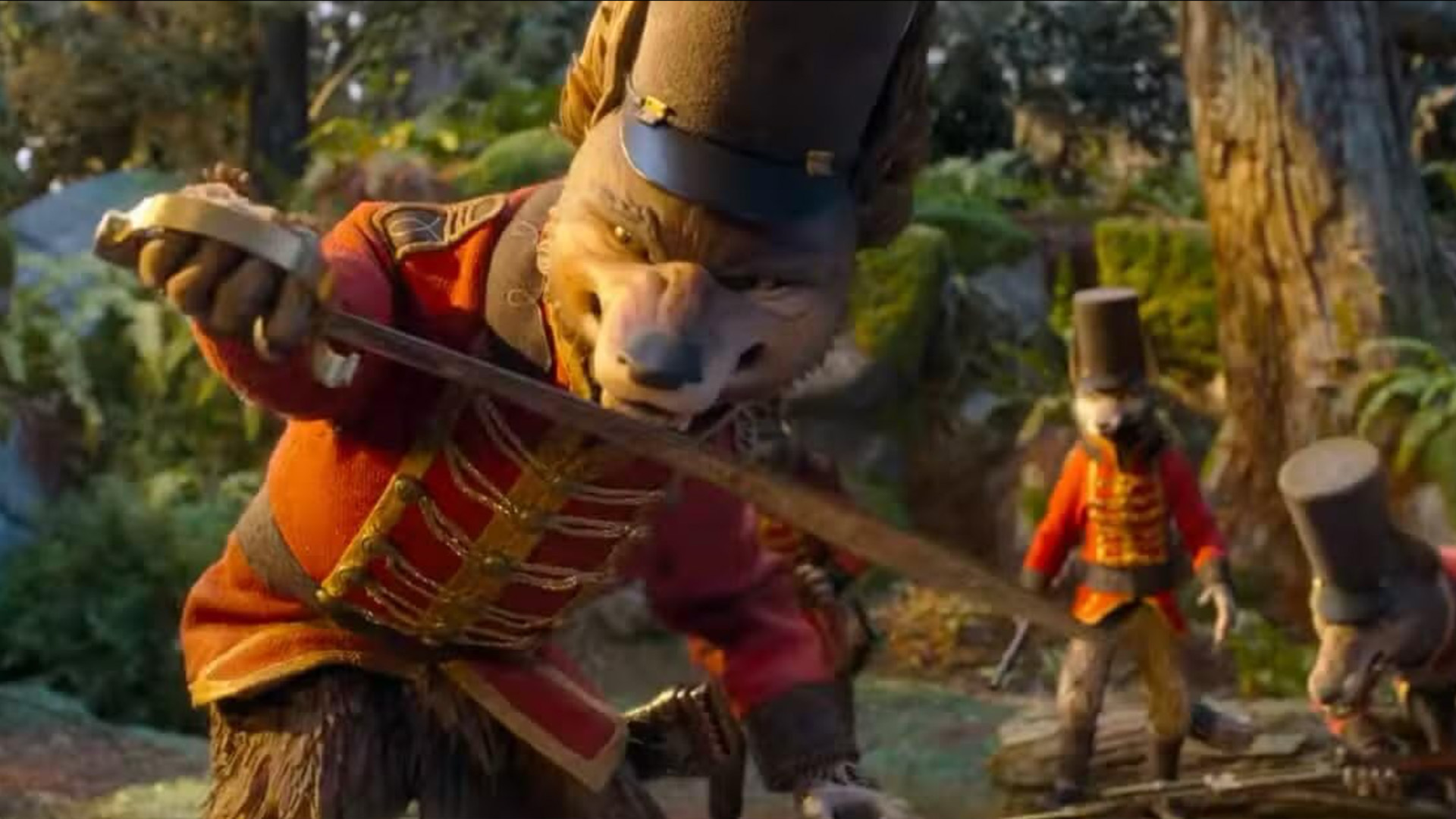 The coyote armyLaika
McLean: Any of the coyotes — because of their thin little hair — half the hair on their face was 3D-printed, and the other half was done through silicone. When you get tiny little strands like that and you get the light just right, they can glow more.
The hardest build of all had wings — the General, the giant golden eagle voiced by Angela Bassett.
McLean: The most challenging one for us was the eagle, because we’d done fur characters before, so we felt comfortable 3D-printing decent-looking fur. But the eagle — with the feathers and the size of her — just trying to figure out how that whole thing was going to work. From my perspective, we love a lollipop head: a face and a skinny little neck. The eagle was a whole [other matter]. The team came up with that amazing slinky neck. Once we started checking off some of those boxes, the stress levels dropped a little. But in the early days, that was a lot of sleepless nights.
 Buidling the General was a challengeLaika
Every creature posed the same core puzzle: making a rigid, printed material read as living fur, feathers, or skin.
Jones: The only characters that didn’t have replacement faces were the horses. For everything else, we had to figure out how we were going to have a resin material — whether it was 3D-printed fur or 3D-printed feathers — match whatever the rest of the puppet was made out of, whether that was fabric feathers or silicone fur. No one can pitch an idea and convince anybody it’s going to look good until you actually build the thing, get it in the hands of the animator, and get it on camera. That’s the success criteria.
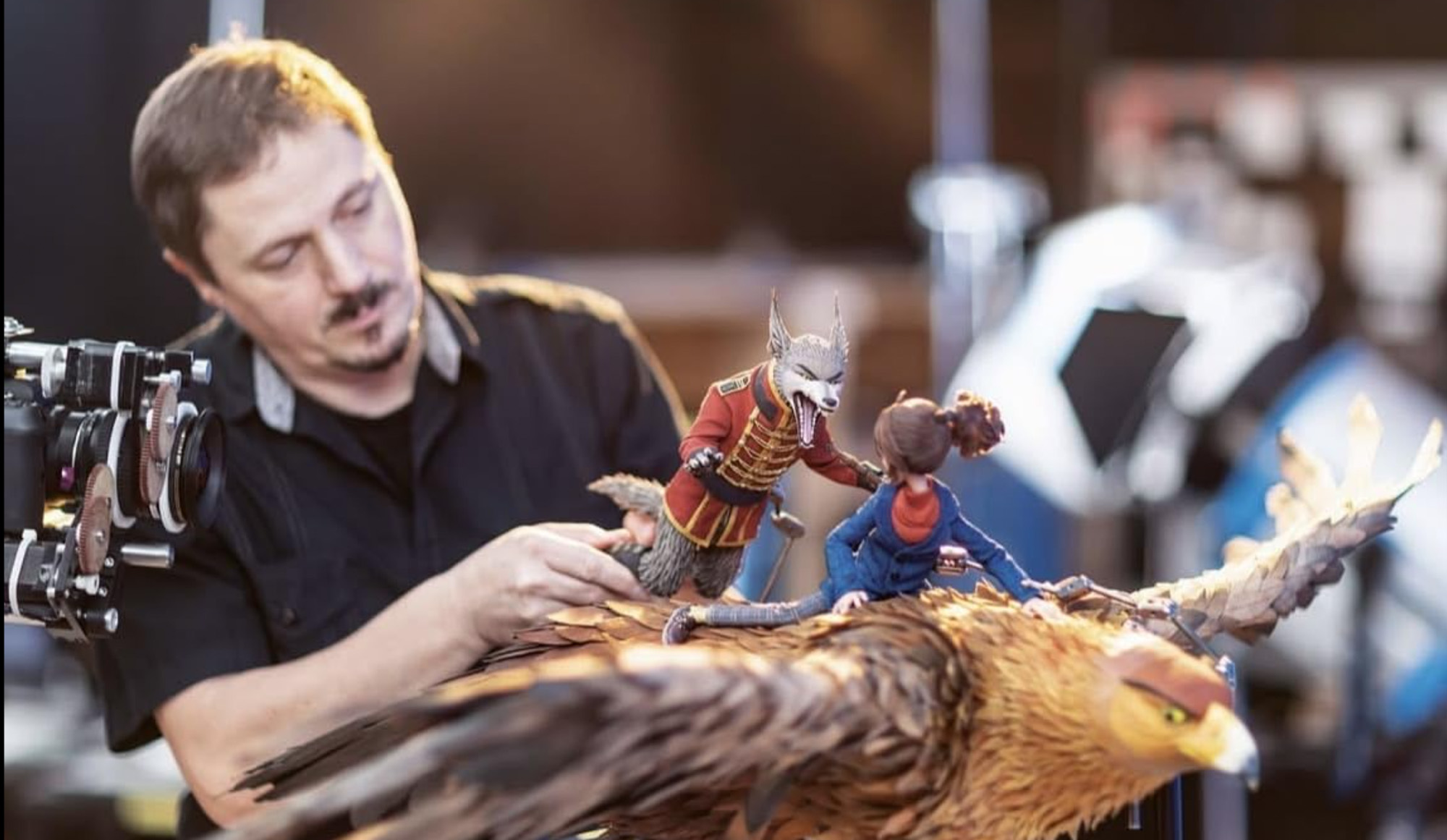 A coyote soldier attacks Prue and the GeneralLaika
The Lord of the Rings of it all
Knight was charmed from the moment he read the first few pages of Meloy’s story, and Butler began his adaptation soon after. The entire team knew it would be a huge undertaking.
Knight: I absolutely fell in love with it. It was just magic. It felt like it had moss under its fingernails. It breathed the same air as all these great fantasies and fairy tales I loved as a kid, and yet it also had something bracingly contemporary and something deeply emotional under everything. I had to make it.
Butler: I kept thinking about Lord of the Rings — and that was more for scope and scale. Like, don’t underwrite it. This is a big, big adventure. It’s epic. It genuinely deserves that word. So I was trying to think in terms of that for the scope and scale.
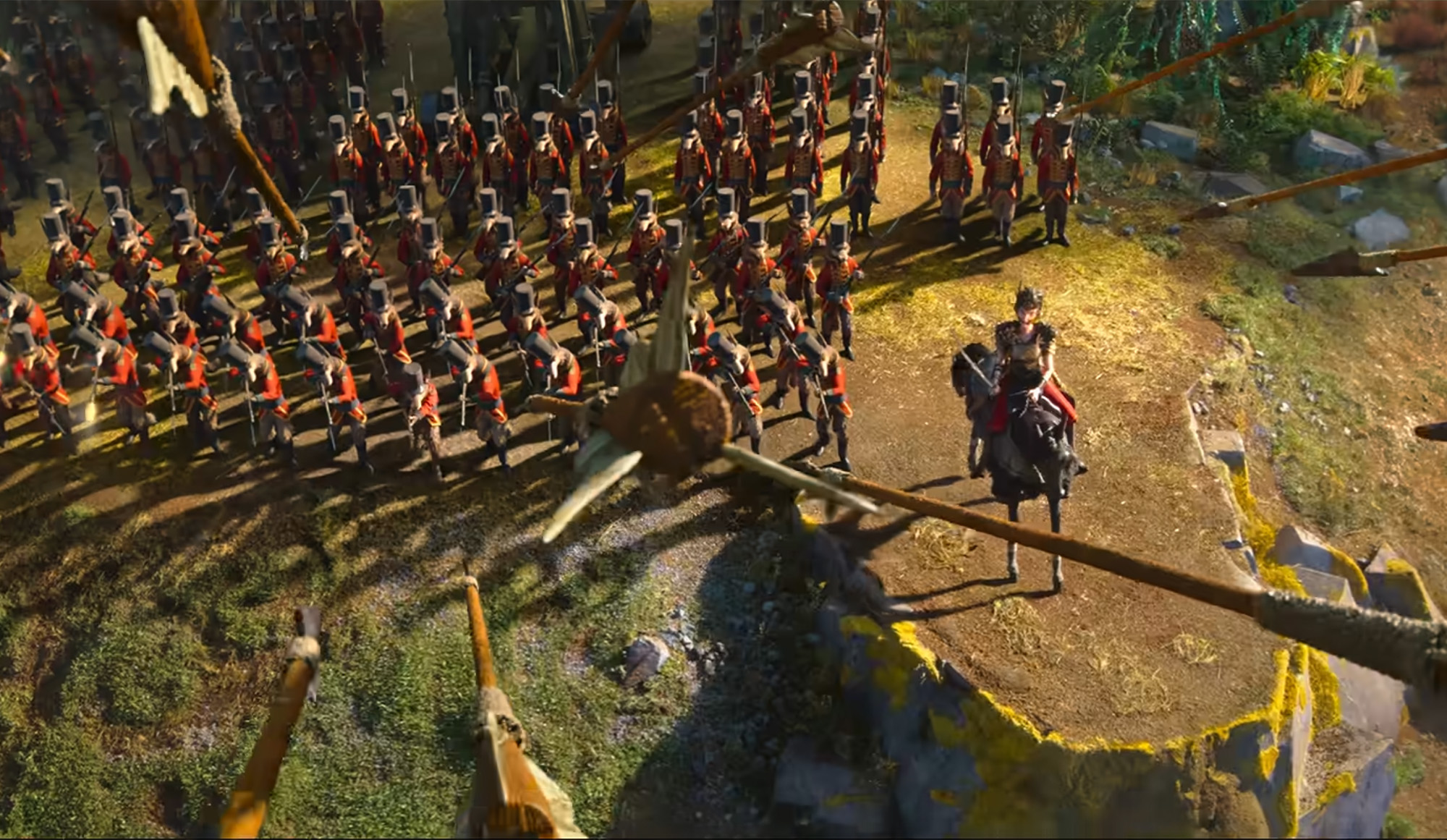 The climactic battle is the largest-scale stop-motion set piece everLaika
In fact, live-action movies, because in terms of the stuff that we’ve done, this is by far the most emotionally complex movie. So I did keep thinking, if this was a live-action movie, what would we do? … It was a lot of live-action reference, more than any animation.
But Butler didn’t want to stick to convention. He decided to take a concept familiar to audiences — the grand tradition of a child crossing into a fantastical world — and subvert it.
Butler: We know Alice in Wonderland, The Wizard of Oz, Narnia — we’ve even done it with Coraline. So what can we do with Wildwood that’s embracing those fantasy tropes and playing with that imagination, but doing it in a daring way, a more subversive way, and really bringing something to the screen that we haven’t done before?
The cast was swept up in the epic-ness of Wildwood, too. Asked which film he’d pair Wildwood with for a double bill, Jacob Tremblay went one bigger — and pitched a Lord of the Rings triple feature.
Jacob Tremblay (Curtis): I think you do three films. You do the first Lord of the Rings [The Fellowship of the Ring], and then you do Wildwood, and then you do the last Lord of the Rings [The Return of the King].
Peyton Elizabeth Lee (Prue): And then you tell them that’s all one story.
Tremblay: The Two Towers is a filler film. [Laughs.] It was really Wildwood all along.
The battle: “Unlike anything anybody’s ever seen in stop-motion.”
The film climaxes in a sprawling clash between the General’s forces and Alexandra’s coyote army — a sequence Butler describes in unambiguously Tolkien-sized terms.
Butler: There’s a magnificent flight sequence, action sequence — I took kernels from the book and then made them more cinematic where possible.
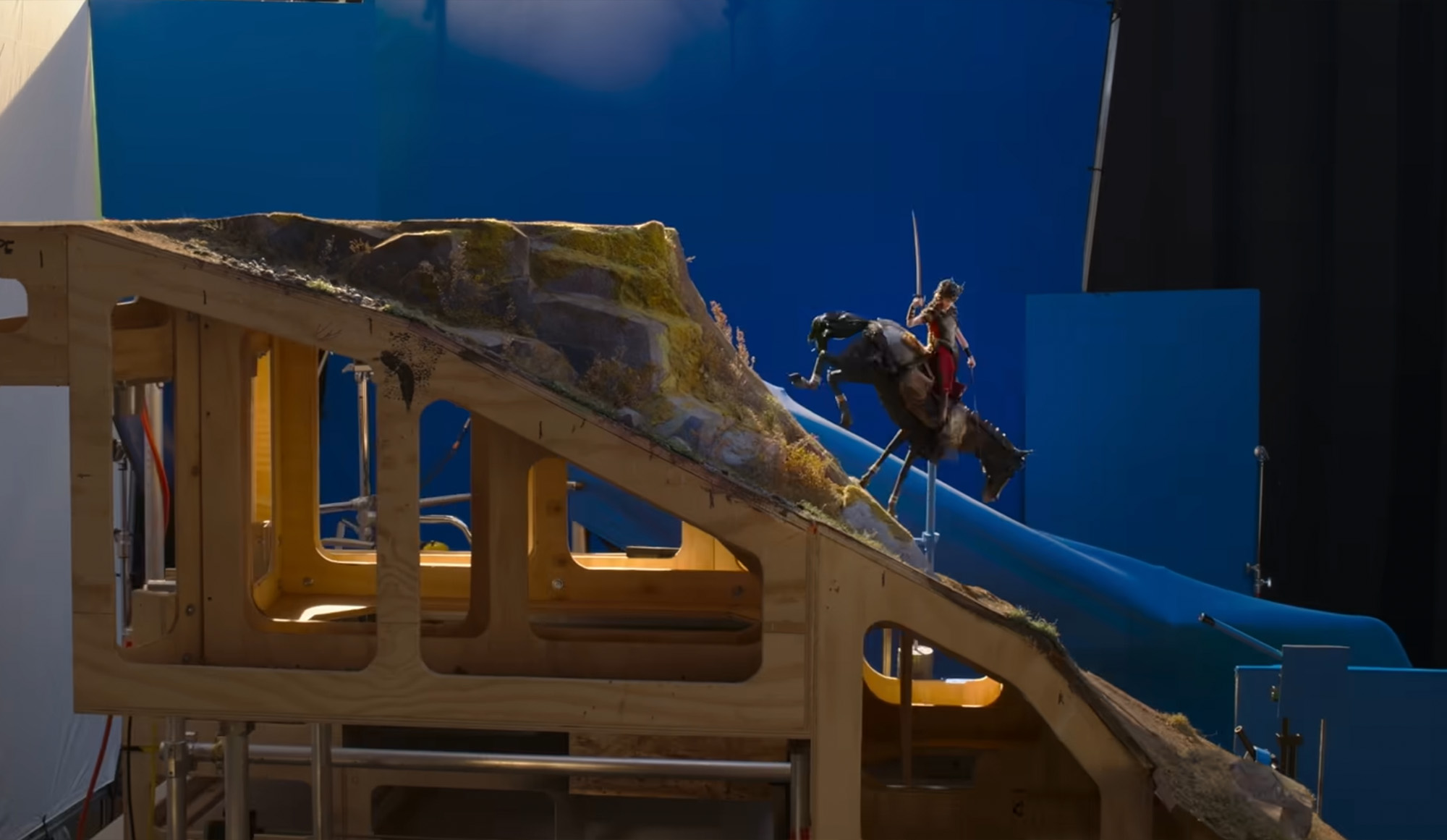 Alexandra charges into battleLaika
When I was approaching the big battle scenes at the end — this huge Lord of the Rings-scale battle sequence at the end — I remember when I was writing that, I was thinking, “Can we?” But we did it. Nothing came up that we thought, “No, we can’t do that.”
Brad Schiff (head of animation): There are a bunch [of scenes I can’t wait for audiences to see]. I think the scene with the General — which a lot of people have actually seen already, because it was the first look. But I think some of the battle scenes are going to be unlike anything anybody’s ever seen in stop-motion before. That stuff’s going to be really mind-blowing, I think.
Built to be big: “I can’t wait to see it on Imax.”
Butler framed Wildwood as a film shot like live action — and the production designer argues that theatrical scale is Laika’s whole reason for being.
Butler: It’s the quality of acting of these puppets… so often you expect animated characters to be wacky or larger than life, but we were really trying to sell this as real people. When you see those puppets on screen, you’re compelled by them. You forget that they’re a puppet.
Lee: This is a super magical, fantastical film, but the performances and the characters are all pretty grounded, which creates a really good contrast. Travis wanted our characters to feel very real. So right off the bat we were playing it pretty real, and the emotion comes out very raw.
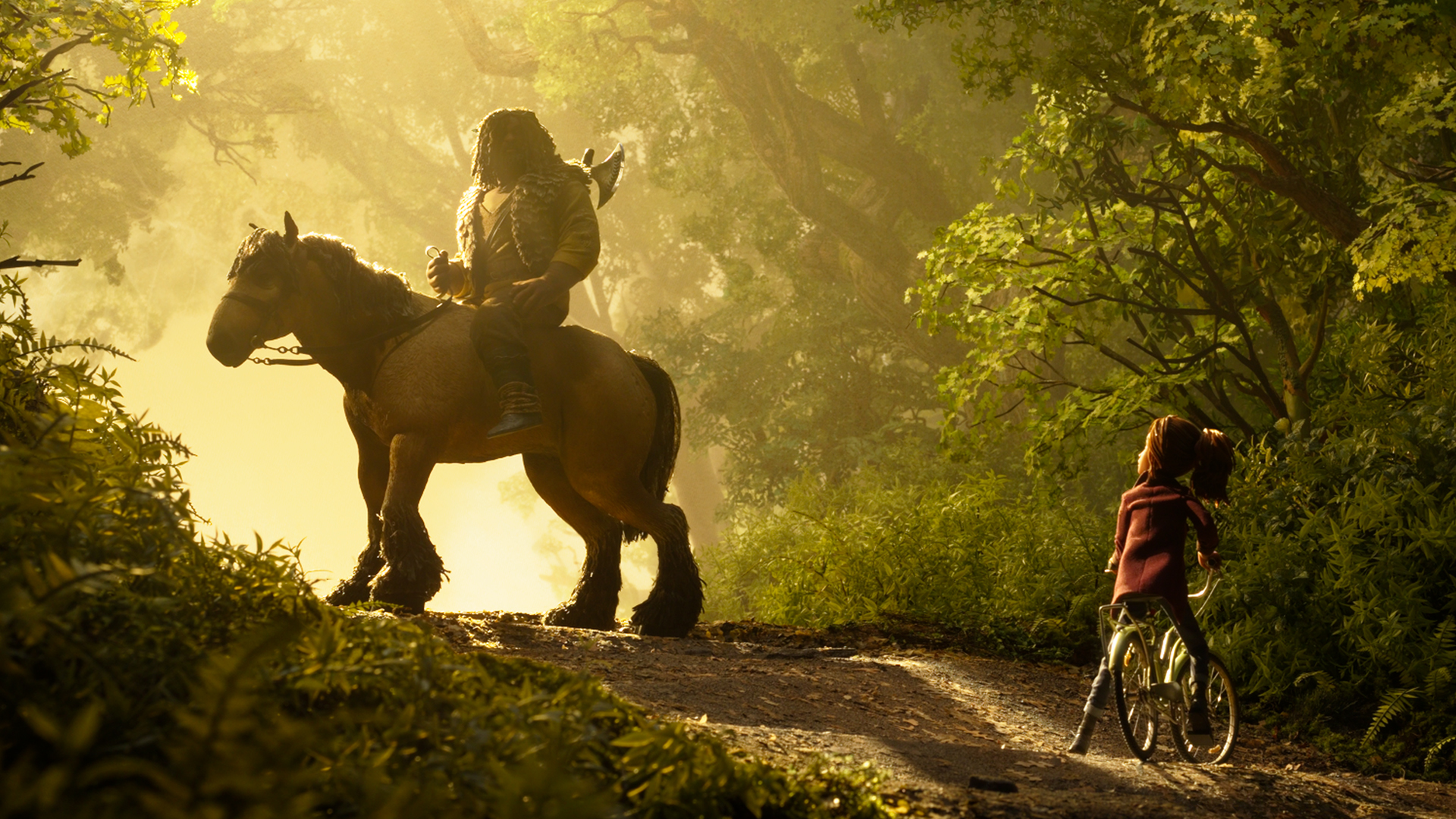 Prue meets Brendan, leader of the banditsLaika
Lowry: Travis’ love of the medium is so profound. He wants it to be not just bigger, not just better, but pushing the medium somewhere it’s never been. Part of that is making it feel filmic, making it feel like a big film. I do think it’s got vibes of live action often. Wildwood is shot very much like a live-action film — we have a lot of cuts. I can’t wait to see it on Imax. I’ve never seen any of our films on Imax. It’s just unbelievable.
Schiff: As a lover of film and movies, you want to see movies big. They’re really meant to be seen big. Travis was an avid moviegoer as a kid, and the type of films he really wanted to make were big motion pictures.
Why it had to be practical
If Wildwood is Laika’s Lord of the Rings, it’s one made almost entirely by hand — a choice the team sees as its signature in the age of AI.
Schiff: When we were kids coming out of a movie — whether it was Star Wars, E.T., whatever — there was always this “aha” moment of, “How the heck did those moviemakers pull that off?” That movie magic probably made us all fall in love with film. … When [audiences] come out of a practical [film], you can see it — the trend has gone to be more practical. Project Hail Mary — they were so psyched that that robot was a puppet. To me, it brings back that movie-magic moment we all had as kids.
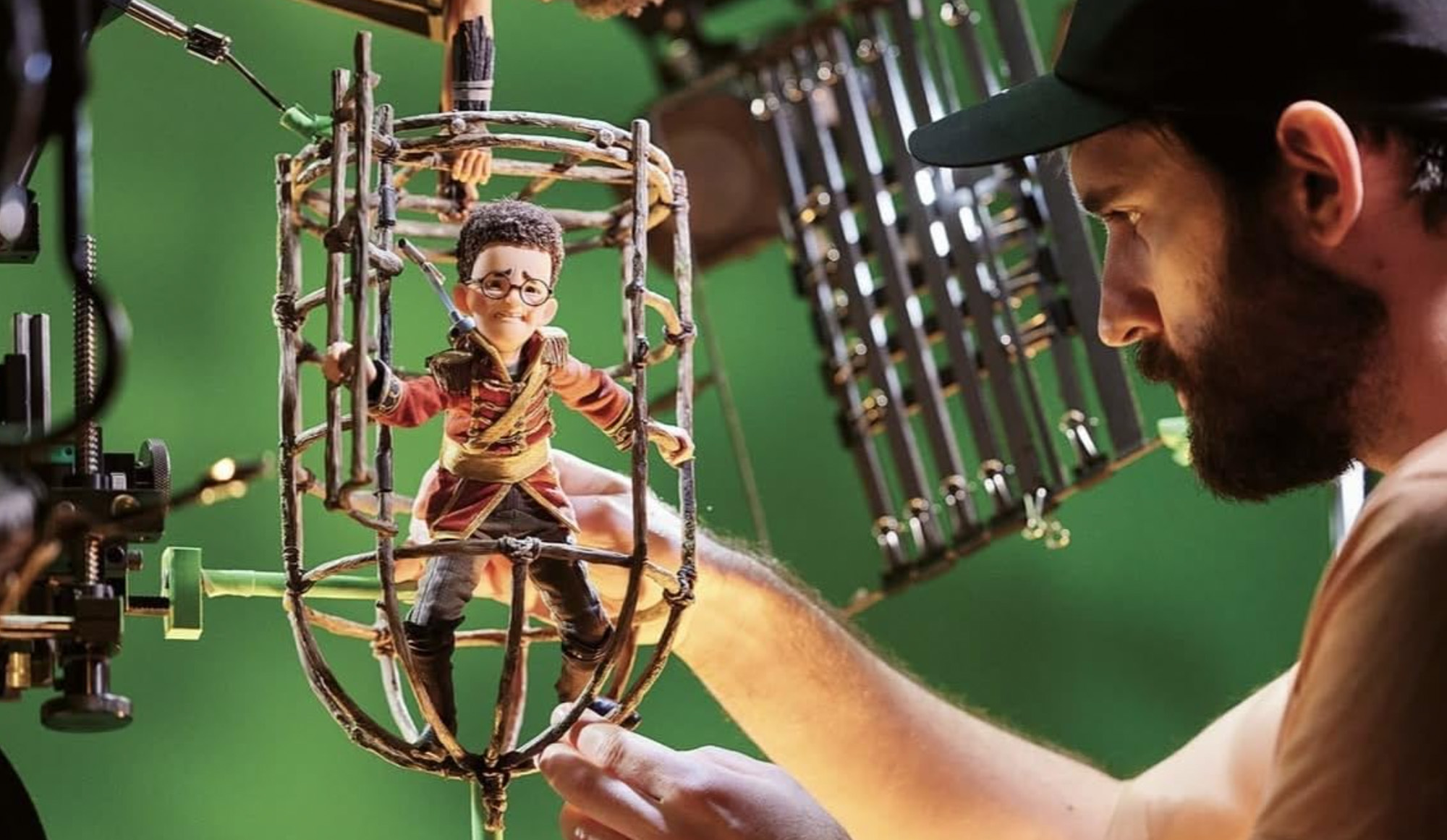 Curtis finds himself in a jamLaika
McLean: When the trailer was released … there were thousands and thousands [of comments] all so excited about Laika not falling victim to AI and the AI slop. They were really excited that this was done practically. That brings me so much joy, because I do think today’s youth respect the hard work, respect how much time it takes.
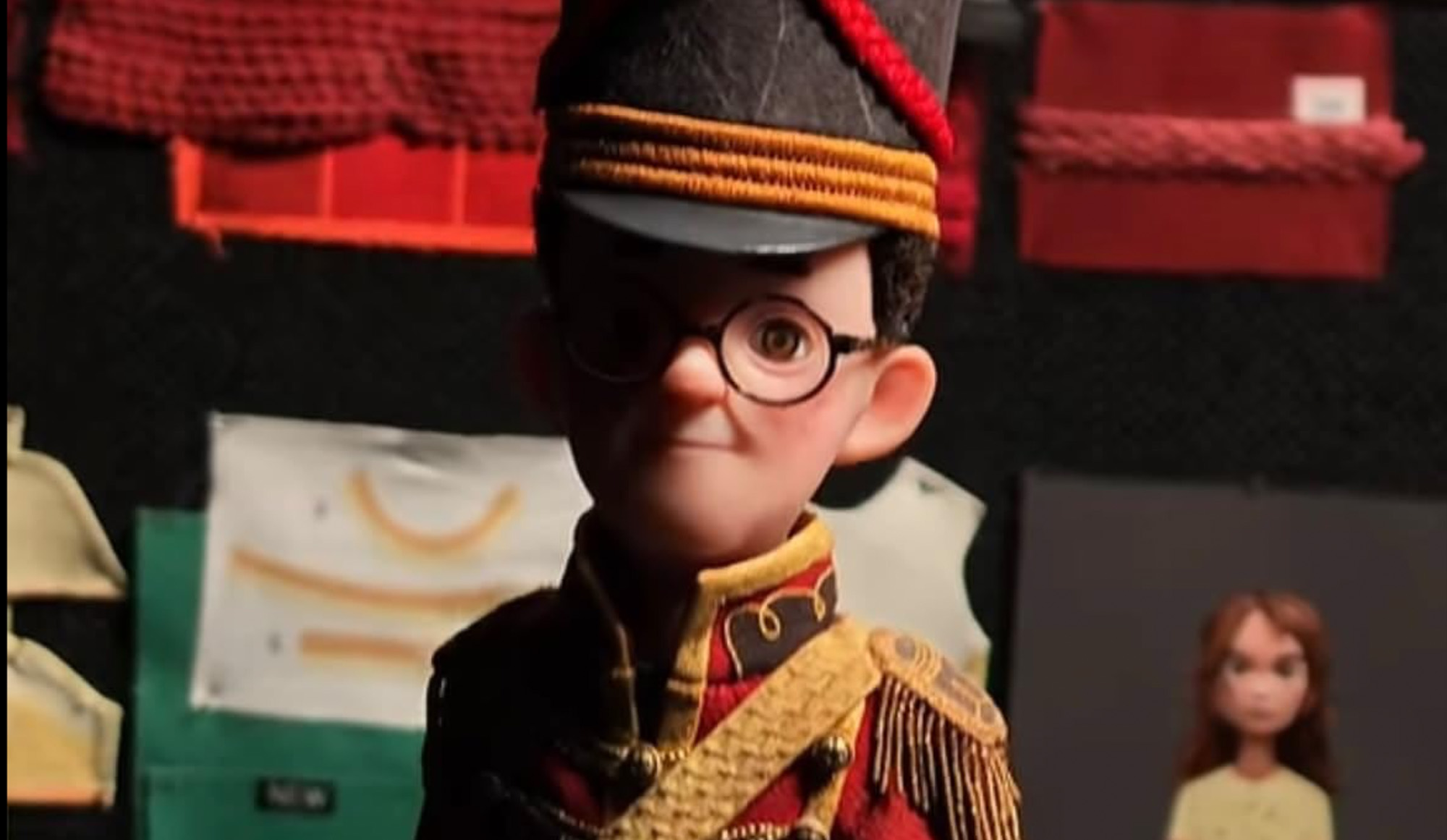
That hand-built ethos extends to the wardrobe, where costume designer Deb Cook sourced materials the way the rest of the studio sources ideas — by hand, in the real world.
Cook: There are a lot of things in the vintage stores here that are fabrics we don’t make anymore, and I really enjoy seeing those. I like buying items myself that are fabrics I don’t recognize — the textures they create aren’t something you’d see in contemporary clothing, or way back in history. There’s just something in the middle. A lot of people here have made their own clothes, and those end up in there as well. I love turning them inside out to see what people did.
 Curtis in the costume shopLaika
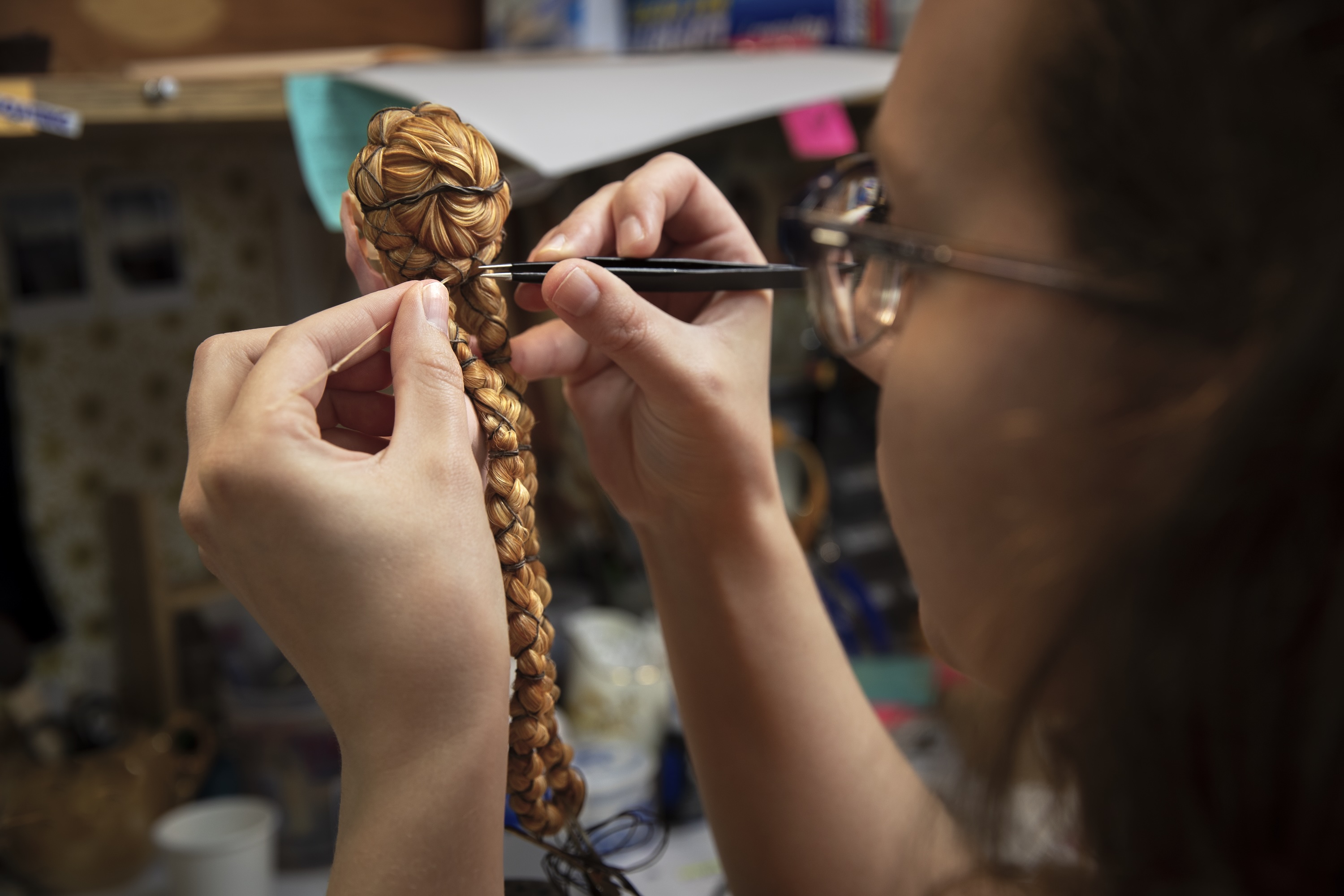
Knight: Most animation companies use computers, and we use computers too — we’re not Amish — but it’s in service of the craft. It’s in service of the art, and there’s always a human behind it.
Every single thing is a choice. Everything is designed and built and manipulated by an artist’s hand. If a character feels sad, that’s not because sadness was lying around in the studio — someone had to sculpt sad, and move sad, and shoot sad, and light sad. It’s the accumulation of all these incredible choices over the years by these amazing artists who put so much love and care into what they do.
 Each doll is painstakingly crafted and styledLaika
Deschanel: You should also know that Travis started out as an animator, and everybody I’ve spoken to in stop-motion animation says he was the best and the fastest. Listening to him talk with the animators — I’ll see something in a preparatory test and go, “Oh my God, that’s great,” and Travis will always have something to say to make it better. He has an incredible eye for how these characters come to life.
Lowry: What’s so interesting about Wildwood is, I’ve watched it recently, and I don’t have [my usual regrets], because the group, the technology, and my experience allowed me to do it exactly like I wanted to do it. So I don’t cringe when I watch this. I’m 63 — I better get it right at some point. I just watched it with a smile on my face.
 Portland’s historic Pittock Mansion is a key settingLaika
Knight: We live in an era that’s largely frictionless, where entire worlds can be generated with a click of a mouse, where things can spring to life with nothing but a prompt. With stop-motion, it’s something different — taking your time with something actually matters. Putting effort and care into something actually makes a difference. What I love most about [Wildwood] is that it really is a celebration of empathy and humanity, and that’s at the core of everyone who made it.
Interviews were edited and condensed