
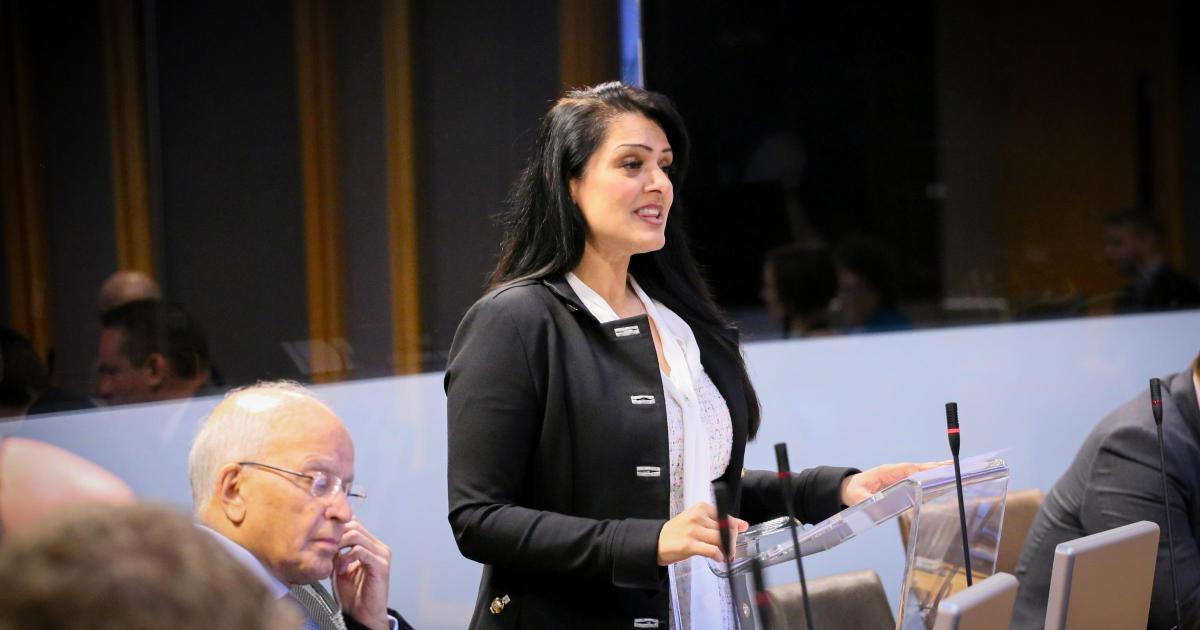
Natasha Asghar, a Welsh Conservative Member of the Senedd who represents Newport and Islwyn, criticised Aneurin Bevan University Health Board for using terms such as “pregnant people”, “people who menstruate” and “people who were born with ovaries” in its health information materials.
Ms Asghar said: “There is nothing offensive about the word ‘women’ and it is deeply worrying that it has been deliberately omitted from these documents.
“Health bosses should have the confidence to use it where it is appropriate.
“Patients want timely treatment, shorter waiting lists and faster care in A&E.
“Aneurin Bevan University Health Board should cut waiting lists and drop the woke language.”
She called on the health board to review its communications and use what she described as “plain, accurate language that recognises women”.
Ms Asghar is against the health board’s use of inclusive language (Image: Natasha Asghar)
Ms Asghar said: “Every patient deserves respectful care, and that does not require describing women as ‘people who were born with ovaries’.”
The health board defended its approach, saying its language is intended to be inclusive and reflect the needs of its diverse community.
A spokesperson for Aneurin Bevan University Health Board said: “Aneurin Bevan University Health Board is committed to ensuring everyone can access the healthcare they need, with dignity, respect and without discrimination.
“Our health information is designed to be clear, accurate and inclusive, helping people understand their health and access appropriate care.
“We don’t consider this woke, we consider it to be respectful.
The Grange University Hospital (Image: NQ)
“Where we use terms such as ‘pregnant people’ or ‘people who menstruate’, this reflects the fact that while these experiences predominantly relate to women, some transgender and non-binary people also require these services and information.
“This approach does not diminish the importance of women’s health or the language used to describe women.
“Rather, it recognises that inclusive communication helps ensure nobody is inadvertently excluded from vital health information or discouraged from seeking care.”
The spokesperson said inclusivity does not detract from the health board’s priorities of reducing waiting times, improving access to services and delivering high-quality care.