
Children with partial or mild hearing loss can encounter challenges in everyday environments that go unnoticed due to their diagnosis, parents say.
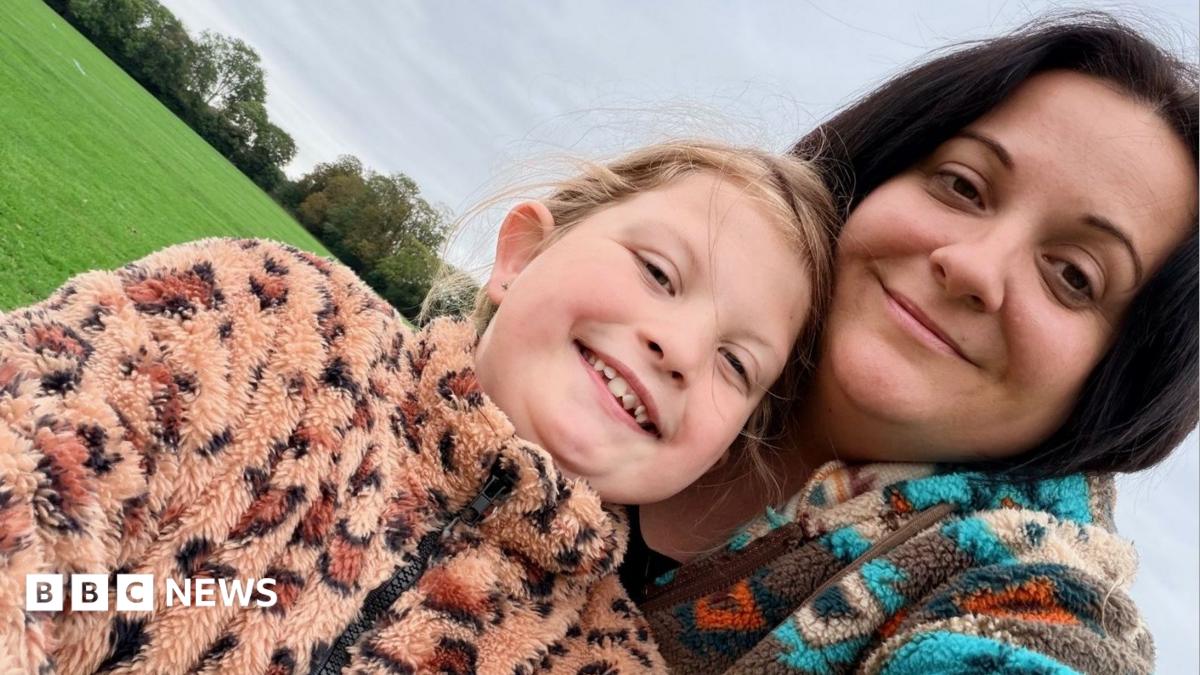
Arlo, eight, from Cottingham, has unilateral hearing loss, or single-sided deafness, which wasn’t picked up by healthcare professionals until she was two.
She uses a hearing aid, but busier environments such as a classroom can make it difficult to concentrate, or pinpoint individual speakers, according to her mum Ali.
“It can definitely take it out of her after a school day,” the 38-year-old explains.
“She says: ‘my ears are aching now, I’m very tired’.
“People can wrongly assume if you’re not fully or profoundly deaf, then everything’s okay and you can just carry on your day as normal.”
Arlo is one of more than 53,000 deaf children and young people in the UK, according to the National Deaf Children’s Society (NDCS).
48% are reported to have mild or unilateral hearing loss.
Despite this, the charity says there are still “gaps in understanding” around the impact this type of hearing loss can have on children, following a recent survey.
Just 36% of respondents agreed that mild or single-sided deafness can have a great impact on a child’s daily life, with one in five believing it to have little or no impact.
If an environment is too loud, such as a music concert, Arlo can end up turning off her hearing aid entirely, which can make it difficult to communicate.
“If people do talk and it’s noisy, they cover their mouth,” Ali says.
“She doesn’t necessarily lip read, but she’ll watch what they’re saying.”