
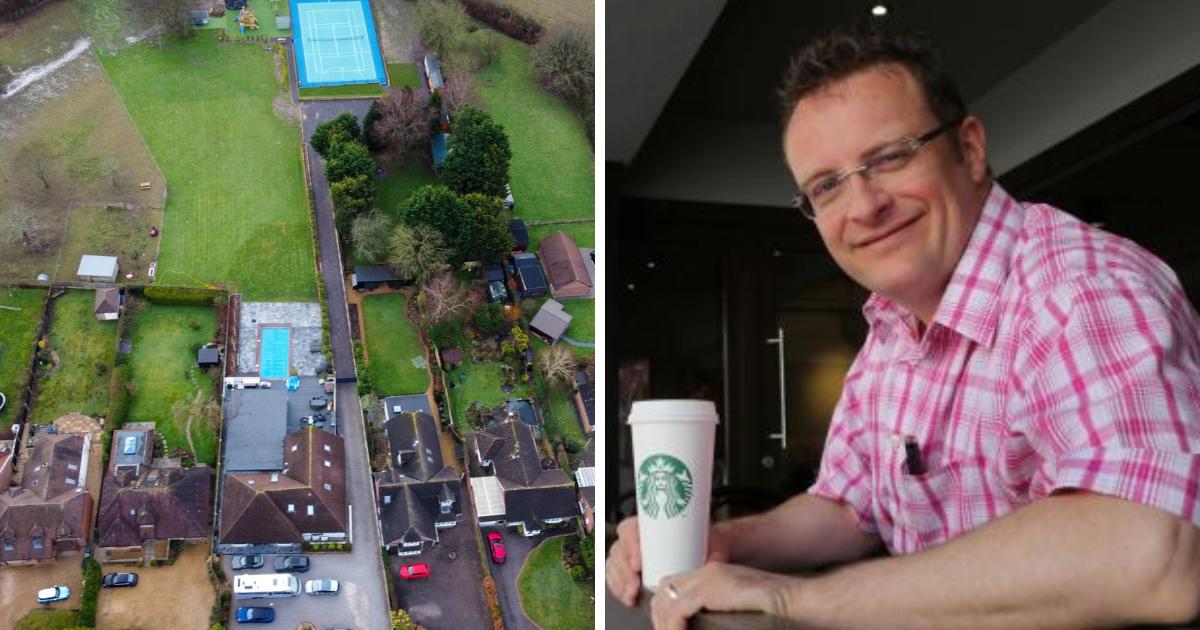
Mark Hepburn appealed to the Planning Inspectorate to overturn an enforcement notice issued by Winchester City Council.
The notice, issued on January 22, concerned a breach of planning control at his former home Cupressus, in Durley Brook Road, Durley.
The appeal came after Mr Hepburn lost an application to have a plot of land at the rear of the property changed to residential.
In previous years he had argued that the three-acre rural site had been used as a garden by previous owners, and that his family were doing the same when they built a tennis court, children’s playground and home gym there.
The appeal decision, which was released on Thursday, October 15, saw the planning inspector, M.P. Howell, dismiss the appeal and uphold the enforcement notice.
Neighbours were pleased. One said: “All the many neighbours are just very pleased as this has been going on for years and has been very stressful continually having to write reports to the council whenever another application came in.”
The inspector said that the development was inappropriate in the countryside location, and that it did unacceptable harm to the character of Durley, saying that it “erodes the rural character of the predominantly undeveloped field”.
This would require Mr Hepburn to remove the tennis court, as well as any associated hardstanding, the play equipment, artificial turf, services connected with the residential use, and resulting waste from the site.
The property in Durley, formerly owned by Mark Hepburn (Image: Andrew Croft/Solent News)
However, the inspector’s report said that a railway carriage located on the site could be retained because specialist lifting equipment would be needed to relocate it.
The report said: “The evidence satisfies me that the railway carriage was already present on the land before the mixed use alleged in the Notice arose.
“Although its precise use before that time is unclear, the evidence suggests that it had been on the land for a considerable period, including during the previous owner’s occupation.
“Importantly, there is no evidence that it was brought onto the land or erected in order to facilitate the mixed use.
“Rather, it was an existing feature of the land that subsequently became subsumed within the mixed use.
“Its later use in connection with the residential activities does not alter the fact that it was a separate piece of operational development already present before the breach occurred.
“Based on the evidence before me, the railway carriage was not introduced onto the land to support or facilitate the material change of use.
“Rather, it formed part of the physical condition of the land before that breach occurred.
“Ceasing the mixed use, including the residential use of the carriage, and removing the other development introduced in connection with that use would remedy the breach.
“Removal of the carriage itself would not restore the land to its condition before the breach occurred.
“I therefore conclude that the appellant has demonstrated that the railway carriage is immune from enforcement action as operational development and that its removal cannot be required under the Murfitt principle as a means of remedying the material change of use alleged and restoring the land to its previous condition.”
A neighbour of the property said: “All the many neighbours are just very pleased as this has been going on for years and has been very stressful continually having to write reports to the council whenever another application came in.”
Mr Hepburn is the the former owner of the multi-million-pound 23.5 Degrees coffee franchise.