
Credit: Far Out / YouTube Still
Sun 18 October 2026 16:06, UK
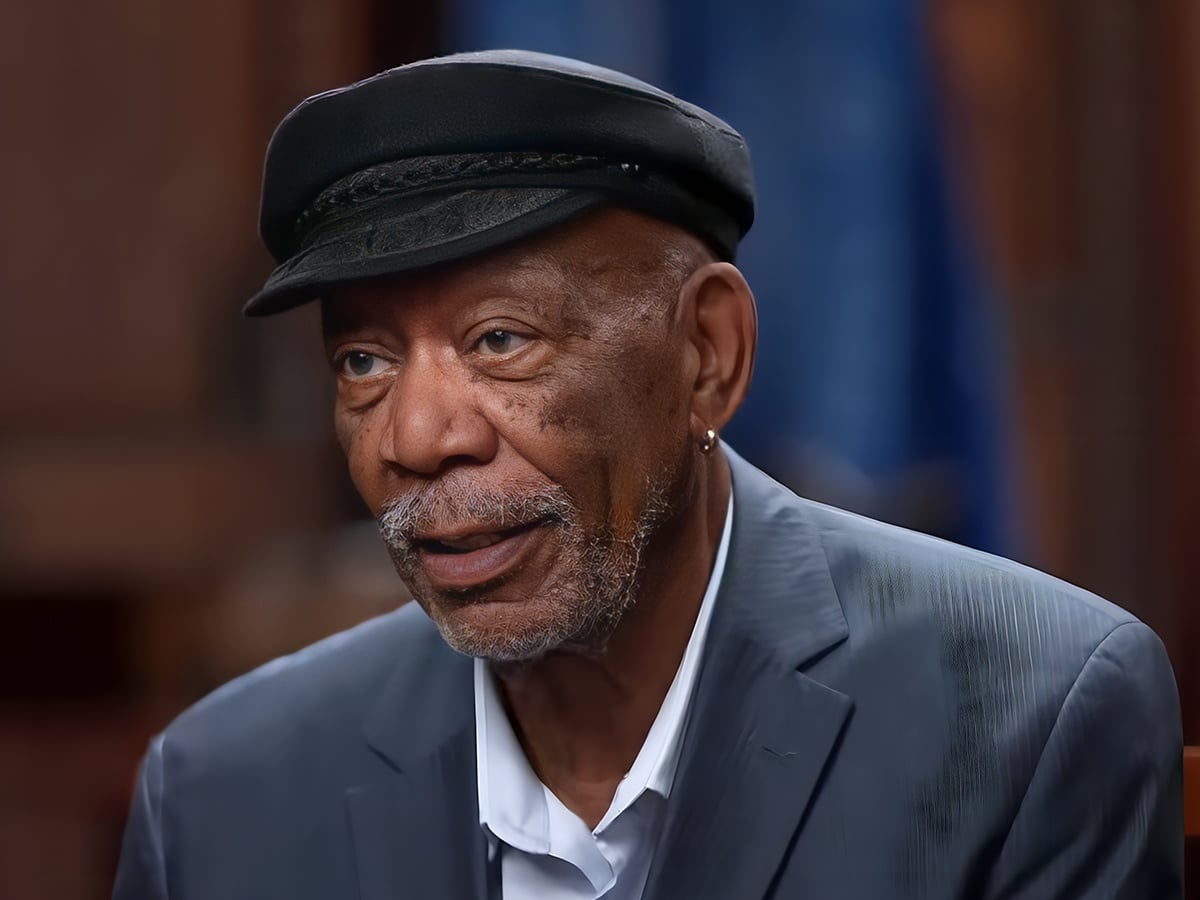
Sat in the quiet dark of his first cinema experience, a young Morgan Freeman was left beguiled by the big screen.
Rural Mississippi was as far away from his new hometown of Chicago as one could have hoped to imagine, and the culture shock hit the young Freeman hard. His previous home in the southern state didn’t even have indoor plumbing or a phone line; the big city was a mind-blowing experience. But perhaps the most dazzling facility on offer was the cinema.
Heartwarmingly, on the day the little boy went to his first film, he “immediately fell in love” with the process of watching movies on the biggest screens possible. “They were such magical places,” he remembered from that fateful afternoon. From that day forward, he did everything he could – including collecting used soda bottles for recycling – to cobble together enough money for his next movie ticket. Soon, he was convinced, “I was going to be an actor or a bum.” There would be no middle ground.
A lot is to be said for our formative experiences in film. Often, the movies we loved as children are the ones that stay with us for the rest of our lives. And for more than eight decades, Freeman has kept that first picture as his number one movie. “The first movie I ever saw was King Kong,” he recalled with a warm smile, thinking back to his first cinema experience at the age of six. “It scared the daylights out of me. I was six and had dreams for a long time about that ape.”
Thankfully, the fear didn’t put Freeman off watching movies. The scenes were electric, and they hit every nerve in his body as the notion of heroes and villains on screen became an enticing prospect he couldn’t ignore: “My number one favourite film was the first film I ever saw,” he reiterated to Rotten Tomatoes in 2011. “That film is the original King Kong. It’s still, I think, the best King Kong.”
It’s hard to argue otherwise, considering what the cast and crew achieved in 1933. King Kong was one of the greatest examples that the cinematic medium was ready to take the next giant leap in its evolution, from the contained, inventive magic of the silent era to something completely unprecedented. The spectacle of it all, a larger-than-life experience, has been fundamental in the way we have modelled the contemporary big-budget Hollywood productions.
Of course, looking back at King Kong now, it’s hard to ignore the racist contextualisations of the narrative, but that’s something Freeman himself is more than familiar with. He rightly pointed out that sci-fi in general has always been less than inclusive, to say the least and that Black actors found it incredibly difficult to break through into the genre that American and European audiences felt comfortable labelling as “fantasy”.
Further reading: Cutting Room Floor
While movies offered a chance of escapism and perhaps an ill-advised view on society, Freeman was left hurt by their exclusionary casting. “My value system was put in place by the movies,” he admitted to Variety in 2018. “I was hit hardest by the science-fiction movies, the future. Up until the ‘60s and ‘70s, science fiction and fantasy totally left Blacks out.”
Once again, though, instead of letting something negative put him off movies, Freeman knew that the magic of cinema was something everyone of every race and creed could enjoy. So, he resolved to do everything he could, through his acting career, to “change people’s attitudes about Black people, about us as Americans; about America itself.”
This is why, when he first broke into film in the ‘70s, he steadfastly refused to star in Blaxploitation films, and why he never lost the childlike wonder that came with watching King Kong on that magical cinema screen. He knew right then and there that his future lay in the movies, and he smiled, “When you want it, you can get it.”
