
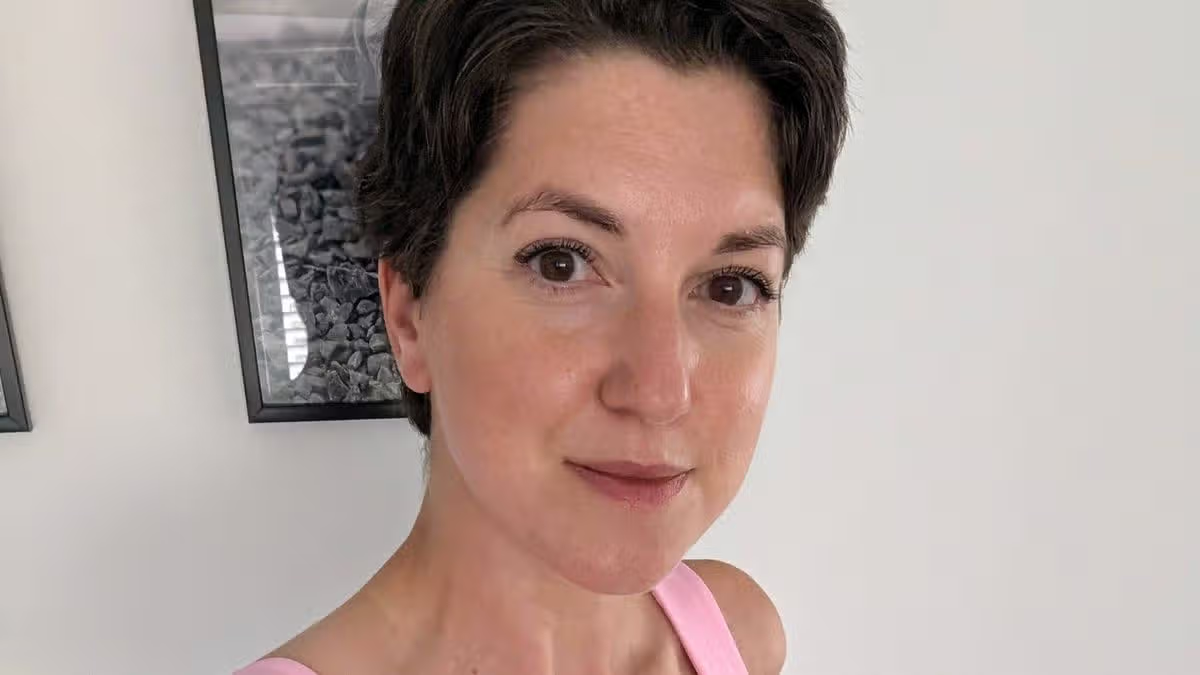
A fit and “very active” lady whose sole indication was a lump prior to being diagnosed with an uncommon breast cancer at 37 has said she wishes to demonstrate to others “there is life after cancer”. Rasa Stonyte, 38, an international relocation manager residing in Flintshire, North Wales, initially discovered the lump on the side of her left breast in mid-February 2025.
A doctor on 4th March suggested it was probably “nothing to worry about”, so she attended a subsequent ultrasound examination at Glan Clwyd Hospital three weeks afterwards and underwent a biopsy that very day.
On 1st April, Rasa stated she was “shocked” to learn she had triple-negative invasive metaplastic ductal carcinoma with squamous differentiation – an uncommon and aggressive subtype representing less than 1% of all breast cancers.
A fortnight later, Rasa explained she endured six months of “horrible” immunotherapy and chemotherapy, including the “very potent” doxorubicin chemo drug nicknamed The Red Devil.
She subsequently underwent a double mastectomy in October 2025 following genetic testing during her treatment which confirmed she carried the BRCA1 gene mutation, indicating she faces an elevated risk of multiple cancers.
Rasa stated she currently has “no evidence of disease” and she attributes this to medical professionals – including the nursing staff at Glan Clwyd Hospital and cancer centre, whom she described as “absolute angels” – alongside maintaining physical activity. Throughout her treatment, she received unwavering support from her fiancé, William McManus, 47, and her parents, who travelled from Lithuania to assist with her care.
“The reality is, I’m not strong, I’m not special and I’m not different to anyone else,” Rasa told PA Real Life.

Rasa was diagnosed with cancer on April 1 last year. (Image: © 2026 PA Media, All Rights Reserved)
“I just didn’t have a choice and every cancer patient will say exactly the same – if we want to live, there is no real other choice.
“But I want to show that there is life after cancer and it can be a really beautiful life.”
Rasa described herself as someone who has always maintained an active lifestyle and been “very outdoorsy”, regularly tackling mountain climbs with her partner William and their pair of Hungarian vizslas.
Aware of a family history of breast cancer through her paternal grandmother, Rasa recognised the significance of consistent check-ups, and a routine examination approximately five years earlier had detected lumps which proved benign and subsequently disappeared.
Therefore, when Rasa observed another lump on the side of her left breast that appeared to “come out of the blue” in mid-February 2025, she assumed it wasn’t cause for concern.
Ensure our latest news headlines always appear at the top of your Google Search by making us a Preferred Source. Click here to activate or add us as Preferred Source in your Google search settings
Following a GP referral on 4th March for an ultrasound three weeks later, Rasa described it as a “huge shock” when a nurse also strongly recommended she undergo a biopsy that very same day.

Rasa undergoing treatment(Image: © 2026 PA Media, All Rights Reserved)
Rasa explained: “My expectation was that everything was fine, so that started ringing alarm bells and I panicked because I have an extreme injection phobia.
“The nurse tried to calm me down and we had a very long chat where she convinced me that I should get that biopsy done.
“And thank goodness she did because I think if I left the hospital, I’m not sure I would have returned back because the anxiety around injections was always a huge issue.”
On 1 April, Rasa learnt the biopsy outcome, with William beside her. Her oncologist stated: “I’m really sorry, but it’s cancer.”
Given it was April Fools’ Day, Rasa recalled her instant initial reaction was, “Is that a joke?”.

Rasa decided not to have a breast reconstruction surgery.(Image: PA )
She described breaking down into a “flood of tears” with everything becoming a “blur”, while William posed follow-up questions regarding the diagnosis, prognosis and subsequent steps.
Within a fortnight of her diagnosis, Rasa explained she commenced a three-month course of chemotherapy which proved “very stressful” owing to her needle phobia, and she endured side effects including fatigue, dizziness and hair loss.
Rasa mentioned she also underwent “absolutely horrible” self-administered immunotherapy injections that caused her “shooting pains” across her body for days following treatment.
“The worst came when I had the Red Devil because it is very potent and knocked me out for weeks on end,” Rasa stated, referring to the second round of chemotherapy lasting three additional months.

Rasa Stonyte was 37 when she was diagnosed with breast cancer. (Image: PA)
“I was extremely fatigued, I had mouth ulcers and all of my hair – including eyelashes and eyebrows – fell out.
“It’s very difficult to describe the feeling, but it was as if everything inside of me was dying.”
Following six months of cancer treatment, genetic testing uncovered that Rasa carried the BRCA1 gene mutation, prompting her to undergo a double mastectomy on 23 October to minimise the risk of the disease returning.
She chose against breast reconstruction surgery, explaining she wanted to “get back” to her normal life “as soon as possible” while avoiding potential complications.
“Having implants would have been a very long and painful journey,” Rasa said.
“I’m very happy with my decision; I feel a sense of freedom now that I’m flat.”
Following the operation, Rasa described it as a “good day” when she learnt in early November 2025 that there was no evidence of disease.
“I’m really happy and I’m very grateful,” she said.

She loves walking her dogs in the mountains(Image: © 2026 PA Media, All Rights Reserved)
“I live a better life than I did before, but there’s no end to my worry and I don’t think there ever will be.”
To enhance her survival prospects, Rasa emphasised the importance of maintaining an active lifestyle through walking her dogs and scaling mountains, despite continuing to experience bone discomfort from her cancer treatment.
“I feel free, happy and strong when I’m hiking,” Rasa said.
“Since it helps me mentally, it automatically helps me physically. And I definitely feel more alive when I’m outdoors.”

Walking her dogs keeps her active(Image: PA)
Dr Sophie Ketchen, director of research and charitable impact at Breast Cancer UK, told PA Real Life: “Studies show that people who are the most physically active after a breast cancer diagnosis have a 30-40% lower risk of dying from the disease than those who are least physically active.
“Some evidence also suggests that physical activity may reduce the risk of recurrence, demonstrating the importance of trying to be physically active if you can after receiving a diagnosis.”
Rasa emphasised the significance of sharing her experience to raise awareness surrounding breast cancer.

Rasa wants to encourage others to get screenings(Image: PA)
“When I started talking about all this on social media, a (former colleague) reached out to me and said that I was the reason why she checked herself and got diagnosed with breast cancer,” she said.
“I just want to show other people who have been diagnosed that there is life after cancer.”
To discover more about how you can minimise your risk, and devise your own personalised prevention strategy, take Breast Cancer UK’s Prevention Quiz here.