
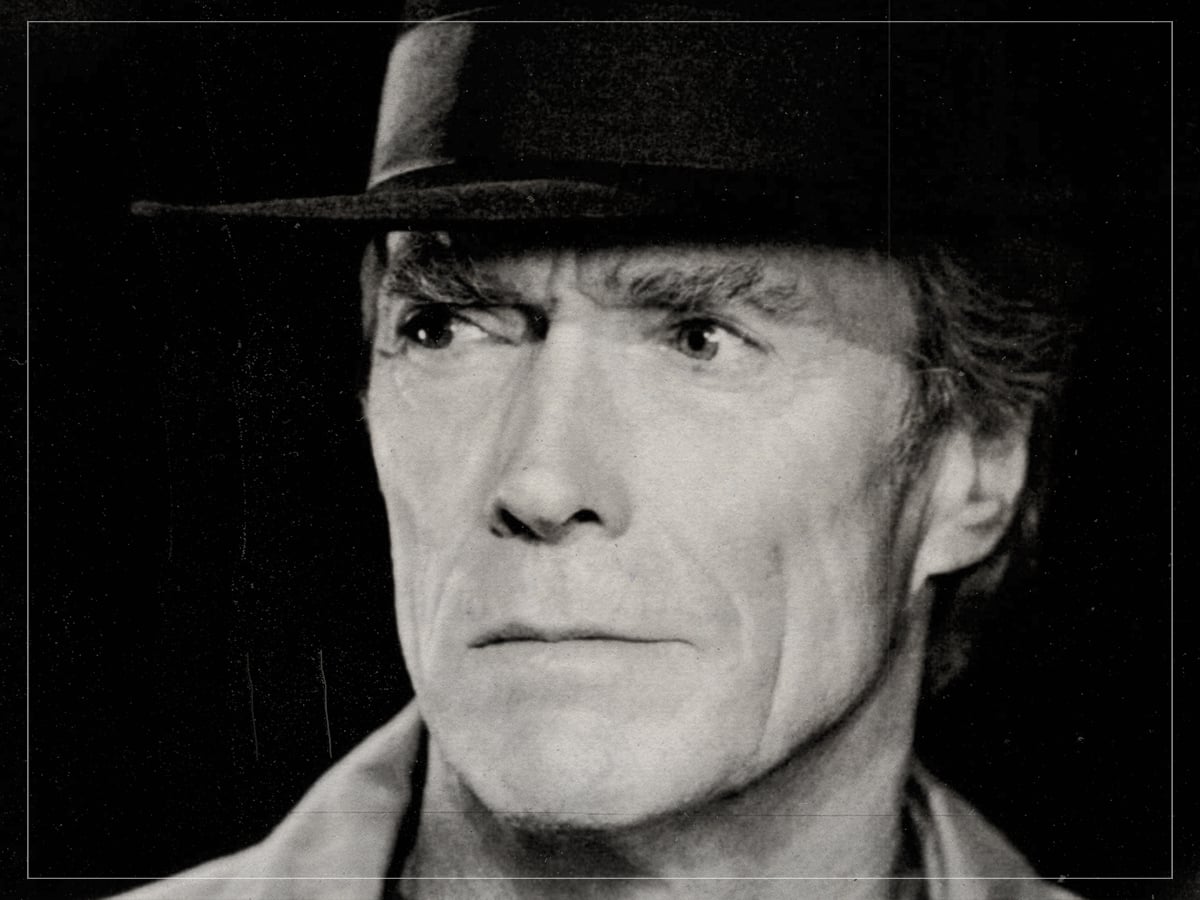
Credit: Far Out / Castle Rock Entertainment / Sony Pictures Releasing
October 19th, 2026 · 8:02pm BST
To be considered an icon in Hollywood, you usually need to be proficient in at least one outstanding skill.
However, some artists can go the extra mile and become legendary in two. Alongside his prolific acting career, starring in many acclaimed westerns and thrillers, Clint Eastwood has also directed countless movies, making him one of the industry’s hardest-working filmmakers. Following his star-making turn in the Dollars Trilogy, he made his directorial debut in 1971 with Play Misty For Me.
The film marked the start of a long directing career, which subsequently included titles such as High Plains Drifter and Bronco Billy. Throughout the years, he’s continued to make a significant dent on the film industry with movies like Unforgiven, The Bridges of Madison County, Million Dollar Baby, Invictus and American Sniper. Often working in the crime and thriller genres, he made Changeling in 2008 with Angelina Jolie in the starring role.
Written by J Michael Straczynski, the creator of Babylon 5 and Sense8, the film is arguably one of Eastwood’s most emotionally powerful directorial efforts. It follows a woman whose missing son is seemingly returned to her, only for her to realise that the boy is not her child.
Despite repeatedly insisting that the authorities have made a mistake, her concerns are dismissed, and she is eventually committed to a psychiatric hospital. Set in the late 1920s, the film explores themes rarely associated with Eastwood’s traditionally masculine filmmaking, examining how women were routinely dismissed, mistreated and failed by those in positions of authority.
It was during filming that he first worked with Jolie, who rose to prominence in the ‘90s because of performances in movies like Gia and Girl, Interrupted. Eastwood praised Jolie for her diligent effort, telling Pop Entertainment that she was “the most prepared actress – or certainly as prepared – as any actress I’ve ever worked with”, highlighting her dedication to her performance.
Although Jolie is now celebrated as much for her humanitarian work as her acting, it’s worth remembering the dedication she brought to her performances. Initially regarded as a sex symbol, particularly following her appearance in Tomb Raider, she was determined to prove that her talent extended far beyond her looks. Rather than resting on her fame, Jolie approached her roles with remarkable commitment and professionalism, something Eastwood witnessed first-hand when they worked together.
“I didn’t know Angelina very well before doing this. I had met her on a few occasions, but I always thought of her as a very interesting actress, a very good actress,” he explained.
“A lot of people get on the cover of magazines and it doesn’t necessarily mean they’re talented, but in her case, she is really talented.”
Clint Eastwood on Angelina Jolie
Eastwood recognised her talent in the way that she knew exactly what to do as soon as shooting began. “She came in with the material in her mind, with an attack on the character, was very amenable, and you could shoot almost immediately, which was something I like to do,” he said. “I like to catch somebody before they have a chance to think about it too much; like they haven’t spoken the words so many times that it’s flat”.
Eastwood believes that there is “a subliminal thing where you look in their eyes, and it’s the 10th or 20th time they’ve done it…you try for it in the early moments when they’re still reaching for it and still trying to figure it out, but she’s very amenable to that.” Jolie seemed to be an ideal actor for him to direct, and her performance certainly reflected this ease between the two; she was subsequently nominated for ‘Best Actress’ at the Academy Awards.
“And she does have the most striking face that one could imagine,” Eastwood concluded.
What makes Changeling particularly striking is that Jolie’s performance is built around restraint rather than the typically action-heavy roles with which many audiences associated her. As Christine Collins, she portrays a mother whose determination to find her real son becomes a battle against a Kafkaesque system more interested in protecting its reputation than uncovering the truth.
The emotional wallop comes not simply from her grief, but from the way that grief is repeatedly dismissed by those in positions of authority. Jolie seems to lean into the fact that this is, uncannily, a true story, and delivers a performance that feels true to life right down to her evident physical deterioration, but always with the defiant dignity that Collins is said to have possessed. Clearly, she studied the historic accounts and wrestled with her own motherhood.
That tension also reflects Eastwood’s strengths as a director. Rather than allowing the period setting to overwhelm the story, he keeps the focus on Collins’ increasingly desperate struggle, giving Jolie room to convey her character’s anguish through a quiet resolve that feels equally profound in the modern age. Quests for justice are, after all, a constant.
The result is a performance that demonstrates the range behind her celebrity, while highlighting Eastwood’s ability to draw nuanced work from the loftiest stars in Hollywood. Jolie’s Academy Award nomination for ‘Best Actress’ further cemented the film’s place among the more acclaimed performances of her career, and Clintwood’s eeriest dive into history.
ADD AS A PREFERRED SOURCE ON GOOGLE  The Far Out Clint Eastwood Newsletter
All the latest stories about Clint Eastwood from the independent voice of culture.
Straight to your inbox.