
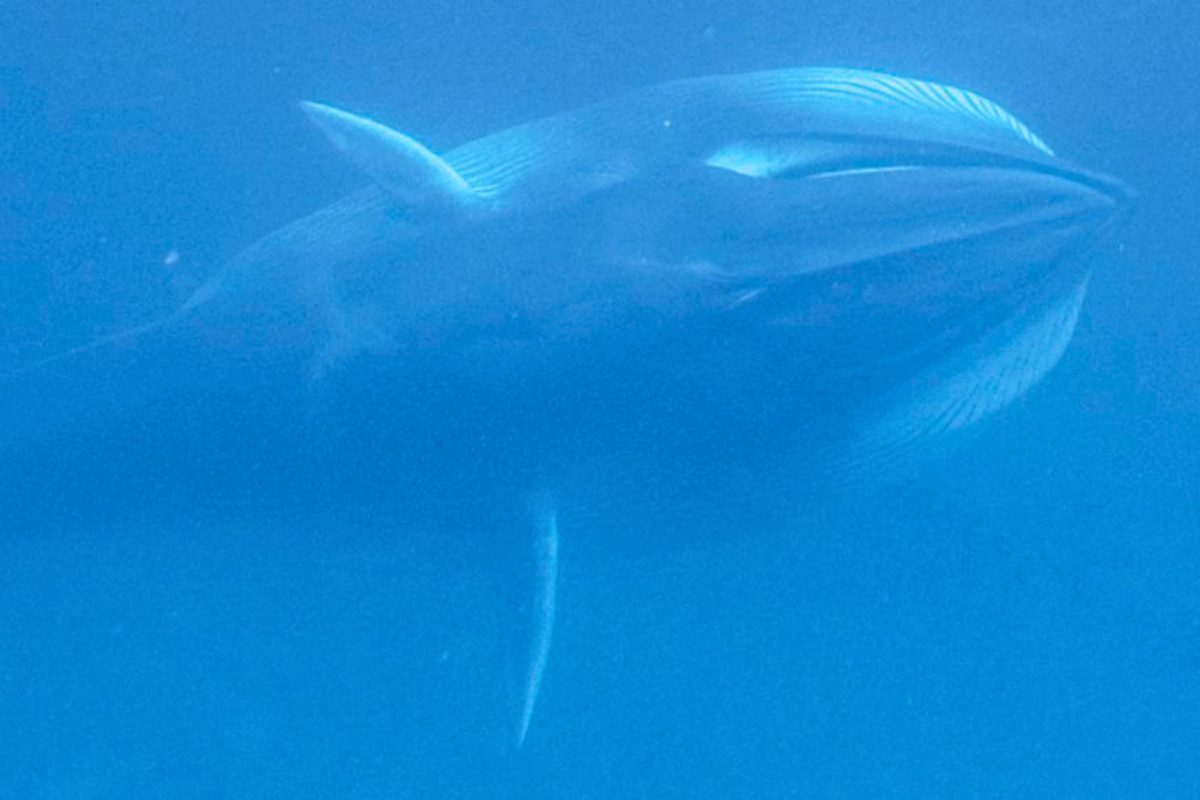
Very little is known about the Omura’s whale – a type of baleen whale, first recognised as a species in 2003. Such is the mysterious nature of the species that it is listed as Data Deficient on the International Union for Conservation of Nature (IUCN) Red List, meaning there is not enough information to accurately assess its risk of extinction.
Now, new research from north-west Australia is providing fresh insights into the habitat of the enigmatic whale.
Published in the journal Marine Mammal Science, the findings reveal that Omura’s whales are most likely to be found in warm, food-rich waters – knowledge that can be used to help conserve the species.
Omura’s whales belong to a group of whales known as rorquals, which includes the mighty blue whale. They grow to around 10m in length and their evolutionary lineage dates back 10–17 million years. But we don’t know much more about the whales – that’s why researchers from Curtin University’s Centre for Marine Science and Technology wanted to study them.
The research was based on 18 years of underwater acoustic recordings (2005–2023), collected from Australia’s North-west Marine Region – a network of marine parks stretching from the Western Australia–Northern Territory border to Kalbarri in Western Australia. The team analysed acoustic recordings from 35 sites spanning around 1,800km of ocean.
Listen: the Omura’s whale song. Credit: Royal Society Open Science
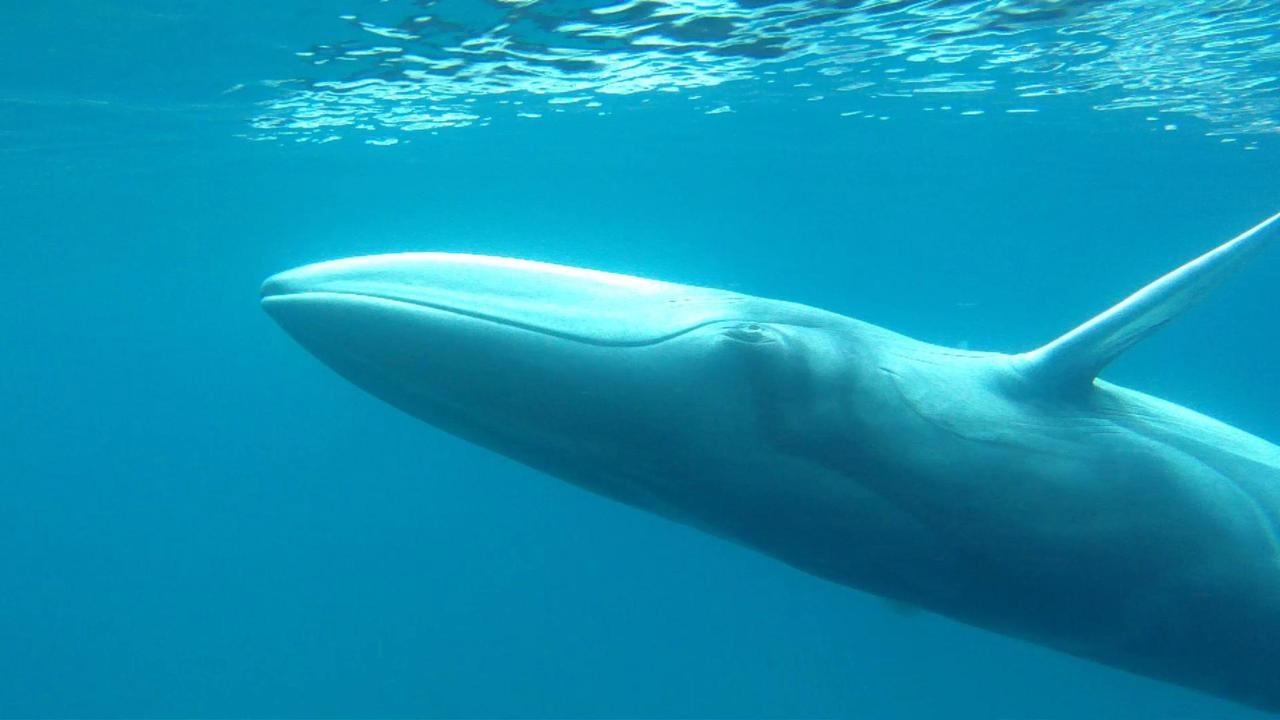 The Omura’s whale is a small-to-medium-sized whale – but as far as animals go, it’s still huge, with adults measuring around 10m in length. Credit: Royal Society Open Science
“Omura’s whales are notoriously difficult to study because visual sightings are rare, so listening for their calls provides an important way of understanding where they occur,” says lead author and Curtin PhD student Ciara Browne.
Browne and colleagues detected Omura’s whale calls throughout the year, but their distribution appeared to shift with the seasons, with the whales more likely to be present from September to May when waters were warmer. During these relatively balmy months, “ocean conditions create rich feeding opportunities,” explains Browne.
The team also found the whales were more likely to be present in areas with higher levels of chlorophyll. Chlorophyll is an indicator of microscopic marine life and ocean productivity – and therefore prey availability. When chlorophyll levels were higher, the whales’ presence also increased.
“Our findings provide an important baseline for understanding how Omura’s whales use Australian waters and how they may respond to environmental change,” says co-author Professor Christine Erbe.
“This knowledge can help inform marine planning and improve our understanding of potential impacts from activities such as shipping, offshore industry and other sources of underwater noise.
“The research can also help improve our understanding of the impacts of future climate change on whale behaviour.”
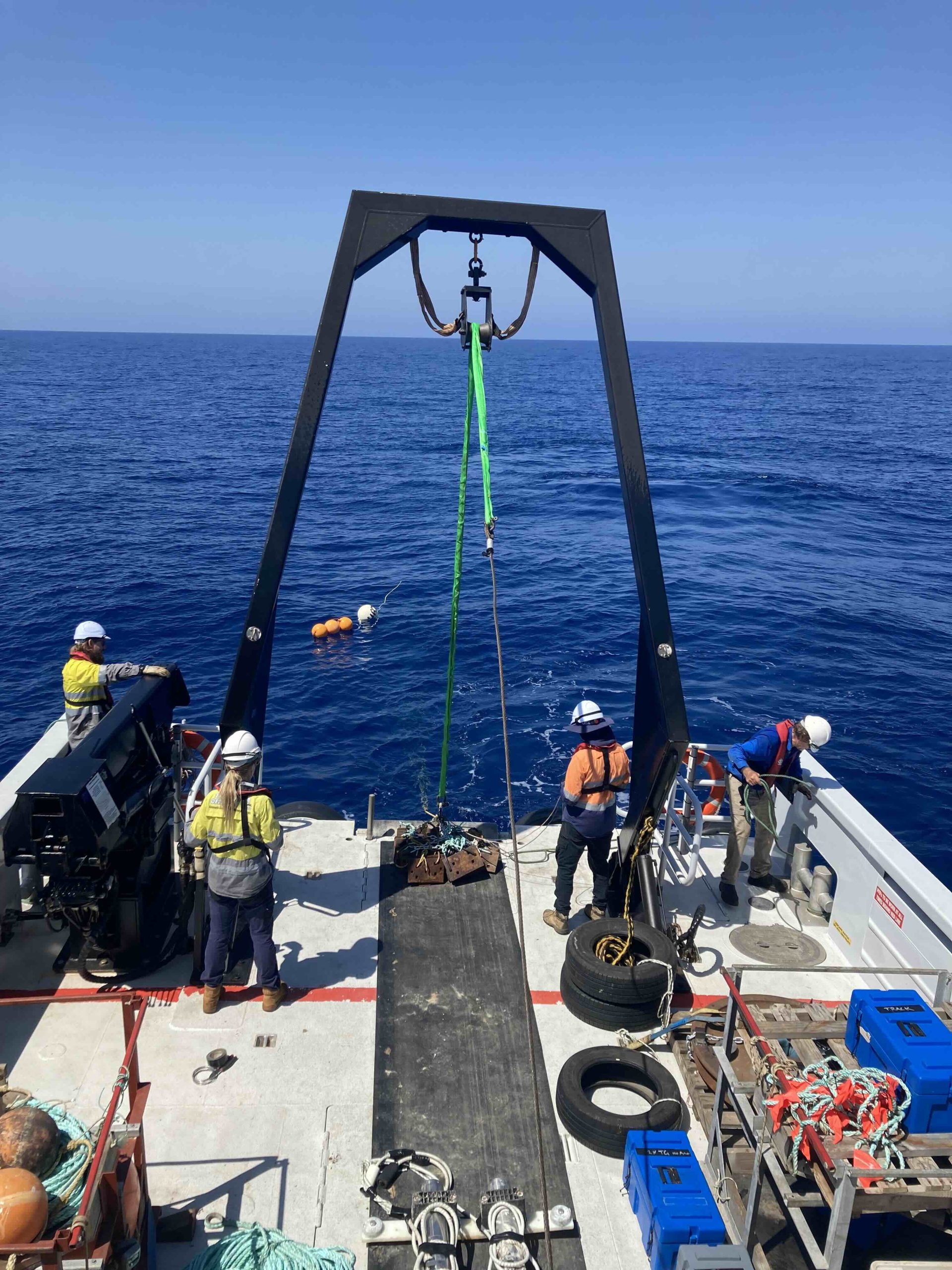 Researchers at sea off the North West Shelf, Australia. Credit: Royal Society Open Science
More wildlife stories from around the world
Top image: Omura’s whale. Credit: Royal Society Open Science