
Follow us
Add us as a preferred source on Google
Newsletter
Subscribe to our newsletter
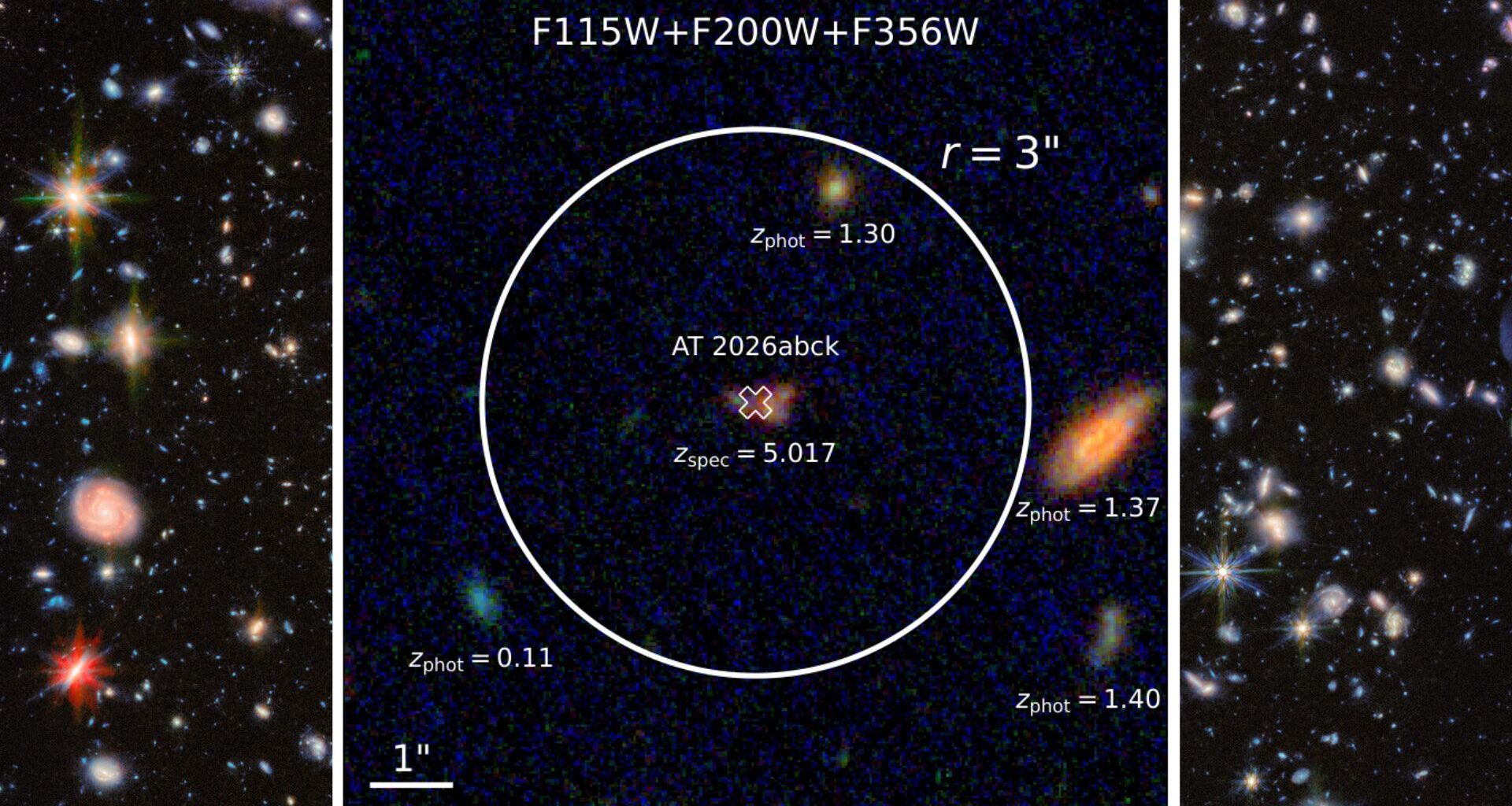
Astronomers using the James Webb Space Telescope (JWST) have found what may be one of the most distant supernovas ever observed. And in a stroke of cosmic luck, the team thinks they’re seeing what the explosion looked like just days after it ignited.
The supernova, named AT 2026abck, dates to around 1.15 billion years after the Big Bang, when the universe was less than one-tenth of its current age and bursting with massive stars flickering into life. The massive exploding star violently released its light over 12.5 billion years ago, according to the researchers — so long ago that the distance between us has effectively ballooned sixfold due to the expansion of the universe.
Latest Videos FromLive Science
A beacon from the beginning of space-time
You may like
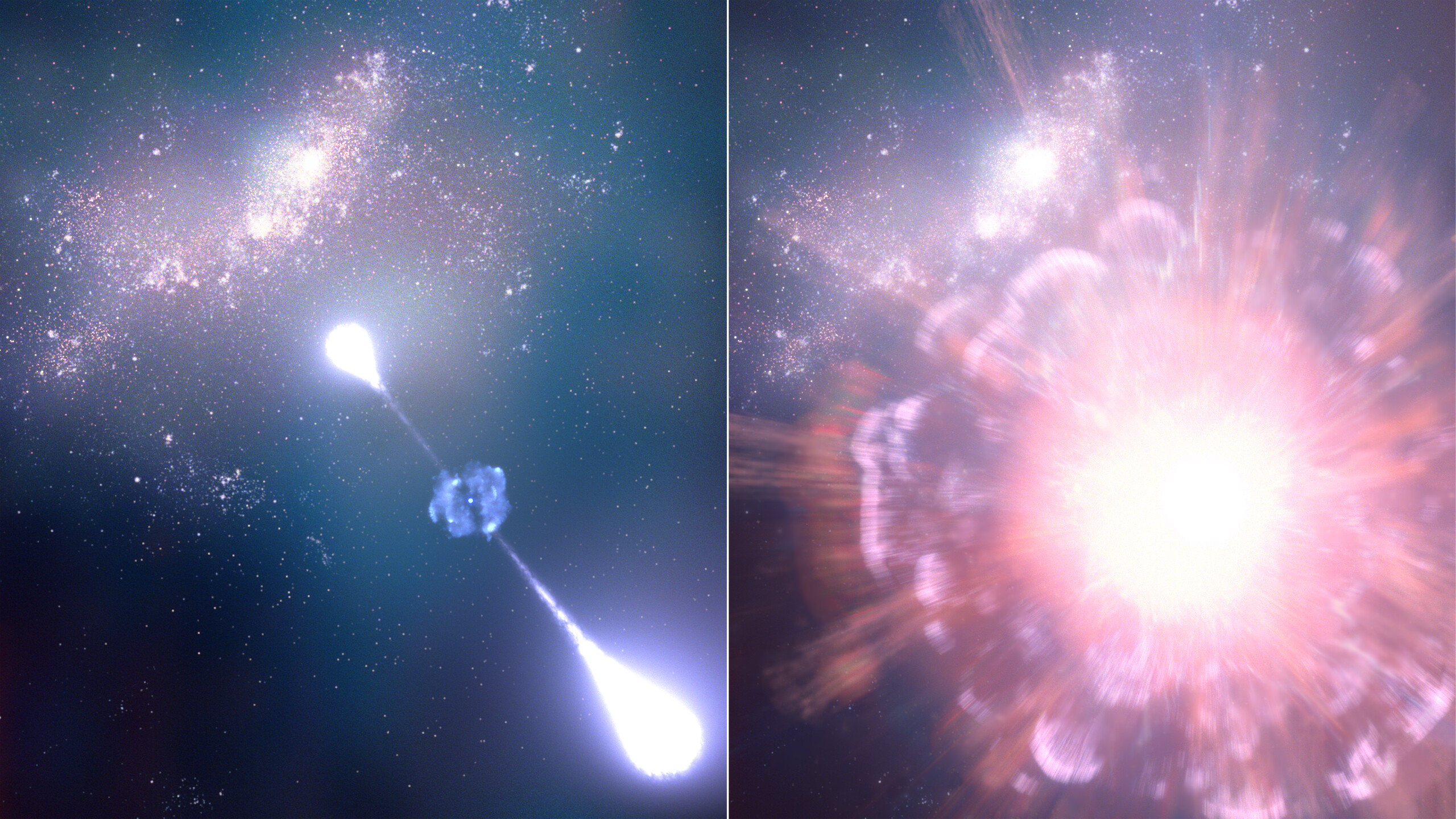
An illustration of a supernova erupting when the universe was just 730 million years old.
(Image credit: NASA, ESA, CSA, STScI, L. Hustak (STScI))
What to read next
An explosion in slow motion
Zhuang, M., Shen, Y., Hu, L., Pierel, J. D. R., Pan, Z., Stone, Z., Burgasser, A. J., Fan, X., Greene, J. E., Li, J., & Wang, F. (2026, September 29). NEXUS: Discovery of a Luminous Young Transient at z=5. arXiv.org. https://arxiv.org/abs/2609.38373
TOPICS