
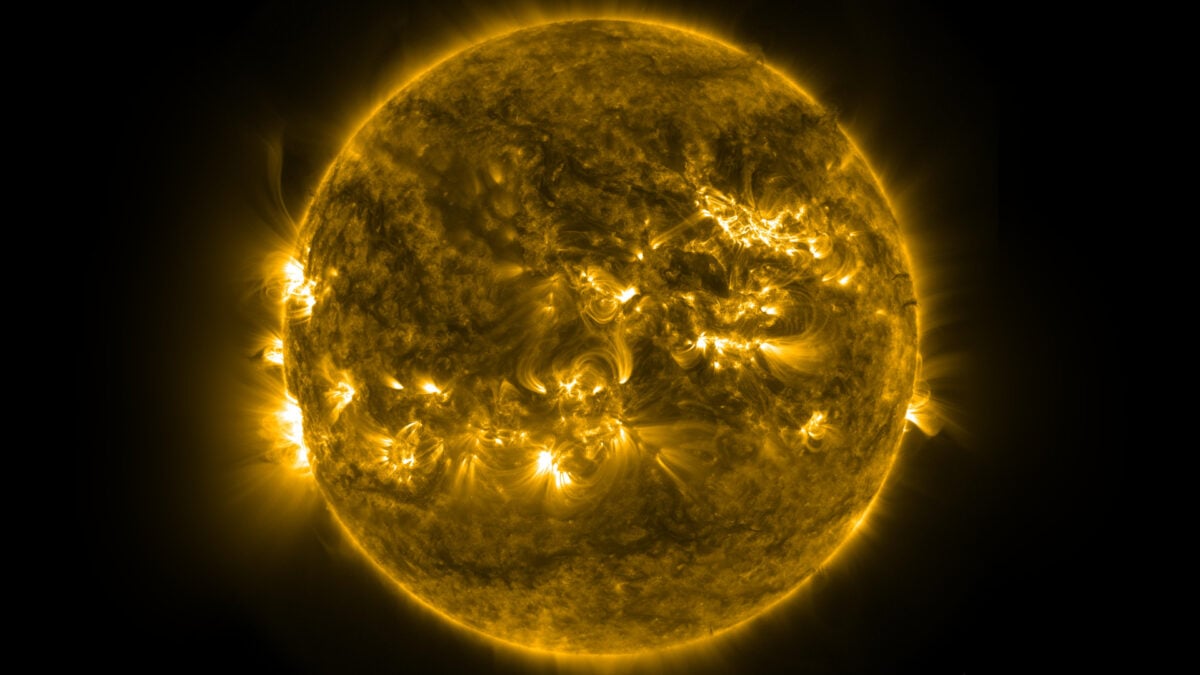
On November 11, 2025, an X5-class solar flare triggered the largest ground-level enhancement (GLE) event—when solar radiation is so powerful it generates measurable changes on Earth—in almost 20 years. Scientists didn’t miss the chance to deploy everything they had to collect as much data as they could. And nearly a year later, they have the details on how these storms affected Earth.
A paper published yesterday in Space Weather presents a comprehensive dataset on how extreme solar events affect airborne and terrestrial electronics, as well as human health. During the November flare, formally called GLE 77, researchers based in the U.K. and the Netherlands deployed weather balloons and instruments to collect radiation data both on the ground and up to 106,000 feet (32,308 meters) in the sky.
As expected, radiation levels significantly varied depending on location and altitude. One flight from London to New York experienced a 42.6% increase in radiation exposure—demonstrating the importance of direct observations, as opposed to model-based projections, when assessing radiation risk.
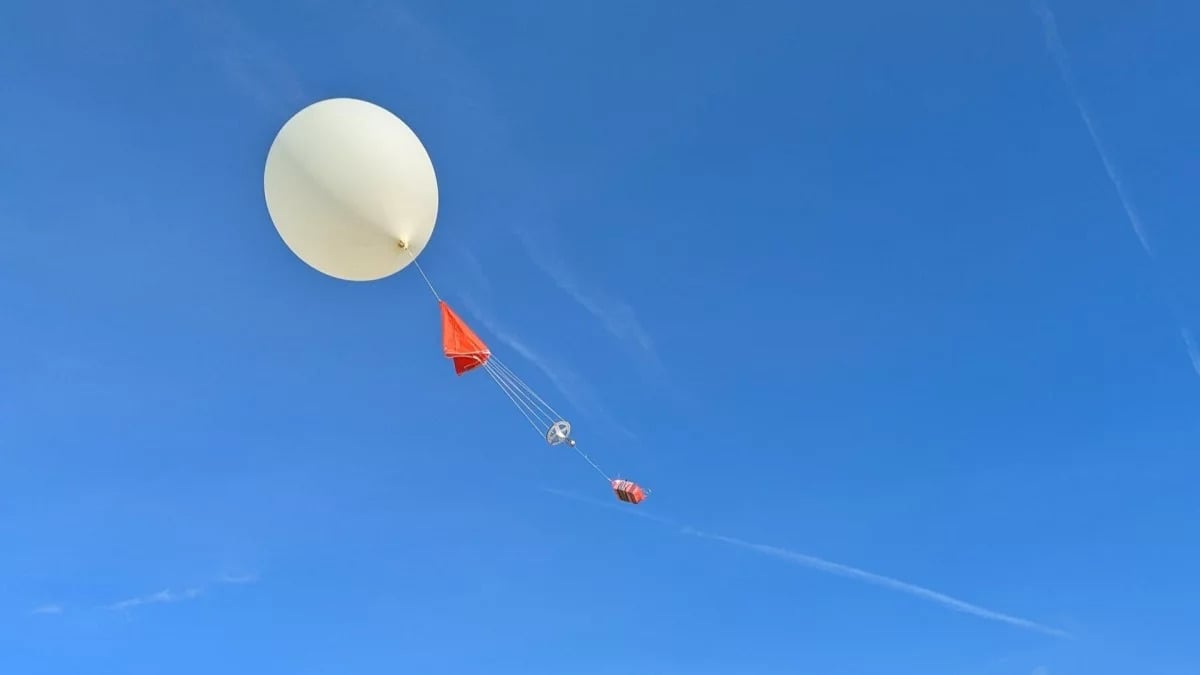 A weather balloon launched in October 2025 at Met Office sites in Camborne and Lerwick in the U.K. Credit: University of Surrey
“This is the first time radiation data has been collected through the atmosphere during a space weather event in this way,” Krista Hammond, the study’s co-author and a space weather manager at the U.K. Met Office, said in a statement. This “represents a big leap forward in scientific understanding and will make a real difference to our space weather forecasting capability,” she added.
A solar freakout
The Sun operates on 11-year cycles, transitioning between low and high magnetic activity. Most recently, NASA confirmed that our star reached its solar maximum in October 2024, adding that solar activity would likely increase throughout the next year. Usually, Earth’s own magnetic field and atmosphere act as a buffer against radiation storms, but particularly powerful solar storms can create major disturbances in Earth’s magnetic field, triggering a geomagnetic storm. And as predicted, the Sun went real wild during the latter half of 2025.
Around a week before GLE 77, the Sun released two X-class flares that wiped out radio signals in South America. Days later, Airbus pulled roughly 6,000 A320-family jets for a software fix after an earlier incident blamed on solar radiation. This was because earlier, on October 30, a software malfunction led to an altitude adjustment failure on a commercial flight. To be clear, there wasn’t a solar storm on that date, although the stray cosmic ray that did cause this failure is very much the “same class of particle” produced by extreme flares, as spaceweather.com’s Tony Phillips wrote in a report at the time.
True numbers
The latest work wasn’t a lucky strike; that is, the team’s equipment didn’t just happen to be ready at the right time. The researchers had worked for a long time to develop sensors and instruments to be attached to weather balloons and commercial aircraft. And their hard work clearly paid off, as they were able to deploy their equipment within an hour of GLE 77, according to a statement published a couple weeks following the November 11 flare.
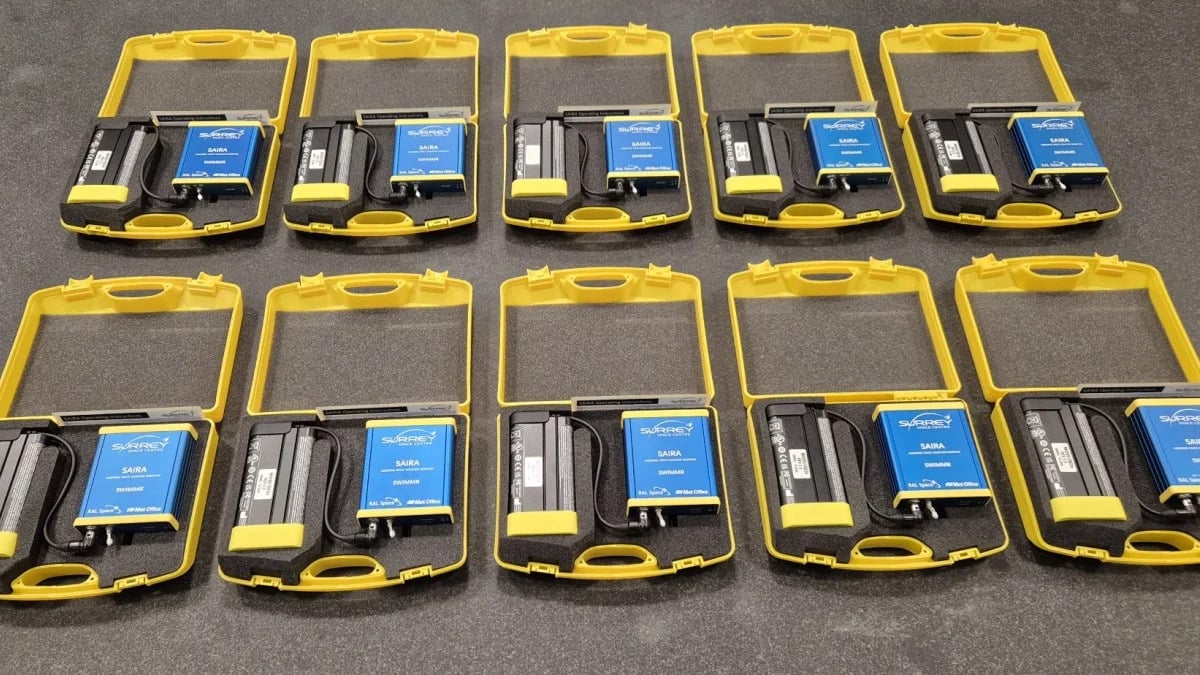 Monitors installed on commercial planes to measure radiation exposure. Credit: University of Surrey
“I’d spent years studying these events, so when the alerts first came through, I assumed it would just be another small blip,” Fraser Baird, the study’s co-lead author and a research fellow at the Surrey Space Centre in the U.K., said in the latest statement. “But when I logged into the data stream and saw what was happening over Lerwick, I genuinely couldn’t believe it.”
Namely, the balloons launched from Lerwick, Scotland, recorded a “moderate” advisory threshold at an altitude higher than commercial jet altitudes, several hours after the storm peaked. But measurements exceeded the “severe” thresholds at altitudes associated with supersonic flight, according to the statement. However, the International Civil Aviation Organization, which issues these warnings, never did so during GLE 77, the team noted in the paper.
Balloons at the ready
Obviously (and fortunately), powerful solar weather events are relatively rare; even if they do occur, they don’t always travel in Earth’s direction, either. But as the latest work shows, nothing tells us more about how these events affect us than direct measurements.
“It shows just how geographically variable these events can be and why having coordinated monitoring systems in place is so important for improving our understanding of radiation risks to aviation,” Baird added.