
Greek mythology has stood the test of time, thanks to its universal themes, storytelling archetypes, and, as therapist and author Dr. Gillian O’Shea Brown, LCSW, writes in her book Psyche’s Awakening, its insights into the human psyche.
From complex family dynamics to overcoming insurmountable challenges, trauma, and suffering to love and relationships, Greek myths have endured through thousands of years as surprisingly relatable stories that reflect aspects of our own modern lives.
Heather Rose Artushin: Share a bit about your background and what inspired you to write Psyche’s Awakening: A Guide to Emotional and Somatic Healing Through the Wisdom of Greek Myth?
Gillian O’Shea Brown: In an era of AI and algorithmic reality, people are starving for what is real and true. Myths endure because they connect us to something larger than ourselves. They aren’t just entertainment—their archetypes are mirrors and roadmaps, reminding us of the resilience and wisdom already waiting inside our own psyches.
After publishing my textbook for NYU, Healing Complex PTSD, I had my own children and realized how much vital psychological wisdom gets locked away behind academic jargon. It made me look back at my own childhood in Ireland, where I understood the world through fairytales and folklore. That’s why I wrote this book: to take the timeless power of Greek mythology and turn it into a practical, modern roadmap for deep psychological healing.
HRA: Greek mythology is having a moment culturally – what about the Greek myths speaks profoundly to the narrative on mental health and psychological healing?
GOB: Yes! I think we all developed a little bit of an obsession with Greek mythology this summer with The Odyssey, but it is not just an obsession – it is a lifestyle. Myths are more than mere stories. They are the original maps to navigate our psyche. They reveal that while the heroes of ancient myths had to slay external monsters, our greatest battle is conquering what lies within.
The truth is, we never truly know ourselves or the strength of our relationships until we are tested by adversity. I’ve come to believe that pain is the elixir the soul drinks to evolve. The hero’s journey isn’t a fictional story; it’s the blueprint of your own life unfolding. It’s a challenging, beautiful path to becoming who you were always meant to be.
Our predestined meeting with our inner “dragon”—whether that takes the form of a painful memory, a deep fear, or a monumental task—isn’t an obstacle. It’s an initiation. It forces us to turn inward, face our shadow, and reclaim our power. The archetypal energy of every mythical figure lives inside you. The real magic isn’t in a distant fairy tale; it’s your own internal life elixir that allows you to transform wounds into wisdom, pain into purpose, and shame into self-forgiveness.
HRA: How can readers embrace the “hero’s journey” story framework as their own? In what ways do these storytelling models, like those found in Greek mythology, resonate with our individual mental health journeys?
GOB: While in ancient myth, the hero must slay a monster in real life, we must conquer what lies within. Joseph Campbell explained that the hero’s journey is not merely an external adventure of battling monsters. Instead, it is equally—if not more—about the psychological journey of confronting one’s fears, doubts, and insecurities: the shadow. Your “shadow” is the hidden, darker side of you—your repressed feelings, memories, weaknesses, destructive impulses, and unacknowledged desires. It is through the confrontation with your “shadow,” which can take many forms—the most feared enemy, a painful memory, or an impossible task—that the seeker truly becomes a hero. This predestined meeting with the inner “monster” (shadow) should be viewed as an opportunity rather than an obstacle; it is an initiation that forces you to turn inward, harness power, and overcome fear. A hero’s external challenges often mirror their internal landscape.
The very first step to healing is curiosity, followed closely by compassion and accountability. I love what the great sculptor Michelangelo said about creating his masterpiece ‘The David’: ‘I saw the angel in the marble and carved until I set him free.’ Your authentic self is already inside you, waiting to be unveiled. It is currently buried beneath unresolved trauma, defense mechanisms, and old fears, but within your psyche exists an innate wisdom that knows exactly how to heal. When you stop fighting your fears and start looking at them with curiosity, you unlock a strength you never knew you possessed. You begin to transform your pain into purpose, reshaping your deepest struggles into your greatest source of meaning.
HRA: Which Greek myth do you most identify with, and what have you learned about yourself in the process of studying it?
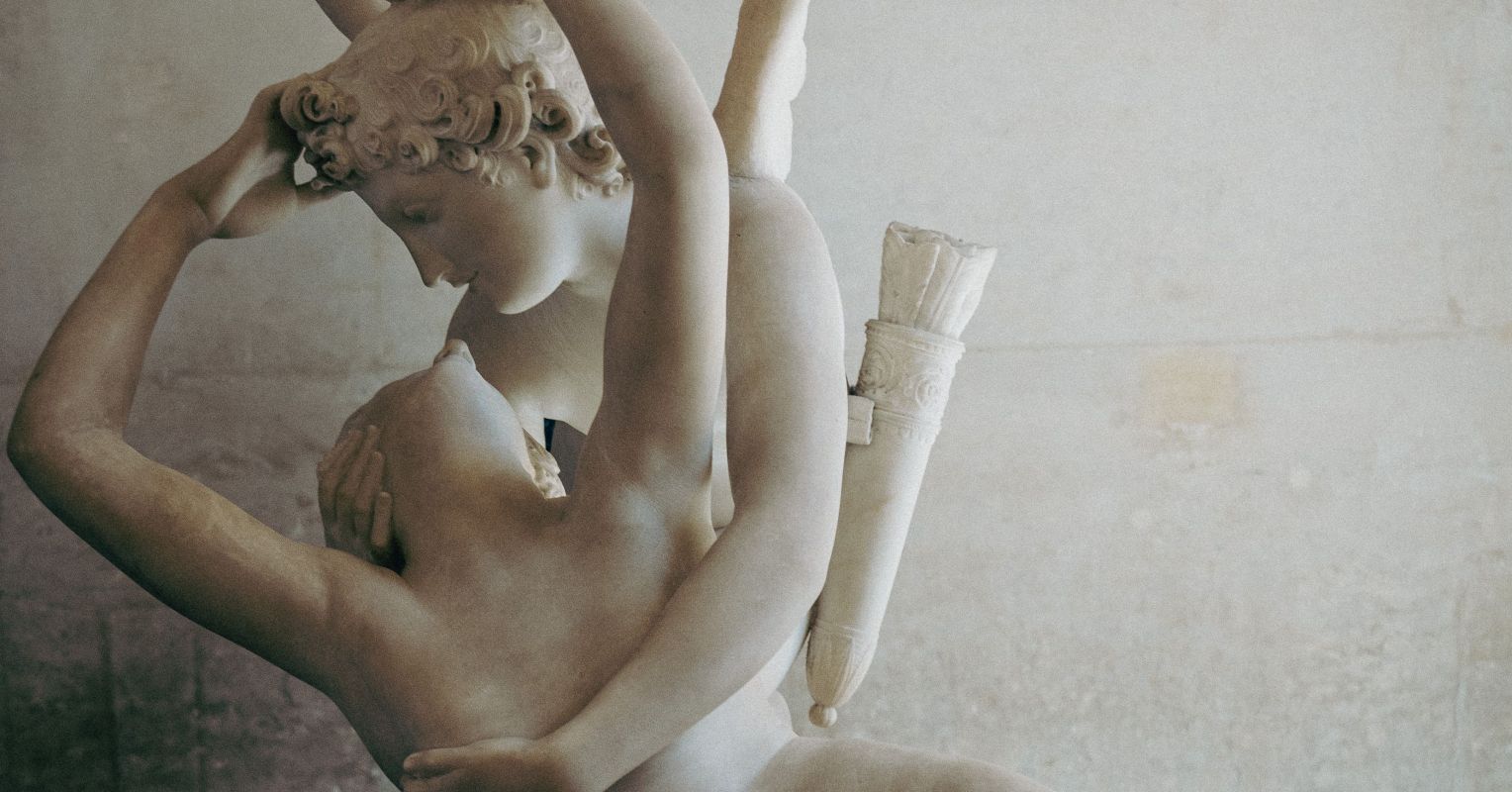
GOB: The enduring power of myths lies in their ability to reconnect us to something larger than ourselves, inspiring us to live more meaningful and compassionate lives and, most importantly, reminding us of our natural inclination toward doing good. One of the most captivating stories of love in Greek mythology is that of Psyche and Eros. Psyche, the goddess of the soul, goes through trials and tribulations to be reunited with Eros, the god of love. Their story symbolizes the soul’s journey of overcoming trials, aligning with love, and transforming through growth.
Psychology Essential Reads
In life, we are all on a journey toward sacred reunion, a process of integrating love with the soul. Even the origin of the word psychology leads us back to myth; the word psyche in Greek means “soul,” forming the root of words like psychology (“the study of the soul”) and psychiatry (“the healing of the soul”). And so I resonated most with Psyche — the goddess of the soul: She was not born the goddess of the soul, but became her through trials and tribulations. I believe pain is the elixir the soul drinks to evolve.
HRA: What do you hope readers take away from spending time with your book, Psyche’s Awakening?
GOB: My hope is that this book will help you to live through the pain and emerge on the other side with joy, beauty, and serenity. I hope this book becomes a companion to you and a source of comfort through the dark times. I hope my words shape your internal dialogue as you compassionately witness, rescue, and heal yourself. I hope you’ll share this guidance with others.
I am merely a guide. You are the protagonist, the master, and the hero of your journey. Please accept the invitation to go within and deepen the relationship you have with yourself—to take responsibility for your life.