
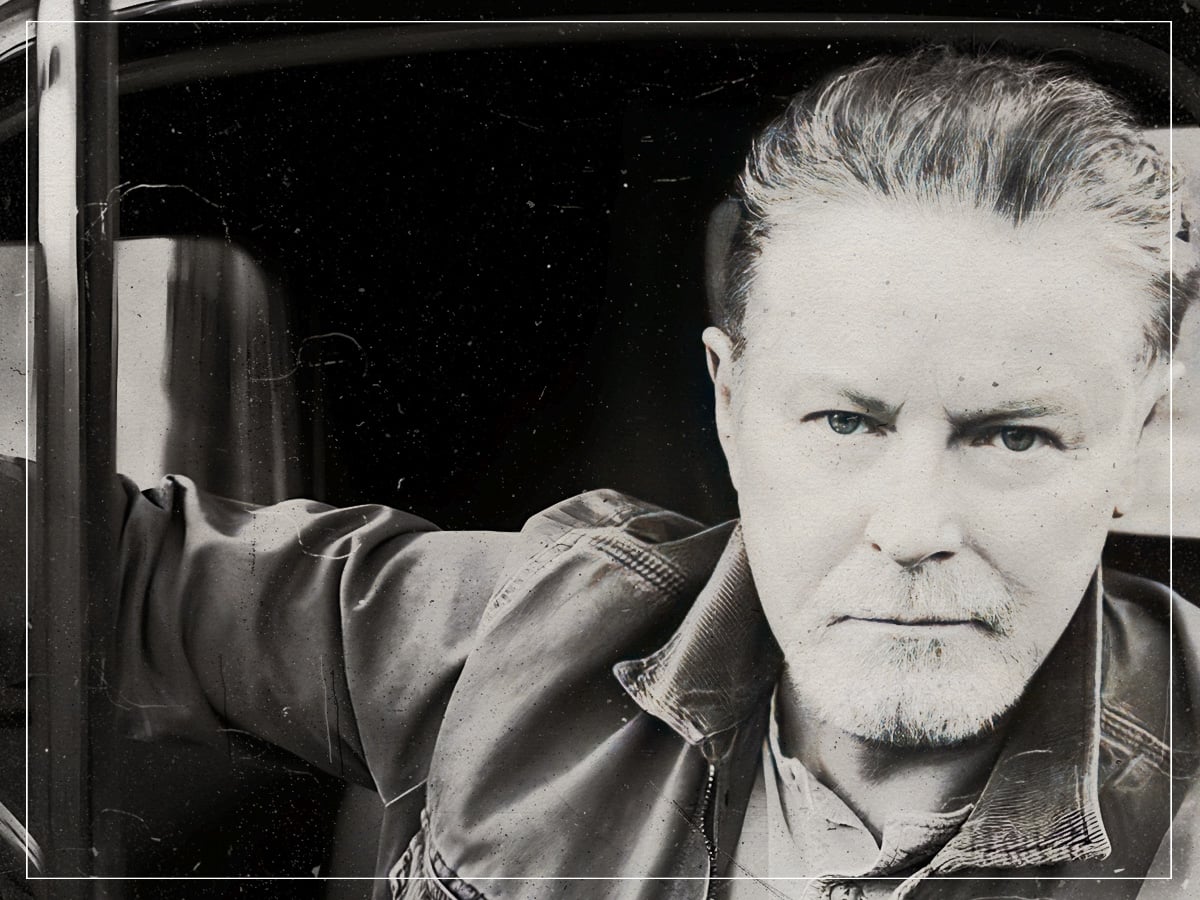

Credit: Far Out / TIDAL
October 22nd, 2026 · 9:24pm BST
No one becomes a legend in the music industry without making a few enemies along the way.
It’s easy to say the right things in the press, but behind the scenes, things often get ugly. Don Henley always had a clear idea of how he wanted to conduct himself in the business, but his falling-outs didn’t end when the Eagles broke up. In fact, they were just getting started.
If anything, the band’s decision to cut ties as the 1980s began was almost a necessity. They had been worn out from years of touring and recording, and after trying to slog everything out during The Long Run, addiction issues led to them eventually coming to blows during a benefit show at Long Beach, California, on July 31st, 1980.
It would be the final concert they would play for 14 years. However, even if their future looked uncertain, though, Henley didn’t need to worry about a damn thing.
Henley was the voice behind all of their greatest hits, and when he started working on tunes like ‘Dirty Laundry’, there was doubt that he was going to be a solo star. But a good record only comes from the people around it as well. While David Geffen had already fallen out with Henley when the Eagles were tied up in legal matters with Asylum Records, he managed to patch things up enough to work on records like Building the Perfect Beast.
Despite still selling some of the biggest records of any former Eagle, Henley remembered thinking that his records were getting little support, culminating in him getting sued by Geffen for $30,000,000 when he asked to leave the company in 1993. Although Geffen was ready for war, he did end up stooping a little too low as well.
Henley’s wife had been battling serious health struggles during the trial, and while she had no knowledge of what her husband’s deal entailed, she was forced to testify in court on behalf of her life partner. Even though Geffen labelled Henley as a “malcontent” on multiple occasions, the frontman said that his relationship with the industry mogul was never going to be the same after going through those court hearings.
Further reading: From The Vault
Before this legal affair made the vicious feud a public matter, they kept their dislike for one another behind closed doors, but Henley couldn’t play Mr Nice Guy any longer. In 1993, he viciously told the LA Times, “David Geffen is not in the record business anymore. He’s in the David Geffen business.”
Henley may be a heavyweight musical performer, but winning a legal fight against Geffen, who Forbes estimates has a net worth of up to $9.7 billion as of 2026, was a stretch too far, even for him.
 Credit: Far Out / Geffen Records / Los Angeles Times
He ultimately ended up getting Eagles back together, which helped him fulfil his contract thanks to the chart-topping 1994 live album, Hell Freezes Over, which was released on Geffen. Following the release of his 1995 solo greatest hits, Actual Miles: Henley’s Greatest Hits, he was finally a free man.
However, the grudge still burns bright. Speaking to the Inquirer in 2008, Henley reflected in detail on the feud, which he called “ugly”, explaining, “I simply didn’t want to make records for David Geffen anymore. I have absolutely no respect for the man.”
Henley then explained that once the Eagles broke up, Geffen encouraged him to sign a contract after being given a charming pitch, conceding, “And I fell for it, again, because I was feeling rather insecure and at loose ends at the time.”
Ultimately, he felt it was a toxic one-way relationship, adding, “I just didn’t feel like putting my heart and soul into any more records for a company that just didn’t really care.”
Even as late as 2017, Henley thought that those wounds were too fresh to patch up, saying, “I think the hate is much stronger than the love! I don’t care what he says about me. Everybody knows who he is, and what he is. I don’t need to say a thing about him, because everybody knows.”
Because for Henley, this was about more than business. He had become a songwriter to write the kind of tunes that would last long after he was gone. But, in his view, Geffen saw him as someone he could exploit every time he made a new record, and as a piece of meat rather than a genuine artist. And looking at what Henley was writing right before the hearings, it’s no wonder that he felt stifled.
The End of the Innocence most likely wasn’t named that by accident, and even when Henley joined the Eagles again during their reunion, he was definitely a changed man from the naive kid who started out with Geffen in 1971. He could always deliver the songs fans wanted to hear, but whenever it came time to make a new record or go out on a major tour, he would always have his guard up in case someone was trying to take advantage of him.
