
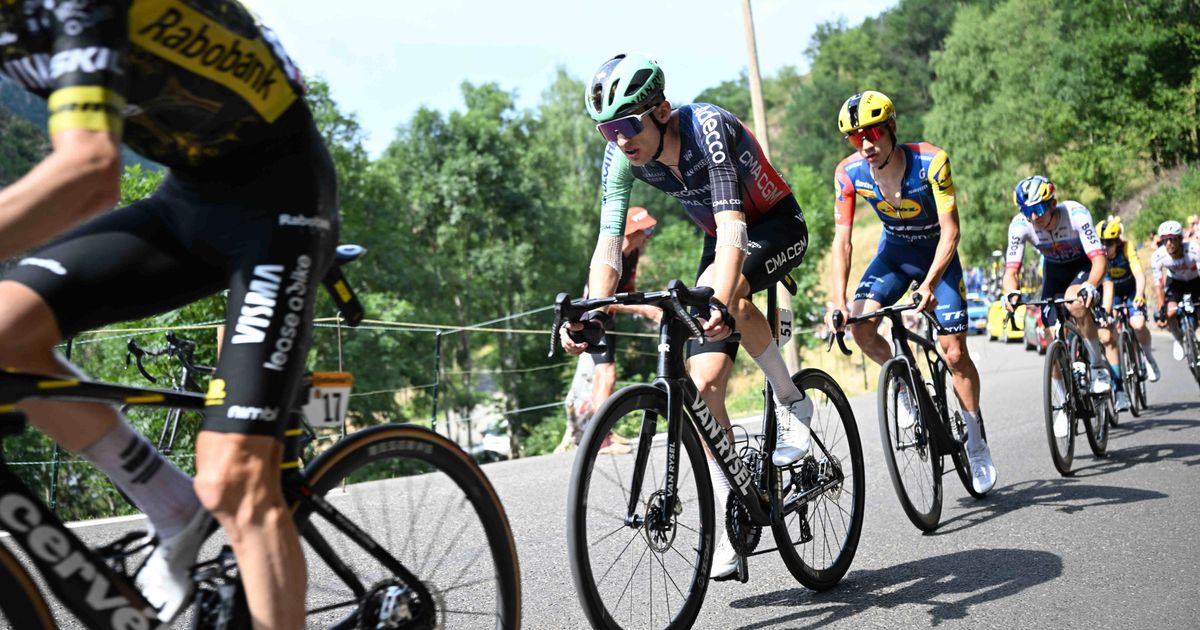
Our selected eightPaul SeixasPavel SivakovLaurens De PlusBen O’ConnorMatthew RiccitelloNicolas ProdhommeTiesj BenootDaan HooleThree arrivals to strengthen Seixas’ mountain supportSivakov helped Tadej Pogacar win the Tour in 2024 and 2025, riding within a team regularly expected to control mountain stages before its leader attacked. Signed through 2029, he would arrive with experience of defending yellow as well as pursuing it.
Alongside Seixas, he could take responsibility for the penultimate climb or go ahead in a breakaway, leaving De Plus and Riccitello available for the final ascent. On stages with long valleys between the climbs, Sivakov would also be a valuable rider to have waiting beyond the summit if Seixas attacks.
De Plus has spent much of his career working for established Grand Tour leaders. He finished tenth at the 2023 Giro d’Italia and 15th at the 2024 Tour, with fifth at the 2024 Dauphine, third at the 2025 Volta ao Algarve and sixth at Catalunya among his strongest stage-race performances.
His 2026 results were less prominent: 29th at Romandie and 50th at the Tour Auvergne-Rhône-Alpes. A domestique’s finishing position only reveals so much, but De Plus would need a stronger spring to secure this place ahead of Decathlon’s alternatives. At his best, he could spare Seixas long spells of setting his own pace when the mountain group begins to thin.
O’Connor returns having finished fourth at the 2021 Tour and second at the 2024 Vuelta a Espana during his first spell with the organisation. He would bring another option for the hardest mountain stages, with the endurance to accompany Seixas late into the day and the breakaway experience to be deployed further up the road.
His race programme will matter. In an October interview with Domestique, O’Connor questioned the decision to race the 2026 Tour after the Giro, having struggled to recover his best level during a 78-day season. Decathlon could offer him leadership opportunities elsewhere, but sending him to July exhausted would undermine one of the main reasons for bringing him back.
The cost of leaving Kooij and Bissegger out
Kooij, Cees Bol and Aurelien Paret-Peintre would make way for the three arrivals. Kooij’s omission would be particularly difficult after a Tour debut that produced a victory and four further stage podiums. On days when Seixas needed only to finish safely, the Dutchman repeatedly put Decathlon in contention to win.
Taking Kooij and Bol again would leave room for only one additional climber unless Decathlon also dropped existing mountain support. It would also retain the demands of chasing breaks and organising lead-outs. Our selection gives those two places to Seixas’ helpers, accepting fewer opportunities on the sprint stages.
Paret-Peintre loses out more directly to the climbing recruitment. He already knows the group and rode alongside Seixas in 2026, but there is no room for him alongside all three arrivals, Prodhomme and Riccitello without dropping Benoot or Hoole. He would remain among the first alternatives if a climber were injured or short of form.
Bissegger’s absence is harder to settle on balance alone. His extension through 2028 keeps another strong rouleur available, and Decathlon specifically praised his stage-racing work when announcing the deal. With him in the team, Hoole would have more help covering exposed roads and bringing Seixas towards the front before difficult approaches.
There is a risk of asking too much of Hoole by taking five climbing domestiques. Bissegger could replace one of them if their spring performances fail to justify that concentration of mountain support. Of the riders outside our eight, he offers the clearest way to change its balance.
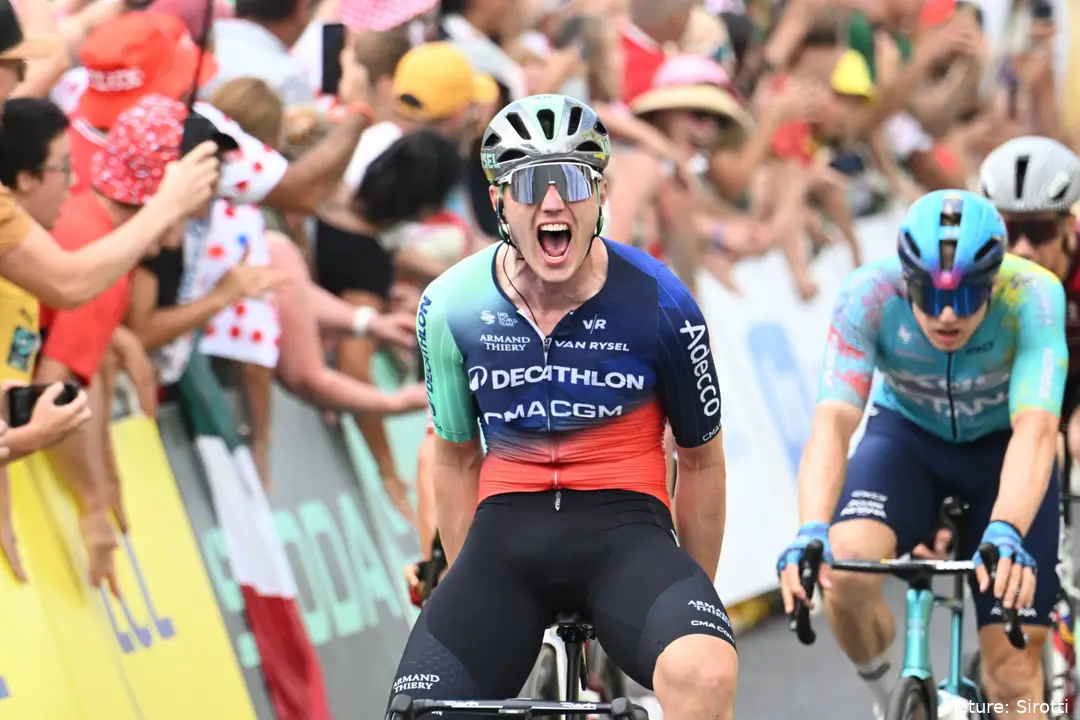
Olav Kooij won a stage of the Tour de France on debut in 2026
Prodhomme, Riccitello and the riders Seixas already trusts
Prodhomme finished 16th at the 2026 Tour while helping Seixas, following a 2025 season in which he won a Giro stage and the Route d’Occitanie overall title. He should keep his place. With Sivakov, De Plus and O’Connor available, Decathlon could use him on earlier climbs without leaving Seixas dependent on a single remaining teammate.
Riccitello finished his first Tour 24th while supporting Seixas. His post-race account included the bottle runs and time spent sheltering his leader alongside his work in the mountains. He has already accepted those responsibilities within this group, and another Tour together would build on that partnership.
Benoot was road captain in 2026 and still finished 17th overall. He would again have responsibility for organising the team and keeping Seixas positioned before difficult sections, while remaining capable of contributing on the climbs. Without Bissegger, using Benoot too heavily to control breaks would leave a significant gap around Seixas later in the day.
Hoole’s place should survive Kooij’s omission. The Dutchman won a Giro time-trial stage in 2025, then finished fourth overall at the 2026 Tour of Britain and 15th at Paris-Roubaix. He would take much of the work on flatter roads, with no lead-out to prepare once Seixas had been delivered safely towards the finish.
The climbers would still have to share that workload. Hoole cannot spend every stage chasing and then be expected to keep Seixas near the front through the final kilometres. The opening days will place an immediate demand on that protection: the 2027 Tour begins in Edinburgh with three stages across Britain.