

Members Only
Nacht van Woerden isn’t the most important or most serious race on the calendar. But what it represents is vital to the sport.
Amanda Crow
Evaluated purely by cold, hard facts, Nacht van Woerden is not an important event. It is only a C2-level race, the bottom rung of the UCI’s cyclocross classification system, and it is not part of any of the big three cyclocross series – not the UCI World Cup, nor the Telenet Superprestige, nor the X2O Badkamers Trofee. It is held in mid-October, on a weeknight, well before the heart of the European season. It is unabashedly urban, wedging itself into a canal-encircled ball of paths and parks in the center of Woerden, population 52,600, 40 kilometers south of Amsterdam. There is no defining course feature, like the sand pit at Zonhoven or the cobbles of the Koppenbergcross. It is held in the dark. What serious race is held in the dark?
And yet, here it is, with its own gallery on the esteemed Escape Collective and a palmares that includes names like Brand, Vos, and Van Empel, Nys and Vervecken and Groenendaal. There are modern greats who are notably absent, but really, all of that is beside the point. The point is that, now in its 24th running, Nacht van Woerden encapsulates so much of what’s special about the cyclocross season.
The Tuesday night racing is only the grand opening of Woerden’s annual Koeienmarkt, the Cow Market, where the main event is ostensibly Wednesday’s cattle show and judging. (According to the official schedule, at 2:00 pm on Wednesday, the Woerden’s Most Beautiful award is presented by the mayor. It is not specified whether the recipient is human or bovine.)
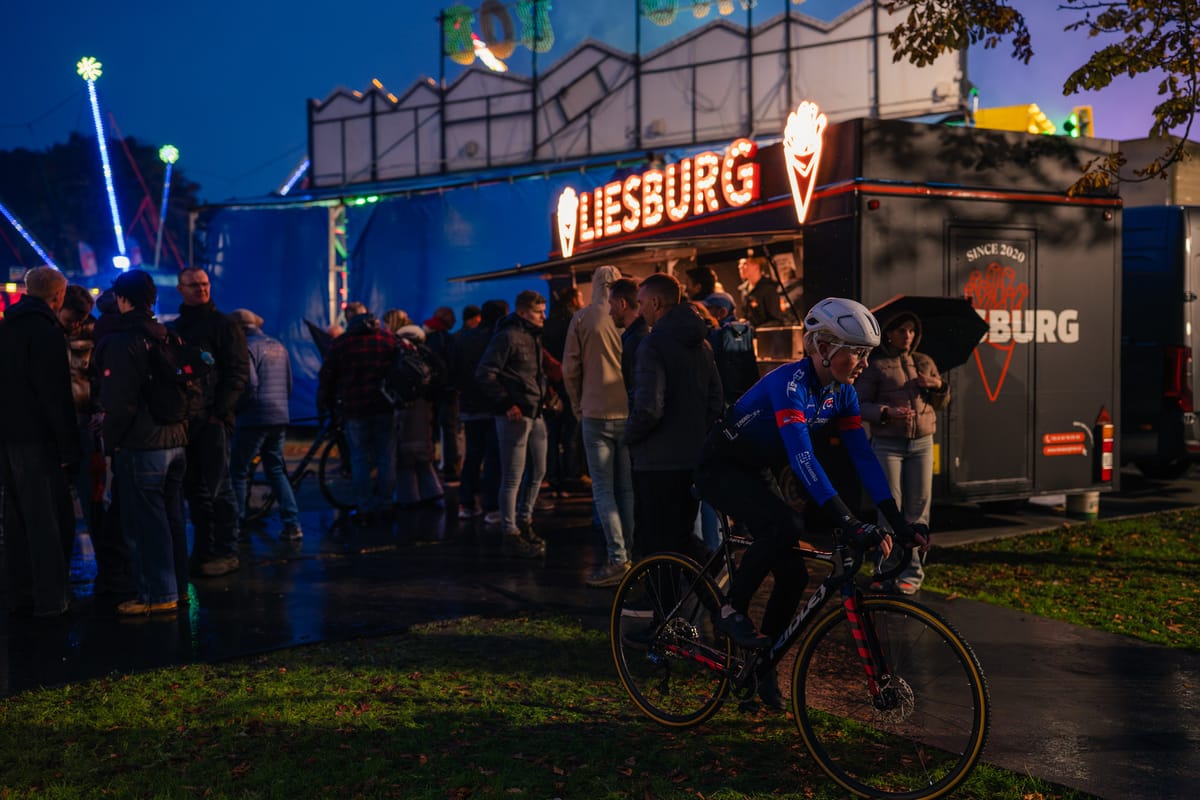
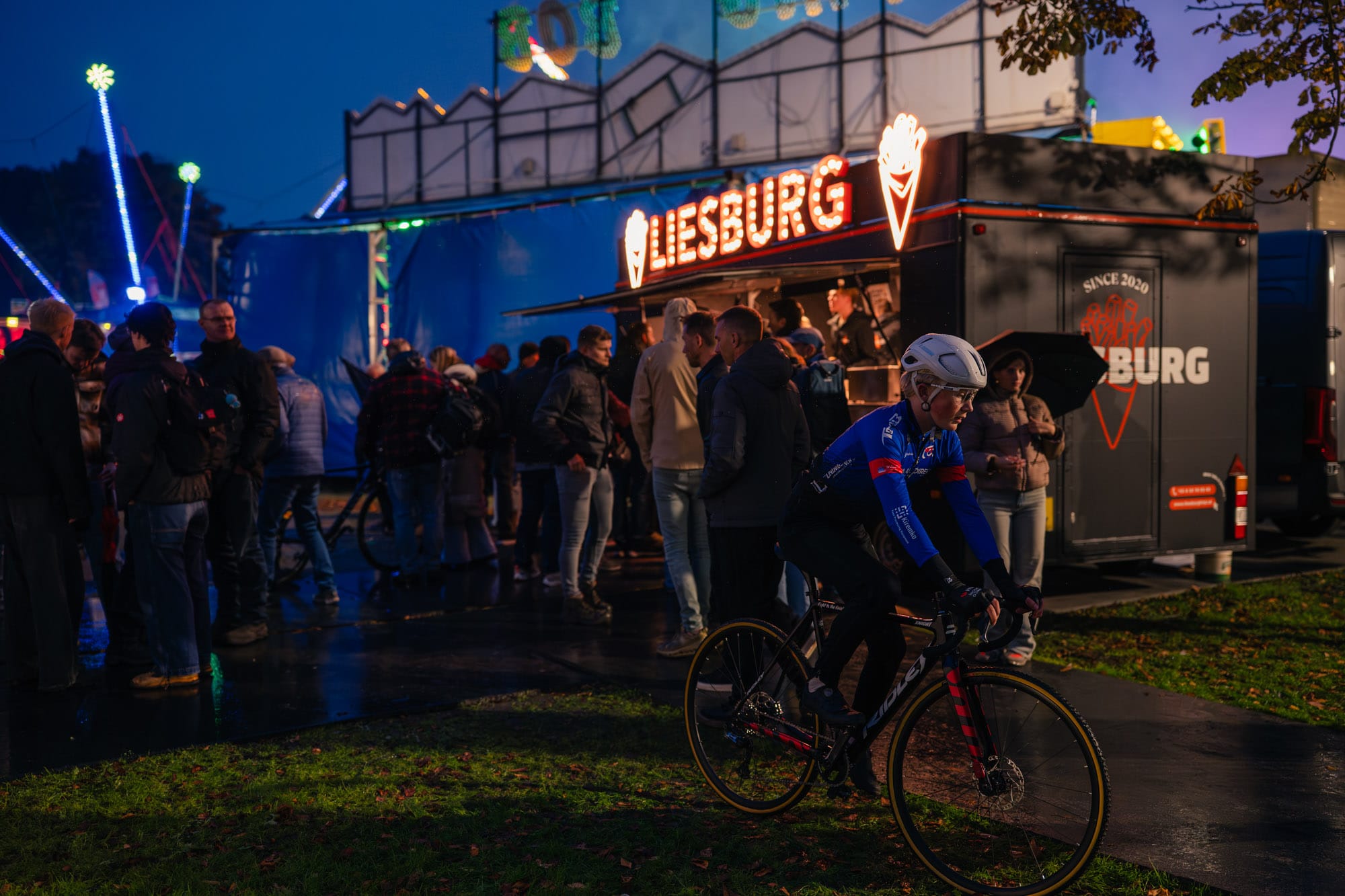
Overlaid on both is the kermis, the traveling carnival, from Tuesday evening through midnight Wednesday, offering blinding, spinning rides, step-right-up-games, and beer, frite, and burger stands. It’s classic kermis racing transported to fall and transformed by early sunsets, with cyclocross taking the place of summer’s high-speed, elbows-out road laps across curbs and cobbles.
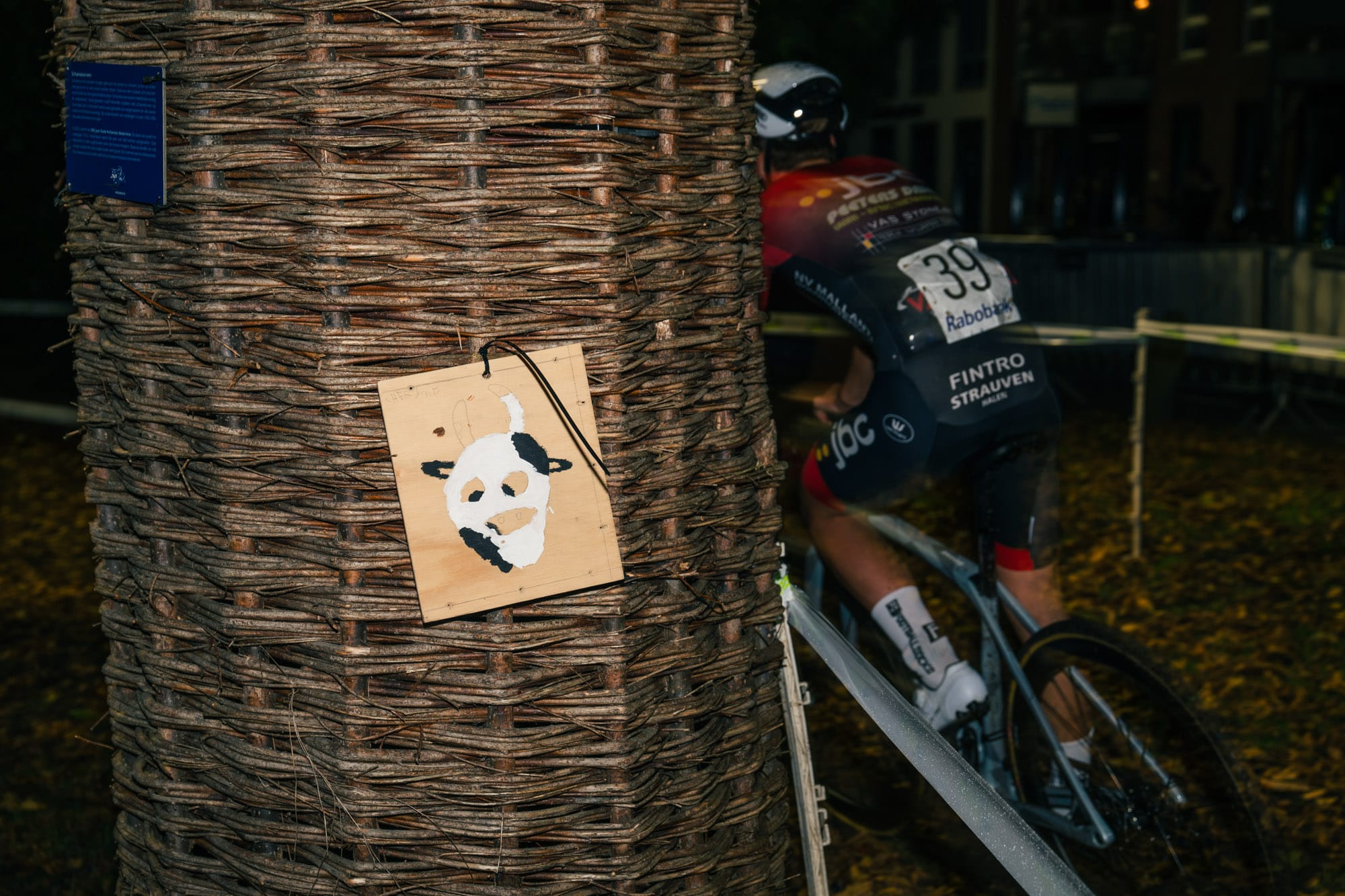 Racing. Cows. And pictures of cows rendered just a little creepier by the lighting.
Before the elite races, junior races warm up the crowd, followed by the invite-only Koppelcross, where young juniors are paired with an elite men’s racer for an annual team race. The rules are: the juniors start on their own, then alternate laps with their elite partners until the bell rings. At that point, everyone is on the track, with elites required to remain behind their junior to the finish. (Allegations of shenanigans amongst the elites abound.) An hour afterward, following the elite women, the elite men will be on the line again for their own race.
This is not the regimented warmup process that typically fills the final hour before a World Cup or Superprestige start. But this is cyclocross in Northern Europe: adaptable, not always so serious, integrated into communities and their celebrations, and embraced by their people, rain, shine, or darkness.
Photographer Amanda Crow takes us inside an annual rite of ‘cross season.
– Ryan Newill
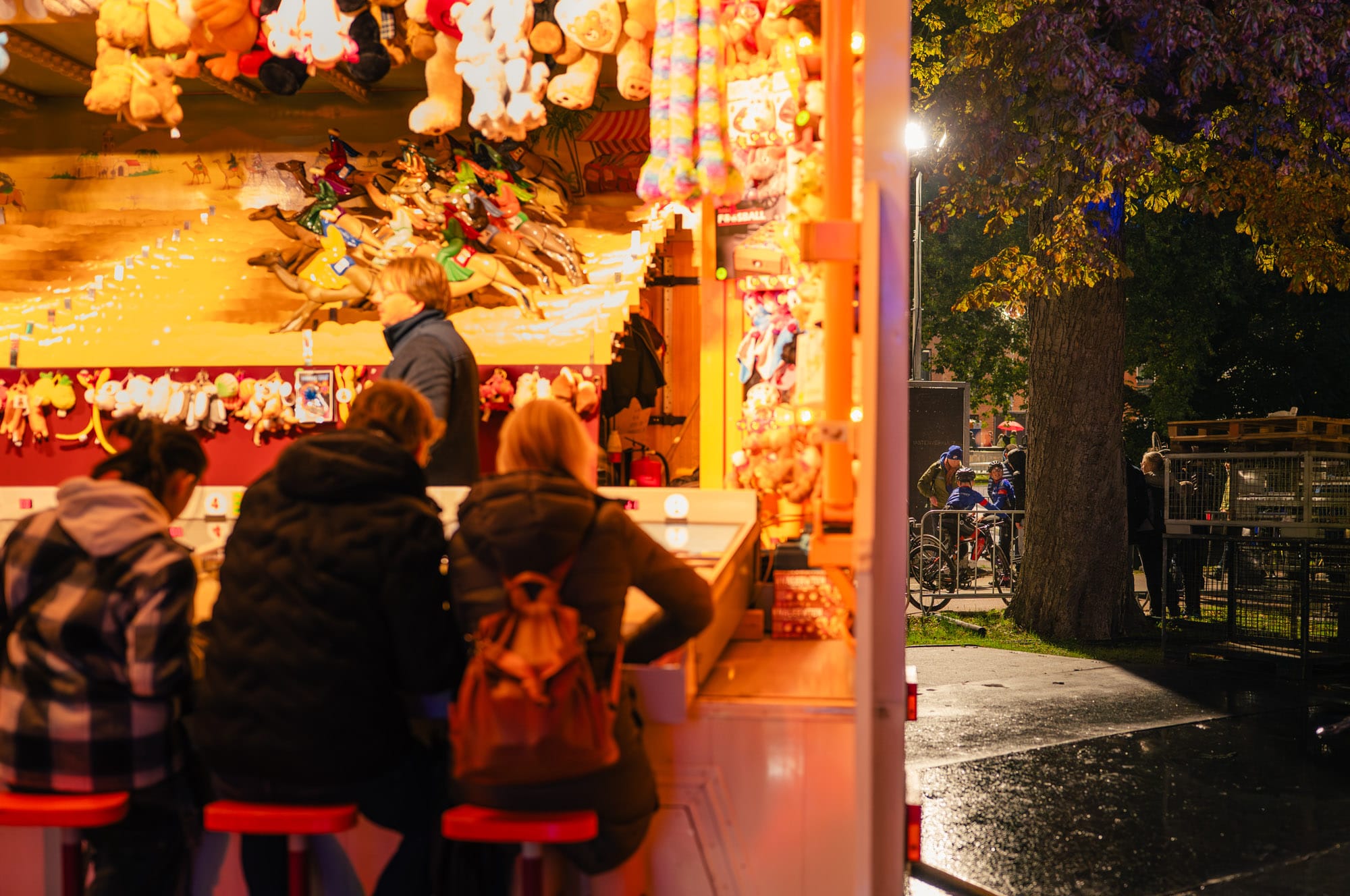 A bit of faux camel racing at the real bike race.
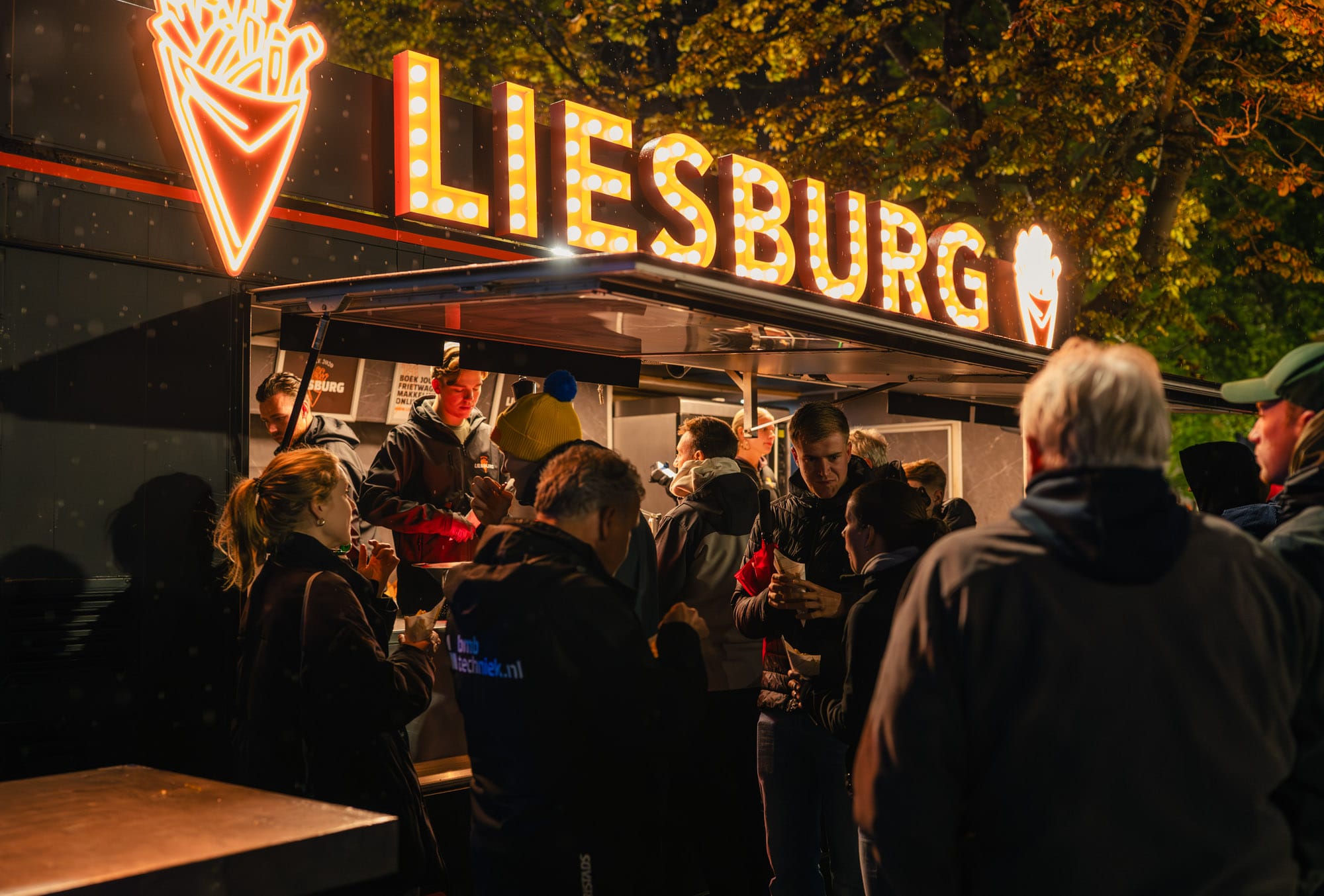 Frites. Always frites.
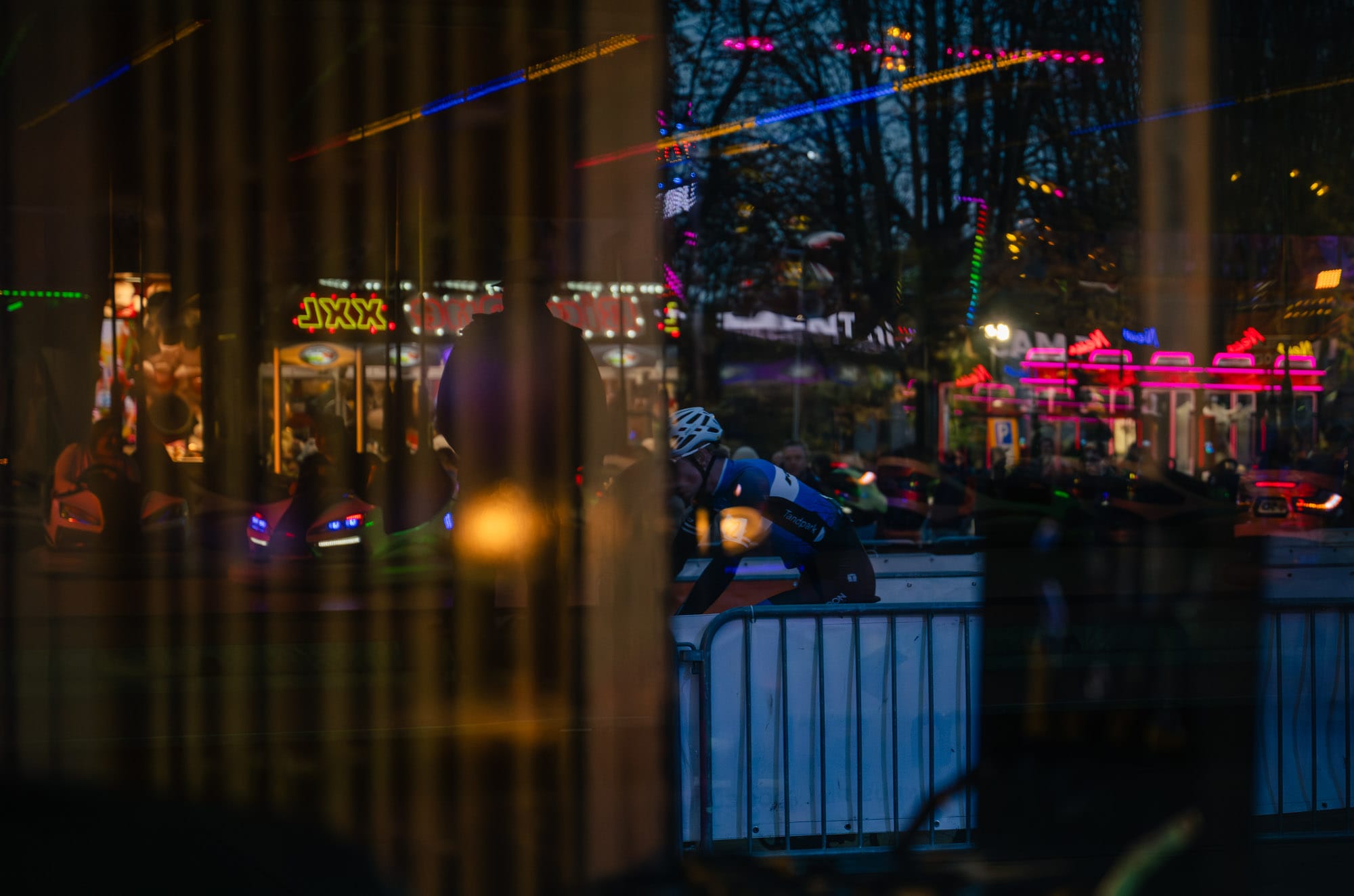 The junior race fills out the undercard as the sun sets on the kermis.
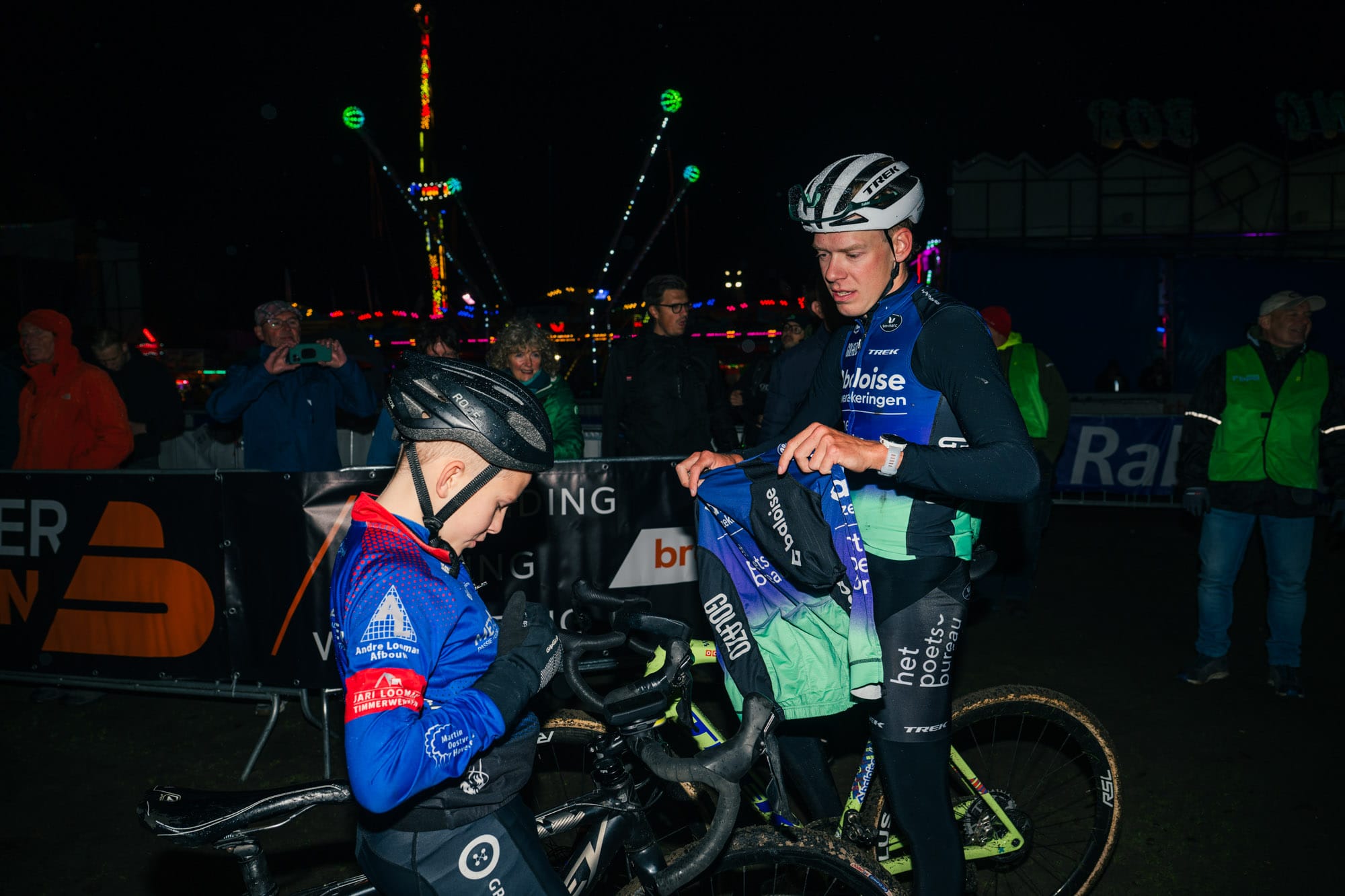
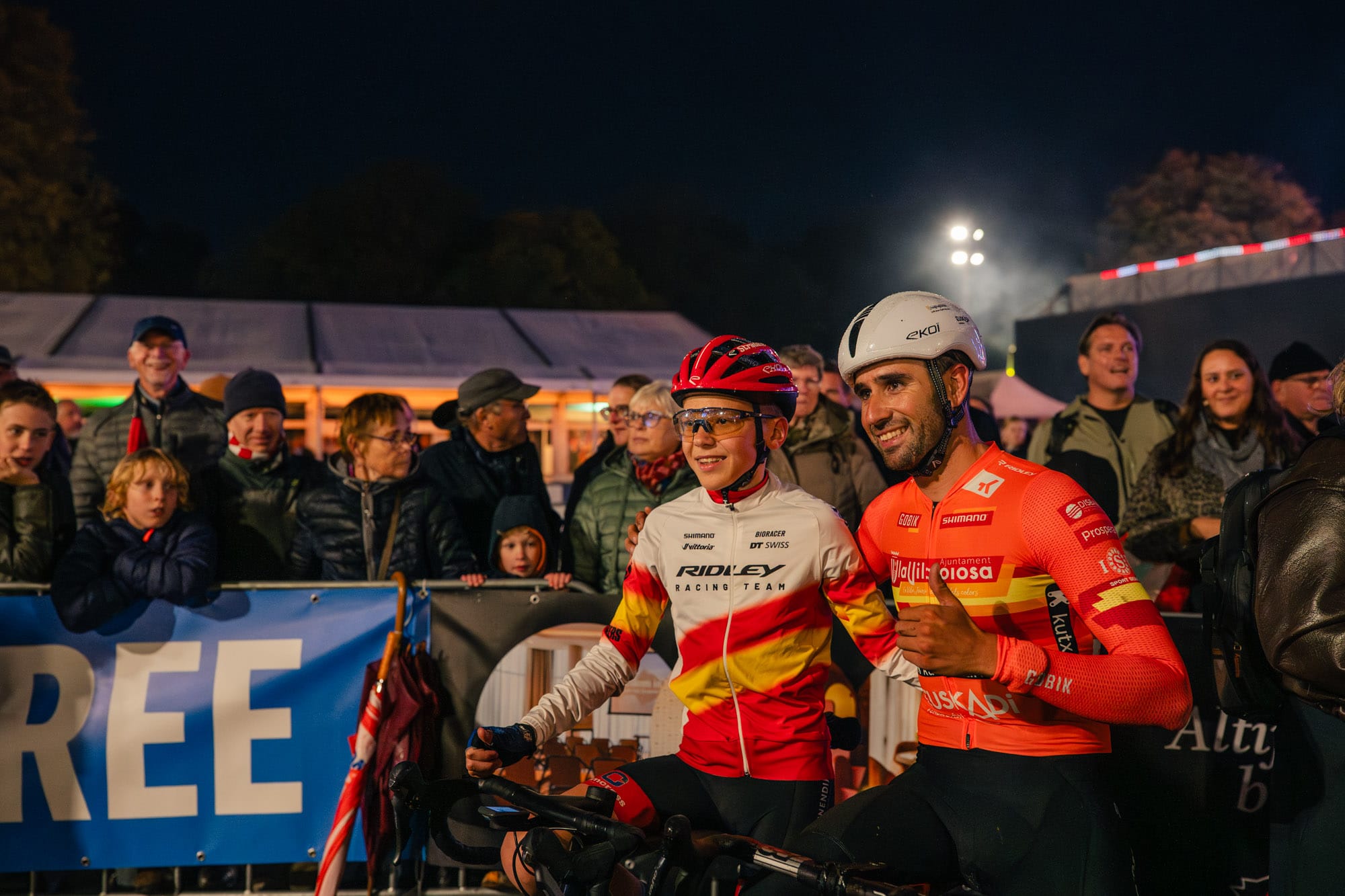
Pim Ronhaar (Baloise Verzekeringen) and Filipe Orts Lloret (Euskaltel-Euskadi) suit up their Mini-Mes for the Koppelcross.
This post is for paying subscribers only
Subscribe now
Already have an account? Sign in
Did we do a good job with this story?
Yep
Nope