
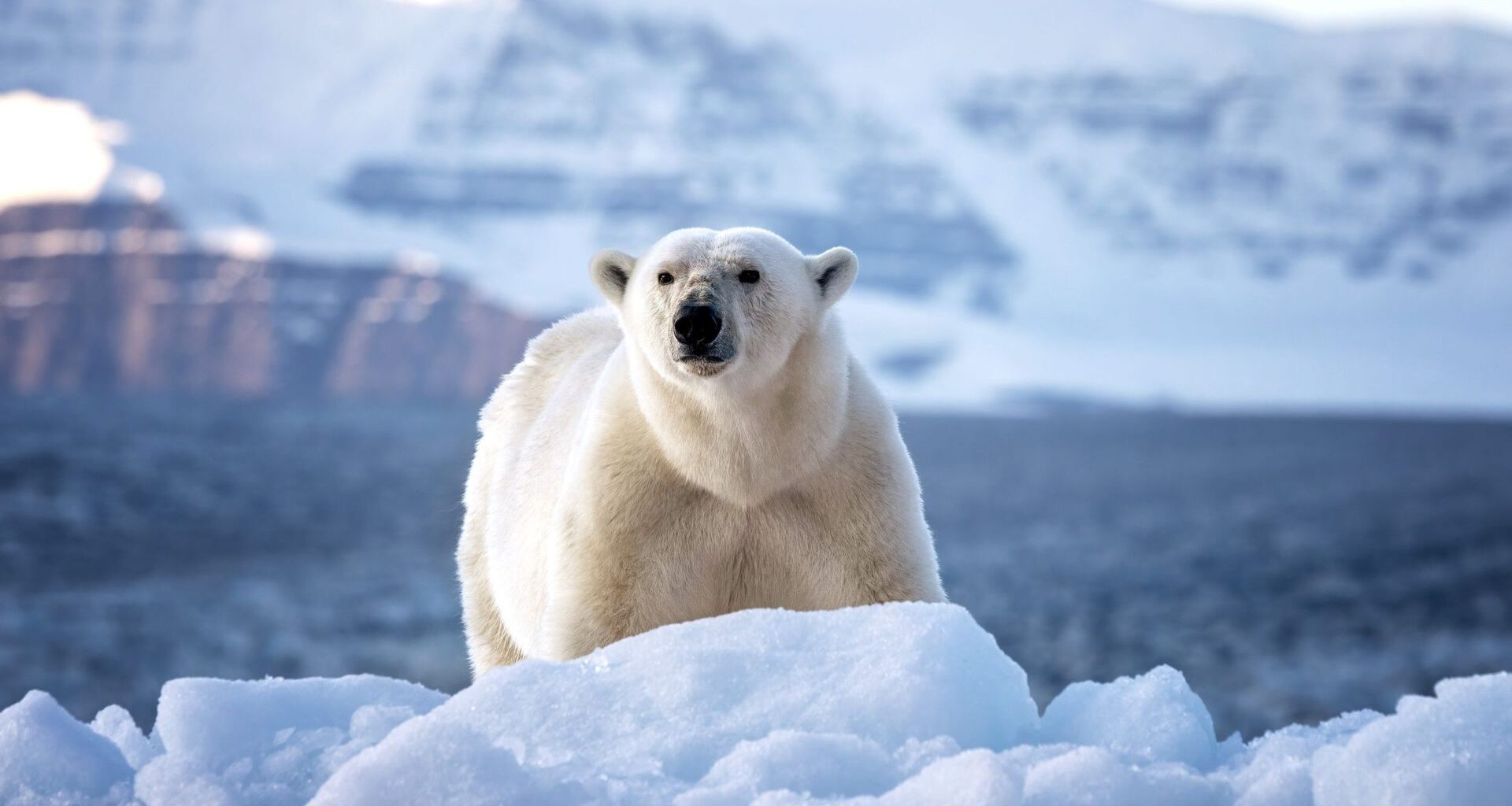
Blood samples from East Greenland reveal evidence of H5 bird flu infections in four apparently healthy polar bears, raising new questions about disease in the Arctic.
A polar bear does not have to go looking for trouble. Sometimes, it can find it in its next meal.
A seabird, a clutch of eggs, or a dead seal may offer food to a hungry bear. But if that food carries bird flu, an ordinary search for dinner could also bring an infection.
That is how a disease named after birds can become a problem for one of the Arctic’s biggest predators.
Scientists have already reported polar bear deaths from bird flu in Alaska and Norway’s Svalbard islands.
Now, blood samples from East Greenland offer a more hopeful development.
Four bears carried signs of a past encounter with a dangerous type of bird flu, yet all looked healthy when hunters found them.
Antibodies tell the story
A bear can recover from an infection without leaving any obvious sign that it was ever sick. Its blood, however, may still hold evidence.
When the immune system responds to an infection, it makes proteins called antibodies. These can stay in the blood after the infection has ended, a little like footprints that remain after a visitor has left.
Kayla Buhler, a researcher at the University of Inland Norway and a postdoctoral fellow at Cornell University’s College of Veterinary Medicine, led the work.
“We’re not detecting active infections; we’re detecting a prior infection that has been cleared by the animal,” Buhler said.
Hunters helped find answers
The researchers could investigate that history because local Inuit hunters had helped collect samples for years.
Their partnership with scientists offered access to animals in a remote region where tracking wildlife disease is difficult.
The samples came from hunts near Scoresby Sound in East Greenland.
These hunts provide food, hold cultural importance for Indigenous communities, and follow annual government quotas.
Researchers at Aarhus University in Denmark, including Christian Sonne, worked with the hunters to collect heart blood from 109 bears between 2016 and 2025.
All of the samples came from the January-to-May hunting season.
The hunters also knew how the animals looked and behaved before the hunt. Every sampled bear appeared healthy, and the hunters had not reported seeing sick ones.
Four bears stood out
The team first checked for antibodies to the broader flu family that includes bird flu. None of the 81 bears sampled through 2023 tested positive.
Then the results changed. Three of 14 bears tested positive in 2024, followed by six of 14 in 2025.
Those nine positive results did not all point specifically to H5 bird flu.
More detailed tests at Canada’s National Microbiology Laboratory found antibodies linked to the globally spreading H5 group in four bears, all sampled in 2025.
“This is one of the first studies to show that bears can recover and do quite well after infection,” Buhler said.
Dinner can carry disease
The study did not establish how those four bears encountered the virus. The researchers consider eating infected birds or mammals one likely route.
That could happen when a bear hunts, scavenges a carcass, or feeds around nesting birds.
Other possible routes include contact with fluids from an infected animal’s nose or mouth, although the team did not confirm any route in these bears.
Migrating birds help explain how the virus could reach such a remote place. Every summer, birds travel north to breed, connecting Greenland with places far beyond the Arctic.
Once they arrive, many crowd into large nesting colonies where infections can spread.
Glaucous gulls travel between East Greenland and Svalbard, for example, and researchers have repeatedly found viruses from the same H5 group in those gulls on Svalbard.
Less ice changes meals
For polar bears, this possible exposure comes as their search for food is changing. They hunt on sea ice, but as that ice disappears, they spend more time on land.
A bear looking for food ashore may turn to animals it would encounter less often while hunting on the ice. Bird colonies can become feeding grounds, bringing bears into closer contact with birds and anything those birds carry.
“On Svalbard, Norway, we see that polar bears are now taking down reindeer, which is something never seen before in the past. There and in many other parts of the Arctic, they are starting to raid bird colonies,” Buhler said.
The researchers did not show that ice loss caused the infections they detected. They describe a possible consequence of changing diets: new meals may bring new opportunities for disease to spread.
Survival leaves unanswered questions
The researchers suspect the bears encountered the virus during the previous summer or fall, when migrating birds were present.
If so, they survived for months before hunters took them the following winter or spring.
But antibodies cannot tell researchers exactly when an infection happened or how ill a bear became.
A healthy-looking animal might have had a mild infection, or it might have recovered from a more serious illness.
The sample size was small, which means the findings should be interpreted with caution.
Researchers tested only 14 bears in each of the final two years, all from one hunting area, so the results cannot describe what is happening across the entire Arctic.
These samples also came from animals that lived until the hunt.
They cannot reveal how many other bears might have died, or whether surviving one infection would protect a bear the next time it encountered the virus.
Watching what happens next
Those four bears give scientists a reason to look more closely at animals that seem well.
Finding out why some bears survive could help researchers understand a disease they have also found in bears that died.
The team wants to know whether viruses circulating in Greenland carry changes that make them better at infecting mammals.
Another question concerns spread between bears, which sometimes gather around carcasses or garbage near human settlements.
“It’s important for us to monitor what new pathogens are becoming established in polar bears because we don’t know how they’ll be affected,” Buhler said.
Working with local hunters could help researchers monitor these changes and track the health of polar bears, which remain important to Indigenous communities for food and cultural traditions.
The study is published in the journal Emerging Infectious Diseases.
—–
Like what you read? Subscribe to our newsletter for engaging articles, exclusive content, and the latest updates.
Check us out on EarthSnap, a free app brought to you by Eric Ralls and Earth.com.
—–