

‘We have, to date, invoiced £0 in fees from the A+U framework,’ says Tim O’Callaghan, co-founder of Nimtim Architects.
It has been nearly four years since 65 architects and design practices were handed a spot on London’s Architecture + Urbanism (A+U) framework.
But despite the early fanfare, several have reported that being a part of this ready-to-use roster of talent has resulted in a dismal amount of work. Some are questioning whether it’s even worth the hassle of applying to rejoin the framework when it expires in four months’ time at the end of February.
The AJ has heard criticisms that the framework has failed to increase the diversity of who wins what. Small teams and minority-run firms say they’ve received a pitiful proportion of fees, despite being championed as beneficiaries of the set-up.
Of course everyone loses out when there isn’t enough work to go around – the value of jobs commissioned so far through the framework is a third of that of its predecessor (£41 million compared with £15 million). But have small practices borne the brunt of this decline?
Launched in 2023 as the successor to the Architecture Design and Urbanism Panel 2 (ADUP2), the A+U framework was created by the Greater London Authority (GLA) with the dual aim of opening up public-sector access to industry expertise and widening opportunities in terms of practice sizes and backgrounds.
‘My studio is one of those named at the top of the table, but receiving a fraction of one per cent of contract fees tells its own story’
Upon its inception, deputy mayor for planning Jules Pipe said that it was ‘crucial that those involved in the transformation of London are representative of all who live here’, and that he and the mayor were ‘pleased to see such a diverse range of practitioners’ signed up.
The ambitions for the next iteration will, no doubt, be similar. But the AJ has already heard that a number of practices do not intend to reapply, including Office Sian, which operated as part of a consortium led by Karakusevic Carson Architects.
In a candid social media post, the practice’s founding director, Gurmeet Sian, revealed that despite this consortium routinely topping the tables in terms of total fees won, his practice had invoiced less than 0.12 per cent of the group’s earnings.
Of the £2.1 million of work the consortium has won over the last three or so years, only around £2,500 has reached Office Sian. Writing on LinkedIn, Sian said: ‘My studio is one of those named at the top of the table, but receiving a fraction of one per cent of contract fees tells its own story. So after seeing this lop-sided distribution of fees year on year, Office Sian have taken the difficult decision to resign from this framework.’
He said the GLA’s efforts were ‘genuine’, but despite 57 per cent of studios on the framework being diverse-led, headline figures were failing to translate into fees.
‘Though the premise was to include practices like ours, the actual project opportunities weren’t geared the same way’
The founders of Nimtim, though not part of a consortium, feel the same. ‘Much was made of the opportunities for smaller and diverse-led practices that the framework would provide,’ O’Callaghan tells the AJ. ‘However, the reality is that it has not turned into actual billable work for many of us.’
He also highlights the ‘significant’ time and resources needed for the two-stage application and subsequent bids within each lot. O’Callaghan says that while the application to get on the framework is assessed on design quality, the individual tenders over the years have been decided based on ‘experience, track record and/or personnel’.
This has made it ‘extremely difficult’ for smaller and emerging studios to win work when pitted against larger, more established practices operating on the same lot. Nimtim made it on to Lot 3, for landscape, green infrastructure and public realm, and Lot 7, for small sites housing.
He says there have only been four or five opportunities presented to architects in Lot 7 – a lot that O’Callaghan claims was supposed to function like a ‘taxi rank system’ where everyone would get an opportunity in turn. ‘That has not been the case,’ he adds.
Nimtim remains ‘on the fence’ about reapplying, though O’Callaghan said it was ‘unlikely’ after three years on the framework. Similarly, Chloë Leen, director at PUP Architects, says her team is hesitant to bid for another place, having only had four invitations to tender, and submitted proposals for just one project, over the last three years.
PUP Architects made it on to Lot 6 for commercial, workspace and industrial schemes, where it competed with the likes of Stirling Prize winner Haworth Tompkins and a consortium containing Studio Egret West and Bell Philips.
‘Though the premise of the framework was to promote the inclusion of practices like ours, the actual project opportunities weren’t geared the same way’, says Leen. ‘Knowing our lot competitors, we had to weigh up the likelihood of winning the job versus the resources of putting the bid together, which for a small practice is proportionally onerous.’
Leen describes the selection process as ‘very rigorous and labour intensive’, spanning ‘many months’ and proving a ‘huge drain on resources’. She wants to review the GLA’s proposed changes before deciding whether to reapply.
McCloy + Muchemwa, a practice within the Studio Egret West-led consortium, also failed to win any fee-paying work from the framework. It says it has not yet been invited to join any rebidding consortiums, while co-founder Steve McCloy adds that they’d be unlikely to win a place on their own.
In a statement to the AJ, the GLA confirmed that the updated framework would include ‘several significant changes’ following feedback from participating practices.
A spokesperson said: ‘We are committed to developing a framework that evolves where necessary so that practices of all sizes can help shape London’s urban environment.’
By the end of its run, ADUP2 had seen six practices take on more than £2 million worth of work, with double that number winning more than £1 million.
In comparison, the A+U framework can boast only one member, the consortium led by Karakusevic Carson, as having broken the £2 million mark, and only five topping £1 million.
While Karakusevic Carson declined to comment on the distribution of work and fees within its consortium, founding partner Paul Karakusevic did tell the AJ: ‘As a practice we support design competitions, frameworks and collaboration, but recognise that the current financial conditions for London public sector clients are making it harder for everyone.’
The GLA says that, as of July, more than half (54 per cent) of projects using the framework were awarded to diverse-led suppliers, defined as a ‘supplier that has 50 per cent or more of its leadership who identify with being female, Black, Asian, minority ethnic, disabled and/or as members of the LGBTQIA+ community’. It also says 46 per cent of projects using the framework have been given to small suppliers, with 27 per cent awarded to micro suppliers.
The GLA has tried to achieve something equitable in what is a challenging time for the profession, but the well-intentioned flagship framework appears to be falling short in this ambition.
As Sian says: ‘To be clear: we are not victims here. [But] things must change.’
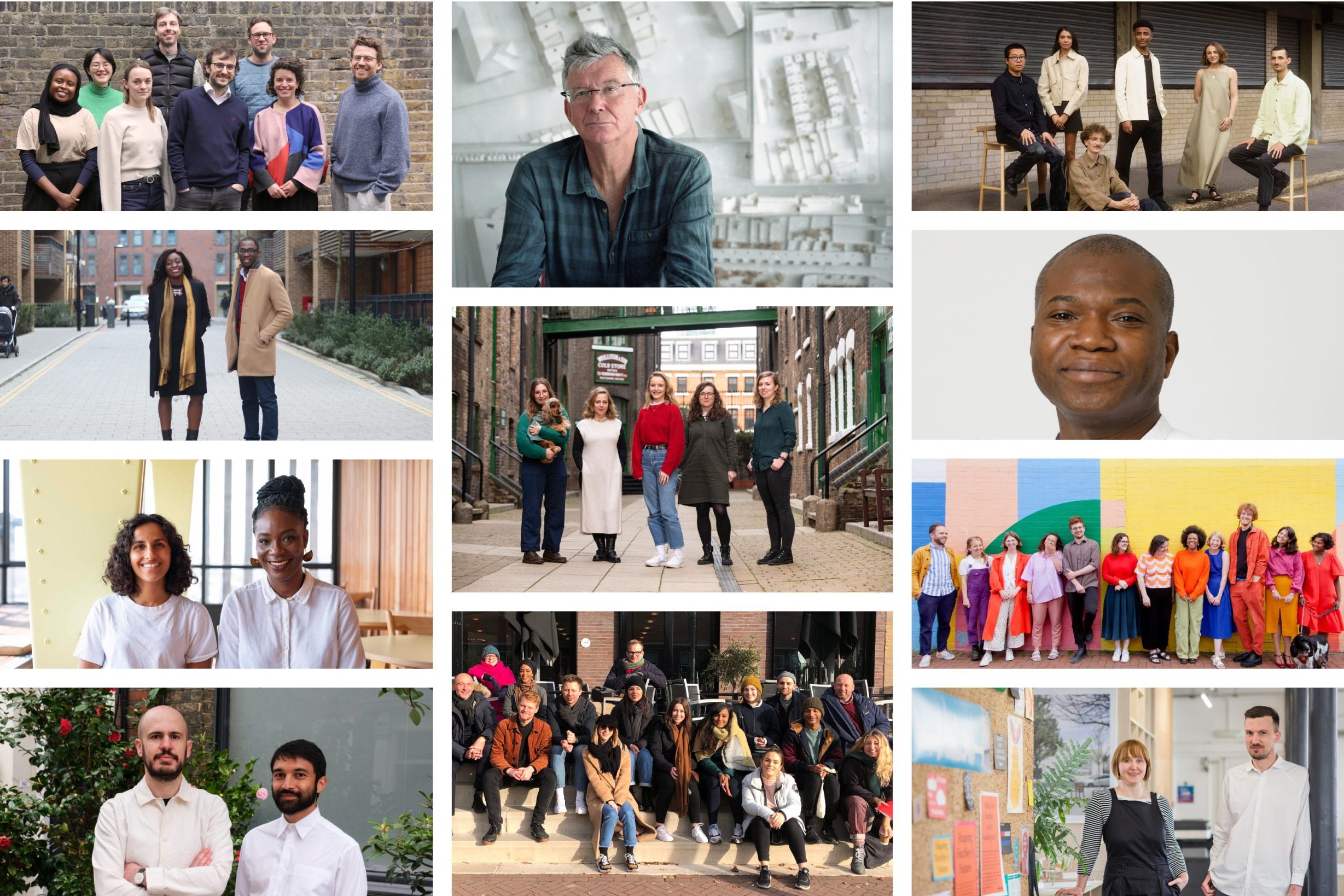
A total of 55 places on the framework – representing 57 per cent of appointments across all ten lots – were awarded to ‘diverse-led’ enterprises
Who’s won what? Top five earners as of July 2026
Karakusevic Carson Architects with K Bava Architects, Office Sian, Pedder & Scampton, Sarha Hersi and Saya Hakamata £2.13 million
Hawkins\Brown £1.25 million
We Made That £1.15 million
Archio £1.12 million
East architecture, landscape, urban design £1.04 million
2018 predictions: Will the profession continue to be marginalised?