
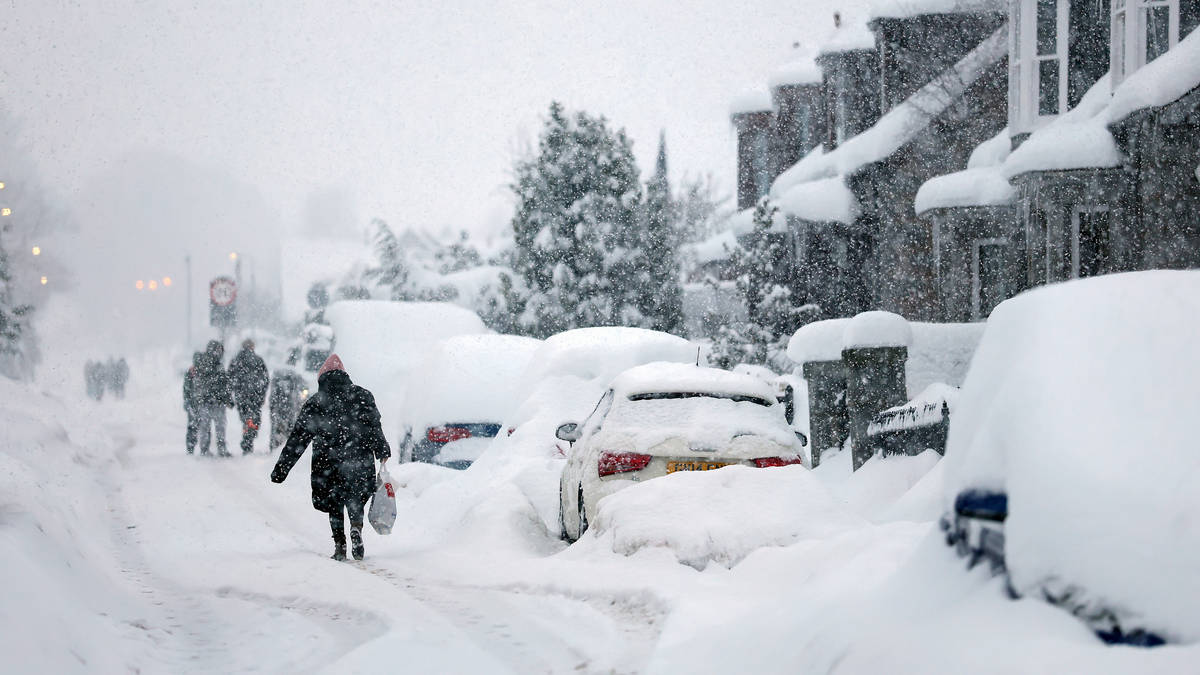
Britain is expected to pay some of the highest energy costs in Europe this winter.
Picture:
Getty Images
Brits are forecasted to be paying some of the highest energy costs in Europe this winter.
Data suggests the nation’s reliance on imports to ensure a steady supply will deepen across the next few months as the temperature drops.
Energy system operators forecast the UK will have enough gas and electricity to meet demand this winter, partly because it pays higher market prices than neighbouring markets to secure imports.
It comes despite an increasing dependence on overseas supplies which have been squeezed by the Iran war, analysis has shown.
National Gas, which oversees Britain’s gas networks, set out the forecasts after agreeing a deal with the owner of a major Belgian pipeline to keep gas flowing into the country this winter by reversing a planned capacity cut.
The deal will add around 10p a month to the average gas bill, The Guardian reports.
Without the intervention, which was approved by energy regulator Ofgem, there was a danger of gas running out in the event of a worst-case scenario where part of the country’s gas networks failed as temperatures plummeted.
In addition to gas imports by pipelines, Britain is expected to increase imports of seaborne liquefied natural gas (LNG) cargoes by about 5% from last winter, according to National Gas forecasts.
National Gas, which is responsible for transporting gas across the country, said domestic gas production from the UK continental shelf is forecast to decline by around 5%, in line with a long-term downward trend.
This is offset by an expected increase in imports of liquefied natural gas (LNG) by around 6%, which it said highlights Britain’s growing dependence on global gas supplies.
The UK has some of the smallest gas stores in Europe after decades of relying on homegrown production from the North Sea.
It comes days after the Jackdaw gas field, 150 miles east of Aberdeen in Scotland, was approved after years of uncertainty and a court case.
Andy Burnham has pledged the UK will meet its net zero target despite approving it, saying the decision will strengthen energy security.
On Wednesday, ministers announced the gas field had been approved after years of uncertainty and a court case.
The decision drew criticism from some Labour backbenchers and environmentalists, while Conservatives called on the Government to also approve the Rosebank oil field, west of Shetland in Scotland’s north.
Writing in The Guardian, Mr Burnham said: “There has been much speculation about what this announcement means for Britain’s commitment to addressing the climate crisis.“I want to be clear that our determination is unwavering.
“The simple truth is that even as we pursue our ambitious target of net zero by 2050, we will need oil and gas for years to come as a bridge to that clean-energy future.”